Ateliê — Envio gratuito para todo o mundo — Entrega em 2–6 semanas
      William Hogarth, 1697 – 1764

      William Hogarth's 100 Most Famous Paintings

      Placa uma, de A Rake’s Progress is the painting William Hogarth is best remembered for. Plate seis, de A Rake's Progress and Gin Lane (1750) complete the trio of best-loved canvases. Our catalogue counts 307 works by William Hogarth. Here are the 100 most famous, with the year, the museum and the story of each canvas.

      Ranked by our popularity score, which combines the searches, visits and orders for each work. Updated Outubro 2026. Each painting on this page can be ordered as an oil reproduction painted by hand on linen canvas, or as a fine art print, made to the size you choose.

      Portrait of William Hogarth
      William Hogarth · 1697 – 1764
      Born · died
      1697 – 1764, Londres
      Works in our catalogue
      307
      Most famous
      Placa uma, de A Rake’s Progress
      Most works at
      Sir John Soane's Museum

      The ten best-loved paintings by William Hogarth

      Placa uma, de A Rake’s Progress by William Hogarth
      1

      Placa uma, de A Rake’s Progress

      Gravura

      Immerja-se em um retrato visceral da ambição desenfreada e da ruína moral com “Plano Um”, parte da icônica série “A Rake’s Progress” de William Hogarth. Esta engravada, datada do início do século XVIII, não é apenas uma representação visual; é um espelho implacável dos vícios e das ilusões que assolavam a sociedade londrina da época. A cena, capturada com precisão meticulosa, nos transporta para o coração de um estúdio artístico…

      Plate seis, de A Rake's Progress by William Hogarth
      2

      Plate seis, de A Rake's Progress

      Gravura

      Um Vislumbre da Sátira do Século XVIII Mergulhe no caos vibrante de "Plate six, from A Rake's Progress", uma gravura magistral de William Hogarth. Esta intrincada cena em preto e branco captura a energia frenética de uma taverna movimentada, oferecendo um retrato vívido da vida social e do comentário moral do século XVIII. Composição e Estilo O estilo inconfundível de Hogarth brilha nesta composição detalhada, onde cada figura e objeto…

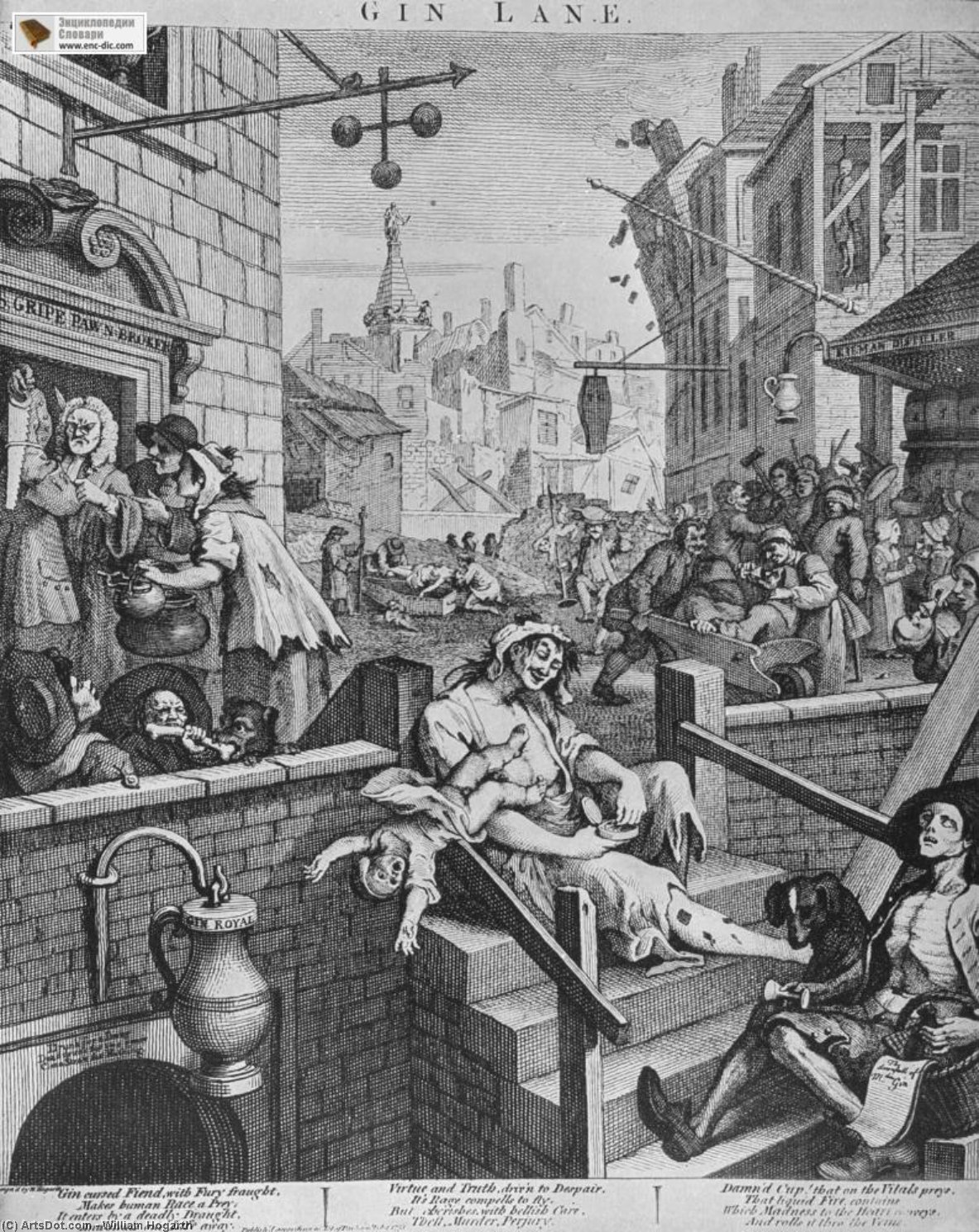
      Gin Lane (1750) by William Hogarth
      3

      Gin Lane

      1750 · Engraving

      In the heart of 18th-century London, amidst the swirling fog and the growing shadows of social upheaval, William Hogarth captured a moment of profound human tragedy that continues to haunt the viewer centuries later. His masterpiece, Gin Lane, is far more than a mere engraving; it is a visceral, breathing chronicle of a city in the throes of moral and physical decay. Completed in 1751, this work serves as a…

      The Marriage Contract (1745) by William Hogarth
      4

      The Marriage Contract

      1745 · Acrylic On Canvas

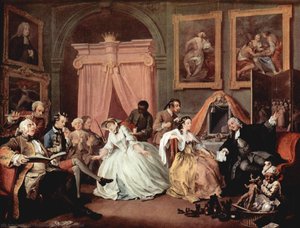
      A Window Into Georgian Society In the heart of 1745, William Hogarth captured more than a mere domestic arrangement; he froze a pivotal moment of social negotiation in "The Marriage Contract." This meticulously crafted tableau invites the viewer into a room thick with the palpable anxieties and lofty aspirations of Georgian England. As we gaze upon the central table where a man proposes to his prospective bride, we are not…

      O Banquete (1755) by William Hogarth
      5

      O Banquete

      1755 · Óleo sobre tela · Sir John Soane's Museum, Londres

      Uma Cena Festiva da Vida no Século XVIII: Desvendando "O Banquete" de William Hogarth (1755) O Banquete, de William Hogarth, pintado em 1755, é uma pintura a óleo vibrante e densamente povoada que oferece um vislumbre fascinante dos costumes sociais da Inglaterra Georgiana. Com dimensões de 101 x 127 cm, esta obra de grande escala não é meramente a representação de um banquete; trata-se de um comentário cuidadosamente construído sobre…

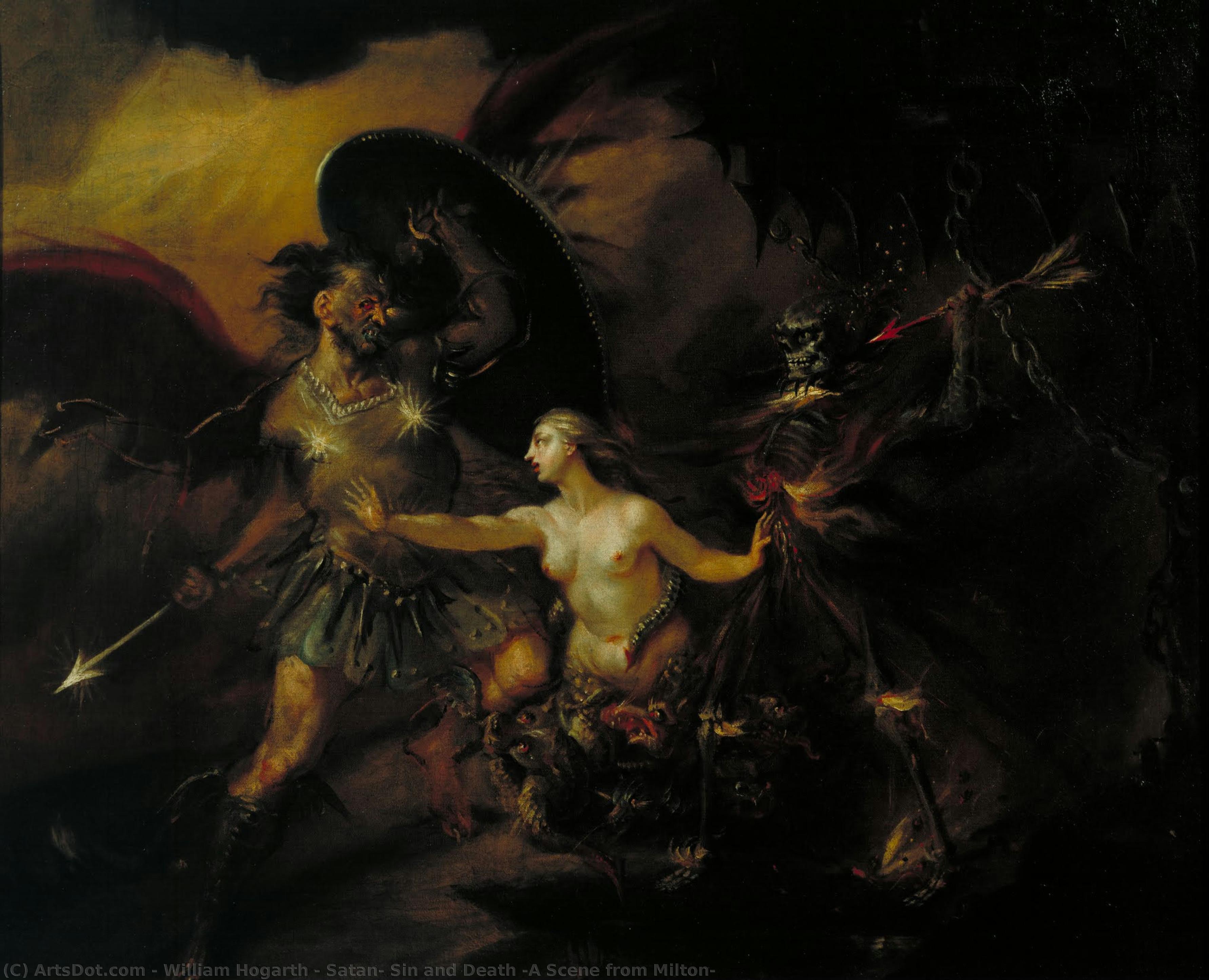
      Satã, o Pecado e a Morte (Uma Cena de Milton (1735) by William Hogarth
      6

      Satã, o Pecado e a Morte (Uma Cena de Milton

      1735 · Óleo sobre tela · Tate Britain, Londres

      A obra "Satan, Sin, and Death", pintada por William Hogarth em 1735, é muito mais do que uma mera ilustração do poema épico de John Milton, Paraíso Perdido; é uma alegoria moral meticulosamente elaborada que mergulha o espectador em um mundo de tentação, consequência e conflito eterno. Este óleo sobre tela, atualmente residente na Tate Britain, em Londres, mede 74 x 61 cm e oferece um vislumbre incrivelmente íntimo da…

      The Painter and his Pug (1745) by William Hogarth
      7

      The Painter and his Pug

      1745 · Oil On Canvas · Tate Gallery, Londres

      A Portrait of Intimacy: William Hogarth’s ‘The Painter and his Pug’ Subject & Composition: This captivating 1745 portrait by William Hogarth offers a charmingly informal glimpse into the artist's personal life. It depicts Hogarth himself, seated and gazing directly at the viewer, accompanied by his beloved pug, Trump. The composition is remarkably balanced; Hogarth occupies the central space while Trump rests comfortably to his right, creating an intimate and relaxed…

      O Suicídio da Condessa by William Hogarth
      8

      O Suicídio da Condessa

      Óleo sobre tela

      Uma Visão Sobre o Declínio Social na Inglaterra do Século XVIII “A Suicídio da Condessa”, obra maestra de William Hogarth (1697–1764), é um retrato inquietante e carregado de significado que captura a essência das preocupações sociais da Inglaterra iluminista. Criada entre 1743 e 1745, esta pintura representa o ponto culminante de uma narrativa sobre as consequências destrutivas dos casamentos motivados apenas pelo interesse financeiro, oferecendo uma crítica mordaz à moralidade…

      The Four Times of Day: Night (1738) by William Hogarth
      9

      The Four Times of Day: Night

      1738 · Acrylic On Canvas · Cleveland Museum of Art, Cleveland

      William Hogarth's "The Four Times of Day: Night," painted in 1738, isn’t merely a depiction of a London street scene; it’s a meticulously crafted window into the social and moral landscape of eighteenth-century England. This remarkable work, now immortalized through WahooArt’s hand-painted reproductions, captures a moment of revelry – or perhaps reckless abandon – with an unparalleled level of detail and satirical observation that defines Hogarth's unique artistic legacy. The…

      A Harlot's Progress: Quarrels with her Jewish Protector (1743) by William Hogarth
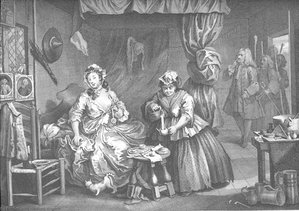
      10

      A Harlot's Progress: Quarrels with her Jewish Protector

      1743 · Oil On Canvas · Ascott House, Leighton Buzzard

      The room holds a sudden, sharp noise. A tea-table tilts, porcelain clatters, and the heavy weight of an argument settles over the fine fabrics. Mary, known as Moll Hackabout, moves with a violent intent, her arm a decisive line against the opulent interior. She kicks at the furniture to draw eyes away from the doorway, where a lover slips quietly into the shadows. A black serving boy stands near, a…

      William Hogarth: canvases 11 to 100 of the ranking

      Autorretrato (1757) by William Hogarth
      #11

      Autorretrato

      1757 · National Portrait Gallery

      O Autorretrato de William Hogarth, pintado em 1757, oferece uma janela cativante para a vida e a prática artística de um dos mais significativos artistas da Grã-Bretanha. Esta…

      Bring this light home →
      Soliciting Votes (1754) by William Hogarth
      #12

      Soliciting Votes

      1754 · Sir John Soane's Museum

      William Hogarth's "Soliciting Votes," completed in 1754, stands as a masterful distillation of Enlightenment satire and a poignant reflection on the burgeoning political landscape of London. More than…

      Bring this light home →
      The heir (1735) by William Hogarth
      #13

      The heir

      1735 · Sir John Soane's Museum

      William Hogarth’s “The Heir,” completed in 1735, is more than simply a depiction of a domestic scene; it’s a meticulously crafted social commentary rendered with the precision and…

      Bring this light home →
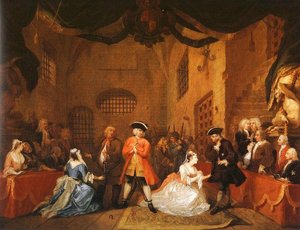
      A Scene from The Beggar's Opera (1729) by William Hogarth
      #14

      A Scene from The Beggar's Opera

      1729 · National Gallery of Art

      William Hogarth's "A Scene from The Beggar’s Opera," painted in 1729, isn’t merely a depiction of a theatrical performance; it’s a meticulously crafted snapshot of 18th-century London life…

      Have it painted by hand →
      South Sea Scheme by William Hogarth
      #15

      South Sea Scheme

      In the swirling currents of 1721 London, amidst a fever of unbridled greed and financial delirium, William Hogarth unleashed a visual critique that would forever etch itself into…

      Order this canvas →
      Casamento à la Mode (1743) by William Hogarth
      #16

      Casamento à la Mode

      1743 · National Gallery

      Na grandiosa tapeçaria da arte britânica do século XVIII, poucas obras possuem a sagacidade mordaz e a profundidade narrativa de Marriage à la Mode, de William Hogarth. Concluída…

      Bring this light home →
      Hudibras by William Hogarth
      #19

      Hudibras

      William Hogarth's *Hudibras*, specifically the frontispiece and related engravings from Samuel Butler’s satirical poem, offers far more than a simple illustration; it’s a meticulously crafted social commentary frozen…

      Have it painted by hand →
      Visita ao Charlatão Médico (1745) by William Hogarth
      #20

      Visita ao Charlatão Médico

      1745

      No mundo vibrante e, ao mesmo tempo, mordaz da Londres do século XVIII, “Visita ao Charlatão Médico”, de William Hogarth, emerge como uma profunda performance teatral capturada em…

      Order this canvas →
      The Times, plate 2 (1763) by William Hogarth
      #22

      The Times, plate 2

      1763

      The Pulse of an Era: London Unveiled In the year 1763, as the gears of the Industrial Revolution began to turn and the streets of London swelled with…

      Order this canvas →
      Autorretrato (1745) by William Hogarth
      #24

      Autorretrato

      1745

      O autorretrato de 1745 de William Hogarth não é meramente uma semelhança; é uma janela meticulosamente elaborada para a mente de um dos observadores mais astutos e satíricos…

      Order this canvas →
      Miss Mary Edwards (1742) by William Hogarth
      #25

      Miss Mary Edwards

      1742 · The Frick Collection

      A Portrait of Privilege and Virtue: Examining William Hogarth’s Miss Mary Edwards William Hogarth's "Miss Mary Edwards," completed in 1742, stands as an emblem of Enlightenment England—a meticulously…

      Have it painted by hand →
      The Battle of the Pictures (1743) by William Hogarth
      #26

      The Battle of the Pictures

      1743

      William Hogarth's "The Battle of the Pictures," completed in 1743, isn’t merely an engraving; it’s a vibrant, chaotic microcosm of 18th-century London’s art world – a scene brimming…

      Order this canvas →
      Suicide of the Countess (1745) by William Hogarth
      #27

      Suicide of the Countess

      1745

      Georgian England was gripped by a fervor for moral reform following the Enlightenment. Writers like Jonathan Swift satirized aristocratic excesses and championed reason over superstition, influencing artists like…

      Bring this light home →
      Canvassing for Votes by William Hogarth
      #28

      Canvassing for Votes

      William Hogarth’s “Canvassing for Votes” isn't merely a painting; it’s a meticulously crafted social commentary, a vibrant snapshot of corruption and manipulation embedded within the seemingly convivial atmosphere…

      Have it painted by hand →
      The Ball (1745) by William Hogarth
      #30

      The Ball

      1745

      To stand before William Hogarth's depiction of "The Ball" is to be instantly transported across the threshold of time, directly into the glittering heart of an 18th-century London…

      Order this canvas →
      The Bench (1758) by William Hogarth
      #31

      The Bench

      1758

      A Gathering of Characters: Decoding Hogarth’s ‘The Bench’ Subject & Narrative: William Hogarth's 1758 engraving, ‘The Bench’, presents a tightly composed group of six men, each meticulously rendered…

      Order this canvas →
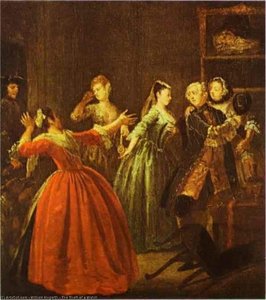
      The Denunciation (1729) by William Hogarth
      #33

      The Denunciation

      1729

      A Scene of Accusation: Unveiling Hogarth’s ‘The Denunciation’ William Hogarth's *The Denunciation*, painted in 1729, is far more than a depiction of a social gathering; it’s a meticulously…

      Bring this light home →
      Self-Portrait by William Hogarth
      #36

      Self-Portrait

      National Gallery of Ireland

      A middle-aged man gazes directly from an oval vignette, his expression calm and steady. He wears a soft red cap and a patterned blue robe, the heavy silk…

      Have it painted by hand →
      The triumph of Representatives (1755) by William Hogarth
      #38

      The triumph of Representatives

      1755 · Sir John Soane's Museum

      A Window Into Georgian Society: Examining William Hogarth’s “The Triumph of Representatives” William Hogarth's "The Triumph of Representatives," completed in 1755, isn’t merely a depiction of an event;…

      Bring this light home →
      Second stage of cruelty (1751) by William Hogarth
      #42

      Second stage of cruelty

      1751

      This powerful engraving, created by William Hogarth in 1751, offers a chilling glimpse into the realities of 18th-century England. Far from idealized landscapes or flattering portraits, this work…

      Have it painted by hand →
      The Reward of Cruelty (1751) by William Hogarth
      #45

      The Reward of Cruelty

      1751

      The Reward of Cruelty William Hogarth’s “The Reward of Cruelty,” published in 1751 as part of his monumental *Four Stages of Cruelty*, stands as a chilling indictment of…

      Bring this light home →
      Simão Lord Lovat by William Hogarth
      #46

      Simão Lord Lovat

      Simon Lord Lovat: A Portrait of Rebellion and Dignity William Hogarth’s “Simon Lord Lovat” transcends mere visual representation; it's a meticulously crafted snapshot of an era defined by…

      Order this canvas →
      Scholars at a Lecture by William Hogarth
      #48

      Scholars at a Lecture

      A Window Into Enlightenment: Examining William Hogarth’s “Scholars at a Lecture” The etching by William Hogarth, "Scholars at a Lecture," transcends mere depiction; it's an exquisitely crafted snapshot…

      Have it painted by hand →
      Sarah Malcolm in Prison by William Hogarth
      #50

      Sarah Malcolm in Prison

      Sarah Malcolm in Prison: A Portrait of Crime and Vulnerability William Hogarth’s *Sarah Malcolm in Prison* stands as a chilling testament to the moral anxieties of Georgian England,…

      Bring this light home →
      Gin Lane (1751) by William Hogarth
      #52

      Gin Lane

      1751

      In the heart of 18th-century London, amidst the swirling fog and the growing shadows of social upheaval, William Hogarth captured a moment of profound human tragedy that continues…

      Have it painted by hand →
      The murder of the count (1745) by William Hogarth
      #53

      The murder of the count

      1745

      William Hogarth’s “The Murder of the Count,” completed in 1745, is not merely a depiction of violence; it’s a meticulously constructed moral fable, a searing indictment of societal…

      Bring this light home →
      The Enraged Musician (1741) by William Hogarth
      #54

      The Enraged Musician

      1741

      In the heart of 1741 London, amidst the burgeoning energy of the Enlightenment, William Hogarth captured a moment of pure, unadulterated sensory overload. The Enraged Musician is not…

      Bring this light home →
      The Bathos by William Hogarth
      #55

      The Bathos

      William Hogarth's *The Bathos*, a powerfully unsettling engraving created towards the end of his life, is not merely an artwork; it’s a visual lament—a darkly satirical reckoning with…

      Bring this light home →
      The Beggar's Opera (1729) by William Hogarth
      #59

      The Beggar's Opera

      1729 · Yale Center for British Art

      A Window Into Georgian Society: Exploring Hogarth's "The Beggar's Opera" William Hogarth’s “The Beggar’s Opera,” completed in 1729, transcends mere visual representation; it serves as a meticulously crafted…

      Order this canvas →
      Lame theater by William Hogarth
      #62

      Lame theater

      William Hogarth’s “Lame Theater,” completed around 1730, stands as a cornerstone of English Rococo satire and a remarkably astute observation of the social landscape of Georgian London. More…

      Order this canvas →
      Feira de Southwark by William Hogarth
      #63

      Feira de Southwark

      Uma Janela para o Século XVIII: A Pintura de William Hogarth Sobre o Mercado de Southwark Assunto e Narrativa: O Mercado de Southwark (c. 1733) é um panorama…

      Order this canvas →
      Self Portrait by William Hogarth
      #64

      Self Portrait

      In the quiet intimacy of his studio, William Hogarth presents us with more than just a likeness; he offers a profound window into the very essence of Enlightenment…

      Bring this light home →
      Tyburn Large by William Hogarth
      #72

      Tyburn Large

      “Tyburn Large,” painted by William Hogarth in 1746, isn't merely a depiction of an execution; it’s a meticulously rendered snapshot of 18th-century London life, brimming with social commentary…

      Order this canvas →
      The Mackinen Children (1747) by William Hogarth
      #77

      The Mackinen Children

      1747 · National Gallery of Ireland

      “The Mackinen Children,” painted by William Hogarth in 1747, stands as a cornerstone of British Rococo art and exemplifies the artist’s masterful command of classical principles. More than…

      Order this canvas →
      Engraving of John Wilkes by William Hogarth
      #78

      Engraving of John Wilkes

      A Portrait of Moral Decay: Examining Hogarth’s Engraving of John Wilkes William Hogarth's "Engraving of John Wilkes" stands as a cornerstone of 18th-century British art and satire, capturing…

      Bring this light home →
      Richard Mouteney (1746) by William Hogarth
      #83

      Richard Mouteney

      1746 · Bavarian State Painting Collections

      The Weight of Presence A man sits in the center of a dark void. He wears a heavy black robe that swallows the light, its folds thick and…

      Order this canvas →
      Times of the Day: Morning by William Hogarth
      #86

      Times of the Day: Morning

      William Hogarth’s “Times of the Day – Morning,” a cornerstone of his celebrated series, isn’t merely a depiction of a London street; it’s a meticulously crafted observation of…

      Order this canvas →
      Satire on False Perspective by William Hogarth
      #87

      Satire on False Perspective

      Satire on False Perspective William Hogarth’s *Satire on False Perspective*, created in 1754 for Joshua Kirby's pamphlet *Method of Perspective*, stands as a masterful demonstration of artistic critique…

      Order this canvas →
      Análise da Beleza by William Hogarth
      #89

      Análise da Beleza

      Analisis da Beleza William Hogarth, nascido em Londres em 1697, foi muito mais que um artista; ele era um historiador visual, um observador atento da natureza humana e…

      Order this canvas →
      Thomas Pellett, M.D. (1737) by William Hogarth
      #93

      Thomas Pellett, M.D.

      1737

      An elderly gentleman, Thomas Pellett, M.D., occupies the center of this 1737 oil portrait. The composition utilizes a dark, oval vignette to focus attention on the subject's face…

      Bring this light home →
      Self-Portrait (1735) by William Hogarth
      #95

      Self-Portrait

      1735 · Yale Center for British Art

      In this 1735 self-portrait, we encounter the artist not as a distant figure, but in an intimate, eye-level encounter. The composition focuses on a bust-length view of a…

      Order this canvas →
      The Lottery by William Hogarth
      #96

      The Lottery

      The image is a black and white painting of a theater scene featuring a group of people gathered around a stage. The main focus of the painting is…

      Have it painted by hand →
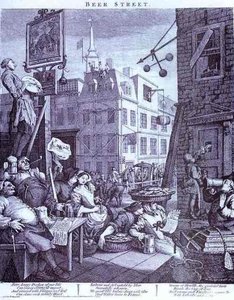
      Beer Street (1751) by William Hogarth
      #99

      Beer Street

      1751

      Beer Street, an iconic engraving created by William Hogarth in 1751, is a masterpiece that showcases the artist's ability to blend social commentary with artistic finesse. This work…

      Bring this light home →
      Rake's Progress' The Gaming House (1735) by William Hogarth
      #100

      Rake's Progress' The Gaming House

      1735 · Sir John Soane's Museum

      A Window into Georgian Society: Examining Hogarth’s “Rake’s Progress” William Hogarth's "Rake's Progress," completed in 1735, stands as a cornerstone of British Baroque art and a searing indictment…

      Order this canvas →

      William Hogarth's canvases, period by period

      What William Hogarth painted most

      The four subjects that return most often on these canvases, each with its best-loved example.

      Where William Hogarth's canvases hang

      The 8 museums that hold the most of the paintings on this page.

      Museum City Works by William Hogarth Paintings from this list
      Sir John Soane's Museum, LondresSir John Soane's Museum Londres 14 O Banquete, Soliciting Votes, The heir
      Yale Center for British Art, New HavenYale Center for British Art New Haven 11 The Beggar's Opera, The Family of John, 2nd Duke of Montagu and an attendant, William Augustus, Duke of Cumberland
      National Gallery of Ireland, DublinNational Gallery of Ireland Dublin 7 Self-Portrait, The Mackinen Children
      Upton House, BanburyUpton House Banbury 3 The Four Times of Day: Night, Gerard Anne Edwards Hamilton (1732–1773) in his Cradle
      Ascott House, Leighton BuzzardAscott House Leighton Buzzard 2 A Harlot's Progress: Quarrels with her Jewish Protector, An Unknown Lady, possibly Miss Woodley, later Mrs Henry Vaughan (not Mrs Jane Hogarth)
      National Gallery of Art, WashingtonNational Gallery of Art Washington 2 A Scene from The Beggar's Opera, A Scene from the Beggar's Opera
      National Gallery, LondresNational Gallery Londres 9 Casamento à la Mode
      Fitzwilliam MuseumFitzwilliam Museum 9 A prisoner of the Fleet being examined before a committee of the House of Commons

      William Hogarth's most famous canvas, decade after decade

      1. 1720s
        A Scene from The Beggar's Opera (1729) by William Hogarth
        Canvas 14 of 100

        A Scene from The Beggar's Opera

        Age 23 – 32 · National Gallery of Art

        William Hogarth's "A Scene from The Beggar’s Opera," painted in 1729, isn’t merely a depiction of a theatrical performance; it’s a meticulously crafted snapshot of 18th-century London life…

      2. 1730s
        Satã, o Pecado e a Morte (Uma Cena de Milton (1735) by William Hogarth
        6 of 100

        Satã, o Pecado e a Morte (Uma Cena de Milton

        Age 33 – 42 · Tate Britain

        A obra "Satan, Sin, and Death", pintada por William Hogarth em 1735, é muito mais do que uma mera ilustração do poema épico de John Milton, Paraíso Perdido;…

      3. 1740s
        The Marriage Contract (1745) by William Hogarth
        Ranked 4 of 100

        The Marriage Contract

        Age 43 – 52

        A Window Into Georgian Society In the heart of 1745, William Hogarth captured more than a mere domestic arrangement; he froze a pivotal moment of social negotiation in…

      4. 1750s
        Gin Lane (1750) by William Hogarth
        Canvas 3 of 100

        Gin Lane

        Age 53 – 62

        In the heart of 18th-century London, amidst the swirling fog and the growing shadows of social upheaval, William Hogarth captured a moment of profound human tragedy that continues…

      5. 1760s
        The Times, plate 2 (1763) by William Hogarth
        22 of 100

        The Times, plate 2

        Age 63 – 67

        The Pulse of an Era: London Unveiled In the year 1763, as the gears of the Industrial Revolution began to turn and the streets of London swelled with…

      William Hogarth's canvases, question by question

      Which canvas is William Hogarth most remembered for?Read the answer

      Placa uma, de A Rake’s Progress, followed by Plate seis, de A Rake's Progress and Gin Lane (1750).

      What are William Hogarth's ten most famous canvases?Read the answer

      Placa uma, de A Rake’s Progress, Plate seis, de A Rake's Progress, Gin Lane, The Marriage Contract, O Banquete, Satã, o Pecado e a Morte (Uma Cena de Milton, The Painter and his Pug, O Suicídio da Condessa, The Four Times of Day: Night and A Harlot's Progress: Quarrels with her Jewish Protector. Each canvas in the ranking above comes with its year and its museum.

      How many paintings did William Hogarth create?Read the answer

      307 works by William Hogarth are in our catalogue, dated 1721 to 1763.

      Where do William Hogarth's most famous canvases hang today?Read the answer

      Mostly in Sir John Soane's Museum (Londres), Yale Center for British Art (New Haven) and National Gallery of Ireland (Dublin); the list above names each museum and its canvases.

      When did William Hogarth paint the most famous canvases?Read the answer

      In 1740s, which gave 18 of the 100 works on this page, The Marriage Contract among them.

      Which famous William Hogarth canvas came first, and which came last?Read the answer

      The earliest canvas here is Emblematical print of the South Sea Scheme (1721); the latest is The Times, plate 2 (1763).

      Which subjects did William Hogarth paint most?Read the answer

      Social commentary (28), 18th century (26) and Satire (26), across the 100 works on this page.

      Which medium appears most in William Hogarth's paintings?Read the answer

      Acrylic On Canvas, used in 29 of the 100 works on this page.

      Which paintings by William Hogarth are held by the Sir John Soane's Museum?Read the answer

      The Sir John Soane's Museum, Londres holds 5 of the works on this page, among them O Banquete, Soliciting Votes and The heir.

      Where can I buy a reproduction of a William Hogarth painting?Read the answer

      Yes. Every painting on this page can be ordered from its own page as an oil reproduction painted by hand, or as a fine art print, in the size you choose.

      Meet the painter: William Hogarth

      A Vida de William Hogarth

      Londres, 1697. O ar em Bartholomew Close é denso, preenchido pelos sons de uma metrópole em constante crescimento. É neste cenário que William Hogarth entra em um mundo de estabilidade precária. Seu pai, Richard Hogarth, luta para garantir o sustento como mestre de escola de latim e autor de livros didáticos. As finanças da família oscilam drasticamente; em certo momento, Richard enfrenta a dura realidade do encarceramento por dívidas na Fleet Prison. Essa exposição precoce à instabilidade da vida urbana deixa uma marca indelével. William Hogarth cresce observando o abismo entre as classes sociais, uma perspectiva que acabará por definir sua carreira como pintor, gravador, satirista, cartunista e escritor.

      O caminho deste jovem não é pavimentado por heranças ou patronatos facilitados. Em vez disso, é uma vida moldada pela aspereza da cidade. Ele percorre as ruas de Londres, observando as figuras que povoam as cafeterias e as feiras. Sua mãe, Anne Gibbons, oferece o ancoradouro doméstico para uma existência frequentemente marcada pelas flutuações econômicas da época. Quando ele finalmente começa a deixar sua marca no mundo, já é um homem de múltiplas disciplinas, utilizando a tinta e o nanquim para dissecar a própria sociedade que o criou.

      • A Harlot's Progress (1731/1732)
      • A Rake's Progress (1735)
      • Marriage A-la-Mode (1743–1745)

      Infância, Família e Formação

      Londres, 1697. Filho de Richard Hogarth, um mestre de escola de latim e escritor ocasional, William cresce em meio às fortunas oscilantes de um homem que luta para manter sua subsistência na metrópole. A instabilidade do ambiente doméstico toma um rumo drástico quando Richard é enviado para a Fleet Prison, onde passará cinco anos devido a dívidas não pagas. Este período de privações, marcado pela precariedade financeira da família, deixa uma impressão indelével no jovem observador da vida urbana.

      Por volta de 1714, o foco de sua vida volta-se para os detalhes técnicos do ofício. Hogarth inicia um aprendizado com Ellis Gamble, um gravador de ouro e prata que atuava em Leicester Fields. É nesse período que ele aprende a precisão exigida para a criação de cartões comerciais e produtos similares, desenvolvendo um domínio fundamental sobre a placa de cobre. Essa base técnica sólida fornecerá as ferramentas necessárias para uma carreira que, eventualmente, transcenderá a mera reprodução comercial.

      Sua trajetória se transforma à medida que ele avança para o estudo artístico formal. Em 1720, ele se matricula na St Martin's Lane Academy. Sua formação expande-se ainda mais sob a tutela de Sir James Thornhill, o pintor oficial de George I. Sob a orientação de Thornhill, o foco de Hogarth desloca-se da precisão em pequena escala da gravura para as complexidades mais amplas da pintura e da composição, movendo-se do trabalho meticuloso do artesão em direção à escala grandiosa das belas artes.

      Técnica e Estilo Artístico

      William Hogarth transita com maestria entre a precisão do retrato realista e a energia rápida e sequencial de séries que antecipam a estética das histórias em quadrinhos. Ele não se limita a pintar; ele constrói narrativas vivas. Essa abordagem atinge o seu ápice no desenvolvimento dos seus "temas morais modernos", um método no qual utiliza a narrativa visual para criticar o tecido social de sua época. Para ele, tanto a tela quanto a placa de cobre tornam-se palcos para dramas em constante desenrolar, utilizando frequentemente uma mistura de humor e sátira mordaz para enfatizar suas críticas sociais.

      A base técnica de sua obra reside no seu domínio absoluto da gravura. William Hogarth compreendia o peso de uma linha e o poder de uma gravura para alcançar o grande público. Em 1753, ele transcende o campo visual para o teórico com a publicação de sua obra Analysis of Beauty. Neste tratado, ele vai além da mera observação para codificar suas teorias estéticas, enfatizando especificamente a importância da "linha serpentina" como um princípio fundamental de beleza e movimento.

      • A Harlot's Progress (1731/1732)
      • A Rake's Progress (1735)
      • Marriage A-la-Mode (1743–1745)

      Obras-Chave e Séries

      O poder narrativo de sua obra atinge o seu ápice nos chamados "temas morais modernos", uma série de pinturas concebidas para funcionar como verdadeiros romances visuais. Em 1731/1732, A Harlot's Progress traça a trágica queda de uma jovem que chega a Londres, apenas para sucumbir às tentações da cidade. Esse padrão de decadência social continua em 1735 com A Rake's Progress, que acompanha Tom Rakewell enquanto ele esbanja sua herança em jogos de azar e libertinagem. Estas obras não se limitam a retratar cenas; elas mapeiam as consequências da corrupção moral através de detalhes meticulosos e elementos simbólicos profundos.

      O foco desloca-se da ruína individual para o choque entre as classes sociais na série Marriage A-la-Mode, produzida entre 1743 e 1745. Aqui, o artista ironiza os resultados desastrosos dos casamentos arranjados e a busca desenfreada por status. A tensão entre os interiores opulentos dos ricos e as realidades degradantes dos pobres torna-se um tema recorrente. Mesmo em seus anos tardios, o comentário permanece afiado. Em 1748, O the Roast Beef of Old England aborda a identidade nacional, enquanto a obra de 1750, The March of the Guards to Finchley, apresenta uma visão caótica e barulhenta da vida militar, contrastando as fileiras disciplinadas ao longe com o comportamento escandaloso dos soldados em primeiro plano.

      • A Harlot's Progress (1731/1732)
      • A Rake's Progress (1735)
      • Marriage A-la-Mode (1743–1745)
      • O the Roast Beef of Old England (1748)
      • The March of the Guards to Finchley (1750)

      Legado e Impacto Duradouro

      O século XVIII testemunhou o surgimento de uma escola de arte distintamente britânica, um movimento impulsionado pela recusa de William Hogarth em depender de modelos continentais. Ele transcendeu a mera imitação de estilos estrangeiros para estabelecer uma linguagem visual enraizada nas próprias ruas de Londres. Essa mudança foi profunda; ele tornou-se o artista inglês mais importante de sua geração. Sua influência é tão onipresente que o termo "hogarthiano" entrou no léxico para descrever seu estilo particular de observação satírica.

      A realidade comercial de seu sucesso trouxe consigo um novo tipo de conflito. À medida que suas gravuras ganhavam uma popularidade massiva, elas também atraíam uma onda de reproduções não autorizadas. O plágio tornou-se uma ameaça constante ao seu sustento. Essa tensão forçou um confronto legal que alterou permanentemente o panorama da propriedade intelectual. Ele atuou ativamente em prol da Lei de Direitos Autorais de 1735, um movimento que assegurou os direitos dos criadores contra aqueles que buscavam lucrar com seu trabalho sem permissão.

      Seu método de narrativa por meio de imagens sequenciais criou um modelo para as mídias do futuro. Ele atua como um precursor direto da caricatura política moderna e da história em quadrinhos. Ao utilizar uma série de imagens para dissecar o comportamento social, William Hogarth forneceu um molde para narrativas visuais que dependem da leitura, e não apenas do olhar. Sua influência estende-se das gravuras satíricas do século XVIII até os próprios fundamentos da cultura popular contemporânea.

      Onde Ver as Obras Hoje

      Os vestígios físicos das críticas sociais de William Hogarth permanecem espalhados por grandes instituições. Em Londres, a National Gallery abriga peças da série Marriage à la Mode, onde a narrativa visual da decadência social é preservada. Próxima dali, a Tate Britain detém Satan, Sin and Death (A Scene from Milton, uma obra que destaca sua habilidade de traduzir temas literários complexos para a forma visual. O Foundling Museum também mantém sua presença na cidade, guardando The March of the Guards to Finchley, uma peça que captura a energia caótica da vida militar do século XVIII.

      O alcance de seu trabalho estende-se para além do Reino Unido. Na cidade de Nova York, a Frick Collection preserva Miss Mary Edwards, um retrato que reflete sua destreza em capturar o caráter individual. Estas coleções oferecem uma oportunidade de encontrar os detalhes específicos de suas gravuras e pinturas em seus contextos originais. Os visitantes podem perceber sua influência na maneira como estas instituições gerem a tensão entre a arte erudita e a sátira popular.

      All 307 works by William Hogarth →