


 Previzualizare
 Trimite prin felicitare
 Distribuie
 Detalii despre lucrare
 Ghid
Ghid

 Descarcă imaginea
 Produse similare
 Radiografie
 Galerie foto
 Statistici
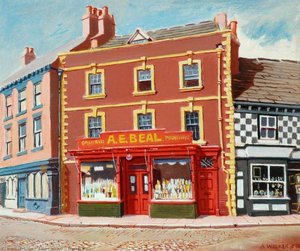
The White Bridge
 24.0 x 30.0 cm
 The Mercer Art Gallery
Explore the evocative landscapes & narratives of Albert Walker (1900-1984), a TopImpressionists artist known for his American scenes, including Knaresborough & Abbey Road, capturing rural life and historical moments.
 Vezi mai mult
Lucrarea de artă afișată pe această pagină este protejată de legile privind drepturile de autor, ceea ce înseamnă că nu putem crea sau vinde în mod legal o reproducere identică. Această protecție este garantată prin acorduri internaționale, precum Convenția de la Berna și de legile naționale, inclusiv cele prevăzute de Legea dreptului de autor din S.U.A. – Titlul 17. Toate drepturile rezervate. Orice reproducere neautorizată este interzisă.
Ca alternativă respectuoasă și legală, oferim tablouri pictate manual, personalizate, inspirate de original. Artistii noștri experimentați și profesioniști studiază cu atenție stilul, starea de spirit și esența artistică a originalului pentru a crea o piesă nouă și unică, care evocă aceeași emoție – rămânând, în același timp, o creație originală în sine.
Această metodă respectă pe deplin reglementările privind drepturile de autor, deoarece nu implică copierea sau duplicarea operei protejate. În schimb, este o reinterpretare creativă – o pictură nouă, influențată de original, dar care nu este identică cu acesta.
Reproducere pictată manual în ulei
Pictură în ulei pe pânză, pictată manual de artiștii noștri la dimensiunea și ramele dorite de dumneavoastră, pe comandă. ( Comută pe versiunea Print Comută pe Imagine Digitală)




































Standard
personalizat
CM
INCH
Alegeți dintre dimensiunile noastre prestabilite, care respectă proporțiile originale ale operei de artă.
Loading sizes...

lățime
înălțime
Introduceți lățimea și înălțimea necesare pentru a se potrivi ramei sau peretelui dumneavoastră. Această lucrare este pictată manual, așa că, pentru o dimensiune cu o formă diferită, artistul poate picta puțin mai mult în jurul imaginii sau poate tăia puțin din margini — dumneavoastră decideți. Vă vom trimite o simulare digitală pentru aprobare înainte de a începe pictarea. Imaginea afișată pe această pagină nu reprezintă rezultatul real — doar simularea este reprezentativă.
Exemple de elemente ce pot fi personalizate: Înlocuiți fața cu fotografia clientului; Adăugați un animal de companie (de exemplu, înlocuiți pisica cu un câine); Includeți un mesaj ascuns în fundal; Schimbați peisajul sau elementele din fundal.
După plasarea comenzii, echipa TopImpressionists.com va contacta clientul prin e-mail pentru instrucțiuni și îi va furniza o previzualizare a machetei
După plasarea comenzii, echipa TopImpressionists.com va contacta clientul prin e-mail pentru instrucțiuni și îi va furniza o previzualizare a machetei
Livrare în întreaga lume () în 3-4 săptămâni, în loc de cele 5 săptămâni standard. (25 Octombrie). Fără compromisuri în ceea ce privește calitatea.

Livrare expres gratuită la nivel mondial

Pânză de in de înaltă calitate

Asigurare completă pentru transport

Garanție de rambursare a taxelor vamale

Garanția fidelității culorilor

Politica de retur în 100 de zile (doar pentru defecte de fabricație)

Garanție de rambursare 100%

Ofertă pentru comenzi multiple
 Opțiunea cu sticlă este disponibilă doar pentru dimensiuni de sub 110 cm

The White Bridge
Tehnică de reproducere
Dimensiune reproducere
-


Preț total calculat
lei 1246
Biografie artist
Albert Walker: A Vision of Rural America and Victorian Echoes
Albert Walker (1846–1915), a largely unsung figure of American landscape painting, offers a poignant glimpse into the fading grandeur of rural life in the late 19th century. Born in Springfield, Oregon, during a period of rapid westward expansion and profound social change, Walker’s work transcends mere topographical representation; it's imbued with a melancholic beauty, reflecting both the romantic ideals of the Victorian era and the encroaching realities of industrialization. His canvases capture not just scenes but also a sense of loss—the slow disappearance of traditional ways of life as the frontier gave way to settled communities.
Walker’s artistic journey began with formal training in Boston, where he studied under the esteemed landscape painter Asher B. Durand, a leading figure in the Hudson River School movement. Durand's emphasis on capturing the sublime beauty of nature and depicting it with scientific accuracy profoundly influenced Walker’s early style. However, unlike many of his contemporaries who embraced a purely objective approach, Walker infused his landscapes with a distinctly emotional quality. He wasn’t simply rendering a view; he was conveying a feeling—a sense of quiet contemplation, nostalgia, and perhaps even a subtle sadness for the past.
The Influence of Joseph Mallord William Turner
A crucial element in understanding Walker's artistic vision lies in his deep admiration for the work of Joseph Mallord William Turner. Like Turner, Walker was fascinated by light and atmosphere, employing loose brushstrokes and vibrant color palettes to create a sense of immediacy and movement within his landscapes. Turner’s ability to capture fleeting moments of beauty—the shimmering effects of sunlight on water, the dramatic interplay of clouds and shadows—served as a powerful model for Walker. He particularly admired Turner's use of atmospheric perspective, creating a sense of depth and distance through subtle variations in color and tone.
Furthermore, both artists shared a fascination with the power of nature to evoke profound emotions. Walker’s landscapes are not static representations; they are dynamic scenes teeming with life—rolling hills dotted with grazing cattle, winding rivers reflecting the sky, and towering trees casting long shadows across the fields. This emphasis on movement and vitality reflects Turner's belief that art should capture the essence of experience rather than simply depicting external reality.
Key Themes and Subjects
Walker’s oeuvre is dominated by scenes of rural America—vast prairies, rolling hills, and picturesque waterways. He frequently depicted farms, barns, and livestock, capturing the rhythms of agricultural life with remarkable detail and sensitivity. However, his paintings are not simply celebrations of rural prosperity; they often carry a subtle undercurrent of melancholy, suggesting the vulnerability of these communities to economic hardship and social change. Many of his works depict scenes of solitude—a lone figure standing on a hilltop, a farmhouse silhouetted against the setting sun—evoking a sense of isolation and longing.
A recurring motif in Walker’s paintings is the depiction of water—rivers, lakes, and streams—which he often rendered with shimmering reflections and atmospheric effects. Water served as a powerful symbol for Walker, representing both the life-giving force of nature and the inevitability of change. His paintings of rivers, particularly, are imbued with a sense of fluidity and movement, mirroring the constant flux of time and the transience of human existence.
Major Works and Legacy
Among Walker’s most celebrated works are “Prairie Sunset” (1888), a breathtaking depiction of a vast prairie bathed in the golden light of twilight; “River Crossing” (1892), which captures a group of travelers making their way across a wide river; and “Barn at Dusk” (1895), a poignant portrayal of a solitary farmhouse silhouetted against the fading light. These paintings, along with many others in his collection, demonstrate Walker’s exceptional skill as a landscape painter and his ability to evoke powerful emotions through his art.
Despite not achieving widespread recognition during his lifetime, Albert Walker's work has been increasingly appreciated in recent years for its quiet beauty, emotional depth, and historical significance. He stands as a testament to the enduring power of landscape painting to capture the essence of American life—both its triumphs and its sorrows—and offers a valuable window into a bygone era.
Albert Walker
1900 - 1984
Detalii rapide
- Full Name: Albert Walker
- Nationality: American
- Date Of Birth: 1900
- Date Of Death: 1984
- Place Of Birth: WahooArt
- Notable Artworks:
- Knaresborough
- Abbey Road
- Artistic Movement Or Style: American scenes
- Artists Who Influenced This Artist: ['Toft']
- Artists Or Movements Influenced By This Artist: ['Walker']