


 Trimite
 Distribuie
 Detalii
 Ghidul

 Descarcă
 Produse similare
 Diaporama
 Statistici
Venus and Mars


Marvel at Antonio Canova's 'Venus and Mars,' a neoclassical sculpture celebrating peace & harmony. This iconic marble masterpiece, commissioned by the Prince Regent, embodies love and war’s union.
 Citește mai mult
Antonio Canova (1757-1822) a fost sculptorul neoclasic de renume mondial, renumit pentru statuile sale din marmură, precum "Cupid și Psiché" și "Graciașii". Crea opere pline de eleganță și emoție, inspirate de Grecia și Roma Antică.
Reproducere pictată manual în ulei
Pictură în ulei pe pânză, realizată manual de artiștii noștri la dimensiunea și ramele dorite de dumneavoastră, pe comandă. ( Comută pe versiunea Print Treci la imagine digitală)




































Dimensiuni standard
personalizat
CM
INCH
Alegeți dintre dimensiunile noastre prestabilite, care respectă proporțiile originale ale operei de artă.
Loading sizes...

lățime
înălțime
Puteți introduce propriile dimensiuni pentru a se potrivi unui anumit cadru sau spațiu. Dacă dimensiunea selectată nu corespunde proporțiilor imaginii originale, vom decupa opera de artă sau vom extinde pictura cu elemente suplimentare pictate manual. O simulare digitală vă va fi trimisă pentru aprobare înainte de începerea producției.
Vă rugăm să rețineți că previzualizarea de pe ecran nu reflectă decuparea sau extinderea reală. Doar macheta va arăta cu exactitate compoziția finală.
Deși sunt disponibile dimensiuni personalizate, vă recomandăm să selectați o dimensiune din lista predefinită pentru a păstra proporțiile originale.
Exemple de elemente ce pot fi personalizate: Înlocuiți fața cu fotografia clientului; Adăugați un animal de companie (de exemplu, înlocuiți pisica cu un câine); Includeți un mesaj ascuns în fundal; Schimbați peisajul sau elementele din fundal.
După plasarea comenzii, echipa TopImpressionists.com va contacta clientul prin e-mail pentru instrucțiuni și îi va furniza o previzualizare a machetei
După plasarea comenzii, echipa TopImpressionists.com va contacta clientul prin e-mail pentru instrucțiuni și îi va furniza o previzualizare a machetei
Livrare în întreaga lume () în 3-4 săptămâni, în loc de cele 5 săptămâni standard. (10 Octombrie). Fără compromisuri în ceea ce privește calitatea.

Livrare expres gratuită la nivel mondial

Pânză de in premium

Asigurare completă pentru transport

Garanție de rambursare a taxelor vamale

Garanția fidelității culorilor

Politica de retur în 100 de zile (doar pentru defecte)

Garanție de rambursare 100%

Reducere pentru comenzi multiple
 Opțiunea cu sticlă este disponibilă doar pentru dimensiuni de sub 110 cm

Venus and Mars
Tip de reproducere
Dimensiune reproducere
-


Preț total
lei 1218
A Moment of Divine Union: Antonio Canova’s “Venus and Mars”
Antonio Canova's "Venus and Mars," completed in 1822, is more than just a sculpture; it’s a carefully orchestrated tableau of opposing forces achieving an unexpected harmony. This magnificent marble work, currently residing within the Royal Collection at Buckingham Palace, offers a profound meditation on love, war, peace, and the enduring power of artistic creation. Commissioned by Prince Regent George IV during his visit to London, the sculpture represents a pivotal moment in Canova’s career – a bold departure from the rigid formality of Neoclassicism while firmly rooted in classical ideals.
The subject matter itself is strikingly original for its time. Rather than depicting Venus and Mars engaged in battle or mythological drama, as was common in earlier representations, Canova presents them in an intimate embrace. The goddess Venus, a figure synonymous with beauty, fertility, and love, is rendered with exquisite sensuality – her flesh soft and yielding, her limbs draped in delicate folds of fabric that hint at both vulnerability and power. Her gaze is directed towards Mars, the god of war, creating a dynamic tension within the composition. Mars, traditionally portrayed as a stern and imposing figure, stands powerfully upright, his musculature meticulously sculpted to convey strength and resolve. He holds his spear firmly in one hand, a symbol of his dominion over conflict, yet his posture suggests a willingness to yield to the allure of Venus’s affection.
The Neoclassical Masterstroke: Technique and Form
Canova's mastery of marble carving is immediately evident. The sheer scale of “Venus and Mars” – standing nearly two meters tall – commands attention, while the intricate detail of each muscle fiber, wrinkle, and drapery fold speaks to his unparalleled skill. The sculpture exemplifies the Neoclassical style, drawing inspiration from the idealized forms and balanced compositions of ancient Greek and Roman art. However, Canova transcends mere imitation; he infuses these classical elements with a profound sense of emotion and psychological depth. The smooth, polished surface of the marble creates an illusion of life, capturing the subtle nuances of human expression and movement.
The technique employed is particularly noteworthy. Canova utilized a subtractive method, carefully removing material from a larger block of Carrara marble to reveal the desired form. This process demanded immense patience and precision, allowing him to achieve an astonishing level of realism and anatomical accuracy. The subtle gradations in tone – achieved through meticulous polishing and shading – further enhance the sculpture’s three-dimensionality, creating a captivating interplay of light and shadow.
A Symbol of Reconciliation: Historical Context and Meaning
The creation of “Venus and Mars” coincided with the Congress of Vienna (1814–1815), an international conference that reshaped Europe after Napoleon’s defeat. The sculpture, therefore, can be interpreted as a potent symbol of reconciliation – a visual representation of the end of war and the dawn of a new era of peace. Venus, representing love and harmony, gently embraces Mars, signifying the triumph of diplomacy over conflict. This theme resonated deeply with Prince George IV, who commissioned the work to celebrate the restored stability of Europe.
Furthermore, Canova’s choice of depicting the figures in the nude was a deliberate artistic statement. In classical art, nudity served as a means of celebrating human beauty and virtue, stripping away artificial conventions to reveal the inherent dignity of the human form. By presenting Venus and Mars unclothed, Canova elevates their union to a realm of pure emotion and spiritual significance.
An Enduring Legacy: Emotional Impact and Artistic Significance
“Venus and Mars” continues to captivate viewers with its profound emotional resonance. The sculpture’s inherent tension – the interplay between love and war, beauty and strength – invites contemplation on the complexities of human nature. The figures' embrace is not merely a physical gesture; it represents a merging of opposing forces, suggesting that even the most seemingly irreconcilable elements can find harmony within themselves.
Beyond its historical and symbolic significance, “Venus and Mars” stands as a testament to Canova’s artistic genius. It remains one of his most celebrated works, admired for its technical brilliance, emotional depth, and enduring beauty. Reproductions of this iconic sculpture offer an opportunity to experience the power and grace of Canova's vision in any setting – a timeless reminder of the transformative potential of art.
Întrebări și răspunsuri
Unde pot descărca "Venus and Mars" de Antonio Canova?
Este disponibil un download pentru "Venus and Mars": pagina de Descarcă a operei oferă descărcare imagine digitală de înaltă rezoluție.
Cine este autorul operei "Venus and Mars" și din ce curent face parte?
"Venus and Mars" a fost creat de Antonio Canova în stilul Neoclassical Sculpture. Artistul și mișcultarea identifică tradiția operei.
În ce an a fost creată „Venus and Mars”?
"Venus and Mars" de Antonio Canova a fost creat(ă) în 1816.
Cine a creat "Venus and Mars"?
„Venus and Mars” este atribuit lui Antonio Canova.
Cât de cunoscută este opera „Venus and Mars” de Antonio Canova?
"Venus and Mars" de Antonio Canova are un nivel de popularitate Iconic. Această clasificare reflectă cât de larg este recunoscută lucrarea.
Ce vârstă avea Antonio Canova când a creat "Venus and Mars" în 1816?
Antonio Canova avea 59 ani când a creat "Venus and Mars" în 1816. Vârsta este calculată pe baza anului nașterii artistului, 1757.
"Venus and Mars" de Antonio Canova face parte din domeniul public?
Statusul drepturilor de autor pentru "Venus and Mars" de Antonio Canova: opera este în domeniul public - drepturile de autor au expirat. Acest lucru determină dacă reproducerile imaginii pot fi realizate liber.
Biografie artist
Antonio Canova: O viață în marmură
- Născut: Possagno, Italia (1757)
- Decedat: 1822
Antonio Canova se impune ca o figură monumentală în istoria artei occidentale, fiind recunoscut pe scară largă drept cel mai important sculptor neoclasic al vremii. Măiestria sa în sculptarea marmurii și capacitatea de a insufla formelor clasice o emoție profundă i-au asigurat locul printre cei mai mari artiști din toate timpurapoile. Născut în Possagno, Italia, fiind fiul pietrarului Pietro Canova, primii ani ai vieții lui Canova au fost modelați de mediul artistic vibrant care îl înconjura.
Tinerețe și formare artistică
- Rădăcini familiale: Profesie tatălui său i-a oferit prima expunere la sculptura în piatră, iar bunicul său, Pasino Canova, un sculptor specializat în altare și reliefuri joase, a jucat un rol crucial în cultivarea talentului său.
- Dezvoltare artistică timpurie: Încă înainte de vârsta de zece ani, Canova a demonstrat o îndemânare remarcabilă, creând mici sfinte din marmură care își evidențiau abilitatea înnăscută. A învățat meseria sub îndrumarea lui Giuseppe Bernardi ('Torretto') și Giovanni Ferrari, perfecționându-și ulterior tehnica.
- Studiile academice: Studiile sale la Accademia di Belle Arti din Veneția i-au adus numeroase premii, consolidându-i reputația de tânăr artist promițător. Un atelier situat într-o mănăstire i-a oferit spațiul necesar pentru a-și dezvolta meșteșugul.
- Primele comenzi: Primele sale lucrări, precum statuile lui Orfeu și Eurydice pentru senatorul Giovanni Falier (1775-17\\77), au prezentat un stil Rococo emergent, prefigurând rafinamentul său neoclasic ulterior.
Ascensiunea spre celebritate și stilul neoclasic
- Definirea Neoclassicismului: Opera lui Canova este caracterizată prin formele sale elegante, figurile idealizate și revenirea la principiile estetice ale Greciei și Romei Antice. El a evitat cu măiestrie melodrama artei baroce, reușind în același timp să reziste frigului adesea asociat cu încercările timpurii de reînvie clasică.
- Lucrări cheie și recunoaștere: Sculpturi precum Cupid și Psiche (aprox. 1787-1793), Magdalena Pocăită și
Ercole și Lichas i-au stabilit reputația în întreaga Europă. Opera sa era extrem de râvnită de către familii regale și nobili. - Promovarea reputației: Canova și-a promovat strategia carierei prin publicarea gravurilor lucrărilor sale și prin crearea unor versiuni din marmură ale unor mașteri de gips, asigurând o diseminare largă a artei sale.
- Apreciere internațională: Comenzile primite din întreaga Europă, inclusiv statuia lui Teseu și Minotaurul pentru Girolamo Zulian (ambasadorul venețian la Roma), i-au consolidat statutul de unul dintre cei mai celebrați artiști ai Europei.
Lucrări majore și moștenire
- Sculpturi remarcabile: Dincolo de cele menționate anterior, lucrările semnificative ale lui Canova includ Venus Italica, Musa Polihimnia, Cele Trei Grații Dansând și reprezentarea sa emoționantă a lui Eurydice.
- Comenzi monumentale: A primit comenzi prestigioase pentru mausolee, cel mai notabil fiind elaboratul Mormânt al Papei Clement al XIII-lea din Basilica Sfânta Petru, Roma – o dovadă a abilității sale atât în sculptură, cât și în design arhitectural.
- Gipsoteca Antonio Canova: Muzeul Gipsoteca Antonio Canova găzduie cea mai importantă colecție a lucrărilor sale, oferind o perspectivă inestimabilă asupra procesului său creativ și a evoluției artistice.
- Influența asupra generațiilor următoare: Influența lui Canova s-a extins mult dincolo de timpul său, modelând cursul sculpturii neoclasice și inspirând generații de artiști prin măiestria tehnică și puterea sa expresivă.
Semnificație istorică
- Întruparea Neoclassicismului: Antonio Canova a devenit sinonim cu mișcarea neoclasică, întruchipând idealurile sale de ordine, claritate și revenire la antichitatea clasică.
- Sculptor de curte și diplomat: Poziția sa de sculptor de curte pentru numeroși conducători europeni i-a oferint o influență politică considerabilă și i-a permis să modeleze gusturile artistice ale întregului continent.
- Inovație tehnică: Abilitatea sa fără egal în sculptarea marmurii a împins limitele a ceea ce era considerat posibil, stabilind un nou standard pentru excelența sculpturală.
- O moștenire artistică durabilă: Sculpturile sale continuă să captiveze publicul din întreaga lume, consolidându-i locul ca unul dintre cei mai importanți și influenți artiști din istorie.

Antonio Canova
1757 - 1822 , Italia
Informații rapide
- Artistic Movement Or Style: Neoclassicismo
- Artists Or Movements Influenced By This Artist: ['Neoclassicismo']
- Artists Who Influenced This Artist: ['Barroco italiano']
- Date Of Birth: 1757
- Date Of Death: 1822
- Full Name: Antonio Canova
- Nationality: Italian
- Notable Artworks:
- Cupid Psyche
- Magdalena Penitent
- Hércules et Lique
- Thésée Minotaur
- Place Of Birth (City And Country): Possagno, Italia
Articole conexe
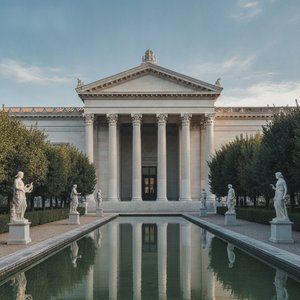
Neoclassicism Unveiled: Discovering the Timeless Elegance and Rational Order of Classical Art
Unveil the timeless elegance of Neoclassicism. Journey through an era defined by reason, order, and the revival of Greco-Roman ideals. Our expert exploration offers a sophisticated look at the transition from Rococo excess to classical precision for the true art enthusiast.

The Timeless Elegance of Academic Classicism: A Journey Through Order, Precision, and the Pursuit of Perfection
Explore the profound beauty of Academic Classicism. Discover how masters used order, precision, and classical ideals to achieve timeless perfection in art history, from Neoclassical portraits to the pursuit of ideal beauty.

The Eternal Beauty of Marble: A Guide to Sculpting Light, Stone, and the Soul of Art History
Explore the sublime artistry of marble sculpture. From Greek antiquity to the masters of light, discover how stone captures the eternal essence of human beauty and emotion through expert craftsmanship and historical mastery.
Explorați opere de artă organizate pe teme, stiluri și caracteristici.
