


 Vezi în context
 Trimite
 Distribuie
 Detalii
 Ghidul

 Descarcă
 Produse similare
 Radiografie
 Diaporama
 Statistici
Canadian Jungle
 Acrylic On Canvas
- WallArt
- Canadian Group of Painters
 1946
1946- 19th Century
 44.0 x 53.0 cm
 McMichael Canadian Art Collection
Arthur Lismer's "Canadian Jungle" (1946) captures the lush beauty of Canada’s wilderness with vibrant colors and masterful detail. A stunning landscape painting by a Group of Seven member.
 Citește mai mult
Arthur Lismer (1885-1969): pictor canadian remarcabil, membru al Grupului de Șapte, cunoscut pentru peisajele sale vibrante și operele de camuflaj dazzle din Primul Război Mondial.
Lucrarea de artă afișată pe această pagină este protejată de legile privind drepturile de autor, ceea ce înseamnă că nu putem crea sau vinde în mod legal o reproducere identică. Această protecție este garantată prin acorduri internaționale, precum Convenția de la Berna și de legile naționale, inclusiv cele prevăzute de Legea dreptului de autor din S.U.A. – Titlul 17. Toate drepturile rezervate. Orice reproducere neautorizată este interzisă.
Această metodă respectă pe deplin reglementările privind drepturile de autor, deoarece nu implică copierea sau duplicarea operei protejate. În schimb, este o reinterpretare creativă – o pictură nouă, influențată de original, dar care nu este identică cu acesta.
Giclée / Imprimare artistică
Printuri giclée sau pe canvas de calitate muzeală, cu proces de producție rapid și opțiuni flexibile de finisare. ( Comandă pictură realizată manual Treci la imagine digitală)




P118B lei10

P118H lei10

P118W lei10

P438Z lei10

P508JH lei12

P508YH lei12

P805H lei10

P805Z lei10

P919BZ lei10

P919G lei10

P919XJ lei10

P959ZH lei10

P968JZ lei12

W106C lei8

W218G lei10

W218JH lei8

W218Y lei10

W307PJ lei10

W316G lei10

W316PJ lei8

W316Y lei10

W398PJ lei8

W4111J lei10

W500HY lei15

W500JH lei15

W692G lei12

W849H lei8

W940BG lei15

W953PJ lei8




Dimensiuni standard
personalizat
CM
INCH
Alegeți dintre dimensiunile noastre prestabilite, care respectă proporțiile originale ale operei de artă.
Loading sizes...

lățime
înălțime
Introduceți lățimea și înălțimea de care aveți nevoie, pentru a se potrivi ramei sau peretelui dumneavoastră. O printare poate fi doar tăiată, niciodată extinsă dincolo de dimensiunea imaginii originale, astfel încât o dimensiune cu o formă diferită va pierde o parte din imagine. Vă trimitem o simulare digitală pentru aprobare înainte de a imprima orice. Imaginea afișată pe această pagină nu prezintă tăierea reală — doar simularea arată acest lucru.
Livrare în întreaga lume () în 2 săptămâni, în loc de cele 4/5 săptămâni standard. (22 Octombrie)

Livrare expres gratuită la nivel mondial

Pânză de in premium

Asigurare completă pentru transport

Garanție de rambursare a taxelor vamale

Garanția fidelității culorilor

Politica de retur în 100 de zile (doar pentru defecte)

Garanție de rambursare 100%

Reducere pentru comenzi multiple
 Opțiunea cu sticlă este disponibilă doar pentru dimensiuni de sub 110 cm

Canadian Jungle
Giclée / Imprimare artistică
Dimensiune reproducere
-


Preț total
lei 319
A Wilderness Captured: Arthur Lismer’s “Canadian Jungle”
Arthur Lismer's "Canadian Jungle," painted in 1946, isn’t merely a depiction of a forest; it’s a vibrant distillation of the Canadian spirit – a potent blend of rugged wilderness and burgeoning national identity. This oil on canvas, measuring 44.8 x 53.7 cm, transports the viewer to a realm where the raw power of nature collides with a nascent sense of artistic self-definition within Canada. Lismer, a pivotal figure in both the Group of Seven and as an educator at NSCAD University, masterfully employed his experience as a photo-engraver – a profession demanding meticulous detail and a keen eye for visual language – to create a landscape brimming with life and imbued with a quiet intensity.
The painting’s style is firmly rooted in the post-impressionist movement, yet distinctly Canadian. Lismer's brushwork is bold and expressive, eschewing photographic realism in favor of capturing the *feeling* of the forest – its density, its light, and its inherent energy. He utilizes a rich palette dominated by deep greens, browns, and ochres, punctuated by flashes of brighter color that draw the eye to specific details within the scene: the dappled sunlight filtering through the canopy, the vibrant hues of wildflowers, and the subtle variations in texture across the bark of ancient trees. Notice how he doesn’t shy away from a slightly rough application of paint; this adds to the sense of immediacy and authenticity, as if the viewer is stepping directly into the heart of the wilderness.
The Roots of Identity: Lismer's Journey and Context
Lismer’s artistic trajectory is itself a fascinating story. Born in Sheffield, England, his early life was shaped by the industrial realities of working-class existence – a stark contrast to the natural beauty he would later dedicate his art to capturing. His apprenticeship in photo-engraving honed his technical skills and instilled within him an appreciation for visual precision, which he then skillfully applied to landscape painting. His move to Canada in 1911 coincided with a crucial period of artistic development, as he sought to establish himself within the burgeoning Canadian art scene. The rise of the Group of Seven, of which Lismer was a founding member, reflected a desire to forge a distinctly Canadian visual language – one that moved beyond European influences and embraced the unique character of the country’s landscapes.
The painting's creation occurred during World War I, a period of profound social and political change in Canada. Lismer’s service as an official war artist, documenting scenes from Halifax harbor, further informed his understanding of the relationship between humanity and nature – particularly the resilience of the natural world amidst conflict. This experience is subtly reflected in “Canadian Jungle,” suggesting a deeper connection to the land and its enduring strength.
Symbolism Within the Scene: Trees as Guardians
The towering trees that dominate "Canadian Jungle" are more than just elements of the landscape; they function as powerful symbols. They represent not only the physical wilderness but also the ancient wisdom and enduring spirit of Canada itself. Their gnarled branches reach towards the sky, suggesting a connection to something larger than themselves – a sense of continuity and rootedness. The dense undergrowth and tangled vines further reinforce this symbolism, creating a feeling of mystery and hinting at hidden depths.
The inclusion of a small stream winding through the forest adds another layer of meaning. Water is often associated with life, renewal, and purification – qualities that are deeply valued in Canadian culture. It also creates a sense of movement and flow within the composition, drawing the viewer’s eye deeper into the heart of the scene.
A Legacy of Light and Landscape
"Canadian Jungle" is a testament to Arthur Lismer's ability to capture the essence of the Canadian wilderness. It’s a painting that invites contemplation, evoking feelings of awe, tranquility, and connection to nature. Reproductions of this artwork offer a remarkable opportunity to bring this evocative landscape into any space, serving as a constant reminder of Canada’s rich natural heritage and Lismer's enduring legacy as one of its most important artists. The vibrant colors and textured brushwork translate beautifully to high-quality reproductions, ensuring that the spirit of “Canadian Jungle” can be enjoyed for generations to come.
Întrebări și răspunsuri
Cum pot vizualiza o previzualizare a unei reproduceri a operei "Canadian Jungle" de Arthur Lismer?
O previzualizare a operei "Canadian Jungle" de Arthur Lismer este disponibilă pe pagina de Previzualizare a lucrării.
Care este nuanța dominantă în "Canadian Jungle" de Arthur Lismer?
"Canadian Jungle" tinde spre o nuanță de Ochre to Sepia.
Ce origine națională stă la baza Canadian Group of Painters-ului din "Canadian Jungle"?
"Canadian Jungle" a fost creat de Arthur Lismer, născut în Regatul Unit al Marii Britanii și Irlandei, în cadrul mișcării Canadian Group of Painters. Originea artistului leagă opera de Canadian Group of Painters, așa cum este practicat de artiștii din Regatul Unit al Marii Britanii și Irlandei.


Biografie artist
A Life Painted in the Spirit of Canada
Arthur Lismer’s story is one of a remarkable transformation, a journey that took him from the smoky, industrial heart of Sheffield, England, to becoming a pivotal figure in shaping a distinctly Canadian artistic identity. Born in 1885, his early years were deeply intertwined with the realities of working-class life – a world dominated by factories and the ever-present haze of coal smoke. Yet, within this environment, something remarkable began to blossom: an unyielding yearning for the unspoiled beauty of nature, a desire that would ultimately define his artistic path. His apprenticeship at thirteen with a photo-engraving company wasn’t merely a trade; it was a foundational experience, honing skills in visual language and observation – skills he would later wield with extraordinary power. Evening classes at the Sheffield School of Art provided formal training, nurturing a talent already evident in his sketches and quiet observations of the world around him, even discreetly during Unitarian church services, much to his mother’s gentle disapproval. This early exposure wasn't simply about mastering technique; it was about *seeing*, truly *seeing* – an ability that would become the cornerstone of his entire artistic career. The decision to travel to Antwerp’s Academie Royale proved pivotal, exposing him to European currents like Barbizon and Post-Impressionism, subtly shaping his evolving style and broadening his artistic horizons.From Halifax Harbor to the Group of Seven
The most significant turning point in Arthur Lismer's life arrived in 1911 with the courageous decision to immigrate to Canada. Settling in Toronto, he found employment at Grip Ltd., a bustling commercial art firm where fatefully, he encountered Tom Thomson – another artist destined for legendary status. However, it was his appointment as principal of the Victoria School of Art and Design in Halifax in 1916 that truly revealed his commitment to education and artistic development. He didn’t simply administer; he revitalized the school, expanding its curriculum and attracting a diverse student body, believing passionately in fostering a new generation of Canadian artists. This period was dramatically altered by World War I, which thrust him into the role of an official war artist. Assigned to Halifax Harbor, a vital strategic port, Lismer found himself captivated by the dynamic scene – the bustling ships, the constant flow of troops and supplies. It was here that he developed his most iconic series: paintings depicting vessels adorned with *dazzle camouflage* – a revolutionary technique designed to confuse enemy submarines through complex patterns and disruptive coloration. These weren’t merely technical exercises; they were bold visual statements, demonstrating his adaptability as an artist and earning him recognition from Lord Beaverbrook. The urgency of the war effort demanded innovation, and Lismer responded with remarkable creativity and skill. His wartime work stands as a testament to both his artistic talent and his commitment to serving his country.A Distinctly Canadian Vision
Lismer’s artistic development wasn't static; it was a continuous evolution, profoundly influenced by his European training but increasingly shaped by the vastness and raw beauty of the Canadian landscape. Initially, he embraced Post-Impressionist techniques – vibrant colors, expressive brushwork – but gradually began to develop a more personal and distinctly Canadian style. His landscapes weren’t simply representations of scenery; they were attempts to capture the *essence* of Canada – its emotional resonance, its untamed spirit. He sought not just to depict what he saw but to convey how it felt to be immersed in the wilderness, to experience the power and majesty of nature firsthand. His paintings often featured flattened perspectives and textured brushstrokes, reflecting a desire to move beyond mere imitation and towards a more subjective interpretation of reality. The use of color was particularly significant; he employed bold, saturated hues – deep blues, vibrant greens, fiery reds – to evoke the drama and intensity of the Canadian environment. He wasn’t interested in photographic realism but rather in capturing the *feeling* of being present in these extraordinary places. The influence of his Unitarian upbringing also subtly informed his work, imbuing it with a sense of spirituality and reverence for nature.Key Works and Recognition
Throughout his career, Arthur Lismer produced a remarkable body of work that continues to resonate with audiences today. Notable paintings include *Convoy in Bedford Basin*, a dynamic depiction of ships navigating the harbor; *Stormy Weather, Georgian Bay*, capturing the raw power of a northern lake; and *Seagull*, a poignant study of a solitary bird against a dramatic sky. His work as a war artist is equally significant, offering a unique visual record of Halifax during World War I. In 1967, in recognition of his lifelong contributions to Canadian art and education, Arthur Lismer was made a Companion of the Order of Canada – a prestigious honor that affirmed his enduring legacy. His paintings are held in major public and private collections across Canada and internationally, ensuring that his vision continues to inspire future generations of artists.Legacy and Enduring Influence
Arthur Lismer’s impact extends far beyond his individual artworks. As an educator, he profoundly influenced the development of arts education in Canada through his leadership at NSCAD University and the Ontario College of Art. He instilled in his students a passion for creativity, a commitment to artistic excellence, and a deep appreciation for the Canadian landscape. His legacy is not simply about what he painted; it’s about how he inspired others to *see* – to see the beauty and power of the natural world with fresh eyes. His work remains a vital part of Canada's cultural heritage, a testament to the enduring spirit of innovation and artistic vision. Lismer’s art invites us to step into the wilderness and feel its profound impact on our souls.
Arthur Lismer
1885 - 1969 , Regatul Unit al Marii Britanii și Irlandei
Informații rapide
- Artistic Movement Or Style: Grupul Șapte, Peisaj
- Artists Or Movements Influenced By This Artist:
- Arta canadiană
- Grupul Șapte
- Artists Who Influenced This Artist:
- Școala Barbizon
- Post-impresionism
- Date Of Birth: 27 iunie 1885
- Date Of Death: 23 martie 1969
- Full Name: Arthur Lismer
- Nationality: Englez-Canadian
- Notable Artworks:
- Convoy în Bedford Basin
- Vreme furtunoasă, Georgian Bay
- Place Of Birth: Sheffield, UK
Articole conexe
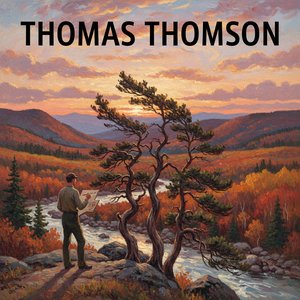
Thomas Thomson: Pioneering Canadian Landscape & the Pursuit of National Identity
Explore the evocative landscapes of Tom Thomson, a pivotal figure in Canadian art & precursor to the Group of Seven. Discover his bold style, lasting legacy, and profound impact on shaping a national artistic identity.

Arthur Lismer: A Pioneer of Canadian Modernism & the Group of Seven's Visionary Spirit
Explore the life & art of Arthur Lismer, a pivotal figure in Canadian Modernism and founding member of the Group of Seven. Discover his landscapes, teaching legacy & lasting influence on Canadian art history.

Arthur William Devis: A Provincial Eye on Georgian Life & Naval History
Explore the life & work of Arthur William Devis (1762-1822), a key figure in Georgian portraiture and naval history painting. Discover his intimate 'conversation pieces' and captivating depictions of colonial India. Learn more at TopImpressionists.

George Agnew Reid: A Canadian Impressionist's Pursuit of Light, Colour, and National Identity
Explore the life & work of George Agnew Reid, a pivotal figure in Canadian Impressionism. Discover his genre paintings, mural commissions, and lasting influence on art education & national identity. A comprehensive guide for collectors & enthusiasts.

Portret de Grup Personalizat: O Capodoperă Familială pentru Generații Viitoare
Creează o moștenire vizuală de neuitat! TopImpressionists oferă portrete de grup personalizate, pictate manual de artiști talentați. Calitate excepțională, aprobare digitală și garanție 100%. Comandă acum!