


 Vezi în context
 Trimite
 Distribuie
 Detalii
 Ghidul

 Descarcă
 Produse similare
 Radiografie
 Diaporama
 Statistici
The Old Bedford
 Oil
Oil- WallArt
- Impressionism
 1895
1895- 19th Century
 76.0 x 60.0 cm
 Muzeele Naționale Liverpool
A moody black and white exploration of London nightlife, this 1895 painting by Bernard Sickert captures the raucous atmosphere of the Bedford Music Hall through masterful lighting and shadows for your collection.
 Citește mai mult
Explore Bernard Sickert's evocative urban scenes & portraits – a pivotal figure in modern British art. Discover his dark palettes, press photo influence & Camden Town legacy.
Reproducere pictată manual în ulei
Pictură în ulei pe pânză, realizată manual de artiștii noștri la dimensiunea și ramele dorite de dumneavoastră, pe comandă. ( Comută pe versiunea Print Treci la imagine digitală)




P118B lei10

P118H lei10

P118W lei10

P438Z lei10

P508JH lei12

P508YH lei12

P805H lei10

P805Z lei10

P919BZ lei10

P919G lei10

P919XJ lei10

P959ZH lei10

P968JZ lei12

W106C lei8

W218G lei10

W218JH lei8

W218Y lei10

W307PJ lei10

W316G lei10

W316PJ lei8

W316Y lei10

W398PJ lei8

W4111J lei10

W500HY lei15

W500JH lei15

W692G lei12

W849H lei8

W940BG lei15

W953PJ lei8




Dimensiuni standard
personalizat
CM
INCH
Alegeți dintre dimensiunile noastre prestabilite, care respectă proporțiile originale ale operei de artă.
Loading sizes...

lățime
înălțime
Introduceți lățimea și înălțimea de care aveți nevoie, pentru a se potrivi ramei sau peretelui dumneavoastră. Această lucrare este pictată manual, așa că pentru o dimensiune cu o formă diferită, artistul poate picta puțin mai mult în jurul imaginii sau poate tăia puțin din margini — dumneavoastră decideți. Vă vom trimite o simulare digitală pentru aprobare înainte de a începe pictarea. Imaginea afișată pe această pagină nu reprezintă rezultatul real — doar simularea este reprezentativă.
Exemple de elemente ce pot fi personalizate: Înlocuiți fața cu fotografia clientului; Adăugați un animal de companie (de exemplu, înlocuiți pisica cu un câine); Includeți un mesaj ascuns în fundal; Schimbați peisajul sau elementele din fundal.
După plasarea comenzii, echipa TopImpressionists.com va contacta clientul prin e-mail pentru instrucțiuni și îi va furniza o previzualizare a machetei
După plasarea comenzii, echipa TopImpressionists.com va contacta clientul prin e-mail pentru instrucțiuni și îi va furniza o previzualizare a machetei
Livrare în întreaga lume () în 3-4 săptămâni, în loc de cele 5 săptămâni standard. (23 Octombrie). Fără compromisuri în ceea ce privește calitatea.

Livrare expres gratuită la nivel mondial

Pânză de in premium

Asigurare completă pentru transport

Garanție de rambursare a taxelor vamale

Garanția fidelității culorilor

Politica de retur în 100 de zile (doar pentru defecte)

Garanție de rambursare 100%

Reducere pentru comenzi multiple
 Opțiunea cu sticlă este disponibilă doar pentru dimensiuni de sub 110 cm

The Old Bedford
Tip de reproducere
Dimensiune reproducere
-


Preț total
lei 1248
Following the example of Édouard Manet (1832 – 1883) and Edgar Degas (1834 – 1917) and their paintings of Parisian cafes and theatres, Sickert painted the raucous nightlife of London’s music halls throughout his career. He was a regular visitor at the Bedford Music Hall in Camden Town, the subject of this painting. Sickert may have intended it as a sequel to his earlier picture of the child performer Little Dot Hetherington on the stage of the Bedford, in which she is shown pointing to this spot while singing the popular song, “The Boy I Love is up in the Gallery”. As well as recording vividly the atmosphere and setting of a late 19th century performance, this is a brilliant exercise in lighting and composition. Sickert exploits the contrast between the shadowy auditorium and the reflected glare of the stage, and creates tricks of space and perspective by means of the giant mirror on the left.
Întrebări și răspunsuri
În ce perioadă a carierei lui Bernard Sickert se încadrează "The Old Bedford"?
În cariera lui Bernard Sickert, „The Old Bedford” aparține perioadei Mature Period. Această etapă facilitează compararea sa cu celelalte opere ale artistului.
Cum este construită compoziția cromatică a operei "The Old Bedford" de Bernard Sickert?
Analiza cromatică a operei "The Old Bedford" de Bernard Sickert relevă un Gentle contrast și o Unified Palette armonie.
Ce tip de operă de artă este "The Old Bedford" de Bernard Sickert?
"The Old Bedford" este o piesă de tip WallArt.
Opere similare


Biografie artist
Bernard Sickert: A Shadowed Vision of London
Bernard Sickert (1863–1932) remains a figure of enduring fascination and subtle controversy within the annals of British art. Born in Munich to a family deeply rooted in artistic tradition – his father, Oswald, was himself a painter – Sickert’s journey led him from the vibrant hues of Germany to the grimy, atmospheric streets of London, where he ultimately forged a uniquely powerful and unsettling vision of the city. His work, often characterized by its dark palettes, press photo influence, and exploration of marginalized figures, positioned him as a pivotal transitional figure between Impressionism and the burgeoning movements of Modernism, yet his methods and subject matter frequently provoked debate and suspicion.
Early influences shaped Sickert’s artistic trajectory. Initially drawn to acting, he eventually embraced painting under the tutelage of James McNeill Whistler, absorbing the latter's emphasis on tonal harmony and formal structure. This early training provided a foundation for his later explorations of composition and color. However, it was Edgar Degas who exerted the most profound impact, particularly in his approach to depicting urban life – capturing fleeting moments of movement and revealing the underlying structures of the city through carefully observed details. Sickert’s fascination with the visual language of photography, evident in his cropped compositions and stark lighting, further distinguished his work from more traditional approaches.
The Camden Town Group and a Darker Palette
Sickert's artistic development gained significant momentum during the late 1890s and early 1900s, coinciding with the rise of the Camden Town Group – a collective of artists who sought to capture the gritty reality of London’s East End. This group, which included Walter Sickert, Vanessa Bell, and Duncan Grant, rejected the idealized landscapes favored by many of their contemporaries and instead focused on portraying the lives of ordinary people in their working-class surroundings. Sickert's involvement with Camden Town marked a shift towards darker palettes, more direct depictions of urban decay, and an exploration of themes such as prostitution, poverty, and social alienation – subjects that were often considered taboo at the time.
His association with the New English Art Club (NEAC) provided a platform for his work to be exhibited alongside other progressive artists. However, it was his depiction of Katie Lawrence at Gatti’s in 1888, a scene from a music hall frequented by prostitutes, that ignited considerable controversy. The painting's unflinching portrayal of female performers and their environment sparked outrage among critics who deemed it vulgar and morally objectionable. Despite the criticism, this work established Sickert’s reputation as an artist willing to confront difficult subjects and challenge conventional artistic norms.
London as a Subject: Portraits and Urban Landscapes
Sickert's oeuvre is remarkably diverse, encompassing portraits of prominent figures – including Whistler, Aubrey Beardsley, and members of the Bloomsbury Group – alongside numerous urban landscapes and scenes of everyday life. He possessed an uncanny ability to capture the atmosphere of London, imbuing his paintings with a sense of melancholy, isolation, and underlying tension. His use of press photographs as compositional models—often cropping figures into starkly framed images—created a distinctly modern aesthetic, anticipating developments in photography and film.
His fascination with the city’s underbelly is particularly evident in works such as “The Horses of St Mark,” a series of paintings depicting prostitutes and streetwalkers. These images are not romanticized or idealized; rather, they offer a brutally honest portrayal of poverty, exploitation, and social marginalization. Similarly, his depictions of Camden Town—the area where he established his studio—are characterized by their atmospheric gloom and sense of urban decay.
Legacy and Controversy
Despite the controversy surrounding some of his subjects and methods, Bernard Sickert’s influence on British art is undeniable. He played a crucial role in bridging the gap between Impressionism and Modernism, paving the way for subsequent generations of artists to explore new forms of expression and challenge established conventions. However, his association with Jack the Ripper—a theory that has been repeatedly investigated but never definitively proven—continues to cast a shadow over his legacy, fueling speculation about his involvement in the infamous crimes.
Regardless of this persistent speculation, Sickert remains a compelling figure – an artist who dared to look beyond the surface of London’s glittering facade and reveal its darker secrets. His work continues to resonate with viewers today, offering a poignant and unsettling glimpse into the heart of a rapidly changing city and the lives of those often overlooked by history.

Bernard Sickert
1863 - 1932
Informații rapide
- Full Name: Bernard Sickert
- Nationality: British
- Date Of Birth: 1863
- Date Of Death: 1932
- Place Of Birth: Munich, Germany
- Notable Artworks:
- A Canal Scene
- Lincoln Cathedral
- The Horses of St Mark
- Artistic Movement Or Style: Post-Impressionism
- Artists Who Influenced This Artist:
- Walter Sickert
- James Whistler
- Artists Or Movements Influenced By This Artist: ['Camden Town Group']
Articole conexe
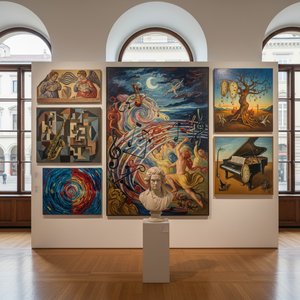
Harmonies on Canvas: Exploring the Visual Representation of Music in Art History
Explore the fascinating history of music's visual representation in art! From ancient symbolism to modern abstraction, discover how artists have captured sound and emotion on canvas. Expert insights & stunning examples.

Shadow & Soul: Why Black & White Photography Remains the Ultimate Power Move in Modern Art
Discover why black & white photography remains a powerful force in contemporary art. Explore the impact of light, shadow, and texture through a visual journey of monochrome mastery and learn how to elevate your space with timeless grayscale aesthetics.

Top 10 Capodopere Alb-Negru: Frumusețe Atemporală în Artă | TopImpressionists.ro
Descoperă top 10 picturi celebre dominate de alb, de la Monet la Kandinsky! Explorează istoria artei, tehnicile artistice și frumusețea atemporală a capodoperelor clasice. Reproduceri de calitate muzeală pe TopImpressionists.com – inspiră-ți decorul!

Monochrome Visions: Exploring the Aesthetic & Historical Significance of Black & White Photography
Explore the rich history & artistic power of black and white photography. From early techniques to iconic masters like Ansel Adams, discover why monochrome continues to captivate art lovers today. Expert insights for collectors.

Top 10 Tablouri Celebre Dominante de Negru: Artă, Istorie și Decor Rafinat
Descoperă Top 10 tablouri celebre dominate de negru! Explorează istoria, simbolismul și tehnicile artistice ale unor opere iconice de Rembrandt, Goya și alți maeștri. Reproduceri de artă de calitate muzeală pe TopImpressionists.com – inspiră-ți decorul!