

 Previzualizare
 Trimite prin felicitare
 Distribuie
 Detalii despre lucrare
 Ghid
Ghid

 Descarcă imaginea
 Produse similare
 Radiografie
 Galerie foto
 Statistici
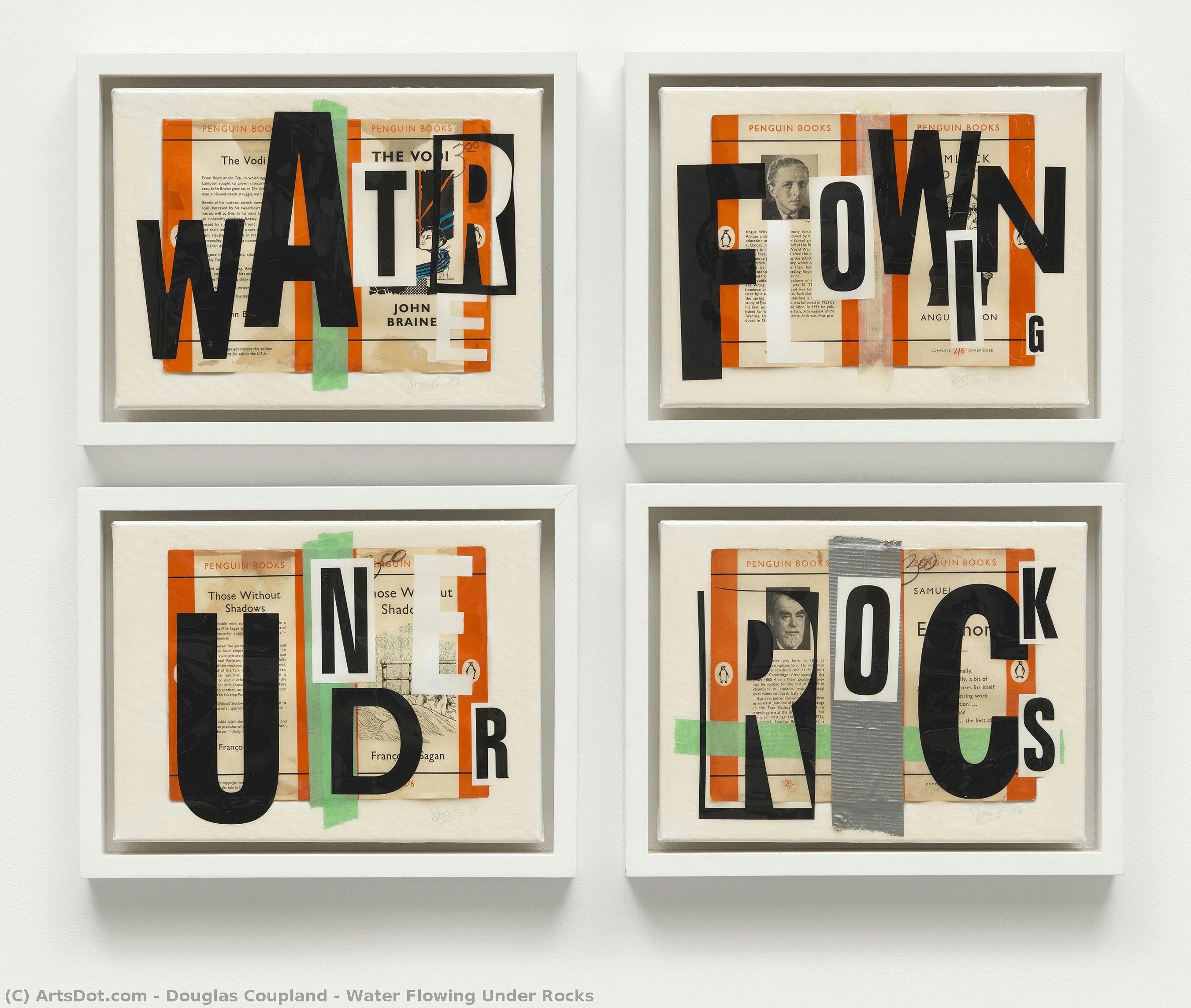
Water Flowing Under Rocks
 Collage
- WallArt
- Contemporary Realism
 Contemporary
 36.0 x 28.0 cm
 Vancouver Art Gallery
Explore 'Water Flowing Under Rocks' by Douglas Coupland – a captivating collage reflecting themes of water, nature, and modern culture through unique letter arrangements and magazine elements.
 Vezi mai mult
Douglas Coupland: artist și scriitor canadian, cunoscut pentru explorarea Gen X, culturii digitale și a identității moderne prin opere de artă vizuală inovatoare, sculpturi și QR codes.
Lucrarea de artă afișată pe această pagină este protejată de legile privind drepturile de autor, ceea ce înseamnă că nu putem crea sau vinde în mod legal o reproducere identică. Această protecție este garantată prin acorduri internaționale, precum Convenția de la Berna și de legile naționale, inclusiv cele prevăzute de Legea dreptului de autor din S.U.A. – Titlul 17. Toate drepturile rezervate. Orice reproducere neautorizată este interzisă.
Ca alternativă respectuoasă și legală, oferim tablouri pictate manual, personalizate, inspirate de original. Artistii noștri experimentați și profesioniști studiază cu atenție stilul, starea de spirit și esența artistică a originalului pentru a crea o piesă nouă și unică, care evocă aceeași emoție – rămânând, în același timp, o creație originală în sine.
Această metodă respectă pe deplin reglementările privind drepturile de autor, deoarece nu implică copierea sau duplicarea operei protejate. În schimb, este o reinterpretare creativă – o pictură nouă, influențată de original, dar care nu este identică cu acesta.
Reproducere pictată manual în ulei
Pictură în ulei pe pânză, pictată manual de artiștii noștri la dimensiunea și ramele dorite de dumneavoastră, pe comandă. ( Comută pe versiunea Print Comută pe Imagine Digitală)




P118B lei10

P118H lei10

P118W lei10

P438Z lei10

P508JH lei12

P508YH lei12

P805H lei10

P805Z lei10

P919BZ lei10

P919G lei10

P919XJ lei10

P959ZH lei10

P968JZ lei12

W106C lei8

W218G lei10

W218JH lei8

W218Y lei10

W307PJ lei10

W316G lei10

W316PJ lei8

W316Y lei10

W398PJ lei8

W4111J lei10

W500HY lei15

W500JH lei15

W692G lei12

W849H lei8

W940BG lei15

W953PJ lei8




Standard
personalizat
CM
INCH
Alegeți dintre dimensiunile noastre prestabilite, care respectă proporțiile originale ale operei de artă.
Loading sizes...

lățime
înălțime
Introduceți lățimea și înălțimea necesare pentru a se potrivi ramei sau peretelui dumneavoastră. Această lucrare este pictată manual, așa că, pentru o dimensiune cu o formă diferită, artistul poate picta puțin mai mult în jurul imaginii sau poate tăia puțin din margini — dumneavoastră decideți. Vă vom trimite o simulare digitală pentru aprobare înainte de a începe pictarea. Imaginea afișată pe această pagină nu reprezintă rezultatul real — doar simularea este reprezentativă.
Exemple de elemente ce pot fi personalizate: Înlocuiți fața cu fotografia clientului; Adăugați un animal de companie (de exemplu, înlocuiți pisica cu un câine); Includeți un mesaj ascuns în fundal; Schimbați peisajul sau elementele din fundal.
După plasarea comenzii, echipa TopImpressionists.com va contacta clientul prin e-mail pentru instrucțiuni și îi va furniza o previzualizare a machetei
După plasarea comenzii, echipa TopImpressionists.com va contacta clientul prin e-mail pentru instrucțiuni și îi va furniza o previzualizare a machetei
Livrare în întreaga lume () în 3-4 săptămâni, în loc de cele 5 săptămâni standard. (26 Octombrie). Fără compromisuri în ceea ce privește calitatea.

Livrare expres gratuită la nivel mondial

Pânză de in de înaltă calitate

Asigurare completă pentru transport

Garanție de rambursare a taxelor vamale

Garanția fidelității culorilor

Politica de retur în 100 de zile (doar pentru defecte de fabricație)

Garanție de rambursare 100%

Ofertă pentru comenzi multiple
 Opțiunea cu sticlă este disponibilă doar pentru dimensiuni de sub 110 cm

Water Flowing Under Rocks
Tehnică de reproducere
Dimensiune reproducere
-


Preț total calculat
lei 1246
A Submerged Narrative: Deconstructing "Water Flowing Under Rocks" by Douglas Coupland
Douglas Coupland’s “Water Flowing Under Rocks” isn't merely a collage; it’s a meticulously constructed visual poem, a fragmented meditation on the anxieties and fleeting beauty of contemporary life. Born from a collection of disparate magazine clippings – primarily sourced from newspapers and periodicals – the artwork presents a deliberately chaotic yet strangely harmonious arrangement of images centered around the word “Water.” This seemingly simple conceit unfolds into a complex exploration of language, perception, and the relentless flow of information that defines our era.
The core technique employed by Coupland is one of strategic juxtaposition. He doesn’t simply paste images together; he actively disrupts their original context, isolating words and phrases – “water,” “flowing,” “rocks” – and reassembling them in unexpected configurations. The typography itself becomes a key element, varying wildly between bold headlines, delicate script, and stark sans-serif fonts. This deliberate manipulation forces the viewer to confront the inherent ambiguity of language, questioning how meaning is constructed and disseminated through visual media. Coupland’s use of collage, a technique deeply rooted in Dadaism and Surrealism, allows him to dismantle traditional notions of authorship and originality, mirroring the fragmented nature of modern experience.
Echoes of Generation X and the Digital Landscape
“Water Flowing Under Rocks” is inextricably linked to Coupland’s seminal work, *Generation X*, published in 1996. The collage can be interpreted as a visual extension of that novel's themes – alienation, disillusionment, and the struggle to find meaning within a hyper-consumerist society. The fragmented nature of the images mirrors the fractured identities and anxieties experienced by Generation X, who came of age during a period of rapid technological advancement and economic uncertainty. The recurring motif of “water” itself carries significant symbolic weight, representing both fluidity and potential danger – the constant flow of information, the subconscious depths of human emotion, and the ever-present threat of overwhelming chaos.
Symbolism in the Submerged Fragments
Beyond its generational resonance, the artwork is rich with subtle symbolism. The “rocks” within the composition can be seen as representing the obstacles and limitations that impede our progress – societal constraints, personal insecurities, or the weight of history. The act of "flowing" suggests a continuous movement, an attempt to navigate these challenges while simultaneously acknowledging their inherent instability. Coupland’s deliberate use of vintage imagery—newspaper clippings from decades past—creates a poignant dialogue between the present and the past, hinting at the cyclical nature of human experience and the enduring relevance of our collective anxieties.
A Reflection on Perception and Meaning
Ultimately, “Water Flowing Under Rocks” is an invitation to slow down and reconsider our relationship with information. It’s a reminder that meaning isn't inherent in any single image or word but emerges from the interplay between them. Coupland’s masterful manipulation of collage forces us to actively participate in the construction of meaning, transforming passive viewers into engaged interpreters. The artwork’s enduring appeal lies not just in its aesthetic qualities but also in its profound commentary on the complexities of contemporary culture and the human condition. It's a piece that rewards repeated viewing, revealing new layers of significance with each encounter.
Întrebări și răspunsuri
Cum se încadrează "Water Flowing Under Rocks" în rândul temelor recurente ale lui Douglas Coupland?
Printre temele consacrate ale lui Douglas Coupland, generation x, consumer culture, digital age, mcluhan themes, canadian identity, urban life, pop art, media commentary – „Water Flowing Under Rocks” oferă o perspectivă proprie asupra collage, water, coupland, rivers, rocks, text, modernity, canada.
Opera "Water Flowing Under Rocks" se află în țara creatorului său?
Nu – opera de artă este păstrată în străinătate. Douglas Coupland s-a născut în Germania, iar originalul „Water Flowing Under Rocks” face parte din colecția unui muzeu din Canada.
Ce paletă și ce emoție transmite "Water Flowing Under Rocks"?
Paleta Neutrals a operei "Water Flowing Under Rocks" de Douglas Coupland se armonizează cu tonul său Nostalgic. Culoarea este una dintre modalitățile prin care o lucrare transmite emoție.


Biografie artist
Un cartograf al al culturii contemporane: Viața și arta lui Douglas Coupland
Douglas Coupland a apărut pe peisajul cultural la începutul anilor '90, nu doar ca un romancier, ci ca un diagnostician al unei epoci. Născut pe 30 decembrie 1961, într-o bază militară canadiană din Baden-Söllingen, Germania, copilăria sa a fost marcată de relocări constante, stabilindu-se în cele din urmă la Vancouver, Canada – un oraș care îi va modela profund sensibilitatea artistică. Această experiență timpurie i-a insuflat o privire de observator agut, fin reglată pe schimbările subtile și pe anxietățile vieții moderne. Deși inițial a ales studiile de sculptură la Emily Carr College of Art and Design, Coupland și-a găsit adevărata vocație nu în modelarea formelor fizice, ci în articularea texturilor intangibile ale existenței contemporane prin cuvânt, iar ulterior, printr-o fuziune fascinantă între arta vizuală și tehnologia digitală. El nu se limita doar la a reflecta cultura; el o numea, oferind voce sentimentelor nespuse ale unei generații care plutește într-o lume aflată într-o accelerare rapidă.De la Generația X la comentariul vizual
Momentul de strălucire al lui Coupland a sosit odată cu publicarea romanului Generation X: Tales for an Accelerated Culture în 1991. Romanul nu a fost doar un succes literar; a fost un fenomen cultural, consacrând un termen care a rezonat instantaneu cu milioane de oameni care se luptau cu identitatea și scopul în umbra societății post-industriale. Termeni precum „McJob” au intrat în lexicon, devenind prescurtarea pentru precarietatea și alienarea muncii din sfârșitul secolului XX. Însă ambiția lui Coupland s-a extins mult dincolo de simpla etichetare a unei generații. El a fost interesat să exploreze peisajul psihologic al unei lumi saturate de media, consumism și schimbare tehnologică. Această explorare nu s-a încheiat cu literatura. El a făcut tranziția fără efort către arta vizuală, ghidat de dorința de a-și exprima ideile prin medii diferite. Practica sa artistică este remarcabil de diversă, cuprinzând pictură, sculptură, fotografie și design – toate unite printr-un fir tematic constant: o interogație asupra vieții moderne. A scris 13 romane, două colecții de nuvele, șapte cărți de non-ficțiune și numeroase scenarii pentru film și televiziune, demonstrând o creativitate prolifică.Limbajul codurilor QR și greutatea pierderii
Arta vizuală a lui Coupland este caracterizată printr-o combinație unică de abstractism, referințe la cultura pop și inovație tehnologică. Probabil cel mai notabil aspect este faptul că a devenit cunoscut pentru seriile sale care integrează coduri QR în picturi. Acestea nu sunt simple elemente decorative; sunt porți către straturi ascunlege de semnificație, invitând privitorii să interacționeze activ cu opera de artă prin intermediul smartphone-urilor lor. Scanarea acestor coduri dezvăluie comentarii concise, adăugând o altă dimensiune experienței vizuale – o dovadă a fascinației lui Coupland pentru intersecția dintre artă și tehnologie. Dincolo de această tehnică inovatoare, munca sa abordează adesea teme profunde ale pierderii și mortalității. Seria Dead Grads, de exemplu, este un omagiu emoționant adus unor vieți tinere întrerupte tragic, fiecare pictură purtând titluri precum „Gun”, „Car Crash” și „Overdose” – mementouri crude ale fragilității vieții și ale impactului durabil al suferinței. Silver Boogeyman, o piesă de impact care dezvăluie chipul lui Osama bin Laden atunci când este privită printr-un ecran de smartphone, exemplifică capacitatea sa de a provoca gândirea și de a sfida percepția, forțând privitorii să înfrunte adevăruri inconfortabile despre lumea de după 11 septembrie.Declarații sculpturale și identitate națională
Viziunea artistică a lui Coupland se extinde dincolo de canvasele bidimensionale, intrând în realmul sculpturii. The Ice Storm, o structură monumentală din oțel, stă ca o reflecție puternică asupra identității și vulnerabilității canadiene. Forma sculpturii evocă atât forță, cât și fragilitate, oglindind complexitatea istoriei națiunii și relația sa cu lumea naturală. Colajele sale mixte, precum God, demonstrează măiestria sa în tehnici de suprapunere și abilitățile de design grafic, incorporând elemente simbolice precum „Lord Jim” și un „D” geometric pentru a crea compoziții vizual captivante care invită la multiple interpretări. Aceste lucrări nu sunt simple obiecte estetice; sunt puzzle-uri intelectuale, care cer un angajament activ din partea privitorului. Opera sa a fost prezentată în locații prestigioase, precum Vancouver Art Gallery și McMichael Canadian Art Collection, consolidându-i poziția de figură semnificativă în arta contemporană.Moștenirea observației și a inovației
Contribuțiile lui Douglas Coupland atât la literatură, cât și la artele vizuale i-au adus o recunoaștere largă, inclusiv numirea ca Ofițer al Ordinului Canadei și apartenența la Ordinul Columbiei Britanice. El rămâne o voce vitală în arte și litere canadiene, cunoscut pentru observațiile sale perspicace, exprimarea artistică inovatoare și dorința de a aborda probleme sociale și culturale complexe. Munca sa continuă să rezoneze cu publicul din întreaga lume, declanșând dialoguri despre cultura contemporană, tehnologie și condiția umană. Coupland nu este doar un artist; el este un cartograf cultural, mapând terenul mereu schimbător al vieții moderne cu precizie și empatie. El a lăsat o marcă indelibilă asupra înțelegerii noastre despre noi înșine și despre lumea din jurul nostru, asigurându-și locul ca unul dintre cei mai importanți artiști contemporani ai Canadei.- Teme cheie: Generația X, cultura digitală, tehnologia, pierderea, identitatea, consumismul, identitatea canadiană.
- Influențe: Pop art, minimalism, constructivism, știința afacerilor japoneze, literatura contemporană.

Douglas Coupland
1961 - , Germania
Detalii rapide
- Artistic Movement Or Style: Pop art, minimalism, constructivism
- Artists Or Movements Influenced By This Artist: ['Contemporary Literature']
- Artists Who Influenced This Artist:
- Pop Art
- Minimalism
- Date Of Birth: 30 decembrie 1961
- Full Name: Douglas Campbell Coupland
- Nationality: Canadian
- Notable Artworks:
- Generation X
- Microserfs
- JPod
- Place Of Birth: Baden-Söllingen, Germania
Articole similare

The Alchemy of Layers: How Digital Collage Reimagines the Soul of Artistic Tradition
Explore the enchanting evolution of digital collage, where modern technology meets the timeless soul of art history. Discover how contemporary artists blend classical textures with digital innovation to create breathtaking new masterpieces for the modern collector.