
Prezentat: · Cu ramă:
 Previzualizare
 Trimite prin felicitare
 Distribuie
 Detalii despre lucrare
 Ghid
Ghid

 Descarcă imaginea
 Produse similare
 Radiografie
 Galerie foto
 Întrebări și răspunsuri
 Statistici

lei 1287
Reproducere pictată manual în ulei
Pictură în ulei pe pânză, pictată manual de artiștii noștri la dimensiunea și ramele dorite de dumneavoastră, pe comandă. ( Comută pe versiunea Print Comută pe Imagine Digitală)
Dimensiune
·Standard
personalizat
CM
INCH
Alegeți dintre dimensiunile noastre prestabilite, care respectă proporțiile originale ale operei de artă.
Se încarcă dimensiunile...

lățime
înălțime
Introduceți lățimea și înălțimea necesare pentru a se potrivi ramei sau peretelui dumneavoastră. Această lucrare este pictată manual, așa că, pentru o dimensiune cu o formă diferită, artistul poate picta puțin mai mult în jurul imaginii sau poate tăia puțin din margini — dumneavoastră decideți. Vă vom trimite o simulare digitală pentru aprobare înainte de a începe pictarea. Imaginea afișată pe această pagină nu reprezintă rezultatul real — doar simularea este reprezentativă.
 Citește mai mult
Finalizare
·
Alb lei1

Margini difuze lei1

Extins lei1

P118B lei10

P118H lei10

P118W lei10

P438Z lei10

P508JH lei12

P508YH lei12

P805H lei10

P805Z lei10

P919BZ lei10

P919G lei10

P919XJ lei10

P959ZH lei10

P968JZ lei12

W106C lei8

W218G lei10

W218JH lei8

W218Y lei10

W307PJ lei10

W316G lei10

W316PJ lei8

W316Y lei10

W398PJ lei8

W4111J lei10

W500HY lei15

W500JH lei15

W692G lei12

W849H lei8

W940BG lei15

W953PJ lei8

H24-GOLD lei30

H24-SILVER lei30

H36-GOLD lei45

H36-SILVER lei45
Expediat într-un tub protector, gata pentru montarea la propria ramă.
Servicii suplimentare
opționalCe includ extrasele?
Exemple de elemente care pot fi modificate: Înlocuirea feței cu fotografia clientului; Adăugarea unui animal de companie (de ex., înlocuirea unei pisici cu un câine); Includerea unui mesaj ascuns în fundal; Modificarea peisajului sau a elementelor din fundal.
După plasarea comenzii, echipa TopImpressionists.com va contacta clientul prin e-mail pentru instrucțiuni și va furniza o previzualizare (mockup)
După plasarea comenzii, echipa TopImpressionists.com va contacta clientul prin e-mail pentru instrucțiuni și va furniza o previzualizare (mockup)
Livrare în întreaga lume () în 3-4 săptămâni, în loc de cele 5 săptămâni standard. (6 Noiembrie). Fără compromisuri în ceea ce privește calitatea.
Lac de protecție
Etichetă de prezentare
Detalii plăcuță din bronz gravat
This elegant plaque features the artist's name and the title of the artwork, finely engraved for a timeless presentation.
It is made from bronze with a refined, elegant finish. The text is precisely laser-engraved for a sharp and permanent result. Measuring 9x2 cm, the plaque is compact yet easy to read. It's built to be durable and scratch-resistant, offering a professional, museum-quality look. Mounting is simple thanks to the included adhesive backing.
Detalii plăcuță din acril transparent
The plaque includes essential engraved details such as the artist's name, the title of the artwork, the date it was created, the type of media used-like oil on canvas or watercolor-a brief description of the piece, and a QR code that links to the complete artwork information.
It is crafted from clear acrylic, offering a sleek, modern appearance. The text is UV-engraved in black to ensure strong visual contrast. With a size of 10x15 cm, it ensures optimal readability. It comes equipped with two metal hooks for secure wall mounting. The plaque is designed to be weather-resistant, making it suitable for various environments, and it includes interactive features that work seamlessly with smartphone scanning.
Detalii placă din acril negru
This elegant plaque includes engraved information such as the artist's name, the title of the artwork, the date it was created, the type of media used (like oil on canvas or watercolor), a short description of the artwork, and a QR code for quick access to more information.
The plaque itself is made from refined black acrylic with a premium finish. The text is laser-engraved in white for high contrast and readability. Its size is 10x15 cm, designed to be easy to read. It comes with two metal hooks for professional mounting. The design is sleek and fits any interior style. It is also weather-resistant and durable, with built-in digital integration for mobile compatibility.
Opțiunea cu sticlă este disponibilă doar pentru dimensiuni de sub 110 cm
 Opțiunea cu sticlă este disponibilă doar pentru dimensiuni de sub 110 cm
- Livrare expres gratuită la nivel mondial
- Pânză de in de înaltă calitate
- Asigurare completă pentru transport
- Garanție de rambursare a taxelor vamale
- Garanția fidelității culorilor
- Politica de retur în 100 de zile (doar pentru defecte de fabricație)
- Garanție de rambursare 100%
- Ofertă pentru comenzi multiple


Descriere obiect de colecție
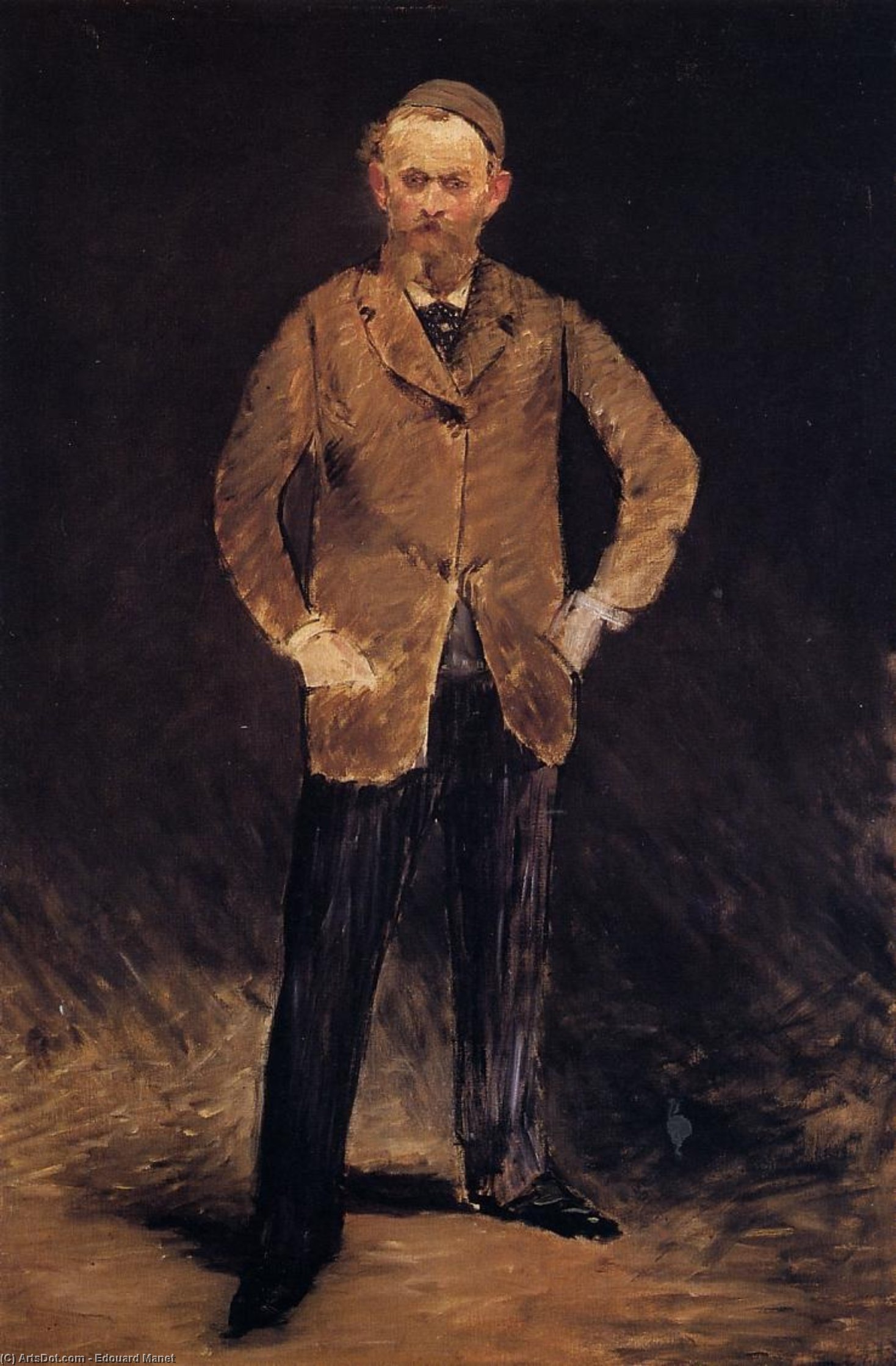
Explorează autoritrul lui Manet 'Autorportret cu cagul' (1878). O privire în stilul și epoca artistului, combinând realismul și impresionismul.
Biografie artist
Descoperă Édouard Manet (1832-1883), un artist revoluționar ce a legat Realismul de Impresionism. Explorează opere iconice precum 'Le Déjeuner sur l'herbe' și influența sa asupra artei moderne.
Despre pictură
Self-Portrait with Skull-Cap: A Glimpse into Manet's World
Edouard Manet’s Self-Portrait with Skull-Cap, painted in 1878, is a captivating work that offers a rare and intimate look at the artist himself. More than just a likeness, it’s a statement about artistic identity, evolving styles, and the complexities of late 19th-century Parisian life. The painting resides within the Bridgestone Museum of Art in Japan.
Composition and Technique
The portrait depicts Manet standing against a stark black background. He is formally dressed in a dark suit and tie, his posture conveying both confidence and a subtle introspection. A distinctive brown skull-cap adorns his head, a deliberate nod to Renaissance masters like Titian and Filippino Lippi – artists he greatly admired. The composition is relatively simple, focusing attention squarely on the artist's face and upper body. Two other figures are faintly visible in the background, adding depth but remaining secondary to Manet’s presence. Manet employed oil paints on canvas, utilizing a technique that blends traditional portraiture with emerging Impressionistic sensibilities. His brushstrokes are visible yet controlled, creating textures and capturing light in a way that foreshadows later developments in art.
Historical Context: Bridging Realism and Impressionism
The late 1870s were a period of significant artistic transition. Manet stood at the crossroads of Realism and Impressionism, challenging academic conventions while forging his own path. His earlier works like Le Déjeuner sur l'herbe and Olympia had caused considerable scandal for their depictions of contemporary life and rejection of idealized forms. This self-portrait reflects Manet’s position as a leading figure in this artistic revolution, demonstrating his ability to synthesize traditional portraiture with the innovative spirit of Impressionism. The painting was created shortly before Manet's death, marking a poignant moment of reflection on his career and legacy.
Symbolism and Emotional Impact
The skull-cap is arguably the most striking symbolic element in the portrait. It’s not merely an article of clothing; it represents Manet’s connection to artistic history and his self-conscious positioning within that lineage. The dark background contributes to a sense of introspection, suggesting a contemplative mood. Manet's gaze, directed slightly off-camera, creates a feeling of engagement with the viewer while simultaneously maintaining a degree of reserve. The overall emotional impact is one of quiet dignity and artistic confidence – a portrait not just of an artist, but of a man grappling with his place in history.
A Timeless Masterpiece
Self-Portrait with Skull-Cap remains a powerful testament to Manet’s artistry and vision. It's a work that invites viewers to consider the complexities of artistic identity, the evolution of art styles, and the enduring power of self-representation. Its historical significance and aesthetic appeal make it a valuable addition to any collection or a source of inspiration for those seeking to understand the foundations of modern art.
Întrebări și răspunsuri
Care este culoarea dominantă în "Autorportret cu cagul"?
Culoarea care iese cel mai mult în evidență în "Autorportret cu cagul" este Verde ftalocianină (#19151c). Culoarea dominantă este utilă atunci când asortați o operă de artă cu un interior.
Din ce perioadă a carierei lui Édouard Manet face parte „Autorportret cu cagul”?
"Autorportret cu cagul" reprezintă perioada Perioada Matură a lui Édouard Manet.
Este "Autorportret cu cagul" în domeniul public?
Statusul drepturilor de autor pentru "Autorportret cu cagul" de Édouard Manet: opera este în domeniul public – drepturile de autor au expirat. Acest lucru determină dacă reproducerile imaginii pot fi realizate liber.
Informații rapide și quiz despre artă
Despre Édouard Manet

Édouard Manet
1832 - 1883, Franța
Biografie artist
Un Spirit Revoluționar: Viața și Opera lui Édouard Manet
Édouard Manet, născut în 1832 într-o familie burgheză confortabilă din Paris, nu părea predestinat unei vieți de artist revoluționar. Tatăl său, un judecător respectat, își imagina un viitor sigur pentru fiul său în avocatură sau poate în marina militară – profesii onorabile potrivite statutului lor social. Cu toate acestea, chiar și pe când era băiat, inima lui Manet aparținea artei. La vârsta de unsprezece ani, a început lecții formale de desen, iar deși a fost ucenic pentru scurt timp la pictorul academic Thomas Couture, metodele rigide ale acestuia i-au devenit rapid sufocante. Această rezistență timpurie prevestea o viață petrecută provocând convențiile artistice. Manet nu era interesat să reproducă pur și simplu trecutul; căuta să surprindă vitalitatea – și uneori realitățile tulburătoare – ale vieții pariziene moderne. Frecventa Luvrul, nu doar pentru a copia maeștrii vechi, ci pentru a diseca tehnicile lor, învățând de la artiști precum Caravaggio și Velázquez cum lumina și umbra puteau sculpta forma și evoca emoția. Cu toate acestea, o schimbare în curenții artistici, în special ascensiunea Realismului promovată de Gustave Courbet, a aprins cu adevărat parcursul creativ al lui Manet. Insistența lui Courbet de a descrie viața de zi cu zi fără idealizare a rezonat profund cu Manet, eliberându-l de constrângerile subiectelor istorice sau mitologice.Ruptura cu Tradiția: Scandal și Inovație
Anii 1860 au marcat o perioadă de ferment artistic intens în Paris, iar Manet s-a aflat în centrul acesteia. Sosirea gravurilor japoneze – *ukiyo-e* – a avut un impact profund asupra sensibilităților sale estetice. A fost captivat de perspectivele lor aplatizate, compozițiile îndrăznețe și utilizarea izbitoare a culorii, elemente care aveau să devină repere ale propriului său stil. Această influență, combinată cu respingerea sa tot mai mare a lustruirii academice, a dus la lucrări care au șocat și scandalizat lumea artistică pariziană. Le Déjeuner sur l'herbe (Prânzul pe iarbă), expus la Salonul Refuzaților în 1863 – o expoziție pentru lucrările respinse de Salonul oficial – a devenit un fulger pentru controversă. Pictura, care descrie o femeie nud relaxându-se la picnic cu doi bărbați îmbrăcați complet, nu era doar despre nuditate; era despre *cum* era prezentată acea nuditate. Figurile lui Manet lipseau formele idealizate și contextul mitologic al nudurilor tradiționale. Erau neîndoielnic moderne, confruntând privitorul cu o directness tulburătoare. Scandalul din jurul Le Déjeuner s-a intensificat odată cu capodopera sa din 1865, Olympia. Această pictură, o reimaginare deliberată a *Venus din Urbino* de Titian, prezenta o prostituată contemporană privind îndrăzneț privitorul în ochi. Realismul necruțător și subiectul provocator au fost întâmpinate cu condamnare generalizată. Criticii l-au acuzat pe Manet de vulgaritate și incompetență artistică, dar dincolo de indignare se afla recunoașterea faptului că el schimba fundamental limbajul picturii.O punte către Impresionism: Lumină, Pensulație și Viața Modernă
Deși Manet nu a îmbrățișat niciodată pe deplin eticheta „Impresionist”, influența sa asupra mișcării a fost incontestabilă. A împărtășit respingerea lor a convențiilor academice și angajamentul față de capturarea efectelor trecătoare ale luminii și atmosferei. A expus alături de Monet, Renoir, Degas și alții la expozițiile independente ale Impresioniștilor, consolidându-și poziția de figură cheie în avangardă. Tehnica lui Manet a evoluat către o pensulație mai liberă, acordând prioritate impresiei formei față de detaliile precise. A experimentat cu culoarea, folosind adesea contraste puternice pentru a crea efecte dramatice. Dincolo de nudurile scandaloase, Manet a explorat o gamă largă de subiecte: portrete – inclusiv descrieri izbitoare ale soției sale Suzanne și ale colegului său artist Émile Zola; scene din viața de noapte pariziană, cum ar fi Un bar la Folies-Bergère, care surprinde magistral alienarea și spectacolul vieții urbane moderne; și scene intime domestice. El nu doar documenta aceste subiecte; le interoga, punând sub semnul întrebării normele sociale și contestând noțiunile convenționale de frumusețe.Moștenire și Impact Durabil
Moartea prematură a lui Édouard Manet în 1883 din cauza sifilisului a întrerupt o carieră care schimbase deja irevocabil cursul istoriei artei. Deși reputația sa a crescut semnificativ după moartea sa, impactul său a fost resimțit imediat de artiștii mai tineri care l-au recunoscut ca pe un eliberator. A spart bariere, contestând noțiunile tradiționale despre subiect, tehnică și scop artistic.- Accentul său asupra capturării vieții moderne a pregătit calea pentru Impresionism și Postimpresionism.
- Utilizarea sa inovatoare a pensulației și a culorii a influențat generații de pictori.
- Disponibilitatea sa de a confrunta adevăruri incomode despre societate i-a forțat pe spectatori să își pună sub semnul întrebării propriile presupuneri.
Informații rapide despre Édouard Manet
- Artistic Movement Or Style: Realism, Impresionism
- Artists Or Movements Influenced By This Artist:
- Monet
- Renoir
- Degas
- Artists Who Influenced This Artist:
- Caravaggio
- Velázquez
- Courbet
- Date Of Birth: 23 ianuarie 1832
- Date Of Death: 30 aprilie 1883
- Full Name: Édouard Manet
- Nationality: Francez
- Notable Artworks:
- Le Déjeuner sur l'herbe
- Olympia
- A Bar at the Folies-Bergère
- Place Of Birth: Paris, Franța


Explorați opere de artă organizate pe teme, stiluri și caracteristici.


Édouard Manet
Autorportret cu cagul
() ·
Cu ramă: · Pictată manual în ulei pe pânză de in
Total