

Prezentat: · Cu ramă:
 Previzualizare
 Trimite prin felicitare
 Distribuie
 Detalii despre lucrare
 Ghid
Ghid

 Descarcă imaginea
 Produse similare
 Radiografie
 Galerie foto
 Întrebări și răspunsuri
 Statistici

lei 1283
Reproducere pictată manual în ulei
Pictură în ulei pe pânză, pictată manual de artiștii noștri la dimensiunea și ramele dorite de dumneavoastră, pe comandă. ( Comută pe versiunea Print Comută pe Imagine Digitală)
Această lucrare este protejată de drepturile de autor
Lucrarea de artă afișată pe această pagină este protejată de legile privind drepturile de autor, ceea ce înseamnă că nu putem crea sau vinde în mod legal o reproducere identică. Această protecție este garantată prin acorduri internaționale, precum Convenția de la Berna și de legile naționale, inclusiv cele prevăzute de Legea dreptului de autor din S.U.A. – Titlul 17. Toate drepturile rezervate. Orice reproducere neautorizată este interzisă.
Ca alternativă respectuoasă și legală, oferim tablouri pictate manual, personalizate, inspirate de original. Artistii noștri experimentați și profesioniști studiază cu atenție stilul, starea de spirit și esența artistică a originalului pentru a crea o piesă nouă și unică, care evocă aceeași emoție – rămânând, în același timp, o creație originală în sine.
Această metodă respectă pe deplin reglementările privind drepturile de autor, deoarece nu implică copierea sau duplicarea operei protejate. În schimb, este o reinterpretare creativă – o pictură nouă, influențată de original, dar care nu este identică cu acesta.
 Citește mai mult
Dimensiune
·Standard
personalizat
CM
INCH
Alegeți dintre dimensiunile noastre prestabilite, care respectă proporțiile originale ale operei de artă.
Se încarcă dimensiunile...

lățime
înălțime
Introduceți lățimea și înălțimea necesare pentru a se potrivi ramei sau peretelui dumneavoastră. Această lucrare este pictată manual, așa că, pentru o dimensiune cu o formă diferită, artistul poate picta puțin mai mult în jurul imaginii sau poate tăia puțin din margini — dumneavoastră decideți. Vă vom trimite o simulare digitală pentru aprobare înainte de a începe pictarea. Imaginea afișată pe această pagină nu reprezintă rezultatul real — doar simularea este reprezentativă.
Finalizare
·
Alb lei1

Margini difuze lei1

Extins lei1

P118B lei10

P118H lei10

P118W lei10

P438Z lei10

P508JH lei12

P508YH lei12

P805H lei10

P805Z lei10

P919BZ lei10

P919G lei10

P919XJ lei10

P959ZH lei10

P968JZ lei12

W106C lei8

W218G lei10

W218JH lei8

W218Y lei10

W307PJ lei10

W316G lei10

W316PJ lei8

W316Y lei10

W398PJ lei8

W4111J lei10

W500HY lei15

W500JH lei15

W692G lei12

W849H lei8

W940BG lei15

W953PJ lei8

H24-GOLD lei30

H24-SILVER lei30

H36-GOLD lei45

H36-SILVER lei45
Expediat într-un tub protector, gata pentru montarea la propria ramă.
Servicii suplimentare
opționalCe includ extrasele?
Exemple de elemente care pot fi modificate: Înlocuirea feței cu fotografia clientului; Adăugarea unui animal de companie (de ex., înlocuirea unei pisici cu un câine); Includerea unui mesaj ascuns în fundal; Modificarea peisajului sau a elementelor din fundal.
După plasarea comenzii, echipa TopImpressionists.com va contacta clientul prin e-mail pentru instrucțiuni și va furniza o previzualizare (mockup)
După plasarea comenzii, echipa TopImpressionists.com va contacta clientul prin e-mail pentru instrucțiuni și va furniza o previzualizare (mockup)
Livrare în întreaga lume () în 3-4 săptămâni, în loc de cele 5 săptămâni standard. (8 Noiembrie). Fără compromisuri în ceea ce privește calitatea.
Lac de protecție
Etichetă de prezentare
Detalii plăcuță din bronz gravat
This elegant plaque features the artist's name and the title of the artwork, finely engraved for a timeless presentation.
It is made from bronze with a refined, elegant finish. The text is precisely laser-engraved for a sharp and permanent result. Measuring 9x2 cm, the plaque is compact yet easy to read. It's built to be durable and scratch-resistant, offering a professional, museum-quality look. Mounting is simple thanks to the included adhesive backing.
Detalii plăcuță din acril transparent
The plaque includes essential engraved details such as the artist's name, the title of the artwork, the date it was created, the type of media used-like oil on canvas or watercolor-a brief description of the piece, and a QR code that links to the complete artwork information.
It is crafted from clear acrylic, offering a sleek, modern appearance. The text is UV-engraved in black to ensure strong visual contrast. With a size of 10x15 cm, it ensures optimal readability. It comes equipped with two metal hooks for secure wall mounting. The plaque is designed to be weather-resistant, making it suitable for various environments, and it includes interactive features that work seamlessly with smartphone scanning.
Detalii placă din acril negru
This elegant plaque includes engraved information such as the artist's name, the title of the artwork, the date it was created, the type of media used (like oil on canvas or watercolor), a short description of the artwork, and a QR code for quick access to more information.
The plaque itself is made from refined black acrylic with a premium finish. The text is laser-engraved in white for high contrast and readability. Its size is 10x15 cm, designed to be easy to read. It comes with two metal hooks for professional mounting. The design is sleek and fits any interior style. It is also weather-resistant and durable, with built-in digital integration for mobile compatibility.
Opțiunea cu sticlă este disponibilă doar pentru dimensiuni de sub 110 cm
 Opțiunea cu sticlă este disponibilă doar pentru dimensiuni de sub 110 cm
- Livrare expres gratuită la nivel mondial
- Pânză de in de înaltă calitate
- Asigurare completă pentru transport
- Garanție de rambursare a taxelor vamale
- Garanția fidelității culorilor
- Politica de retur în 100 de zile (doar pentru defecte de fabricație)
- Garanție de rambursare 100%
- Ofertă pentru comenzi multiple


Descriere obiect de colecție
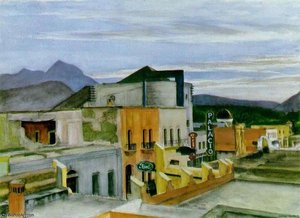
Edward Hopper's "El Palacio" captures urban solitude with striking realism—a black-and-white depiction of a city street, evoking quiet contemplation and the essence of American modern life.
Biografie artist
Edward Hopper: Un maestru al realismului american, surprinde singurătatea și viața urbană cu lumină și umbre evocatoare. Descoperiți picturi iconice precum Nighthawks și Monhegan Houses.
Despre pictură
A Silent Cityscape: Unveiling Edward Hopper's "El Palacio"
Edward Hopper’s 1946 painting, “El Palacio,” isn’t merely a depiction of a city street; it’s a carefully constructed tableau of urban solitude and the quiet anxieties of modern life. Rendered in stark black and white, the image immediately draws the viewer into a scene brimming with understated tension. The composition is dominated by towering buildings on either side, their windows like watchful eyes observing the few figures that populate the street below. The painting’s power lies not in dramatic action or vibrant color—rather, it resides in the subtle details and the palpable sense of detachment that permeates every element.
Hopper masterfully employs light and shadow to create a mood of melancholic introspection. The strong directional lighting emphasizes the textures of the buildings and casts deep shadows, contributing to the painting’s overall feeling of confinement. The open windows invite glimpses into private lives, yet they simultaneously reinforce the sense that these individuals are isolated within their own worlds. The signs visible in the scene—including the prominent “El Palacio”—add a layer of mystery, hinting at a grand establishment and perhaps suggesting a world beyond the immediate view.
The Painter’s Palette: Technique and Style
“El Palacio” exemplifies Hopper's signature style – a blend of realism and psychological insight. He was known for his ability to capture fleeting moments of human experience, often focusing on scenes of loneliness or alienation. Hopper’s technique is characterized by precise observation and meticulous detail. The buildings are rendered with remarkable accuracy, capturing their architectural forms and the subtle variations in surface texture. His use of line is particularly noteworthy; he employs clean, confident lines to define shapes and create a sense of solidity, while simultaneously suggesting movement through the arrangement of elements within the composition.
The painting’s monochromatic palette—a deliberate choice by Hopper—heightens its emotional impact. The absence of color forces the viewer to focus on form, light, and shadow, intensifying the feeling of isolation and emphasizing the starkness of the urban environment. Hopper's approach was rooted in a desire to represent reality as he perceived it, unburdened by sentimentality or romanticism. He sought to capture the essence of American life—its beauty, its challenges, and its inherent loneliness—with unflinching honesty.
Historical Context: The Post-War Landscape
“El Palacio” was created in 1946, a period marked by significant social and cultural shifts following World War II. America was grappling with the aftermath of conflict, experiencing rapid urbanization, and confronting new anxieties about identity and purpose. Hopper’s work resonated deeply with this mood, reflecting the growing sense of alienation and disillusionment that characterized the post-war era. The painting can be seen as a commentary on the changing nature of American society—a world increasingly defined by anonymity, isolation, and the breakdown of traditional social structures.
Interestingly, Hopper himself described the scene as “suggested by a restaurant on Greenwich Avenue where two streets meet.” This anecdote reveals his meticulous approach to composition and his desire to capture not just a literal representation but also an emotional truth. The painting’s enduring appeal lies in its ability to evoke a sense of familiarity—a recognition of the quiet, often overlooked moments that shape our lives.
Symbolism and Emotional Resonance
Beyond its realistic depiction of a city street, “El Palacio” is rich in symbolic meaning. The towering buildings represent the impersonal forces of urban life, while the open windows symbolize both opportunity and isolation. The figures within the scene—their faces obscured by shadow—suggest a sense of anonymity and detachment. Hopper’s masterful use of light and shadow creates a powerful emotional atmosphere, evoking feelings of loneliness, longing, and perhaps even a touch of melancholy.
Ultimately, “El Palacio” is a poignant meditation on the human condition – a reminder that even in the midst of bustling urban environments, we can still experience profound solitude. It’s a painting that invites contemplation and encourages us to consider our own place within the larger narrative of American life.
Întrebări și răspunsuri
Cât de saturată este paleta culorilor din "el palacio"?
Culorile din "el palacio" de Edward Hopper au o saturație de Subtle Color. Saturația descrie cât de vii sau de tenue sunt culorile.
Există lucrări similare cu "el palacio"?
Descoperă lucrări similare cu „el palacio” în pagina Lucrări similare a operei de artă.
Unde pot fi achiziționate copii pictate manual ale operei "el palacio" de Edward Hopper?
Reproducțiile pictate manual ale operei "el palacio" de Edward Hopper pot fi achiziționate pe acest site web: o reproducere pictată manual în ulei pe pânză de in, prin comandă direct de pe pagina Reproducere pictată în ulei.
Informații rapide și quiz despre artă
Despre Edward Hopper

Edward Hopper
1931 - 1967, Statele Unite ale Americii
Biografie artist
A Solitude Observată: Viața și Arta lui Edward Hopper
Edward Hopper, un nume inextricabil legat de liniștea și melancolia subtilă care permează viața americană a secolului XX, nu era doar pictor de scene; era poet al luminii și umbrei, cronist al izolării moderne. Născut în Nyack, New York, în 1882, într-o familie mijlocie de origine olandeză, primii ani ai lui Hopper au fost marcați de un mediu stabil care a hrănit aspirațiile sale artistice. De la schițe timpurii, meticulos date și semnate, a devenit evident că observația atentă și talentul innscris pentru desen erau elemente centrale ale ființei sale. Deși inițial încurajat spre ilustrație comercială – o sugestie pragmatică din partea părinților săi –, ambițiile lui Hopper se îndreptau către arta fină, conducându-l la Școala de Artă New York unde a studiat sub William Merritt Chase și Robert Henri. Acești ani formativi nu numai că i-au insuflat o tehnică solidă, ci și o apreciere pentru realism și un angajament față de reprezentarea lumii așa cum o vedea – neîmbucurată și onestă. Scrierile lui Ralph Waldo Emerson au rezonat profund cu Hopper, întărind sentimentul său de individualism și observație acută – calități care să devină marcatorii viziunii sale artistice. Călătoriile timpurii în Paris l-au expus la Impresionism, dar Hopper s-a departat rapid de pensulelor lor fugare, modelând o cale unică, distinctă.Găsirea Vocii Sale: Realismul și Scena Americană
Călătoria artistică a lui Hopper nu a fost imediată sau ușoară. A luptat să descopere vocea sa distinctivă, experimentând cu diferite stiluri înainte de a se stabili în realismul care i-ar defini cariera. Acest lucru nu era o simplă replicare a realității; era o distilare a acesteia, eliminând detaliile inutile pentru a dezvălui adevărurile emoționale subiacente. Picturile sale au început să se concentreze pe scene cotidiene – case, restaurante, birouri, camere de hotel – impregnate cu un sentiment de liniște și adesea, singurătate. El poseda o capacitate extraordinară de a surprinde stările psihologice ale subiecților săi, sugerând narațiuni fără a le declara explicit. Detaliile precise ale luminii și umbrelor au devenit cruciale, nu doar ca elemente descriptive, ci și ca indicii emoționale, creând atmosfere care erau atât captivante cât și tulburătoare. House by the Railroad (1925), o capodoperă timpurie, exemplifică această abordare – o compoziție aparent simplă care radiază un sentiment profund de izolare și mister. Stilul său de gravură, adesea trecut cu vederea, a mers în paralel cu pictura, împărtășind teme similare și calități stilistice, demonstrând măiestria sa în diferite medii. Nu era interesat de narațiuni istorice ample sau simbolism alegoric; s-a concentrat pe banalul, ridicându-l la o valoare prin observație atentă și rezonanță emoțională.Viziuni Iconice: Nighthawks și Dincolo
Deși cariera lui Hopper a evoluat gradual, anumite opere l-au propulsat către recunoaștere pe scară largă. Nighthawks (1942), probabil cea mai faimoasă pictură a sa, a devenit imediat un simbol al vieții americane moderne. Scena de restaurant în noapte târzie, luminată de fluorescente puternice, captează perfect singurătatea și anonimatul indivizilor într-un oraș. Figurile din interior sunt pierdute în propriile gânduri, deconectate unele de altele, chiar și în apropiere – un comentariu poignant asupra condiției umane. Gas (1940), cu reprezentarea sa impresionantă a unei benzinării secundare, evidențiază fascinația lui Hopper pentru peisajul american și cultura automobilistică în creștere. Alte opere notabile precum *Automat*, *Office in a Small City* și *Summertime* oferă fiecare perspective unice asupra complexităților societății americane din secolul XX. Aceste picturi nu erau doar reprezentări ale locurilor; erau explorări de stare, psihologie și dramatismul subtil care se desfășoară în scene obișnuite. Soția sa, Josephine Nivison Hopper, a jucat un rol esențial nu numai ca parteneră de viață, ci și ca model frecvent, contribuind semnificativ la caracterizarea figurilor feminine din picturile sale.Temele și Moștenirea: O Influență Durabilă
Mai multe teme recurente străpungează operele lui Hopper. Izolarea urbană este probabil cea mai proeminentă – sentimentul de singurătate experimentat de indivizi chiar în mijlocul mulțimilor. El a explorat peisajul american, atât rural cât și urban, adesea subliniind aspra sa estetică și goliciunea acestuia. Lucrarea sa abordează realismul psihologic, investigând viețile interioare ale subiecților săi cu o sensibilitate care depășește simpla reprezentare. Există și un subtext al nostalgiei pentru un trecut mai simplu, juxtapus cu o recunoaștere a complexităților și anxietăților vieții moderne. Influența lui Hopper asupra artiștilor următori este incontestabilă. Stilul său unic a inspirat numeroși pictori, inclusiv Pierre Sanford Ross, și continuă să rezoneze cu artiștii contemporani care caută să capteze esența experienței umane. Picturile sale rămân căutate de colecționari și sunt expuse în muzee importante din întreaga lume, consolidând locul său ca figură cheie în istoria artei americane. Mai mult decât un artist, Edward Hopper a fost un filosof vizual, oferind perspective profunde asupra condiției umane prin măiestria sa în utilizarea luminii, umbrelor și compoziției.Informații rapide despre Edward Hopper
- Artistic Movement Or Style: Realism
- Artists Or Movements Influenced By This Artist: ['Ross']
- Artists Who Influenced This Artist:
- Chase
- Henri
- Date Of Birth: 22 iulie 1882
- Date Of Death: 15 mai 1967
- Full Name: Edward Hopper
- Nationality: American
- Notable Artworks:
- Nighthawks
- House by Railroad
- Gas
- Place Of Birth: Nyack, SUA
Explorați opere de artă organizate pe teme, stiluri și caracteristici.




Edward Hopper
el palacio
() ·
Cu ramă: · Pictată manual în ulei pe pânză de in
Total