Atelier — Livrare gratuită în întreaga lume — Livrare în 2–6 săptămâni
Tablou după fotografie Lista de dorințe Coșul meu
PrevizualizarePrevizualizare Previzualizare ARPrevizualizare AR Comandă pictură lucrată manual Comandă pictură lucrată manualCumpără imaginea Cumpără imaginea TrimiteTrimite
Detalii despre lucrareDetalii despre lucrare Adaugă la favorite Adaugă la favorite DescarcăDescarcă Produse similareProduse similare RadiografieRadiografie Diapozitive automateDiapozitive automate

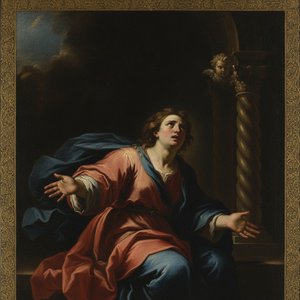
David

Experience the profound spiritual intensity of Francisco de Zurbarán’s David, a Spanish Baroque masterpiece utilizing dramatic tenebrism to capture divine grace, and bring this timeless portrait of dignity into your collection.

Francisco de Zurbarán (1598-1664): Maestru spaniol al Barocului, renumit pentru picturile sale religioase dramatice cu clarobscur și atmosfera spirituală profundă. Descoperi operele sale!

Giclée / Imprimare artistică

Printuri giclée sau pe canvas de calitate muzeală, cu proces de producție rapid și opțiuni flexibile de finisare. (Comandă pictură lucrată manual Comandă pictură lucrată manualCumpără imaginea Cumpără imaginea)

P118B $10
P118H $10
P118W $10
P438Z $10
P508JH $12
P508YH $12
P805H $10
P805Z $10
P919BZ $10
P919G $10
P919XJ $10
P959ZH $10
P968JZ $12
W106C $8
W218G $10
W218JH $8
W218Y $10
W307PJ $10
W316G $10
W316PJ $8
W316Y $10
W398PJ $8
W4111J $10
W500HY $15
W500JH $15
W692G $12
W849H $8
W940BG $15
W953PJ $8

Standard
custom
CM
INCH

Alegeți dintre dimensiunile noastre prestabilite, care respectă proporțiile originale ale operei de artă.

lățime
înălțime

Puteți introduce propriile dimensiuni pentru a se potrivi unui anumit cadru sau spațiu. Dacă dimensiunea selectată nu corespunde proporțiilor imaginii originale, vom decupa lucrarea de artă sau vom extinde imaginea cu margini oglindite sau cu o culoare uniformă. Un mockup digital va fi trimis pentru aprobarea dumneavoastră înainte de începerea producției.
Vă rugăm să rețineți că previzualizarea de pe ecran nu reflectă decuparea sau extinderea reală. Doar mockup-ul va arăta cu exactitate compoziția finală.
Deși dimensiunile personalizate sunt disponibile, vă recomandăm să selectați o dimensiune din lista predefinită pentru a păstra proporțiile originale.

Livrare în întreaga lume () în 2 săptămâni, în loc de cele 4/5 săptămâni standard. (23 August)

why_choose_icon
Livrare expres gratuită la nivel mondial
why_choose_icon
Pânză de in de înaltă calitate
why_choose_icon
Asigurare completă pentru transport
why_choose_icon
Garanție de rambursare a taxelor vamale
why_choose_icon
Garanția fidelității culorilor
why_choose_icon
Politica de retur în 60 de zile (doar pentru defecte)
why_choose_icon
Garanție de rambursare 100%
why_choose_icon
Ofertă pentru comenzi multiple

Preț total

$ 69

reproduction

David

Giclée / Imprimare artistică

Dimensiune reproducere

-

Preț total calculat

$ 69

Informații rapide

  • Title: David
  • Influences: Alejandro de la Mina
  • Notable elements or techniques: Tenebrism
  • Medium: Oil on canvas
  • Artistic style: Religious Art
  • Movement: Baroque

Descriere obiect de colecție

A Portrait of Dignity: Examining Francisco de Zurbarán’s David

Francisco de Zurbarán's “David” stands as a cornerstone of Baroque art, embodying the movement’s profound preoccupation with religious piety and masterful execution. Painted circa 1630-1632, this monumental canvas depicts David, victorious after slaying Goliath, in a posture of unwavering composure—a deliberate antithesis to the turbulent dynamism characteristic of much contemporary painting. The artwork resides within the Legion of Honor museum in San Francisco, offering visitors an unparalleled opportunity to immerse themselves in European art history alongside breathtaking views of the city’s coastline.

The Dramatic Baroque Style: Light and Shadow as Spiritual Expression

Zurbarán's artistic vision is fundamentally rooted in tenebrism—a technique pioneered by Caravaggio that utilizes stark contrasts between light and darkness to heighten emotional impact and convey spiritual significance. The painting’s subdued palette—primarily browns, ochres, and creams—serves to amplify the luminosity emanating from a single source of illumination, highlighting David's figure with an ethereal glow. This masterful manipulation of chiaroscuro isn’t merely stylistic; it symbolizes divine grace penetrating into earthly darkness, mirroring the biblical narrative itself. The artist meticulously renders textures – the rough fabric of David’s tunic, the polished surface of his sword—demonstrating a commitment to realism that transcends mere visual representation.

Symbolism and Narrative Depth: Beyond Physical Appearance

More than just a depiction of a heroic deed, “David” is laden with symbolic resonance. The horse in the background represents steadfastness and nobility, mirroring David’s unwavering resolve. The bowl positioned near the center serves as a subtle allusion to contemplation and humility—a reminder that true victory lies not only in physical prowess but also in spiritual fortitude. Zurbarán's gaze directs our attention inward, prompting reflection on themes of faith, courage, and moral virtue. He captures David’s stillness not as defeat but as acceptance of God’s will – a profound statement about the human condition.

Influence and Legacy: A Masterpiece Recognized Across Generations

Zurbarán’s influence extended far beyond his immediate contemporaries. Artists like Diego Velázquez and José de Ribera absorbed his stylistic innovations, establishing him as arguably Spain's most important Baroque painter. His unwavering dedication to naturalism combined with expressive tenebrism cemented his reputation as “the Spanish Caravaggio,” securing his place among the titans of European art history. Today, reproductions of “David” continue to inspire interior designers and collectors alike, offering a glimpse into the enduring power of artistic contemplation and masterful technique—a testament to Zurbarán’s genius and the timeless beauty of Baroque art.

Biografie artist

Early Life and Formation in Extremadura

Francisco de Zurbarán, born in Fuente de Cantos, Extremadura, Spain, in 1598, emerged from a region steeped in religious fervor and rural austerity—qualities that would profoundly shape his artistic vision. Though details of his earliest training remain somewhat elusive, we know he initially apprenticed with the local painter Alejandro de la Mina before moving to Seville to study under Alonso de Najera. It was within Najera’s workshop that Zurbarán began to absorb the burgeoning Baroque style, a dramatic departure from the more restrained artistic traditions of previous generations. Even in these formative years, a remarkable talent for capturing realistic detail and imbuing his subjects with emotional weight became apparent, hinting at the distinctive path he would forge as an artist. The stark landscapes and devout atmosphere of Extremadura instilled within him a sensibility that favored simplicity, solemnity, and a deep engagement with spiritual themes—characteristics that would define his mature work. His early exposure to the traditions of Spanish painting, particularly the influence of the austere realism prevalent in the region, laid the groundwork for his later artistic style.

The Seville Period: Establishing a Singular Style

By 1614, Zurbarán had established himself in Seville, a vibrant cultural hub and the gateway to Spain’s vast American colonies. He quickly rose to prominence, establishing a successful workshop and attracting numerous commissions, primarily for religious paintings intended for churches, monasteries, and private devotional use. This period witnessed the full flowering of his signature style—a compelling blend of stark realism and intense spirituality. His early works already showcased a masterful command of *tenebrism*, a technique borrowed from Caravaggio that employed dramatic contrasts between light and shadow to create a sense of drama and emphasize the emotional intensity of his subjects. He wasn’t merely replicating what he saw; he was striving to reveal an inner truth, a profound spiritual presence within each figure. His paintings weren't simply representations of saints or biblical scenes; they were invitations to contemplation, designed to evoke a visceral response in the viewer. The influence of earlier Spanish masters like Juan Sánchez Cotán, known for his austere still lifes and precise realism, is also evident in Zurbarán’s early work, as well as the sculptural traditions prevalent in Seville at the time.

Master of Tenebrism and Religious Devotion

Zurbarán's artistic prowess lay in his ability to transform religious narratives into powerfully moving visual experiences. He became renowned for his depictions of monks, nuns, martyrs, and saints—figures often portrayed in moments of profound contemplation or suffering. His *Immaculate Conception* (c. 1635), housed in the Museo de Bellas Artes in Bilbao, exemplifies this mastery; the Virgin Mary is depicted with a serene dignity, bathed in ethereal light against a dark background, conveying both purity and divine grace. Similarly, his *Agnus Dei* (c. 1640), now part of the Metropolitan Museum of Art collection, presents a poignant image of Christ as the sacrificial lamb, radiating an aura of solemnity and sacrifice. The *Sudarium of St Veronica*, with its haunting depiction of the veil bearing the imprint of Christ’s face, showcases his exceptional control over tenebrism and emotional depth. He didn't shy away from portraying the physical realities of faith—the austerity of monastic life, the pain of martyrdom—but always infused these scenes with a sense of reverence and spiritual significance. His *St Francis Receiving the Stigmata* demonstrates his ability to depict profound spiritual experiences with remarkable sensitivity and realism. The series of paintings depicting Carthusian monks further exemplifies his skill in portraying austere religious life, capturing their quiet devotion and inner peace.

Royal Patronage and Lasting Legacy

Around 1630, Zurbarán achieved a significant milestone in his career when he became a court painter to Philip IV. This appointment brought him increased recognition and access to royal commissions, further solidifying his reputation as one of Spain’s leading artists. Despite this success, his popularity waned somewhat in later years with the rise of different artistic tastes. The economic hardships facing Spain during the mid-17th century also impacted his ability to secure large-scale projects. Nevertheless, Zurbarán continued to work diligently, adapting his style and exploring new themes. His influence on Spanish Baroque art is undeniable; his dramatic use of chiaroscuro and his focus on religious themes inspired generations of artists. A circle of followers, known as the “Zurbaranistas,” emerged, continuing to push the boundaries of tenebrism and explore the expressive possibilities of light and shadow. Though he passed away in 1664, Francisco de Zurbarán left behind a rich artistic legacy that continues to be celebrated today, securing his place as one of Spain’s most important Baroque painters—a master of religious art whose works continue to resonate with viewers centuries later.
  • Notable Works: Immaculate Conception (c. 1635), Agnus Dei (c. 1640), Sudarium of St Veronica, St Francis Receiving the Stigmata, Paintings of Carthusian Monks.
  • Historical Significance: Zurbarán’s influence on Spanish Baroque is undeniable; his use of chiaroscuro and his focus on religious themes inspired generations of artists.

Francisco de Zurbarán

Francisco de Zurbarán

1598 - 1664 , Spania

Detalii rapide

  • Artistic Movement Or Style: Baroc, Tenebrism
  • Artists Or Movements Influenced By This Artist: ['Zurbaranistas']
  • Artists Who Influenced This Artist: ['Juan Sánchez Cotán']
  • Date Of Birth: 1598
  • Date Of Death: 1664
  • Full Name: Francisco de Zurbarán
  • Nationality: Spaniol
  • Notable Artworks:
    • Immaculada Concepción
    • Agnus Dei
    • St Francis Stigmata
  • Place Of Birth: Fuente de Cantos, Spania
Explorați opere de artă organizate pe teme, stiluri și caracteristici.
© TopImpressionists.com — Toate drepturile rezervate  ·  100% Pictat Manual · Satisfacție Garantată · Livrare Gratuită în întreaga lume
VISA MASTERCARD