


 Previzualizare
 Trimite prin felicitare
 Distribuie
 Detalii despre lucrare
 Ghid
Ghid

 Descarcă imaginea
 Produse similare
 Radiografie
 Galerie foto
 Statistici
Mr. Fred H. Robertson
 Watercolor
- WallArt
- Romantic Landscape Painting
 1824
1824- 19th Century
 14.0 x 11.0 cm
 Muzeul de Artă Americană Smithsonian
George Catlin’s 1824 Romantic portrait of Mr. Fred H. Robertson captures a Victorian-era frontier vision with meticulous realism and subtle grayscale tones – explore this iconic artwork and own a piece of history.
 Vezi mai mult
Descoperiți arta captivantă a lui George Catlin (1796-1872), renumit pentru portrete și peisaje vii care documentează viața nativilor americani la frontieră. Descoperiți o lume dispărută prin picturile sale uimitoare!
Reproducere pictată manual în ulei
Pictură în ulei pe pânză, pictată manual de artiștii noștri la dimensiunea și ramele dorite de dumneavoastră, pe comandă. ( Comută pe versiunea Print Comută pe Imagine Digitală)




P118B lei10

P118H lei10

P118W lei10

P438Z lei10

P508JH lei12

P508YH lei12

P805H lei10

P805Z lei10

P919BZ lei10

P919G lei10

P919XJ lei10

P959ZH lei10

P968JZ lei12

W106C lei8

W218G lei10

W218JH lei8

W218Y lei10

W307PJ lei10

W316G lei10

W316PJ lei8

W316Y lei10

W398PJ lei8

W4111J lei10

W500HY lei15

W500JH lei15

W692G lei12

W849H lei8

W940BG lei15

W953PJ lei8




Standard
personalizat
CM
INCH
Alegeți dintre dimensiunile noastre prestabilite, care respectă proporțiile originale ale operei de artă.
Loading sizes...

lățime
înălțime
Introduceți lățimea și înălțimea necesare pentru a se potrivi ramei sau peretelui dumneavoastră. Această lucrare este pictată manual, așa că, pentru o dimensiune cu o formă diferită, artistul poate picta puțin mai mult în jurul imaginii sau poate tăia puțin din margini — dumneavoastră decideți. Vă vom trimite o simulare digitală pentru aprobare înainte de a începe pictarea. Imaginea afișată pe această pagină nu reprezintă rezultatul real — doar simularea este reprezentativă.
Exemple de elemente ce pot fi personalizate: Înlocuiți fața cu fotografia clientului; Adăugați un animal de companie (de exemplu, înlocuiți pisica cu un câine); Includeți un mesaj ascuns în fundal; Schimbați peisajul sau elementele din fundal.
După plasarea comenzii, echipa TopImpressionists.com va contacta clientul prin e-mail pentru instrucțiuni și îi va furniza o previzualizare a machetei
După plasarea comenzii, echipa TopImpressionists.com va contacta clientul prin e-mail pentru instrucțiuni și îi va furniza o previzualizare a machetei
Livrare în întreaga lume () în 3-4 săptămâni, în loc de cele 5 săptămâni standard. (26 Octombrie). Fără compromisuri în ceea ce privește calitatea.

Livrare expres gratuită la nivel mondial

Pânză de in de înaltă calitate

Asigurare completă pentru transport

Garanție de rambursare a taxelor vamale

Garanția fidelității culorilor

Politica de retur în 100 de zile (doar pentru defecte de fabricație)

Garanție de rambursare 100%

Ofertă pentru comenzi multiple
 Opțiunea cu sticlă este disponibilă doar pentru dimensiuni de sub 110 cm

Mr. Fred H. Robertson
Tehnică de reproducere
Dimensiune reproducere
-


Preț total calculat
lei 1245
A Glimpse Through the Victorian Lens
In the quiet, monochromatic depths of George Catlin’s 1824 masterpiece, “Mr. Fred H. Robertson,” we encounter more than just a portrait; we step into a window of the American frontier's soul. This intimate work captures a gentleman from Wilkes-Barre, rendered with a profound sense of dignity and stillness. While Catlin is globally renowned for his sweeping, ethnographic chronicles of Native American life, this particular piece offers a rare, contemplative look at the established society of the early nineteenth century. The subject stands before a subtly textured wall, where faint, ghostly inscriptions hint at a history long passed, inviting the viewer to wonder about the man behind the gaze and the era that shaped his character.
The emotional resonance of the piece lies in its understated gravity. There is an aura of solemn contemplation that permeates the composition, achieved through a palette of muted greys, deep browns, and earthy tones. This subdued color scheme does not merely depict a person; it evokes a mood of permanence and reflection. For the discerning collector or interior designer, this artwork serves as a sophisticated anchor in a room, providing a sense of historical weight and intellectual depth that transcends mere decoration.
Mastery of Medium and Light
Catlin’s technical execution in this work reveals the hand of an artist deeply attuned to the nuances of light and texture. Utilizing a delicate combination of watercolor and oil on paperboard, Catlin achieved a luminous quality that is rare in monochrome portraiture. He began with the fluid, transparent washes of watercolor to establish the foundational tonal values and atmospheric shadows. Upon this ethereal base, he applied thin, meticulous glazes of oil, which lent a subtle sheen to the subject's features and added a tactile dimension to the background.
The interplay between these mediums allows for a remarkable range of textures—from the soft, diffused light hitting the man’s brow to the more structured, heavy appearance of his formal attire. This layering technique creates a sense of three-dimensionality that draws the eye inward, making the portrait feel remarkably present. Such technical complexity ensures that even as a high-quality reproduction, the artwork retains its ability to captivate the viewer with its intricate details and lifelike luminosity.
A Legacy of Visual Preservation
To understand the significance of this portrait, one must consider the historical heartbeat of the Romantic movement. Painted during an era defined by exploration and a burgeoning interest in documenting the "vanishing" world, Catlin’s work embodies the Romantic fascination with psychological depth and unvarnished truth. Unlike his contemporaries who often sought to idealize their subjects through mythological or grand landscapes, Catlin approached his portraits—whether of frontier gentlemen or tribal leaders—with an unflinching realism.
Owning a piece inspired by Catlin is an engagement with history itself. This artwork stands as a testament to the artist's transition from a man of law to a visual historian, driven by a mission to capture the essence of life before it was irrevocably altered by westward expansion. For those seeking to infuse their living spaces with art that tells a story of resilience, observation, and profound human connection, Mr. Fred H. Robertson offers an unparalleled opportunity to possess a fragment of the American spirit.
Întrebări și răspunsuri
„Mr. Fred H. Robertson” este mai degrabă o lucrare luminoasă sau întunecată în ansamblu?
Valorile înregistrate pentru "Mr. Fred H. Robertson" de George Catlin sunt: luminozitate de shadow, luminanță de Soft Shadow.
Ce dimensiuni are originalul "Mr. Fred H. Robertson"?
„Mr. Fred H. Robertson” măsoară 14 x 11 cm în formatul său original. Dimensiunile originale reprezintă o referință utilă atunci când alegeți dimensiunea unei reproduceri.
Ce spațiu se potrivește cu nuanțele din "Mr. Fred H. Robertson" de George Catlin?
Datorită paletei de culori Earthy, recomandăm "Mr. Fred H. Robertson" de George Catlin pentru o Living Room. Culorile sunt unul dintre motivele acestei sugestii.
Biografie artist
Early Life and the Call of the Frontier
George Catlin, born in Wilkes-Barre, Pennsylvania, in 1796, was destined for a life profoundly shaped by the frontier—a world both alluring and perilous, vividly etched into his memory through the tales spun by his mother, Polly Sutton. Her own harrowing experience as a captive during an Indian raid ignited within young Catlin a deep fascination with the West, a land perceived not merely as distant but as imbued with a unique dignity and romance. Initially trained in law, he found himself drawn to a different path—a yearning to capture the essence of a vanishing way of life before it was irrevocably altered by westward expansion. This wasn’t simply an artistic pursuit; it stemmed from a profound sense of urgency, a premonition that these vibrant cultures were on the brink of disappearing. His early work, primarily engravings depicting scenes along the Erie Canal, demonstrated a remarkable technical skill and attention to detail—qualities he would later hone into his ambitious project: documenting the lives of Native American tribes. These initial endeavors served as a crucial foundation, sharpening his observational abilities and solidifying his commitment to visual storytelling, laying the groundwork for his future explorations.Documenting a Vanishing World: The Indian Gallery
Catlin’s most enduring legacy is undoubtedly “The Indian Gallery,” an extraordinary collection of over 500 paintings meticulously crafted between the 1830s and 1836 during five extensive expeditions into the American West. He ventured up the Missouri River, penetrating territories inhabited by tribes such as the Mandan, Sioux, Blackfeet, and Choctaw—immersing himself within their communities, participating in ceremonies, witnessing daily life, and forging genuine relationships with tribal leaders. It’s crucial to understand that Catlin wasn't merely an observer; he actively sought to understand and represent these cultures authentically. His paintings are not simply portraits but vibrant narratives of Native American life, capturing the dynamism of their customs, the solemnity of their rituals, and the profound connection between people and the land. Works like Sham Fight, Mandan Boys (1832-1833) offer a glimpse into the playful yet competitive spirit of young warriors, while Medicine Buffalo of the Sioux (1839) powerfully conveys the dignity and authority of a prominent tribal leader. The meticulous detail in these paintings—from the intricate beadwork on clothing to the carefully rendered landscapes—reflects Catlin’s dedication to accuracy and his desire to present Native Americans not as savage stereotypes, but as individuals with rich cultural traditions and complex social structures.A Journey Westward: Challenges and Artistic Evolution
Catlin's expeditions were far from easy. He faced immense logistical challenges – navigating treacherous rivers, enduring harsh weather conditions, and often relying on the hospitality of tribes wary of outsiders. Furthermore, he encountered significant resistance to his work—many Native Americans viewed his presence with suspicion, while government officials largely dismissed his efforts as frivolous or even exploitative. Despite these obstacles, Catlin persevered, driven by a deep conviction that documenting these cultures was an urgent necessity. His artistic style evolved throughout his journey, moving from the more formal engravings of his early career to a looser, more expressive approach that captured the immediacy and dynamism of Native American life. He experimented with color palettes, brushstrokes, and composition, striving to create paintings that were both visually compelling and emotionally resonant. The influence of Hudson River School painters is evident in his landscapes, while his portraits often incorporate elements of realism and psychological insight.Recognition and Legacy
Catlin’s work initially garnered limited recognition in the United States, but it gained considerable acclaim abroad, particularly in Europe during the 1840s and 50s. Exhibitions in London, Paris, and Berlin captivated audiences with their vivid depictions of Native American life—a world largely unknown to Europeans. These international successes not only provided Catlin with much-needed financial support but also helped to raise awareness of the plight of Native Americans and challenge prevailing prejudices. He published several influential books, including *Letters and Notes on the Manners, Customs, and Conditions of North American Indians* (1841) and *Last Rambles Amongst the Indians of the Rocky Mountains and the Andes* (1868), which further solidified his reputation as a leading authority on Native American culture. Despite facing financial difficulties throughout his life, Catlin remained steadfast in his commitment to documenting these vanishing cultures until his death in 1872. Today, George Catlin is remembered not only for his artistic achievements but also for his pioneering role in advocating for the preservation of Native American heritage and challenging the dominant narratives of American history. His paintings serve as a poignant reminder of a time when indigenous cultures were on the brink of extinction—a legacy that continues to inspire artists and scholars alike.Key Works
- Sham Fight, Mandan Boys (1832-1833): A lively depiction of a playful mock battle among young Mandan warriors.
- Mrs. George Catlin (Clara Bartlett Gregory) (1850): A portrait showcasing the artist’s wife, offering insight into his personal life.
- Pipestone Quarry, Coteau Des Prairies (1848): Illustrates a sacred site for many tribes and their spiritual connection to the land.
- Medicine Buffalo of the Sioux (1839): A striking portrait capturing the dignity and power of a prominent Sioux leader.
- Prairie Meadows Burning (1832): Depicts a dramatic scene of controlled burning, highlighting the relationship between Native Americans and their environment.
- Little Wolf, A Famos Warrior (1844): A powerful portrait of a Native American warrior, symbolizing strength and resilience.

George Catlin
1796 - 1872 , Statele Unite ale Americii
Detalii rapide
- Artistic Movement Or Style: Frontier painting
- Artists Or Movements Influenced By This Artist: ['Hudson River']
- Artists Who Influenced This Artist:
- Peale
- Sully
- Date Of Birth: 1796
- Date Of Death: 1872
- Full Name: George Catlin
- Nationality: American
- Notable Artworks:
- Sham Fight
- Prairie
- Pipestone
- Medicine
- Eagle Dance
- Place Of Birth: Wilkes-Barre, USA
Articole similare

Ephemeral Visions: Exploring the Artistic Legacy & Contemporary Practice of Watercolor Painting
Explore the captivating world of watercolor painting! Discover its rich history, essential techniques, influential artists & collecting tips. A comprehensive guide for art enthusiasts from TopImpressionists.
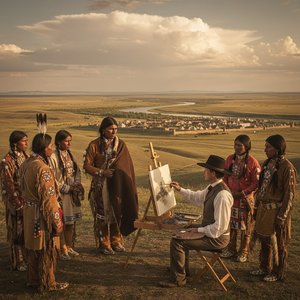
George Catlin: Witnessing & Representing Indigenous Life on the American Frontier
Explore the captivating art of George Catlin, renowned for his vivid portraits & landscapes documenting Native American life on the frontier. Discover a vanishing world through stunning paintings and historical context.

Georges Seurat: Cele Mai Remarcabile 25 de Opere – Artă, Decorațiuni și Inspirație
Descoperă cele mai frumoase 25 de picturi ale lui Georges Seurat! Explorează arta Pointillismului, culorile vibrante și stilul unic al acestui maestru impresionist. Reproduceri de calitate superioară pentru decor interior rafinat pe TopImpressionists.com.

Top 10 Capodopere Acvarelă Legendară care au Schimbat Arta pentru Totdeauna | TopImpressionists.ro
Descoperă Top 10 capodopere acuarelă legendară de la Sargent, Turner și alți maeștri! Explorează istoria artei, tehnicile unice și paletele vibrante. Reproduceri de artă de calitate muzeală pentru decorul perfect pe TopImpressionists.com.

Georges Braque: Cele Mai Iconice 25 De Opere – Artă Modernă pentru Decorul Tău
Descoperă cele mai importante 25 de opere ale lui Georges Braque, pionier al cubismului! Explorează istoria, tehnicile și semnificația fiecărei picturi. Reproduceri artă de calitate muzeală pentru decorul tău pe TopImpressionists.com.
Explorați opere de artă organizate pe teme, stiluri și caracteristici.

