Biografie artist
A Life Dedicated to Art: The World of George Howland Beaumont
Sir George Howland Beaumont, born in Dunmow, United Kingdom (1753), was a figure whose life embodied the evolving tastes and passions of late 18th and early 19th-century Britain. Inheriting both a baronetcy and an estate at a young age, Beaumont’s path wasn't immediately destined for artistic pursuits. However, his education at Eton College included initial training in landscape painting under Alexander Cozens, sparking a lifelong fascination with the visual arts. This early exposure was merely a prelude to the transformative experience of the Grand Tour undertaken in 1782 alongside his wife, Margaret—a journey that irrevocably altered his artistic sensibilities and broadened his understanding of European art history. Italy and its rich artistic heritage proved pivotal; Beaumont’s eyes were opened to the masterpieces of the Old Masters, igniting within him not only an appreciation but also a fervent desire to collect and comprehend these works—a passion that would define his subsequent life.
Cultivating Taste: Collection, Patronage, and Artistic Development
Upon his return to England, Beaumont embarked on building an impressive collection of Old Master paintings, driven by genuine enthusiasm despite limited financial resources. Central to this endeavor was Claude Lorrain’s *A Landscape with Hagar and the Angel*, a painting that became deeply cherished and emblematic of Beaumont’s aesthetic ideals—a piece he would carry with him on coach journeys, safeguarding it within a specially crafted case. He wasn't merely acquiring objects; he was assembling a visual library, meticulously documenting each artwork and striving to grasp its artistic significance. Simultaneously, Beaumont began exhibiting his own work at the Royal Academy from 1794 to 1825, establishing himself as a respected amateur within London’s art circles—a recognition that underscored his commitment to artistic expression and solidified his position amongst fellow connoisseurs. His social life flourished alongside these pursuits, centered around his residence at Grosvenor Square and serving as Tory MP for Beer Alston (1790-1796)—roles which afforded him access to influential figures and fostered connections within the intellectual milieu of his time. Notably, Beaumont’s friendship with William Wordsworth—a kindred spirit captivated by the sublime beauty of nature—influenced his artistic vision and encouraged him to explore themes of landscape and emotion. He was particularly drawn to the Romantic movement, mirroring its emphasis on imagination and feeling in his own paintings and actively supporting younger artists like John Constable—whose evocative depiction of Broughton Castle exemplifies Beaumont’s appreciation for capturing the essence of the natural world.
The Birth of a National Treasure: Establishing the National Gallery
Beaumont’s contribution to British art history transcends mere artistic production; it resides fundamentally in his visionary role as a catalyst for cultural advancement. Recognizing the dearth of public spaces dedicated to showcasing exceptional artworks, he championed an audacious proposition—one that would reshape London's cultural landscape forever. In 1823, Beaumont proposed a transformative solution: he would donate sixteen paintings from his personal collection—a staggering sum representing nearly half of his entire fortune—on condition that the government procure John Julius Angerstein’s equally impressive holdings and secure suitable premises for their combined display. This bold initiative galvanized Parliament into decisive action, culminating in the establishment of the National Gallery in May 1824—a landmark achievement that cemented Beaumont's legacy as a pioneer of artistic patronage and a fervent advocate for democratizing access to art. His foresight ensured that masterpieces from across Europe would be accessible to all Britons, fostering appreciation for beauty and enriching the nation’s cultural heritage for centuries to come.
A Painter's Eye: Artistic Style and Notable Works
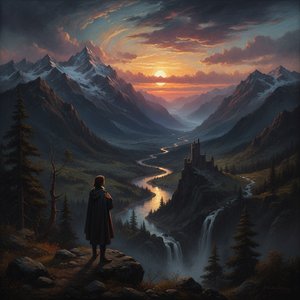
Beaumont’s artistic style was characterized by a meticulous attention to detail and an unwavering devotion to capturing the grandeur of the natural world—traits evident in his landscapes, which often depict serene vistas bathed in soft light. He honed his skills under Alexander Cozens, mastering the techniques of watercolor painting and prioritizing atmospheric perspective—a stylistic hallmark of Romanticism. Among his most celebrated canvases are *A View Near Keswick* (1779), a breathtaking depiction of Derwent Water reflecting the surrounding mountains—and *The Ruins of St Mary’s Abbey*, Leicestershire—a poignant portrayal of decaying grandeur that speaks to themes of time and memory. These works stand as enduring symbols of Beaumont’s artistic prowess and his profound connection to the landscapes of England. His paintings are housed in the New Walk Museum and Art Gallery, Leicester, preserving a testament to his lifelong dedication to mastering his craft.
## Legacy and Influence: Shaping British Artistic Discourse
Beaumont's influence extended beyond his own creative output; he served as director of the British Institution from 1806—a role that fostered intellectual exchange and championed artistic innovation. He actively supported younger artists, notably John Constable—whose painting of Broughton Castle exemplifies Beaumont’s admiration for Romanticism’s expressive qualities—and encouraged Constable to study his collection of Old Masters. Furthermore, Beaumont's staunch defense of academic traditions contrasted sharply with the burgeoning fervor for color and dramatic composition championed by J.M.W. Turner—a distinction that underscored Beaumont’s unwavering commitment to upholding artistic standards rooted in classical principles. His legacy continues to resonate within British art history—a reminder that true artistry resides not merely in technical virtuosity but also in a deep appreciation for beauty, informed by intellectual rigor and guided by ethical conviction. Sir George Howland Beaumont died in 1827, leaving behind an indelible mark on the nation’s artistic landscape—a testament to his transformative vision and enduring contribution to British culture.



 Previzualizare
 Comandă pictură lucrată manual
 Trimite
 Distribuie
 Detalii despre lucrare

 Descarcă
 Produse similare
 Radiografie
 Diapozitive automate


 Vezi mai mult






































 Opțiunea cu sticlă este disponibilă doar pentru dimensiuni de sub 110 cm