

Shown: · With its frame:
 Previzualizare
 Trimite prin felicitare
 Distribuie
 Detalii despre lucrare
 Ghid
Ghid

 Descarcă imaginea
 Produse similare
 Radiografie
 Galerie foto
 Q&A
Q&A Statistici
 Oil On Canvas
- WallArt
- Tenebrism
 1620
1620 33.0 x 55.0 cm
lei 1262
Reproducere pictată manual în ulei
Pictură în ulei pe pânză, pictată manual de artiștii noștri la dimensiunea și ramele dorite de dumneavoastră, pe comandă. ( Comută pe versiunea Print Comută pe Imagine Digitală)
Size
·Standard
personalizat
CM
INCH
Alegeți dintre dimensiunile noastre prestabilite, care respectă proporțiile originale ale operei de artă.
Loading sizes...

lățime
înălțime
Introduceți lățimea și înălțimea necesare pentru a se potrivi ramei sau peretelui dumneavoastră. Această lucrare este pictată manual, așa că, pentru o dimensiune cu o formă diferită, artistul poate picta puțin mai mult în jurul imaginii sau poate tăia puțin din margini — dumneavoastră decideți. Vă vom trimite o simulare digitală pentru aprobare înainte de a începe pictarea. Imaginea afișată pe această pagină nu reprezintă rezultatul real — doar simularea este reprezentativă.
 Citește mai mult
Finish
·
White lei1

Blurside lei1

Extended lei1

P118B lei10

P118H lei10

P118W lei10

P438Z lei10

P508JH lei12

P508YH lei12

P805H lei10

P805Z lei10

P919BZ lei10

P919G lei10

P919XJ lei10

P959ZH lei10

P968JZ lei12

W106C lei8

W218G lei10

W218JH lei8

W218Y lei10

W307PJ lei10

W316G lei10

W316PJ lei8

W316Y lei10

W398PJ lei8

W4111J lei10

W500HY lei15

W500JH lei15

W692G lei12

W849H lei8

W940BG lei15

W953PJ lei8

H24-GOLD lei30

H24-SILVER lei30

H36-GOLD lei45

H36-SILVER lei45
Shipped in a protective tube, ready for your own framer.
Above 105 cm the frame is shipped as a kit for a professional framer — read the details.
Extras
optionalWhat do the extras include?
Examples of what can be changed: Replace face with customer photo; Add pet (e.g., replace cat with dog); Include hidden message in background; Change background landscape or elements.
After order, TopImpressionists.com team will email client for instructions and provide a mockup preview
After order, TopImpressionists.com team will email client for instructions and provide a mockup preview
Livrare în întreaga lume () în 3-4 săptămâni, în loc de cele 5 săptămâni standard. (31 Octombrie). Fără compromisuri în ceea ce privește calitatea.
Lac de protecție
Etichetă de prezentare
Detalii plăcuță din bronz gravat
This elegant plaque features the artist's name and the title of the artwork, finely engraved for a timeless presentation.
It is made from bronze with a refined, elegant finish. The text is precisely laser-engraved for a sharp and permanent result. Measuring 9x2 cm, the plaque is compact yet easy to read. It's built to be durable and scratch-resistant, offering a professional, museum-quality look. Mounting is simple thanks to the included adhesive backing.
Detalii plăcuță din acril transparent
The plaque includes essential engraved details such as the artist's name, the title of the artwork, the date it was created, the type of media used-like oil on canvas or watercolor-a brief description of the piece, and a QR code that links to the complete artwork information.
It is crafted from clear acrylic, offering a sleek, modern appearance. The text is UV-engraved in black to ensure strong visual contrast. With a size of 10x15 cm, it ensures optimal readability. It comes equipped with two metal hooks for secure wall mounting. The plaque is designed to be weather-resistant, making it suitable for various environments, and it includes interactive features that work seamlessly with smartphone scanning.
Detalii placă din acril negru
This elegant plaque includes engraved information such as the artist's name, the title of the artwork, the date it was created, the type of media used (like oil on canvas or watercolor), a short description of the artwork, and a QR code for quick access to more information.
The plaque itself is made from refined black acrylic with a premium finish. The text is laser-engraved in white for high contrast and readability. Its size is 10x15 cm, designed to be easy to read. It comes with two metal hooks for professional mounting. The design is sleek and fits any interior style. It is also weather-resistant and durable, with built-in digital integration for mobile compatibility.
Opțiunea cu sticlă este disponibilă doar pentru dimensiuni de sub 110 cm
 Opțiunea cu sticlă este disponibilă doar pentru dimensiuni de sub 110 cm
- Livrare expres gratuită la nivel mondial
- Pânză de in de înaltă calitate
- Asigurare completă pentru transport
- Garanție de rambursare a taxelor vamale
- Garanția fidelității culorilor
- Politica de retur în 100 de zile (doar pentru defecte de fabricație)
- Garanție de rambursare 100%
- Ofertă pentru comenzi multiple


Descriere obiect de colecție
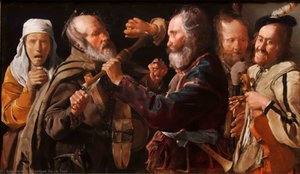
Georges de La Tour's 'The Beggars’ Brawl' (1620) captures a tense scene of urban conflict with dramatic chiaroscuro lighting. Explore this Baroque masterpiece depicting poverty, dispute, and human drama – a captivating work of art.
Biografie artist
Georges de La Tour (1593-1652): Maestru francez al barocului, renumit pentru scene dramatice cu lumina și umbră, portrete meditative și influența caravaggescă. Explorează operele sale captivante!
About the painting
A Shadowed Tableau: Unveiling Georges de la Tour’s ‘The Beggars’ Brawl’
Georges de la Tour’s “The Beggars’ Brawl,” painted in 1620, isn't merely a depiction of a street scene; it’s a meticulously crafted exploration of human nature bathed in the dramatic chiaroscuro that defined his signature style. This intimate canvas, measuring just 33 x 55 cm, transports us to a dimly lit corner of 17th-century Lorraine, a world where poverty and desperation simmer beneath a veneer of uneasy truce. The painting immediately arrests the eye with its masterful use of light – a single, almost theatrical lantern illuminating the central figures while plunging the surrounding space into deep shadow. This technique, characteristic of Tenebrism, isn’t simply an aesthetic choice; it serves to heighten the drama and focus our attention on the intense interaction unfolding before us.

A Study in Human Condition: Symbolism and Narrative
At the heart of the scene stands a man, identifiable by his prominent beard and animated gestures, holding what appears to be an object – perhaps a coin or a piece of food – that fuels the dispute. His face is etched with a mixture of anger and desperation, mirroring the expressions of those around him. The other figures—a collection of beggars, their clothing ragged and worn—are caught in a moment of intense confrontation. The bowl on the right side of the painting isn’t just a prop; it suggests a shared hardship, a communal reliance on meager resources. It speaks to a society where survival was often precarious, and even the simplest interactions could escalate into conflict. The inclusion of a drum-beater further emphasizes the chaotic nature of the gathering – a signal for attention, perhaps a call to action or simply a desperate attempt to draw sympathy.
The Master’s Technique: Chiaroscuro and Baroque Realism
Georges de la Tour was a master of light and shadow, meticulously rendering textures and forms with an almost photographic realism. He achieved this through painstaking layering of thin glazes of oil paint, building up the image gradually to create a sense of depth and volume. Notice how he captures the sheen of wet clothing, the roughness of weathered skin, and the subtle folds in the fabric. His use of color is restrained – predominantly browns, ochres, and blacks—further enhancing the dramatic effect. De la Tour’s work represents a departure from the idealized representations common in earlier Renaissance art; instead, he presents a raw and unflinching portrayal of everyday life, capturing not just appearances but also the underlying emotions and tensions of his subjects.
Historical Context: Lorraine in Transition
“The Beggars’ Brawl” was painted during a period of significant social and political upheaval in France. The Duchy of Lorraine, then under French control, experienced a complex interplay of religious fervor, economic hardship, and political instability. De la Tour's work reflects this atmosphere, offering a glimpse into the lives of those marginalized by society – the poor, the dispossessed, and the forgotten. The painting’s setting in Lunévi, a small town within Lorraine, adds to its authenticity, grounding the scene in a specific time and place. It’s important to note that de la Tour's artistic career unfolded largely outside of Paris, allowing him to develop a distinct style influenced by both Northern European traditions (particularly the Dutch Caravaggisti) and the spiritual intensity of his own region.
Bringing ‘The Beggars’ Brawl’ Home: A Reproduction for Your Space
TopImpressionists offers meticulously crafted hand-painted reproductions of “The Beggars’ Brawl,” allowing you to experience the power and beauty of de la Tour's masterpiece in your own home. Our skilled artists replicate every detail, from the subtle nuances of light and shadow to the expressive faces of the figures, ensuring an authentic representation of this iconic work. Available in a range of sizes and mediums – including fine art prints on premium canvas or archival paper – our reproductions provide a stunning addition to any collection. Explore our selection today and bring the drama and emotional depth of “The Beggars’ Brawl” into your space.
Întrebări și răspunsuri
La ce vârstă a creat Georges de La Tour opera „The Beggars' Brawl”?
Când „The Beggars' Brawl” a fost creat în 1620, Georges de La Tour – născut în 1593 – avea 27 ani.
Ce tehnică a fost utilizată pentru "The Beggars' Brawl" de Georges de La Tour?
Georges de La Tour a utilizat tehnica Oil On Canvas pentru "The Beggars' Brawl". Tehnica definește natura materială a lucrării originale.
Ce paletă de culori este utilizată în "The Beggars' Brawl" de Georges de La Tour?
Paleta lui "The Beggars' Brawl" de Georges de La Tour este descrisă ca fiind Earthy, oferind o descriere concisă a culorilor lucrării.
Quick facts and art quiz
About Georges de La Tour

Georges de La Tour
1593 - 1652, Franța
Biografie artist
A Life Bathed in Shadow: The Enigmatic World of Georges de La Tour
Georges de La Tour, un nume care rezonează cu reverența tăcută rezervată maeștrilor luminii și umbrei, rămâne una dintre cele mai convingătoare figuri ale Barocului francez. Născut în 1593 în Vic-sur-Seille, un orășel așezat într-unul din văile Lorraine, viața sa s-a desfășurat pe fundalul unei fervoare religioase și al unor tulburări politice. Deși detaliile despre formarea sa timpurie rămân parțial obscure – savanții speculează cu privire la posibile călătorii în Italia sau la ucenicie sub artiști locali precum Jacques Bellange – semințele viziunii sale artistice au fost, fără îndoială, semănate în acest mediu. Nu s-a născut într-o familie artistică stabilită; tatăl său era coppersar, dar circumstanțele legate de linia maternă sugerează o posibilă legătură nobilă, o influență subtilă poate reflectată în demnitatea și grația discretă care străjuiesc opera sa. În 1617 s-a căsătorit cu Diane Le Nerf, stabilind o viață domestică în Lunéville, unde a petrecut mare parte din cariera sa, servind atât curții franceze, cât și Ducilor de Lorraine. Această dublă patronaj i-a permis să prospere, dar este în intimitatea sceneelor domestice și a contemplării religioase că opera sa adevărată a găsit expresie.The Dance of Light and Darkness: Artistic Influences and Development
Călătoria artistică a lui De La Tour nu a fost una de inovație radicală, ci mai degrabă o sinteză magistrală a influențelor existente, transformată prin lentila sensibilității sale unice. Contrastul dramatic dintre lumină și umbră – chiaroscuro – care definește picturile sale datorează un datorie incontestabilă lui Caravaggio, maestrul italian care a revoluționat pictura cu scenele sale intense realistice și emoțional încărcate. Cu toate acestea, De La Tour nu a imitat pur și simplu; el a filtrat Caravagismul prin prisma „Caravaggistilor” din Utrecht, în special cei precum Hendrick Terbrugghen. Această fuziune a rezultat într-un stil care era atât puternic cât și restrâns, caracterizat de o paletă sumbră dominată de nuanțe de pământ și gradații subtile de lumină. Primele sale opere, anterioare anului 1630, prezintă o vitalitate mai mare și o dinamică, reflectând influența școlii Utrecht. Dar pe măsură ce cariera sa a progresat, el s-a îndreptat către o estetică tot mai introspectivă și minimalistă. A început să reducă compozițiile, concentrându-se pe forme esențiale și reducând detaliile inutile, creând scene care păreau atât atemporale, cât și profund personale. Această evoluție nu a fost doar tehnică; ea a reflectat adâncimea sa spirituală crescută și dorința de a exprima adevăruri emoționale profunde prin cele mai simple mijloace.Candlelight and Contemplation: Major Works and Recurring Themes
Caracteristica definitorie a operei lui De La Tour este, fără îndoială, utilizarea sa magistrală a luminii de candelă, pe care o folosea nu doar ca sursă de iluminare, ci și ca metaforă pentru grația divină și trezirea spirituală. Picturile sale sunt adesea plasate noaptea, cu figuri înfrumusețate de strălucirea caldă și tremurândă a unei singure lumânări sau lămpi. Acest lucru creează o atmosferă de intimitate și contemplare tăcută, invitând spectatorul să se împrietenească cu experiența emoțională a personajelor. *The Fortune-Teller*, pictată în jurul anului 1630, exemplifică acest stil incipient – o scenă de gen vibrantă, realizată cu observație ascuțită și luminare dramatică. Dar opera sa ulterioară religioasă demonstrează capacitatea sa de a imbue un subiect tradițional cu profunzime emoțională. *Adorarea Pastorilor*, creată în jurul anului 1640, demonstrează abilitatea sa de a imbui o scenă religioasă cu profunzime emoțională. Figurile nu sunt idealizate sau eroice; ele sunt oameni comuni, copleșiți de prezența divină. *Plângerea asupra Sfântului Petru* este un exemplu în special de perspicacitate psihologică – durerea apostolului este redată cu o subtilitate și realism palpabil. *Sfântul Iosif Fierar*, alta dintre operele iconice, prezintă o scenă domestică liniștită, subliniind măiestria lui De La Tour de a surprinde demnitatea tăcută a vieții cotidiene. Aceste picturi nu sunt doar reprezentări ale evenimentelor religioase; ele sunt meditații asupra credinței, îndoielii și condiției umane.A Rediscovered Legacy: Historical Significance and Enduring Appeal
În ciuda recunoașterii sale în timpul vieții – a fost numit „Pictor al Regelui” de către Louis XIII în 1638 – opera sa a căzut în obscuritate după moartea sa în 1652. Pentru secole, multe dintre picturile sale au fost atribuite altor artiști, iar numele său a dispărut din memoria istorică a artei. Nu a fost decât la începutul secolului XX că un efort concertat a fost făcut pentru a descoperi și reevalua opera sa, condus de savanți precum Hermann Voss. Această redescoperire a dezvăluit un artist de originalitate extraordinară și profunzime, ale cărui opere au unit Caravagismul cu clasicismul francez. Utilizarea inovatoare a luminii și umbrei a lui De La Tour, combinată cu perspicacitatea sa psihologică față de subiecții săi, continuă să captiveze publicul astăzi. Picturile sale oferă o privire asupra vieții și spiritualității secolului al XVII-lea, reflectând atât fervura religioasă, cât și realitățile sociale ale vremii sale. El rămâne celebrat pentru capacitatea sa de a imbui scenele cotidiene cu semnificație profundă și experiențe emoționale, neavând în vedere că chiar și în cele mai întunecate vremuri există întotdeauna speranță în lumina tremurândă a credinței și a conexiunii umane. Influența sa poate fi văzută în artiștii ulterioari care au explorat teme similare de introspecție și aspirații spirituale, consolidându-și locul ca figură cheie în istoria artei europene.Quick facts about Georges de La Tour
- Artistic Movement Or Style: Baroc, Tenebrism
- Artists Or Movements Influenced By This Artist: ['Classicism Franțez']
- Artists Who Influenced This Artist:
- Caravaggio
- Terbrugghen
- Date Of Birth: 13 Mar. 1593
- Date Of Death: 1652
- Full Name: Georges de La Tour
- Nationality: Francez
- Notable Artworks:
- Fortune Teller
- Ador.
- Lacrimi S.P.
- S. Joseph
- Place Of Birth: Vic-le-Comte, Franța
Explorați opere de artă organizate pe teme, stiluri și caracteristici.


Georges de La Tour
The Beggars' Brawl
() ·
With its frame: · Hand-painted in oil on linen
Total