

Prezentat: · Cu ramă:
 Previzualizare
 Trimite prin felicitare
 Distribuie
 Detalii despre lucrare
 Ghid
Ghid

 Descarcă imaginea
 Produse similare
 Radiografie
 Galerie foto
 Întrebări și răspunsuri
 Statistici

lei 1278
Reproducere pictată manual în ulei
Pictură în ulei pe pânză, pictată manual de artiștii noștri la dimensiunea și ramele dorite de dumneavoastră, pe comandă. ( Comută pe versiunea Print Comută pe Imagine Digitală)
Dimensiune
·Standard
personalizat
CM
INCH
Alegeți dintre dimensiunile noastre prestabilite, care respectă proporțiile originale ale operei de artă.
Se încarcă dimensiunile...

lățime
înălțime
Introduceți lățimea și înălțimea necesare pentru a se potrivi ramei sau peretelui dumneavoastră. Această lucrare este pictată manual, așa că, pentru o dimensiune cu o formă diferită, artistul poate picta puțin mai mult în jurul imaginii sau poate tăia puțin din margini — dumneavoastră decideți. Vă vom trimite o simulare digitală pentru aprobare înainte de a începe pictarea. Imaginea afișată pe această pagină nu reprezintă rezultatul real — doar simularea este reprezentativă.
 Citește mai mult
Finalizare
·
Alb lei1

Margini difuze lei1

Extins lei1

P118B lei10

P118H lei10

P118W lei10

P438Z lei10

P508JH lei12

P508YH lei12

P805H lei10

P805Z lei10

P919BZ lei10

P919G lei10

P919XJ lei10

P959ZH lei10

P968JZ lei12

W106C lei8

W218G lei10

W218JH lei8

W218Y lei10

W307PJ lei10

W316G lei10

W316PJ lei8

W316Y lei10

W398PJ lei8

W4111J lei10

W500HY lei15

W500JH lei15

W692G lei12

W849H lei8

W940BG lei15

W953PJ lei8

H24-GOLD lei30

H24-SILVER lei30

H36-GOLD lei45

H36-SILVER lei45
Expediat într-un tub protector, gata pentru montarea la propria ramă.
Servicii suplimentare
opționalCe includ extrasele?
Exemple de elemente care pot fi modificate: Înlocuirea feței cu fotografia clientului; Adăugarea unui animal de companie (de ex., înlocuirea unei pisici cu un câine); Includerea unui mesaj ascuns în fundal; Modificarea peisajului sau a elementelor din fundal.
După plasarea comenzii, echipa TopImpressionists.com va contacta clientul prin e-mail pentru instrucțiuni și va furniza o previzualizare (mockup)
După plasarea comenzii, echipa TopImpressionists.com va contacta clientul prin e-mail pentru instrucțiuni și va furniza o previzualizare (mockup)
Livrare în întreaga lume () în 3-4 săptămâni, în loc de cele 5 săptămâni standard. (5 Noiembrie). Fără compromisuri în ceea ce privește calitatea.
Lac de protecție
Etichetă de prezentare
Detalii plăcuță din bronz gravat
This elegant plaque features the artist's name and the title of the artwork, finely engraved for a timeless presentation.
It is made from bronze with a refined, elegant finish. The text is precisely laser-engraved for a sharp and permanent result. Measuring 9x2 cm, the plaque is compact yet easy to read. It's built to be durable and scratch-resistant, offering a professional, museum-quality look. Mounting is simple thanks to the included adhesive backing.
Detalii plăcuță din acril transparent
The plaque includes essential engraved details such as the artist's name, the title of the artwork, the date it was created, the type of media used-like oil on canvas or watercolor-a brief description of the piece, and a QR code that links to the complete artwork information.
It is crafted from clear acrylic, offering a sleek, modern appearance. The text is UV-engraved in black to ensure strong visual contrast. With a size of 10x15 cm, it ensures optimal readability. It comes equipped with two metal hooks for secure wall mounting. The plaque is designed to be weather-resistant, making it suitable for various environments, and it includes interactive features that work seamlessly with smartphone scanning.
Detalii placă din acril negru
This elegant plaque includes engraved information such as the artist's name, the title of the artwork, the date it was created, the type of media used (like oil on canvas or watercolor), a short description of the artwork, and a QR code for quick access to more information.
The plaque itself is made from refined black acrylic with a premium finish. The text is laser-engraved in white for high contrast and readability. Its size is 10x15 cm, designed to be easy to read. It comes with two metal hooks for professional mounting. The design is sleek and fits any interior style. It is also weather-resistant and durable, with built-in digital integration for mobile compatibility.
Opțiunea cu sticlă este disponibilă doar pentru dimensiuni de sub 110 cm
 Opțiunea cu sticlă este disponibilă doar pentru dimensiuni de sub 110 cm
- Livrare expres gratuită la nivel mondial
- Pânză de in de înaltă calitate
- Asigurare completă pentru transport
- Garanție de rambursare a taxelor vamale
- Garanția fidelității culorilor
- Politica de retur în 100 de zile (doar pentru defecte de fabricație)
- Garanție de rambursare 100%
- Ofertă pentru comenzi multiple


Descriere obiect de colecție
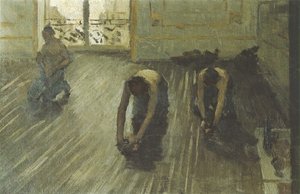
Gustave Caillebotte's 'The Floor Scrapers (study)' captures Parisian laborers with striking realism and light. Explore this iconic Impressionist work depicting urban life, showcasing Caillebotte’s unique perspective.
Biografie artist
Gustave Caillebotte (1848-1894): Un pictor francez inovator, renumit pentru operele sale realiste și impresioniste care surprind viața modernă pariziană cu o perspectivă unică.
Despre pictură
The Floor Scrapers (Study) 02: A Glimpse into Parisian Labor
Gustave Caillebotte’s “The Floor Scrapers (Study) 02,” painted in 1875, isn't merely a depiction of three men diligently working; it’s a meticulously observed and subtly powerful portrait of urban life in late 19th-century Paris. This early work, often considered a pivotal piece in Caillebotte’s artistic development, offers a rare and intimate view into the lives of the city's working class – a subject largely absent from the grand narratives of the era. The painting immediately draws the eye with its stark contrast: the muted tones of the darkened room, punctuated by the bright white of the freshly sanded floorboards, create an almost photographic realism that was revolutionary for its time.
Caillebotte’s artistic journey began with a formal training in law and engineering, but it was his encounter with photography – particularly the work of Nadar – that profoundly shaped his approach to painting. He recognized the power of capturing fleeting moments and precise details, mirroring the photographic process. This influence is evident in the meticulous rendering of the men’s postures, their tools, and the textures of the wood. The composition itself feels deliberately staged, reminiscent of a photograph, with its careful attention to perspective and lighting. The figures are not idealized; they are presented as ordinary laborers, their faces obscured by shadow, emphasizing their anonymity within the bustling city.
Impressionistic Techniques and a Revolutionary Perspective
“The Floor Scrapers” exemplifies Caillebotte’s early embrace of Impressionism, though with a distinct realism that sets him apart from many of his contemporaries. He employed broken brushstrokes to capture the play of light on the wood and the men's clothing, creating a sense of movement and atmosphere. The use of complementary colors – the cool blues and greens of the shadows against the warm browns and yellows of the floor – adds depth and vibrancy to the scene. Notably, Caillebotte’s decision to depict these laborers in a darkened room, bathed in the diffused light of an unseen window, was a bold departure from traditional studio settings. This choice immediately imbued the painting with a sense of immediacy and authenticity.
Furthermore, Caillebotte's innovative perspective—a low-angle shot that emphasizes the scale of the men and their work—was groundbreaking. It forces the viewer to confront the scene directly, fostering a feeling of intimacy and engagement. The composition isn’t about glorifying labor; it’s about presenting it as a fundamental aspect of urban existence. The painting's technical mastery lies in its ability to convey both the physical reality of the work and the emotional weight of the men’s efforts.
Symbolism and Social Commentary
While seemingly straightforward, “The Floor Scrapers” carries subtle layers of symbolism. The act of scraping floors represents a repetitive, demanding task – a symbol of the daily grind endured by countless working-class individuals in Paris at the time. The absence of any discernible hierarchy or leadership among the men suggests a shared experience of labor and resilience. It’s important to note that Caillebotte was one of the first artists to depict urban proletariat, a subject rarely addressed in art during this period. This choice speaks volumes about his desire to challenge conventional artistic norms and offer a more nuanced representation of Parisian society.
The painting's historical context is crucial to understanding its significance. Paris in the 1870s was undergoing rapid industrialization, leading to significant social and economic changes. The working class faced harsh conditions, long hours, and low wages. Caillebotte’s work serves as a poignant reminder of these realities, offering a glimpse into the lives of those often overlooked by history.
A Timeless Reflection on Labor and Urban Life
“The Floor Scrapers (Study) 02” remains a powerful and evocative artwork. It's not just a depiction of three men working; it’s a meditation on labor, poverty, and the human condition. Caillebotte’s meticulous observation, innovative perspective, and subtle symbolism combine to create a work that continues to resonate with viewers today. Reproductions of this painting offer an opportunity to appreciate Caillebotte's artistic vision and gain a deeper understanding of Parisian life in the 19th century – a testament to the enduring power of art to illuminate social realities.
Întrebări și răspunsuri
Din ce materiale este realizată "The Floor Scrapers (study) 02" și în ce stil?
"The Floor Scrapers (study) 02" este realizată în Acrylic On Canvas, în stilul Impressionist Painting.
Există o fișă informativă despre "The Floor Scrapers (study) 02" de Gustave Caillebotte pentru studenți?
Pagina Fișă informativă pentru "The Floor Scrapers (study) 02" de Gustave Caillebotte oferă o fișă informativă imprimabilă în două pagini: opera de artă însoțită de tabelul său de identificare, o bandă decenală care o plasează în intervalul de viață al artistului, alte lucrări ale acestuia, paleta de culori extrasă din imagine și citări gata de copiat în patru stiluri diferite.
Care este culoarea dominantă în "The Floor Scrapers (study) 02"?
Culoarea care iese cel mai mult în evidență în "The Floor Scrapers (study) 02" este Espresso (#504d40). Culoarea dominantă este utilă atunci când asortați o operă de artă cu un interior.
Informații rapide și quiz despre artă
Despre Gustave Caillebotte

Gustave Caillebotte
1848 - 1894, Franța
Biografie artist
A Parisian of the New Age: The Life and Art of Gustave Caillebotte
Gustave Caillebotte, născut într-o familie prosperă din Paris în 1848, a fost un artist unic, plasat strategic pentru a surprinde transformările dramatice care remodelau orașul său. Tatăl său, Martial Caillebotte, a moștenit o afacere textilă de succes și a servit ca judecător, oferindu-i lui Gustave atât securitate financiară, cât și un punct de vedere din care să observe lumea modernă înfloritoare. Inițial, a studiat dreptul – obținând diplome în 1868 și 1870 – dar chemarea sa adevărată s-a găsit în arta. A început o pregătire serioasă sub Léon Bonnat, imersându-se în pictura, în timp ce își dezvolta în același timp un interes puternic pentru fotografie, un mediu emergent care a influențat profund viziunea sa artistică. Această expunere timpurie la principiile fotografice – cadrul său, perspectiva și captarea momentelor fugare – ar deveni elemente distinctive ale stilului său unic. Caillebotte nu documenta doar schimbarea; el se implica activ în posibilitățile estetice pe care o prezenta.Realism Infuzat cu Lumină Impressionistă
Calea artistică a lui Caillebotte s-a diferențiat de tradiția academică strictă, dar nu a îmbrățișat niciodată explorările pur optice ale multor contemporani impresioniști. A găsit o rudenie cu artiștii precum Edgar Degas și Giuseppe de Nittis, împărtășind o fascinație pentru viața modernă, dar abordând-o printr-un punct de vedere al realismului meticulos. Primul său capabil, Les Raboteurs de Parquet (The Floor Scrapers), expus la Salonul din 1875, a stabilit imediat reputația sa ca pictor îndrăzneț și neconvențional. Lucrarea reprezintă trei muncitori care lustruiesc meticulos un podei de lemn, reprezentată cu onestitate fără compromisuri, șocând pe unii spectatori, dar captivându-i pe alții. Nu era doar subiectul – forța de muncă rar întâlnită în arta înaltă – ci și compoziția: tăiată, aproape tulburătoare direct și lipsită de idealizare sentimentală. Această angajare față de reprezentarea vieții cotidiene fără exagerări a continuat în lucrări precum View of Rooftops (Snow), unde a demonstrat o utilizare magistrală a punctelor de vedere înalte și a efectelor atmosferice, influențate de fotografie și de gravurile japoneze.Un Patron și un Pionier: Navigând în Lumea Artei
Dincolo de propriile sale eforturi artistice, Caillebotte a jucat un rol crucial în susținerea mișcării impresioniste. Independența sa financiară i-a permis să devină un patron semnificativ, achiziționând lucrări de la Monet, Renoir, Pissarro, Cézanne și alții într-un moment în care arta lor era în mare parte respinsă de Salonul oficial. Nu a fost doar un colecționar; el a susținut activ acești artiști, organizând și finanțând mai multe expoziții impresioniste care au sfidat normele convenționale ale artei. Această dedicare la promovarea inovației s-a extins și la propria sa colecție, pe care a lăsat-o statului său la moartea sa în 1894 – o donație inițial întâmpinată cu rezistență, dar care a format în cele din urmă piatra de temelie a fondurilor impresionante ale Muzeului Orsay. Perspectiva unică a lui Caillebotte s-a manifestat și în compozițiile sale; lucrări precum Boulevard vu d’en haut (Boulevard Seen from Above), pictate în 1880, demonstrează o sensibilitate modernă remarcabilă, folosind un punct de vedere înalt și o compoziție dinamică care anticipează perspectivele fotografice ale secolului XX. Această abordare inovatoare a compoziției, posibil influențată de gravurile japoneze și de propriile sale experimente fotografice, l-a diferențiat ca pe un pionier adevărat.O Moștenire Reclamată: Un Maestru Modern
Pentru decenii după moartea sa, opera lui Caillebotte a rămas relativ obscură, eclipsată de figuri mai celebrate ale impresionismului. Nu a fost decât târziu în secolul XX că o reevaluare cuprinzătoare a artei sale a început să aibă loc, alimentată de cercetări științifice și de expoziții majore. Această redescoperire a dezvăluit un artist cu o abilitate tehnică remarcabilă, profunzime intelectuală și viziune profundă. Punctele sale de vedere nu sunt doar reprezentări ale vieții moderne; ele sunt meditații profunde asupra complexităților existenței urbane, a peisajului social în schimbare și a relației evolutive dintre artă și realitate. Abilitatea sa de a combina realismul cu tehnicile impresioniste, compozițiile sale inovatoare și angajamentul său neclintit față de reprezentarea lumii din jurul său au asigurat locul său ca figură cheie în arta secolului al XIX-lea. Astăzi, operele lui Caillebotte sunt celebrate pentru perspectiva lor unică, execuția lor magistrală și relevanța lor durabilă – o dovadă a unui artist care a îndrăznit să capteze spiritul unei noi ere.Lucrări Notabile
- Les Raboteurs de Parquet (The Floor Scrapers) (1875): Lucrarea sa inaugurală, care demonstrează realismul și compoziția neconvențională a lui Caillebotte.
- View of Rooftops (Snow) (1878): Demonstrează utilizarea punctelor sale de vedere înalte și a efectelor atmosferice, influențate de fotografie și gravurile japoneze.
- Boulevard vu d’en haut (Boulevard Seen from Above) (1880): O compoziție modernă remarcabilă cu o perspectivă dinamică.
- Paris Street; Rainy Day (1877): Poate cea mai faimoasă lucrare a sa, care surprinde energia vibrantă a vieții pariziene într-un mod unic și evocator.
- The Bezique Game(1881) : O pictură impresionistă captivantă a timpului liber parizian.
Informații rapide despre Gustave Caillebotte
- Artistic Movement Or Style: Realism, Impresionism
- Artists Or Movements Influenced By This Artist: ['Impressionism']
- Artists Who Influenced This Artist:
- Bonnat
- Degas
- Date Of Birth: 19 aug 1848
- Date Of Death: 21 feb 1894
- Full Name: Gustave Caillebotte
- Nationality: Francez
- Notable Artworks:
- Les Raboteurs
- Rooftops (Snow)
- Boulevard
- Rainy Day
- Place Of Birth: Paris, Franța
Opere similare


Explorați opere de artă organizate pe teme, stiluri și caracteristici.


Gustave Caillebotte
The Floor Scrapers (study) 02
() ·
Cu ramă: · Pictată manual în ulei pe pânză de in
Total