


 Vezi în context
 Trimite
 Distribuie
 Detalii
 Ghidul

 Descarcă
 Produse similare
 Radiografie
 Diaporama
 Statistici
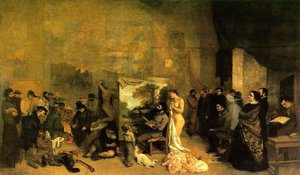
The Painter's Studio


A monumental tableau of social realism featuring a complex allegory of 19th-century life, Gustave Courbet's The Painter's Studio captures raw human emotion and texture, inviting you to explore this masterpiece for your collection.
 Citește mai mult
Gustave Courbet (1819-1877): Revoluționarul realismului francez! Explorează operele sale emblematice precum „Un demolitor” și descoperă impactul său asupra artei moderne.
Achiziționați o imagine digitală de înaltă rezoluție, îmbunătățită, mult superioară previzualizării online.
Fiecare fișier este pregătit cu meticulozitate de specialiștii noștri interni, utilizând instrumente avansate și retușare manuală expertă. Ne asigurăm că fiecare imagine beneficiază de o claritate excepțională, o acuratețe precisă a culorilor și detalii fine.
Fișierul final este livrat prin e-mail în termen de 72 de ore, optimizat pentru utilizare imediată în medii profesionale, editoriale și de imprimare. Aceasta este aceeași calitate în care au încredere studiouri de design, edituri și galerii de top.
Imagine Digitală
Descărcați un fișier la rezoluție înaltă pentru afișare personală, imprimare și proiecte creative. ( Comută pe versiunea Print Comandă pictură realizată manual)
Inclus în fiecare comandă de imagini digitale
Livrare digitală de expertiză, garantată
Când alegeți TopImpressionists.com, nu primiți doar o simplă imagine – primiți o operă de artă digitală îmbunătățită profesional, creată cu precizie și susținută de o garanție de satisfacție. Iată tot ceea ce primești odată cu comanda ta, în mod automat:

Livrare rapidă prin e-mail
Fișierul imaginii digitale la rezoluție înaltă vă va fi trimis prin e-mail în termen de 72 de ore de la finalizarea comenzii – gata pentru utilizare imediată.

Fișier digital optimizat prin IA
Opera ta de artă este optimizată profesional prin intermediul unor instrumente AI avansate și al editării manuale, asigurând un nivel maxim de detalii, claritate și acuratețe a culorilor.

Retransmitere gratuită pe viață
Ai șters sau ai pierdut din greșeală fișierul? Nu îți face griji – ți-l vom retrimite oricând, gratuit.

Fără taxe de import – Întotdeauna
Bucură-te instant de noua ta operă de artă, fără taxe vamale, taxe de import sau costuri de livrare – descărcările digitale sunt întotdeauna fără taxe.

Garanția fidelității culorilor
Asigurăm o reflectare cât mai fidelă a culorilor originale în imaginea ta digitală, prin utilizarea unor instrumente profesionale și a proceselor de gestionare a culorii.

Garanție de satisfacție de 100 de zile
Dacă nu sunteți mulțumit de imaginea digitală achiziționată, o vom revizui sau vă vom returna 100% în termen de 100 de zile – fără nicio întrebare.

Garanție de returnare 100% a banilor
Nu ești mulțumit? Primești rambursarea integrală în termen de 100 de zile de la primirea fișierului digital – fără nicio întrebare.

Reduceri pentru comenzi în volum
Cumpără 3 imagini, economisește 10% - Cumpără 5, economisește 15% - Cumpără 10+, economisește 20%. Ideal pentru proiecte creative, galerii și agenții.
A Bold Declaration of Realism: Gustave Courbet’s The Painter's Studio
Dr. Steven Zucker begins his exploration of Gustave Courbet’s monumental painting, “The Painter’s Studio,” by highlighting its significance within the broader artistic landscape of mid-19th century France. He emphasizes that Courbet’s decision to organize an independent exhibition—a defiant act against the restrictive conventions of the Académie des Beaux-Arts—was crucial in ensuring accessibility and fostering a dialogue about artistic expression beyond official channels. This bold move cemented Courbet's reputation as a revolutionary figure who championed realism, rejecting idealized representations for unflinching depictions of everyday life.- Subject Matter & Composition: The painting presents an ambitious tableau vivant—a “living picture”—featuring intellectuals and artists engaged in conversation within a cluttered studio space. Courbet meticulously populated the scene with figures representing diverse professions and social strata, including philosophers, critics, writers, a priest, a merchant, a hunter (symbolic of Napoleon III), and even a marginalized worker and child beggar. This deliberate inclusion wasn’t merely decorative; it served as a powerful commentary on societal inequalities.
- Stylistic Influences & Technique: Courbet's style draws inspiration from both Neoclassicism and Romanticism, yet decisively abandons their formal constraints. He employs a thick impasto technique—applying paint in heavy layers—creating textured surfaces that convey palpable physicality and immediacy. This tactile approach contrasts sharply with the polished smoothness favored by academic painters of the era.
Allegory & Symbolism: Decoding Courbet’s Manifesto
Beyond its realistic portrayal, “The Painter’s Studio” operates as a complex allegory exploring themes of artistic freedom and social responsibility. The central figure—Courbet himself—is surrounded by symbols representing truth (the nude woman), innocence (the child), and contemplation. Notably, the inclusion of instruments like a guitar and dagger serves to denounce academic art's perceived rigidity and moral conservatism. The figures positioned around Courbet represent various facets of intellectual life and societal values.
- The Figures: Each participant embodies a specific role or perspective—Alfred Bruchas, the art collector; Proudhon, the philosopher; Baudelaire, the poet—reflecting the intellectual currents of the time. The woman-muse symbolizes artistic inspiration and purity, while the cat represents independence and cunning.
- Symbolic Objects: Items like the guitar and dagger are deliberately placed to challenge established artistic dogma. They represent defiance against convention and a commitment to portraying reality without embellishment.
Historical Context & Significance
Painted in 1855, “The Painter’s Studio” arrived at a pivotal moment in art history—immediately following the rejection of Courbet's submission for the Universal Exhibition. This snub fueled his determination to showcase his work independently, establishing the Pavilion of Realism and demonstrating that artistic excellence could exist outside the confines of official patronage. The painting solidified Courbet’s position as a champion of realism and profoundly impacted subsequent generations of artists.
Emotional Impact & Artistic Legacy
Courbet's masterful depiction captures not only the visual details of the studio but also its atmosphere—a space brimming with intellectual curiosity and creative energy. The painting’s raw materiality and unflinching gaze invite viewers to confront uncomfortable truths about societal norms and artistic ambition. “The Painter’s Studio” remains a testament to Courbet’s unwavering conviction in portraying the world as he experienced it, securing his place as one of the most influential figures in modern art.
Întrebări și răspunsuri
Cum face "The Painter's Studio" de Gustave Courbet legătura dintre Contemporary Realism și țara de origine a artistului?
"The Painter's Studio" a fost creat de Gustave Courbet, născut în Franța, în cadrul mișcării Contemporary Realism. Originea artistului leagă opera de Contemporary Realism, așa cum este practicat de artiștii din Franța.
Ce tip de operă de artă este "The Painter's Studio" de Gustave Courbet?
"The Painter's Studio" de Gustave Courbet este clasificată ca WallArt. Această categorie descrie tipul de operă de artă din care este compusă originalul.
Este "The Painter's Studio" de Gustave Courbet o operă de artă cunoscută?
"The Painter's Studio" este clasificată ca Iconic.
Opere similare




Biografie artist
A Rebel’s Brush: The Life and Legacy of Gustave Courbet
Jean Désiré Gustave Courbet, born July 31, 1819, in Ornans, France, stands as a monumental figure in the history of art – a defiant iconoclast who irrevocably altered the trajectory of painting during the mid-nineteenth century. More than simply capturing visual impressions; his oeuvre embodies a profound philosophical commitment to portraying reality without embellishment, establishing him as the undisputed progenitor of Realism and profoundly influencing subsequent artistic movements like Impressionism and Post-Impressionism. His story unfolds not merely through brushstrokes but through a courageous confrontation with societal expectations and an unwavering dedication to artistic integrity.Early Life and Artistic Training
Courbet’s upbringing in Ornans, a modest village nestled in Burgundy, instilled within him a grounding in rural life – a formative experience that would permeate his artistic vision. His parents, bourgeois landowners, recognized and nurtured his burgeoning talent for drawing from an early age, providing him with invaluable encouragement that propelled him toward formal artistic training at the École des Beaux-Arts in Paris in 1839. However, unlike many of his contemporaries who sought to emulate the grandeur and idealism championed by Romantic painters like Eugène Delacroix and Théodore Géricault, Courbet swiftly rejected these conventions. He perceived them as artificial constructs that distanced art from genuine observation and experience—a stance that would define his artistic crusade. While acknowledging influences from masters such as Caravaggio for their masterful use of chiaroscuro and dramatic realism, Courbet deliberately forged his own path, prioritizing directness and materiality over stylistic imitation.The Birth of Realism: Challenging Artistic Conventions
Courbet’s artistic breakthrough arrived with a deliberate repudiation of the prevailing aesthetic standards of his time. He eschewed mythological narratives and heroic allegories; instead, he turned his gaze toward the everyday lives of ordinary people—particularly those engaged in labor and rural existence. This unwavering devotion to depicting reality as he perceived it – what would soon become known as Realism – initially encountered vehement opposition from critics accustomed to idealized representations steeped in romantic sentimentality. Early canvases explored landscapes and portraits, yet swiftly transitioned towards scenes of working-class life rendered on a scale traditionally reserved for monumental historical paintings. This conscious decision wasn’t merely stylistic; it was an assertion of the inherent dignity and significance of subjects often marginalized by artistic discourse. Consider The Stone Breakers (1849), tragically destroyed during World War II—a painting that encapsulates Courbet's revolutionary approach: two laborers, rendered with unflinching detail and muted colors, embody the harsh realities of rural toil without resorting to sentimental embellishment. This work served as a powerful rebuke to academic art’s preoccupation with noble subjects and idealized beauty.Major Works and Artistic Philosophy
Courbet’s artistic philosophy extended beyond subject matter to encompass technique—a cornerstone of his distinctive style. He championed *impasto*, applying paint thickly onto the canvas, prioritizing texture and materiality over smooth surfaces. This method allowed him to capture the physicality of the world around him with unprecedented accuracy, mirroring the tactile experience of observing nature or engaging in manual labor. His monumental canvases like A Burial at Ornans (1850-51) – a depiction of a provincial funeral—further solidified his reputation as a provocateur and champion of artistic freedom. The sheer scale of the painting, coupled with its uncompromising realism and rejection of emotional sentimentality, shocked audiences accustomed to grand historical narratives imbued with moral didacticism. Courbet’s refusal to conform to academic expectations resonated deeply with artists who sought to express their own perspectives on contemporary society—a legacy that continues to inspire artistic experimentation today. He also produced evocative landscapes like View in the Forest of Fontainebleau (1855), capturing the beauty of the natural world without romanticizing it, demonstrating his commitment to truthful representation.Legacy and Historical Significance
Gustave Courbet’s influence on subsequent art movements is undeniable—a testament to his transformative vision of artistic practice. While he drew inspiration from earlier masters like Caravaggio for their dramatic realism and masterful use of light and shadow, his impact transcended mere stylistic imitation. He liberated Impressionists and Post-Impressionists from the constraints of traditional representation, encouraging them to explore new ways of perceiving and portraying the world—a legacy that persists in contemporary art. His unwavering advocacy for artistic freedom cemented his place as a pivotal figure in the history of modernism—a rebel who dared to challenge convention and champion truthfulness above all else. Courbet died April 29, 1877, leaving behind an oeuvre that continues to provoke contemplation and inspire artists worldwide. He remains a symbol of artistic integrity and a beacon for those striving to express their own vision of reality.
Gustave Courbet
1819 - 1877 , Franța
Informații esențiale
- Artistic Movement Or Style: Realism
- Artists Or Movements Influenced By This Artist:
- Impressionism
- Post-Impressionism
- Artists Who Influenced This Artist:
- Eugène Delacroix
- Théodore Géricault
- Caravaggio
- Date Of Birth: 31 iulie 1819
- Date Of Death: 29 aprilie 1877
- Full Name: Gustave Courbet
- Nationality: Franțuzesc
- Notable Artworks:
- Un demolitor
- Un funerariu la Ornans
- Atelierul pictorului
- Place Of Birth: Orléans, Franța