

Shown: · With its frame:
 Previzualizare
 Trimite prin felicitare
 Distribuie
 Detalii despre lucrare
 Ghid
Ghid

 Descarcă imaginea
 Produse similare
 Radiografie
 Galerie foto
 Q&A
Q&A Statistici

lei 1276
Reproducere pictată manual în ulei
Pictură în ulei pe pânză, pictată manual de artiștii noștri la dimensiunea și ramele dorite de dumneavoastră, pe comandă. ( Comută pe versiunea Print Comută pe Imagine Digitală)
Size
·Standard
personalizat
CM
INCH
Alegeți dintre dimensiunile noastre prestabilite, care respectă proporțiile originale ale operei de artă.
Loading sizes...

lățime
înălțime
Introduceți lățimea și înălțimea necesare pentru a se potrivi ramei sau peretelui dumneavoastră. Această lucrare este pictată manual, așa că, pentru o dimensiune cu o formă diferită, artistul poate picta puțin mai mult în jurul imaginii sau poate tăia puțin din margini — dumneavoastră decideți. Vă vom trimite o simulare digitală pentru aprobare înainte de a începe pictarea. Imaginea afișată pe această pagină nu reprezintă rezultatul real — doar simularea este reprezentativă.
 Citește mai mult
Finish
·
White lei1

Blurside lei1

Extended lei1

P118B lei10

P118H lei10

P118W lei10

P438Z lei10

P508JH lei12

P508YH lei12

P805H lei10

P805Z lei10

P919BZ lei10

P919G lei10

P919XJ lei10

P959ZH lei10

P968JZ lei12

W106C lei8

W218G lei10

W218JH lei8

W218Y lei10

W307PJ lei10

W316G lei10

W316PJ lei8

W316Y lei10

W398PJ lei8

W4111J lei10

W500HY lei15

W500JH lei15

W692G lei12

W849H lei8

W940BG lei15

W953PJ lei8

H24-GOLD lei30

H24-SILVER lei30

H36-GOLD lei45

H36-SILVER lei45
Shipped in a protective tube, ready for your own framer.
Above 105 cm the frame is shipped as a kit for a professional framer — read the details.
Extras
optionalWhat do the extras include?
Examples of what can be changed: Replace face with customer photo; Add pet (e.g., replace cat with dog); Include hidden message in background; Change background landscape or elements.
After order, TopImpressionists.com team will email client for instructions and provide a mockup preview
After order, TopImpressionists.com team will email client for instructions and provide a mockup preview
Livrare în întreaga lume () în 3-4 săptămâni, în loc de cele 5 săptămâni standard. (1 Noiembrie). Fără compromisuri în ceea ce privește calitatea.
Lac de protecție
Etichetă de prezentare
Detalii plăcuță din bronz gravat
This elegant plaque features the artist's name and the title of the artwork, finely engraved for a timeless presentation.
It is made from bronze with a refined, elegant finish. The text is precisely laser-engraved for a sharp and permanent result. Measuring 9x2 cm, the plaque is compact yet easy to read. It's built to be durable and scratch-resistant, offering a professional, museum-quality look. Mounting is simple thanks to the included adhesive backing.
Detalii plăcuță din acril transparent
The plaque includes essential engraved details such as the artist's name, the title of the artwork, the date it was created, the type of media used-like oil on canvas or watercolor-a brief description of the piece, and a QR code that links to the complete artwork information.
It is crafted from clear acrylic, offering a sleek, modern appearance. The text is UV-engraved in black to ensure strong visual contrast. With a size of 10x15 cm, it ensures optimal readability. It comes equipped with two metal hooks for secure wall mounting. The plaque is designed to be weather-resistant, making it suitable for various environments, and it includes interactive features that work seamlessly with smartphone scanning.
Detalii placă din acril negru
This elegant plaque includes engraved information such as the artist's name, the title of the artwork, the date it was created, the type of media used (like oil on canvas or watercolor), a short description of the artwork, and a QR code for quick access to more information.
The plaque itself is made from refined black acrylic with a premium finish. The text is laser-engraved in white for high contrast and readability. Its size is 10x15 cm, designed to be easy to read. It comes with two metal hooks for professional mounting. The design is sleek and fits any interior style. It is also weather-resistant and durable, with built-in digital integration for mobile compatibility.
Opțiunea cu sticlă este disponibilă doar pentru dimensiuni de sub 110 cm
 Opțiunea cu sticlă este disponibilă doar pentru dimensiuni de sub 110 cm
- Livrare expres gratuită la nivel mondial
- Pânză de in de înaltă calitate
- Asigurare completă pentru transport
- Garanție de rambursare a taxelor vamale
- Garanția fidelității culorilor
- Politica de retur în 100 de zile (doar pentru defecte de fabricație)
- Garanție de rambursare 100%
- Ofertă pentru comenzi multiple


Descriere obiect de colecție
O capodopera tulbure a lui Hieronymus Bosch: analiza unei picturi emblematice despre Judecata Celui de Sus și simbolismul său profund.
Biografie artist
Descoperiți misteriosul Hieronymus Bosch (1450-1516), pictor olandez genial, renumit pentru viziunile sale suprarealiste și simbolism complex. Explorează operele sale iconice, temele religioase și scene din coșmaruri – o influență de neclintit în istoria artei.
About the painting
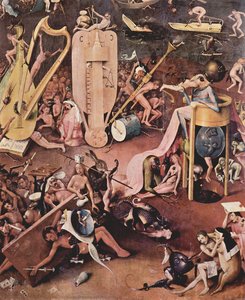
A Glimpse into Bosch’s Inferno: Decoding *The Last Judgement (detail)*
Hieronymus Bosch's *Triptych of the Last Judgement*, completed around 1480-1500, stands as a monumental achievement in Northern Renaissance art—a chilling testament to humanity’s moral failings and divine retribution. This particular detail captures the essence of Bosch’s unsettling vision of Hell, inviting viewers into a world where grotesque figures wrestle with tormentors and symbols resonate with profound theological significance. Examining this artwork reveals not merely a depiction of punishment but an intricate allegory exploring sin, morality, and God's justice—rendered with an imagination that continues to fascinate and disturb centuries later.Subject & Narrative
The scene plunges us directly into the torments of the damned. Unlike traditional depictions focusing on grand theological narratives, Bosch’s Hell eschews simplistic moral pronouncements in favor of a deeply personal experience. We witness a chaotic assembly of figures undergoing punishments uniquely tailored to their earthly transgressions—a deliberate strategy designed to confront viewers with the inescapable consequences of wrongdoing. The detail showcases Bosch's fascination with inventive and often bizarre methods of torment, moving beyond mere fire and brimstone to incorporate fantastical creatures and unsettling machinery. These instruments aren’t simply tools inflicting pain; they embody the sins themselves, amplifying their horror and underlining the futility of resistance. Bosch’s genius lies in transforming abstract theological concepts into visceral imagery that transcends intellectual understanding—a deliberate provocation intended to unsettle the soul.Style & Technique: A Masterclass in Northern Renaissance Surrealism
Bosch's style defies easy categorization, anticipating elements of Surrealism decades before André Breton formally established the movement. Rooted in Late Gothic tradition, it nevertheless possesses an unparalleled originality—characterized by meticulous oil painting on wooden panel that achieves astonishing levels of detail. Note the masterful use of *impasto* strokes—thickly applied paint—creating textural surfaces and conveying a palpable sense of chaotic energy within the darker recesses of Hell. This technique contrasts sharply with smooth, luminous areas highlighting focal points, emphasizing Bosch’s deliberate manipulation of visual perception. The flattened perspective contributes to the claustrophobic atmosphere, trapping the viewer alongside the suffering souls—a compositional choice that reinforces the artwork's psychological impact. Bosch’s meticulous attention to detail isn’t merely decorative; it serves as a conduit for conveying profound symbolic meaning and amplifying the horror of the depicted torment.Symbolism & Iconography: A Moral Compass
Every element in Bosch’s work is laden with symbolism—a deliberate strategy reflecting his engagement with contemporary proverbs, moralities, and religious beliefs. The grotesque figures—often hybrids of human and animal forms—represent the bestial nature of sin and the degradation of humanity. Instruments of music, once associated with earthly pleasure, are repurposed as tools of torture, highlighting the dangers of unchecked indulgence. Consider the recurring motif of musical instruments twisted into instruments of torment—a visual representation of the corruption of virtue and the triumph of evil. The presence of specific objects and creatures alludes to biblical narratives and moral teachings, offering a window into 15th-century anxieties about salvation and damnation. Decoding these symbols unlocks deeper layers of meaning—revealing Bosch’s profound understanding of human psychology and his unwavering conviction in the importance of moral responsibility.Historical Context & Artistic Legacy
Hieronymus Bosch lived during a period of significant social and religious upheaval—the burgeoning Reformation challenging papal authority and fueling anxieties about mortality and divine judgment. His art reflects this turbulent era, grappling with fundamental questions about faith and morality. Bosch’s influence on subsequent generations of artists is undeniable—his visionary style paving the way for Pieter Bruegel the Elder and inspiring contemporary creators exploring themes of fantasy, horror, and the human condition. *His work stands as a powerful reminder that art can confront uncomfortable truths*, provoking contemplation and challenging conventional notions of beauty—a legacy that continues to resonate with audiences today.- Ideal for: Collectors of Northern Renaissance art, those interested in symbolism and allegory, designers seeking impactful statement pieces.
- Mood: Dramatic, unsettling, thought-provoking, gothic.
- Pairing Suggestions: Contemporary furniture, minimalist spaces, gallery walls with thematic connections.
Întrebări și răspunsuri
Cine este artistul din spatele "Judecata Celui de Sus"?
„Judecata Celui de Sus” a fost creat de Hieronymus Bosch. Informațiile de pe această pagină descriu opera originală a lui Hieronymus Bosch.
Ce loc ocupă "Judecata Celui de Sus" de Hieronymus Bosch în istoria artei?
"Judecata Celui de Sus" de Hieronymus Bosch aparține mișcării Northern Renaissance Surrealism, din perioada Renașterea. Împreună, acestea conferă operei locul său în istoria artei.
Ce utilizare și ce spațiu sunt recomandate pentru "Judecata Celui de Sus" de Hieronymus Bosch?
Cele două recomandări pentru "Judecata Celui de Sus" de Hieronymus Bosch sunt utilizarea în (Piesa centrală de impact) și spațiul (Living Room).
Quick facts and art quiz
About Hieronymus Bosch

Hieronymus Bosch
1450 - 1516, Olanda
Biografie artist
A Netherlandish Enigma: The Life and Art of Hieronymus Bosch
Born around 1450 in the vibrant, bustling town of ’s-Hertogenbosch in the Netherlands—then part of Brabant—Hieronymus Bosch, originally Jheronimus van Aken, remains one of art history’s most compelling and mysterious figures. His world was steeped in late medieval religious fervor, folklore, and a growing sense of societal unease, all of which would profoundly shape his uniquely unsettling artistic vision. Coming from a family with a long tradition of painting—his grandfather, Jan van Aken, and father, Anthonius van Aken, were both artists—Bosch likely received his earliest training within the family workshop, absorbing the techniques and conventions of Netherlandish painting. However, even in his formative years, he began to diverge from established norms, hinting at the extraordinary imagination that would define his career. Biographical details are frustratingly scarce; records are fragmented, leaving much open to speculation and interpretation, adding to the aura of mystique surrounding both the man and his work. He married Aleyt Goyaerts van den Meerveen sometime before 1481, a union that provided him with some financial security through her family’s holdings, but little else is known about their personal life.Fantastical Visions and Symbolic Depths
Bosch's artistic style is instantly recognizable—a captivating blend of meticulous detail and wildly imaginative imagery. He primarily worked with oil on oak panels, demonstrating a masterful command of the medium, achieving luminous colors and intricate textures. While his early works show influences from traditional Netherlandish painting, particularly in their realism and attention to detail, he quickly moved beyond mere imitation, developing a profoundly original vision. His paintings are not simply representations of reality; they are allegorical landscapes populated by bizarre creatures, hybrid beings, and unsettling scenes that seem plucked from dreams—or nightmares. Religious themes form the core of much of his work, but these are rarely straightforward depictions of biblical stories. Instead, Bosch uses symbolism to explore complex moral and theological concepts, often focusing on the dangers of sin, the fragility of earthly pleasures, and the inevitability of divine judgment. His creatures—grotesque demons, fantastical animals, and strangely human figures—are not merely decorative elements; they are embodiments of vice, temptation, and spiritual corruption. The blending of the sacred and the profane, the beautiful and the grotesque, creates a uniquely unsettling effect that continues to captivate viewers centuries later.Masterpieces of Moral Allegory
Among Bosch’s most celebrated achievements is The Garden of Earthly Delights (c. 1490-1510), a triptych that remains one of the most enigmatic and debated works in art history. When opened, it presents a panoramic vision of paradise, earthly life, and hell—a complex allegorical representation of humanity’s fall from grace. The left panel depicts the Garden of Eden, teeming with fantastical creatures and lush vegetation; the central panel portrays a world consumed by sensual pleasure and unrestrained desire; and the right panel offers a terrifying glimpse into the torments of hell. The Triptych of the Last Judgement (c. 1480-1490) is another powerful example of his skill in portraying both heavenly bliss and infernal torment, while The Ascent of the Blessed (c. 1480-1490) demonstrates his ability to create ethereal and dreamlike scenes. Even smaller works like Epiphany (c. 1495) showcase his innovative use of oil on wood and complex symbolism, revealing a mind constantly grappling with profound questions about faith, morality, and the human condition.Influences and Artistic Development
Identifying Bosch’s direct influences is a challenging task, given the originality of his vision. Scholars suggest possible connections to medieval folklore, religious texts—particularly those emphasizing apocalyptic themes—and the prevailing anxieties of the time, including fears of heresy and social upheaval. However, it's clear that he synthesized these elements into something entirely new and uniquely his own. His early works show a clear debt to the conventions of Netherlandish painting, particularly in their realism and attention to detail. Yet, as he matured, Bosch began to experiment with new techniques and compositional strategies, developing a style characterized by its meticulous detail, vibrant colors, and unsettling imagery. He was also influenced by the work of other artists, including Jan van Eyck and Rogier van der Weyden, but ultimately forged his own distinctive path. The influence of the *Grotesque* tradition is evident in many of his works, a style that emphasized the bizarre and fantastical, often with a satirical or critical edge.Legacy and Enduring Influence
Bosch’s work has had a profound and lasting impact on art history. He is considered one of the pioneers of Surrealism, inspiring generations of artists with his dreamlike imagery and exploration of the subconscious. His paintings continue to fascinate and provoke debate, solidifying his place as a master of Netherlandish painting and a visionary artist whose influence extends far beyond his own time. The unsettling beauty of his creations—the grotesque creatures, the bizarre landscapes, the moral allegories—remains deeply resonant today, inviting viewers to contemplate the complexities of human nature and the eternal struggle between good and evil. His paintings offer valuable insights into the religious, social, and psychological climate of the late 15th and early 16th centuries, challenging conventional norms and paving the way for new forms of artistic expression. He died in 1516, leaving behind a body of work that continues to haunt and inspire, ensuring his enduring legacy as one of art history’s most singular and unforgettable voices.Quick facts about Hieronymus Bosch
- Artistic Movement Or Style: Surrealism, Simbolism
- Artists Or Movements Influenced By This Artist: ['Pieter Bruegel cel Bătrân']
- Date Of Birth: c. 1450
- Date Of Death: 1516
- Full Name: Hieronymus Bosch
- Nationality: Olandez
- Notable Artworks:
- Gardenul Placerilor Pamantesti
- Judecata de Sus
- Ascensiunea Sfintilor
- Epifania
- Place Of Birth: Den Bosch, Olanda
Explorați opere de artă organizate pe teme, stiluri și caracteristici.




Hieronymus Bosch
Judecata Celui de Sus
() ·
With its frame: · Hand-painted in oil on linen
Total