


 Previzualizare
 Trimite prin felicitare
 Distribuie
 Detalii despre lucrare
 Ghid
Ghid

 Descarcă imaginea
 Produse similare
 Radiografie
 Galerie foto
 Q&A
Q&A Statistici
Intervenția sabinelor (detaliu)


Explorează capodopera neoclasică a lui Jacques-Louis David, „Intervenția sabinelor”, care prezintă mitologia romană și promovează reconcilierea în conflict. Descoperă simbolismul și strălucirea sa artistică pe TopImpressionists.
 Vezi mai mult
Jacques-Louis David (1748-1825): Maestru al neoclasicismului francez revoluționar! Celebrează eroismul și idealurile epocii prin opere emblematice precum 'Jurământul lui Horațiu' și 'Moartea lui Marat'.
Giclée / Imprimare artistică
Printuri giclée sau pe canvas de calitate muzeală, cu proces de producție rapid și opțiuni flexibile de finisare. ( Comandă pictură realizată manual Comută pe Imagine Digitală)




P118B lei10

P118H lei10

P118W lei10

P438Z lei10

P508JH lei12

P508YH lei12

P805H lei10

P805Z lei10

P919BZ lei10

P919G lei10

P919XJ lei10

P959ZH lei10

P968JZ lei12

W106C lei8

W218G lei10

W218JH lei8

W218Y lei10

W307PJ lei10

W316G lei10

W316PJ lei8

W316Y lei10

W398PJ lei8

W4111J lei10

W500HY lei15

W500JH lei15

W692G lei12

W849H lei8

W940BG lei15

W953PJ lei8




Standard
personalizat
CM
INCH
Alegeți dintre dimensiunile noastre prestabilite, care respectă proporțiile originale ale operei de artă.
Loading sizes...

lățime
înălțime
Introduceți lățimea și înălțimea necesare pentru a se potrivi ramei sau peretelui dumneavoastră. O printare poate fi doar tăiată, niciodată extinsă dincolo de dimensiunea imaginii originale, astfel încât o dimensiune cu o formă diferită va pierde o parte din imagine. Vă trimitem o simulare digitală pentru aprobare înainte de a imprima orice. Imaginea afișată pe această pagină nu prezintă tăierea reală — doar simularea arată acest lucru.
Livrare în întreaga lume () în 2 săptămâni, în loc de cele 4/5 săptămâni standard. (30 Octombrie)

Livrare expres gratuită la nivel mondial

Pânză de in de înaltă calitate

Asigurare completă pentru transport

Garanție de rambursare a taxelor vamale

Garanția fidelității culorilor

Politica de retur în 100 de zile (doar pentru defecte de fabricație)

Garanție de rambursare 100%

Ofertă pentru comenzi multiple
 Opțiunea cu sticlă este disponibilă doar pentru dimensiuni de sub 110 cm

Intervenția sabinelor (detaliu)
Giclée / Imprimare artistică
Dimensiune reproducere
-


Preț total calculat
lei 324
Intervenția femeilor sabine: O mărturie a reconcilierii
Tabloul „Intervenția femeilor sabine” de Jacques-Louis David, finalizat în 1799, stă de față ca un emblemă a idealismului neoclasic în mijlocul peisajului turbulent al Revoluției Franceze. Depășind simpla reprezentare a unei legende mitice — răpirea și negocierea ulterioară pentru pace între Roma și aliații săi sabini — opera constituie o meditație profundă asupra legăturilor familiale și a puterii durabile a compasiunii de a potoli conflictul.
- Subiectul: Pictura relatează momentul crucial de după cucerirea romană a Etruriei, când Hersilia, soția lui Romulus, a intervenit cu curaj între soțul și tatăl ei, Tatius, încercând să evite vărsarea de sânge. Acest episod a servit drept o metaforă puternică pentru lupta revoluționară însăși – un apel pentru unitate și înțelegere după ani de tulburări violente.
- Stil și Tehnică: David a aderat cu meticulozitate la principiile Neoclassicismului, oglindind măreția și seriozitatea morală susținută de artiști precum Antonio Canova și Johann Christian Schröder. El a utilizat uleiul pe pânză cu o atenție minuțioasă la detalii, apelând la chiascuro — jocul dramatic de lumină și umbră — pentru a sculpta formele și a transmite emoția. Pincetarea magistrală a artistului surprinde atât fizicalitatea musculară, cât și nuanțele psihologice subtile.
- Context Istoric: Creat în timpul Reacției Thermidoriene, după căderea lui Robespierre, „Intervenția” reflectă dorința lui David de a portretiza o întoarcere triumfătoare la ordine și virtute. Aceasta a servit ca un contrapunct deliberat față de terorul revoluției, subliniind importanța valorilor familiale și a tăriei morale în modelarea armoniei sociale.
- Simbolism: Compoziția este încărcată de semnificație simbolică. Poziția neclintită a Hersiliei întruchipează forța feminină și dreptatea — un contrast izbitor cu preocuparea masculină dominantă pentru război. Promontorul stâncos reprezintă conflictul civil, în timp ce caii simbolizează puterea militară. În mod crucial, David îi plasează pe copii între Romulus și Tatius, evidențiind sacralitatea familiei și pledând pentru reconciliere ca cale către stabilitate.
- Impact Emoțional: „Intervenția” transcende simpla ilustrație narativă; ea evocă un sentiment palpabil de dramă și contemplare morală. Reprezentarea abilă a artistului surprinde tensiunea confruntării alături de demnitatea liniștită a hotărârii materne — inspirând privitorii să reflecteze asupra rolului compasiunii în rezolvarea disputelor și în protejarea valorilor umane.
Alegerea deliberată a subiectului și a stilului artistic de către David subliniază convingerea sa că arta poate servi drept busolă morală în perioade de criză. „Intervenția femeilor sabine” rămâne o capodoperă durabilă, nu doar pentru strălucirea sa tehnică, ci și pentru mesajul său atemporal despre importanța unității, a păcii și a devotamentului familial — teme care continuă să rezoneze cu publicul de astăzi.
Întrebări și răspunsuri
Cât de armonioase sunt culorile din "Intervenția sabinelor (detaliu)" de Jacques-Louis David?
"Intervenția sabinelor (detaliu)" de Jacques-Louis David prezintă o armonie cromatică Unitate cromatică puternică.
În ce mișcare și în ce epocă este situată opera "Intervenția sabinelor (detaliu)" de Jacques-Louis David?
În "Intervenția sabinelor (detaliu)" de Jacques-Louis David, mișcarea Ideali Neoclasici întâlnește epoca Epoca modernă timpurie.
Cât de accentuat este contrastul în "Intervenția sabinelor (detaliu)" de Jacques-Louis David?
"Intervenția sabinelor (detaliu)" de Jacques-Louis David prezintă un contrast Contrast accentuat între zonele luminoase și cele întunecate.
Biografie artist
A Brushstroke Across Revolution: The Life and Art of Jacques-Louis David
Jacques-Louis David, born in Paris in 1748, was more than just a painter; he was a visual chronicler of an era defined by upheaval, idealism, and the relentless pursuit of new orders. His life mirrored the dramatic shifts unfolding across France – from the waning opulence of the Rococo to the austere clarity of Neoclassicism, and ultimately, through the tumultuous years of revolution and Napoleonic glory. A childhood marked by the early loss of his father and a facial impediment that initially hindered his speech seemed only to sharpen his observational skills and fuel an unwavering dedication to artistic mastery. Though initially apprenticed to François Boucher, David quickly found himself drawn to the more morally resonant work of Joseph-Marie Vien, whose emphasis on history painting and classical subjects resonated with a burgeoning sense of purpose within the young artist. His early attempts to win the prestigious Prix de Rome were fraught with frustration, yet these repeated setbacks only intensified his resolve, forging a relentless perfectionism that would characterize his entire career.The Birth of Neoclassical Drama
David’s artistic evolution wasn't merely a stylistic shift; it was a philosophical statement. He rejected the frivolous ornamentation and playful themes of the Rococo, embracing instead the clarity, order, and moral seriousness inherent in classical antiquity. This commitment was profoundly influenced by archaeological discoveries at Pompeii and Herculaneum, which unveiled a world of Roman art and architecture previously lost to time. The images of these ancient ruins, with their monumental scale and rational design, captivated David’s imagination and provided the foundation for his new artistic vision. His breakthrough came with “Oath of the Horatii” (1784), a painting that transcended mere artistic skill to become an emblem of civic virtue and patriotic sacrifice. The stark composition, dramatic lighting – carefully orchestrated to emphasize the figures' musculature and emotional intensity – and precise draftsmanship were revolutionary, signaling a decisive break from the past. It wasn’t simply *what* he painted but *how* – a deliberate construction designed to evoke powerful emotional responses and inspire contemplation on themes of duty, honor, and self-sacrifice. The figures are rendered with an almost sculptural quality, their bodies idealized according to classical principles, while their expressions convey a profound sense of resolve and impending doom. This work didn't just announce a new style; it foreshadowed the ideological currents that would soon sweep across France.Revolution and Remembrance: Art as Political Weapon
As the French Revolution erupted in 1789, David was not merely an observer but an active participant. A fervent supporter of the revolutionary cause and a close associate of Maximilien Robespierre, he saw art as a powerful tool for shaping public opinion and immortalizing the ideals of the new republic. His paintings during this period became potent symbols of revolutionary martyrdom and republican fervor. Perhaps his most iconic work from this era is “The Death of Marat” (1793), a hauntingly realistic depiction of the assassinated journalist, transformed into a secular saint. The painting’s stark simplicity – the pale body, the makeshift desk, the poignant letter clutched in Marat's hand – elevates the scene to a level of profound emotional resonance. David deliberately chose to depict Marat in his final moments, emphasizing his dedication to the revolution and presenting him as a victim of counter-revolutionary forces. The painting was intended to inspire loyalty and galvanize support for the new government. He also created numerous other works celebrating revolutionary heroes and events, solidifying his reputation as a key propagandist for the Revolution.From Revolution to Empire: Serving Napoleon
The fall of Robespierre marked another turning point in David’s career. With remarkable adaptability, he navigated the shifting political landscape and aligned himself with Napoleon Bonaparte, becoming the First Consul’s official court painter. This new patronage ushered in a period of grand-scale commissions designed to glorify Napoleon’s victories and achievements. “Napoleon Crossing the Alps” (1801-1805) is perhaps the most famous example – a masterful piece of propaganda that presents Napoleon as a heroic, almost mythical figure conquering both nature and adversity. The painting depicts Napoleon leading his troops over the formidable Mont Blanc, bathed in dramatic light and rendered with an almost theatrical intensity. “The Coronation of Napoleon” (1807), an immense canvas capturing the opulence and grandeur of the imperial ceremony, further cemented David’s position as the preeminent artist of the Napoleonic era. During this time, his palette subtly shifted, incorporating warmer Venetian colors while maintaining the precision and clarity that defined his style. He continued to produce historical paintings celebrating Napoleon's military triumphs and consolidating his image as a powerful and divinely ordained ruler.Exile, Legacy, and Enduring Influence
The Bourbon Restoration in 1814 brought renewed peril for David, whose association with the fallen Napoleon made him a target of persecution. He chose exile in Brussels in 1816, where he continued to paint and teach until his death on December 29, 1825. Even in exile, his influence remained profound. He trained numerous pupils, including Jean-Auguste-Dominique Ingres, who would become one of the most important neoclassical painters of the 19th century. David’s emphasis on draftsmanship, composition, and historical accuracy left an indelible mark on French art. *His legacy extends beyond mere imitation*; his expressive distortions of form and space even foreshadowed the innovations of later artists like Henri Matisse and Pablo Picasso. Jacques-Louis David was not simply a painter of his time; he *defined* it, capturing its spirit of revolution, ambition, and enduring ideals on canvas for generations to come.- Major Achievements: Established Neoclassicism as the dominant style in French painting.
- Historical Significance: Created iconic images that captured the spirit of the French Revolution and the Napoleonic era.
- Influence: Trained a generation of influential artists who carried on his legacy.

Jacques-Louis David
1748 - 1800 , Franța
Detalii rapide
- Artistic Movement Or Style: Neoclasicism
- Artists Or Movements Influenced By This Artist:
- Ingres
- Matisse
- Artists Who Influenced This Artist:
- Vien
- Mengs
- Date Of Birth: 30 august 1748
- Date Of Death: 29 decembrie 1825
- Full Name: Jacques-Louis David
- Nationality: Francez
- Notable Artworks:
- Oath of the Horatii
- Marat Mort
- Napoleon pe Alpi
- Place Of Birth: Paris, Franța
Articole similare
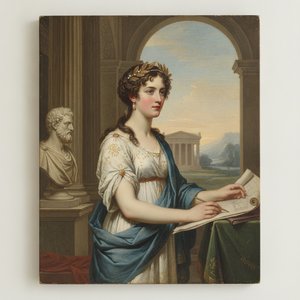
The Revival of Antiquity: Exploring Ideals of Beauty & Power in Neoclassical Portraiture
Explore the captivating world of Neoclassical portraiture! Discover the power & ideals behind masterpieces by David, Girodet & more. Expert analysis, custom reproductions & art appraisal at TopImpressionists.

Echoes of Olympus: Mythological Narratives in Western Art Through the Ages
Explore the captivating history of mythological narratives in Western art! From ancient Greece to modern masterpieces, discover iconic artworks & symbolism. Expert analysis and high-quality reproductions at TopImpressionists.

Jacques-Louis David: Neoclassical Ideals & Revolutionary Witness
Explore the life & art of Jacques-Louis David, leading Neoclassical painter of the French Revolution. Discover iconic works like 'The Death of Marat' and his lasting impact on art history. Expert analysis & high-quality reproductions at TopImpressionists.

The Revival of Antiquity: Exploring the Ideals & Innovations of Neoclassical Art
Explore the revival of classical art with our deep dive into Neoclassicism! Discover key artists like Jacques-Louis David, Enlightenment influences & lasting impact on art history. Learn more now.

The Revival of Antiquity: Exploring the Neoclassical Movement & its Enduring Legacy
Explore the revival of classical art with our deep dive into Neoclassicism! Discover key artists like Jacques-Louis David, Enlightenment influences & lasting impact on art history. High-quality reproductions at TopImpressionists.
Explorați opere de artă organizate pe teme, stiluri și caracteristici.


