

 Previzualizare
 Trimite prin felicitare
 Distribuie
 Detalii despre lucrare
 Ghid
Ghid

 Descarcă imaginea
 Produse similare
 Radiografie
 Galerie foto
 Întrebări și răspunsuri
 Statistici
Boys on the Beach


Capture the radiant light of childhood joy with Sorolla's Boys on the Beach; own a masterpiece echoing Spanish sunshine.
 Vezi mai mult
Joaquín Sorolla: Maestru al luminii și culorii în pictură impresionistă! Admirați operele sale vibrante despre litoralul spaniol și moștenirea artistică impresionantă.
Giclée / Imprimare artistică
Printuri giclée sau pe canvas de calitate muzeală, cu proces de producție rapid și opțiuni flexibile de finisare. ( Comandă pictură realizată manual Comută pe Imagine Digitală)




P118B lei10

P118H lei10

P118W lei10

P438Z lei10

P508JH lei12

P508YH lei12

P805H lei10

P805Z lei10

P919BZ lei10

P919G lei10

P919XJ lei10

P959ZH lei10

P968JZ lei12

W106C lei8

W218G lei10

W218JH lei8

W218Y lei10

W307PJ lei10

W316G lei10

W316PJ lei8

W316Y lei10

W398PJ lei8

W4111J lei10

W500HY lei15

W500JH lei15

W692G lei12

W849H lei8

W940BG lei15

W953PJ lei8




Standard
personalizat
CM
INCH
Alegeți dintre dimensiunile noastre prestabilite, care respectă proporțiile originale ale operei de artă.
Loading sizes...

lățime
înălțime
Introduceți lățimea și înălțimea necesare pentru a se potrivi ramei sau peretelui dumneavoastră. O printare poate fi doar tăiată, niciodată extinsă dincolo de dimensiunea imaginii originale, astfel încât o dimensiune cu o formă diferită va pierde o parte din imagine. Vă trimitem o simulare digitală pentru aprobare înainte de a imprima orice. Imaginea afișată pe această pagină nu prezintă tăierea reală — doar simularea arată acest lucru.
Livrare în întreaga lume () în 2 săptămâni, în loc de cele 4/5 săptămâni standard. (6 Noiembrie)

Livrare expres gratuită la nivel mondial

Pânză de in de înaltă calitate

Asigurare completă pentru transport

Garanție de rambursare a taxelor vamale

Garanția fidelității culorilor

Politica de retur în 100 de zile (doar pentru defecte de fabricație)

Garanție de rambursare 100%

Ofertă pentru comenzi multiple
 Opțiunea cu sticlă este disponibilă doar pentru dimensiuni de sub 110 cm

Boys on the Beach
Giclée / Imprimare artistică
Dimensiune reproducere
-


Preț total calculat
lei 335
A Symphony in Sunlight: Capturing Childhood Joy
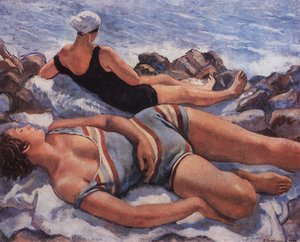
To gaze upon this depiction of boys on the beach is to be instantly transported to a sun-drenched afternoon where time seems to slow down, suspended by the golden quality of light. Joaquín Sorolla y Bastida, master of capturing the ephemeral glow of Mediterranean life, has gifted us a scene brimming with innocent vitality. The composition centers around three young figures enjoying the elemental pleasure of the sea. One boy rests languidly in the water, seemingly at ease with the gentle rhythm of the waves, while his companions stand nearby, their interaction suggesting a shared moment of pure camaraderie. Sorolla possesses an unparalleled gift for rendering human skin under intense sunlight; here, the boys appear almost luminous, as if painted not just with pigment, but with captured rays of dawn.
Sorolla's Mastery of Light and Atmosphere
The technical brilliance evident in this work is inseparable from Sorolla’s lifelong obsession: light. His technique is characterized by an almost breathtaking luminosity. He did not merely paint the beach; he painted the way the sun interacted with the water, the sand, and the boys' skin. Notice how the light seems to emanate from within the scene itself. The interplay between the deep blues of the receding tide and the warm ochres of the dry sand creates a vibrant chromatic harmony. Furthermore, the inclusion of scattered birds adds an organic layer to the atmosphere, grounding the human joy within the vast, breathing ecosystem of the coast. It is this masterful handling of *plein air* light that elevates the painting from a mere portrait to an immersive sensory experience.
Symbolism of Leisure and Innocence
Beyond the technical prowess lies a profound emotional resonance. The subject matter—uninhibited play on the beach—is inherently symbolic. It speaks to a timeless yearning for simplicity, for moments untainted by adult complexity. The nakedness, in Sorolla's context, is rarely one of mere exposure; rather, it symbolizes freedom and vulnerability before nature’s grand stage. The boys are embodiments of unburdened joy, their connection suggesting the purest form of friendship. For the collector or decorator, this piece offers more than just decoration; it offers a visual balm—a reminder to pause, breathe deeply, and appreciate the simple pleasures life affords.
Bringing Coastal Radiance Home
For those seeking to infuse a space with the spirit of a Spanish summer, a reproduction of "Boys on the Beach" is an unparalleled choice. Whether placed in a sunlit living room or a gallery setting, its vibrant palette and palpable warmth will act as a focal point, drawing the eye toward moments of perceived leisure. Sorolla’s ability to make light tangible means that even reproduced, the painting retains an energetic quality. It invites conversation, evokes memories of seaside escapes, and celebrates the enduring beauty found in human connection under the vast, benevolent sky.
Întrebări și răspunsuri
Ce spațiu este recomandat pentru "Boys on the Beach" de Joaquín Sorolla?
O reproducere a „Boys on the Beach” se potrivește de minune într-un Lounge.
În ce perioadă a carierei lui Joaquín Sorolla se încadrează "Boys on the Beach"?
"Boys on the Beach" reprezintă perioada Mature Period a lui Joaquín Sorolla.
Cât de intense sunt culorile din "Boys on the Beach"?
Culoarea operei "Boys on the Beach" prezintă o Subtle Color a saturației și o Balanced a intensității.
Opere similare



Biografie artist
A Life Bathed in Light: The World of Joaquín Sorolla
Joaquín Sorolla y Bastida, a name synonymous with the radiant light and vibrant energy of Spain, was more than just a painter; he was a chronicler of his nation’s soul. Born in Valencia in 1863, Sorolla's early life was marked by tragedy. Orphaned at the tender age of two following a cholera epidemic that claimed both parents, young Joaquín and his sister were raised by their maternal aunt and uncle. This early experience with loss perhaps instilled within him a profound appreciation for the fleeting beauty of life – a sentiment that would permeate his art. Though hardship shadowed his beginnings, it did not dim the spark of artistic talent that quickly became apparent. He received initial instruction in Valencia, demonstrating an aptitude that led to studies under established artists like Cayetano Capuz and José Benlliure, eventually culminating in a four-year grant to study in Rome. It was there, amidst the classical grandeur of Italy, that Sorolla began to forge his unique artistic path, absorbing influences while simultaneously developing a style distinctly his own.From Historical Narratives to Sun-Drenched Realism
Sorolla’s early work reflected the prevailing academic trends of the time – large-scale historical and mythological scenes. He was initially trained in the traditional styles favored by the Spanish Academy, producing works that adhered to established conventions. However, a pivotal shift occurred as he returned to Spain and began to truly observe the world around him. He found himself captivated by the everyday lives of his countrymen, particularly those along the Valencian coast. The intense Mediterranean sunlight, the shimmering sea, and the vibrant energy of the people became his primary subjects. This transition wasn’t immediate; Sorolla continued to explore social realism with works like Sad Inheritance (1899), a powerful depiction of children afflicted by polio bathing in the sea – a painting that garnered significant acclaim but also revealed a darker, more compassionate side to his artistic vision. This work, exhibited at the Universal Exhibition in Paris, brought him widespread recognition and cemented his position as a leading figure in Spanish art. Yet, it was his increasingly focused exploration of light and color, inspired by Impressionism though never fully embracing its tenets, that would define his legacy. He wasn’t merely *depicting* light; he was attempting to *capture* its very essence, the way it danced on water, illuminated skin, and transformed ordinary moments into scenes of extraordinary beauty.Master of Luminism: A Unique Artistic Voice
Sorolla's technique became instantly recognizable – a bravura display of brushwork, characterized by loose, energetic strokes that conveyed movement and atmosphere. He worked *en plein air* whenever possible, directly confronting the challenges of capturing fleeting light conditions. This dedication to painting outdoors resulted in canvases brimming with life and immediacy. His beach scenes, perhaps his most iconic works, are not simply picturesque representations of leisure; they are studies in luminosity, reflections, and the joyful interaction between people and their environment. Paintings like Children on the Seashore and Sewing the Sail exemplify this mastery – figures bathed in golden light, rendered with a remarkable sense of spontaneity and vitality. He wasn’t interested in meticulous detail; rather, he sought to convey the *impression* of reality, prioritizing atmosphere and emotion over precise representation. This approach earned him comparisons to Impressionists like Monet and Renoir, but Sorolla's work possessed a unique Spanish character – a warmth, intensity, and emotional depth that set it apart. The use of broken color and rapid brushstrokes created an effect of shimmering light, as if the sun itself were captured on canvas.Key Achievements & Recognition
- 1892: Gold medal at the National Exhibition in Madrid for Another Marguerite.
- 1894: Acclaimed for The Return from Fishing: Hauling the Boat, acquired by the Musée du Luxembourg.
- 1899: Grand Prix and medal of honor at the Universal Exhibition in Paris for Sad Inheritance.
- 1900-1923: Extensive exhibitions throughout Europe and the United States, establishing international recognition.
- 1912-1928: Commissioned to create Vision of Spain for the Hispanic Society of America (completed posthumously).
- Present Day: Works held in major museums worldwide, including the Museo Sorolla in Madrid.
Legacy and Enduring Influence
By the early 20th century, Joaquín Sorolla was internationally renowned. He exhibited widely throughout Europe and the United States, receiving numerous accolades and commissions. His most ambitious undertaking, Vision of Spain, a series of fourteen monumental murals commissioned by the Hispanic Society of America, remains a testament to his artistic vision and technical skill. Though he suffered a stroke in 1920 that curtailed his painting activity, Sorolla’s influence continued to grow after his death in 1923. His work inspired generations of artists, not only in Spain but around the world. Today, his paintings are held in major museums globally, including the Museo Sorolla in Madrid – a former home transformed into a dedicated space for showcasing his art. Sorolla’s legacy extends beyond his technical brilliance; he captured a specific moment in Spanish history and culture, immortalizing the beauty of its landscapes and the spirit of its people. He remains a master of light, color, and emotion—a painter whose work continues to resonate with audiences today, reminding us of the power of art to illuminate our world.
Joaquín Sorolla
1863 - 1923 , Spania
Detalii rapide
- Artistic Movement Or Style: Luminism, Impressionism
- Artists Or Movements Influenced By This Artist: ['Sorolla a influențat']
- Artists Who Influenced This Artist:
- Pradilla
- Bastien-Lepage
- Menzel
- Date Of Birth: 27 februarie 1863
- Date Of Death: 10 august 1923
- Full Name: Joaquín Sorolla y Bastida
- Nationality: Spaniol
- Notable Artworks:
- Another Marguerite
- Return de la pêche
- Héritage triste
- Place Of Birth: Valencia, Spania
Articole similare

The Soul of Impressionism: Why Oil on Canvas Captures Eternal Light and Timeless Emotion
Discover the enchanting alchemy of Impressionism. Explore how the mastery of oil on canvas, through glazing and impasto, captures eternal light and emotion. Perfect for lovers of Monet and Van Gogh seeking the profound depth of hand-painted fine art.
Explorați opere de artă organizate pe teme, stiluri și caracteristici.


