
 Previzualizare
 Trimite prin felicitare
 Distribuie
 Detalii despre lucrare
 Ghid
Ghid

 Descarcă imaginea
 Produse similare
 Radiografie
 Galerie foto
 Q&A
Q&A Statistici
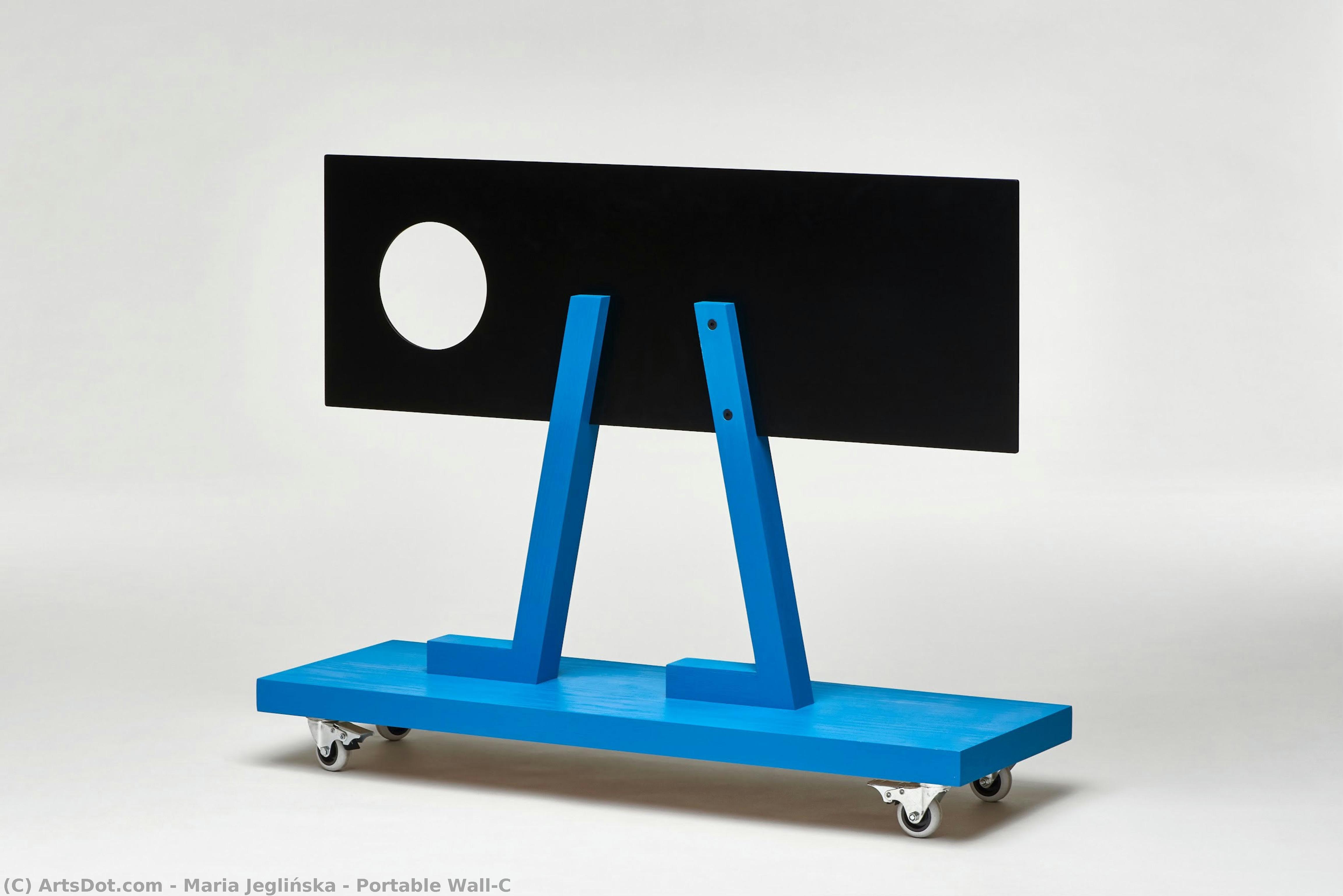
Portable Wall-C

- 70.0 x 90.0 cm


Explore Maria Jeglińska’s ‘Portable Wall-C’: a striking minimalist design blending functionality & color. This sculptural display unit evokes modern aesthetics & playful spatial partitions.
 Vezi mai mult
Explore maria jeglińska's minimalist designs blending functionality & simplicity. Discover her innovative artworks & global exhibitions.
Lucrarea de artă afișată pe această pagină este protejată de legile privind drepturile de autor, ceea ce înseamnă că nu putem crea sau vinde în mod legal o reproducere identică. Această protecție este garantată prin acorduri internaționale, precum Convenția de la Berna și de legile naționale, inclusiv cele prevăzute de Legea dreptului de autor din S.U.A. – Titlul 17. Toate drepturile rezervate. Orice reproducere neautorizată este interzisă.
Această metodă respectă pe deplin reglementările privind drepturile de autor, deoarece nu implică copierea sau duplicarea operei protejate. În schimb, este o reinterpretare creativă – o pictură nouă, influențată de original, dar care nu este identică cu acesta.
Giclée / Imprimare artistică
Printuri giclée sau pe canvas de calitate muzeală, cu proces de producție rapid și opțiuni flexibile de finisare. ( Comandă pictură realizată manual Comută pe Imagine Digitală)




































Standard
personalizat
CM
INCH
Alegeți dintre dimensiunile noastre prestabilite, care respectă proporțiile originale ale operei de artă.
Loading sizes...

lățime
înălțime
Introduceți lățimea și înălțimea necesare pentru a se potrivi ramei sau peretelui dumneavoastră. O printare poate fi doar tăiată, niciodată extinsă dincolo de dimensiunea imaginii originale, astfel încât o dimensiune cu o formă diferită va pierde o parte din imagine. Vă trimitem o simulare digitală pentru aprobare înainte de a imprima orice. Imaginea afișată pe această pagină nu prezintă tăierea reală — doar simularea arată acest lucru.
Livrare în întreaga lume () în 2 săptămâni, în loc de cele 4/5 săptămâni standard. (31 Octombrie)

Livrare expres gratuită la nivel mondial

Pânză de in de înaltă calitate

Asigurare completă pentru transport

Garanție de rambursare a taxelor vamale

Garanția fidelității culorilor

Politica de retur în 100 de zile (doar pentru defecte de fabricație)

Garanție de rambursare 100%

Ofertă pentru comenzi multiple
 Opțiunea cu sticlă este disponibilă doar pentru dimensiuni de sub 110 cm

Portable Wall-C
Giclée / Imprimare artistică
Dimensiune reproducere
-


Preț total calculat
lei 327
The ‘Portable wall-C‘ was created as part of the exhibition series Circulation in the Circle, launched by the Contemporary Design Department in 2018. According to the concept, the invited designer will select an object or ensemble of objects from the collection of the Museum of Applied Arts, and will create a new design as inspired by the object(s). The second designer we have invited for the series is Maria Jeglińska from Poland, who has selected an armchair designed by Sándor Mikó from the museum’s collection, which , which served as one piece of the furnishings of the Te + Én eszpresszó [You + Me espresso bar] that operated on Bem rakpart [embankment] in the 1970s. Inspired by the armchair she selected, Jeglińska has designed playful spatial partitions, which are also colourful characters. The stylised dividers reminiscent of human or animal figures are coquettish pieces. They are located somewhere along the frontier of opening and closing, at the border of 2D and 3D.
Întrebări și răspunsuri
Unde pot vedea o previzualizare a unei reproduceri a operei "Portable Wall-C" de Maria Jeglińska?
O previzualizare a lucrării "Portable Wall-C" de Maria Jeglińska este disponibilă pe pagina de Previzualizare în spațiu a acesteia.
Câți oameni vizualizează "Portable Wall-C"?
Statistici despre "Portable Wall-C" de Maria Jeglińska se regăsesc pe pagina Statistici a operei de artă: vizitele lunare ale acesteia, vizitele lucrărilor artistului și distribuția pe țări și limbi pentru vizitatorii recenti.
În ce muzeu se află originalul "Portable Wall-C"?
Originalul "Portable Wall-C" de Maria Jeglińska este păstrat la Museum of Applied Arts, Budapesta, Hungary. O reproducere permite expunerea operei în propria locuință.
Biografie artist
A Quiet Revolution in Form: The World of Maria Jeglińska
Maria Jeglińska-Adamczewska, born in Fontainebleau, France, in 1983, embodies a fascinating paradox within the contemporary design landscape. She is an artist who quietly champions simplicity and functionality, yet her work resonates with a profound depth that has garnered international acclaim. Her journey, marked by rigorous training at the prestigious ECAL (École Cantonale d'Art de Lausanne) and formative experiences in studios alongside luminaries like Konstantin Grcic and Alexander Taylor, initially pointed towards a career steeped in global design trends. However, Jeglińska’s unexpected return to Poland proved pivotal, igniting a creative force dedicated to fostering a uniquely Polish aesthetic while simultaneously engaging with universal principles of form and space.
From Lausanne to Warsaw: A Defining Shift
Jeglińska's education at ECAL was foundational. The school’s emphasis on industrial design—a discipline that marries artistic vision with practical application—instilled in her a deep respect for materials, processes, and the user experience. Scholarships from institutions like IKEA further broadened her horizons, providing opportunities to collaborate and learn from established figures. Her early work, influenced by these experiences, demonstrated a keen understanding of minimalist principles and a sophisticated approach to spatial composition. Yet, it was her decision to relocate back to Poland in 2007 that truly defined her artistic trajectory. This wasn’t merely a geographical shift; it represented a conscious choice to engage with a specific cultural context—a desire to contribute to the burgeoning Polish design scene and challenge preconceived notions about its capabilities.
The Office for Design & Research: A Philosophy in Practice
In 2012, Jeglińska established the Office for Design & Research, a studio that quickly became synonymous with thoughtful, research-driven design. The office’s ethos centers on the belief that rigorous investigation can unlock innovative solutions and generate new forms of expression. This isn't simply about aesthetics; it’s about understanding the social, cultural, and historical forces that shape our interaction with objects and spaces. Her projects span a diverse range of applications—furniture, lighting, functional objects, exhibition design, and even filmmaking—reflecting a holistic approach to creativity. Clients such as Ligne Roset, Kvadrat, Vitra, and Hermès attest to the studio’s international appeal and its ability to seamlessly blend artistic integrity with commercial viability.
Major Achievements & Curatorial Vision
Jeglińska's impact extends beyond her own design work. She has curated numerous exhibitions that showcase both Polish and global talent, acting as a vital bridge between local artisans and the international art community. Her curation of “Punkty Widzenia / Punkty Siedzenia” (“Ways of Seeing/Sitting”) at the Łódź Design Festival in 2012 demonstrated her ability to create compelling narratives through carefully selected objects. Perhaps most notably, she co-curated and designed the Polish Pavilion for the inaugural London Design Biennale in 2016, a project that brought Polish design to the forefront of international attention. From 2018 to 2020, her role as creative director of the ARENA DESIGN fair in Poznań further solidified her position as a leading voice in the Polish design landscape.
Historical Significance & A Lasting Legacy
Maria Jeglińska’s significance lies not in flamboyant gestures or radical departures from tradition, but rather in her subtle yet powerful commitment to quiet innovation. She represents a new generation of designers who are actively challenging the boundaries between art, design, and research. Her work is characterized by an understated elegance that belies its intellectual depth—a testament to the power of simplicity and functionality when informed by rigorous investigation and cultural awareness. Her influence can be seen in the growing recognition of Polish design on the global stage, and her dedication to fostering a vibrant creative community ensures that her legacy will continue to inspire for years to come. Her recent participation in projects like “Connected” with the American Hardwood Export Council demonstrates an ongoing commitment to exploring new materials and responding to contemporary challenges, solidifying her position as a vital force in the evolving world of design.

Maria Jeglińska
1983 - , France
Detalii rapide
- Artistic Movement Or Style: Minimalist design
- Artists Who Influenced This Artist:
- Konstantin Grcic
- Alexander Taylor
- Date Of Birth: 1983
- Full Name: Maria Jeglińska-Adamczewska
- Nationality: Polish
- Notable Artworks:
- Portable Wall-B
- Vase Man
- Connected table/chair
- Place Of Birth: Fontainebleau, France
Articole similare

The Enduring Form: Sculpture Across History, Technique & Emotional Resonance
Explore the rich history of sculpture with TopImpressionists. Discover key techniques, influential artists & investment potential for discerning collectors. Expert insights into valuing and collecting timeless masterpieces.

Top 10 Capodopere Albastre: Picturi Celebre și Inspirație pentru Decor
Descoperă top 10 picturi celebre dominate de nuanțe subtile de albastru! Explorează poveștile din spatele capodoperelor Monet, Renoir și Van Gogh. Inspirație decor interior & reproducere tablouri pe TopImpressionists.com

The Enduring Form: Exploring Themes & Techniques in Sculpture Across Historical Periods
Explore the rich history of sculpture from ancient masterpieces to contemporary innovations. Discover key techniques, influential artists & investment potential for discerning art collectors.

Top 10 Capodopere din Bronz care au Revoluționat Arta – Inspirație pentru Decor
Descoperă Top 10 sculpturi din bronz care au schimbat istoria artei! Explorează operele lui Rodin, Michelangelo și alți maeștri, tehnicile lor unice și inspirația pentru decorul casei tale. Replici de calitate muzeală pe TopImpressionists.com.

Top 10 Capodopere din Bronz care au Revoluționat Arta | TopImpressionists.ro
Descoperiți Top 10 capodopere din bronz care au revoluționat arta! Rodin, Michelangelo și alții. Aflați istoria sculpturilor clasice și inspirație pentru decorul casei dvs. Reproduceri de artă de calitate muzeală pe TopImpressionists.com