

 Vezi în context
 Trimite
 Distribuie
 Detalii
 Ghidul

 Descarcă
 Produse similare
 Radiografie
 Diaporama
 Statistici
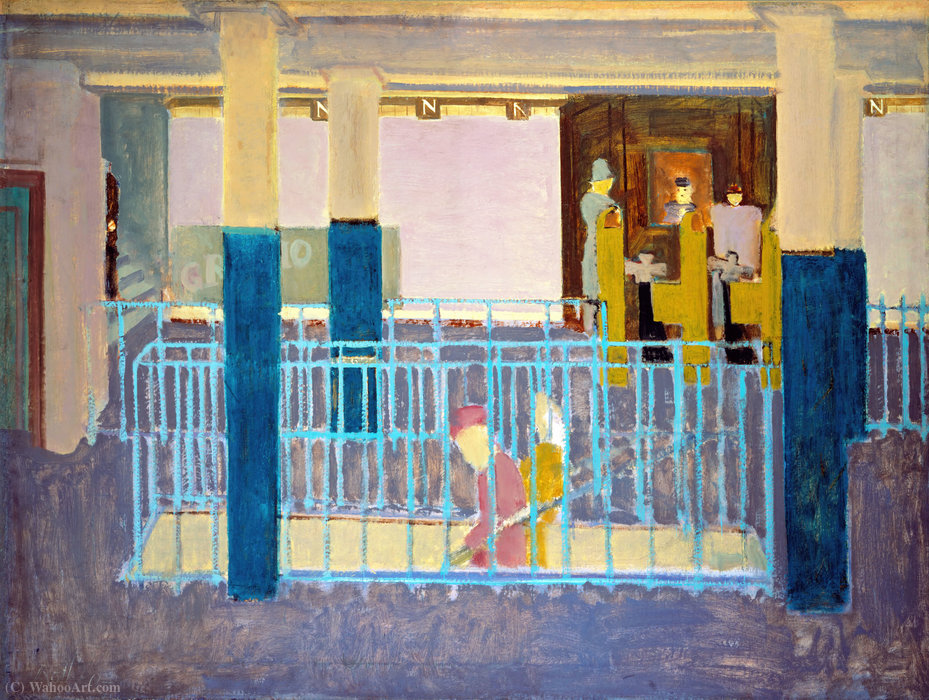
Intrarea în Stația Metroului


Explorează pictura monumentală "Intrarea în Stația Metroului" de Mark Rothko, un simbol al anonimatului urban și al emoțiilor puternice exprimate prin culoare și forme geometrice.
 Citește mai mult
Descoperă operele impresionante ale lui Mark Rothko (1903-1970), pionierul picturii Color Field și al expresionismului abstract! Explorează emoțiile profunde și moștenirea artistică a acestui artist emblematic.
Lucrarea de artă afișată pe această pagină este protejată de legile privind drepturile de autor, ceea ce înseamnă că nu putem crea sau vinde în mod legal o reproducere identică. Această protecție este garantată prin acorduri internaționale, precum Convenția de la Berna și de legile naționale, inclusiv cele prevăzute de Legea dreptului de autor din S.U.A. – Titlul 17. Toate drepturile rezervate. Orice reproducere neautorizată este interzisă.
Ca alternativă respectuoasă și legală, oferim tablouri pictate manual, personalizate, inspirate de original. Artistii noștri experimentați și profesioniști studiază cu atenție stilul, starea de spirit și esența artistică a originalului pentru a crea o piesă nouă și unică, care evocă aceeași emoție – rămânând, în același timp, o creație originală în sine.
Această metodă respectă pe deplin reglementările privind drepturile de autor, deoarece nu implică copierea sau duplicarea operei protejate. În schimb, este o reinterpretare creativă – o pictură nouă, influențată de original, dar care nu este identică cu acesta.
Reproducere pictată manual în ulei
Pictură în ulei pe pânză, realizată manual de artiștii noștri la dimensiunea și ramele dorite de dumneavoastră, pe comandă. ( Comută pe versiunea Print Treci la imagine digitală)




P118B lei10

P118H lei10

P118W lei10

P438Z lei10

P508JH lei12

P508YH lei12

P805H lei10

P805Z lei10

P919BZ lei10

P919G lei10

P919XJ lei10

P959ZH lei10

P968JZ lei12

W106C lei8

W218G lei10

W218JH lei8

W218Y lei10

W307PJ lei10

W316G lei10

W316PJ lei8

W316Y lei10

W398PJ lei8

W4111J lei10

W500HY lei15

W500JH lei15

W692G lei12

W849H lei8

W940BG lei15

W953PJ lei8




Dimensiuni standard
personalizat
CM
INCH
Alegeți dintre dimensiunile noastre prestabilite, care respectă proporțiile originale ale operei de artă.
Loading sizes...

lățime
înălțime
Introduceți lățimea și înălțimea de care aveți nevoie, pentru a se potrivi ramei sau peretelui dumneavoastră. Această lucrare este pictată manual, așa că pentru o dimensiune cu o formă diferită, artistul poate picta puțin mai mult în jurul imaginii sau poate tăia puțin din margini — dumneavoastră decideți. Vă vom trimite o simulare digitală pentru aprobare înainte de a începe pictarea. Imaginea afișată pe această pagină nu reprezintă rezultatul real — doar simularea este reprezentativă.
Exemple de elemente ce pot fi personalizate: Înlocuiți fața cu fotografia clientului; Adăugați un animal de companie (de exemplu, înlocuiți pisica cu un câine); Includeți un mesaj ascuns în fundal; Schimbați peisajul sau elementele din fundal.
După plasarea comenzii, echipa TopImpressionists.com va contacta clientul prin e-mail pentru instrucțiuni și îi va furniza o previzualizare a machetei
După plasarea comenzii, echipa TopImpressionists.com va contacta clientul prin e-mail pentru instrucțiuni și îi va furniza o previzualizare a machetei
Livrare în întreaga lume () în 3-4 săptămâni, în loc de cele 5 săptămâni standard. (23 Octombrie). Fără compromisuri în ceea ce privește calitatea.

Livrare expres gratuită la nivel mondial

Pânză de in premium

Asigurare completă pentru transport

Garanție de rambursare a taxelor vamale

Garanția fidelității culorilor

Politica de retur în 100 de zile (doar pentru defecte)

Garanție de rambursare 100%

Reducere pentru comenzi multiple
 Opțiunea cu sticlă este disponibilă doar pentru dimensiuni de sub 110 cm

Intrarea în Stația Metroului
Tip de reproducere
Dimensiune reproducere
-


Preț total
lei 1245
Entrance to Subway (Subway Station.Subway Scene)
Mark Rothko's "Entrance to Subway" isn’t merely a depiction of a New York City subway station; it’s an immersion into the collective experience of urban life, a poignant meditation on anonymity and the fleeting nature of human connection. Painted in 1938 during a period of intense social and political upheaval – a time when the anxieties of war were beginning to surface – this large-scale oil painting captures not just a physical space but also an emotional landscape. Rothko, a key figure in the Abstract Expressionist movement, deliberately eschewed traditional representational techniques, opting instead for a bold simplification of form and color to evoke profound feelings within the viewer.
The dominant hues of blue and yellow immediately establish a dynamic atmosphere, far removed from the muted tones often associated with depictions of urban decay. These colors aren’t simply applied; they bleed into one another, creating a sense of movement and suggesting the constant flow of people through the station. The composition is anchored by two prominent benches – one centrally positioned, the other subtly placed on the right – offering momentary points of rest amidst the bustling scene. Notice how Rothko uses geometric forms—the rectangular shapes of the benches and the implied lines of the platform—to create a sense of structure within an otherwise amorphous space. These elements aren’t meant to define the scene precisely, but rather to provide a framework for the viewer’s interpretation.
The Language of Color: Rothko’s Abstract Expressionist Approach
Rothko’s technique is characterized by its deliberate lack of detail and emphasis on color fields. He applied paint in broad, sweeping strokes, allowing the colors to overlap and blend organically. This process—often described as “all-over” painting—means that there's no single focal point; instead, the viewer’s eye is invited to wander across the entire surface of the canvas, absorbing the interplay of hues and textures. The thickness of the paint itself contributes to the work’s tactile quality, inviting a physical engagement with the artwork.
It's crucial to understand Rothko’s artistic philosophy during this period. He wasn’t interested in creating images that could be easily identified or understood; rather, he sought to evoke primal emotions—a sense of awe, mystery, and perhaps even melancholy—through the pure experience of color. He famously stated, “Colors are performers,” suggesting that his paintings were meant to act upon the viewer’s subconscious, triggering a deeply personal response.
A Reflection of an Era: Contextualizing "Entrance to Subway"
“Entrance to Subway” was created during a time of significant social and political change in America. The Great Depression had left its mark on the nation, and anxieties about war were growing as Europe teetered on the brink of conflict. Rothko’s work reflects this atmosphere of uncertainty and displacement. The anonymous figures depicted in the painting—a collection of faces lost within the urban landscape—can be interpreted as symbols of the individual’s struggle to find meaning and connection in a rapidly changing world.
Interestingly, Rothko’s early career involved figurative work, depicting portraits and urban scenes. However, he gradually moved away from representational art, seeking a more direct means of expressing his emotions. This shift aligns with the broader trends of the Abstract Expressionist movement, which rejected traditional artistic conventions in favor of exploring new forms of expression.
Legacy and Reproduction: Bringing Rothko’s Vision to Life
Mark Rothko's influence extends far beyond the realm of abstract painting. Artists like Yayoi Kusama, known for her immersive installations that explore themes of infinity and self-obliteration, have cited Rothko as a key inspiration. His work continues to resonate with viewers today, prompting reflection on the nature of human experience and the complexities of modern life.
TopImpressionists is proud to offer meticulously crafted, hand-painted reproductions of “Entrance to Subway.” These aren’t simply prints; they are faithful interpretations of Rothko’s original masterpiece, capturing the vibrancy of color, the texture of paint, and the emotional depth of the artwork. Each reproduction is created by skilled artists who have a deep understanding of Rothko’s technique and philosophy. Explore the details and dimensions on TopImpressionists. For those seeking to delve deeper into Rothko’s life and work, we encourage you to visit Yayoi Kusama's website or explore the extensive resources available on Wikipedia: Wikipedia.
Întrebări și răspunsuri
Cât de multă lumină par să reflecte culorile din "Intrarea în Stația Metroului"?
Luminanța înregistrată pentru "Intrarea în Stația Metroului" de Mark Rothko este Lumină delicată.
Care este luminozitatea percepută a lucrării "Intrarea în Stația Metroului" de Mark Rothko?
Luminozitatea percepută a operei "Intrarea în Stația Metroului" de Mark Rothko este luminos, strălucitor. Aceasta poate fi adaptată la lumina spațiului în care va fi expusă.
Este "Intrarea în Stația Metroului" de Mark Rothko o operă de artă cunoscută?
Nivelul de popularitate înregistrat pentru "Intrarea în Stația Metroului" de Mark Rothko este Iconice.
Biografie artist
Începuturile și Viziunea Artistică
Mark Rothko, născut Markus Yakovlevich Rothkowitz în Dvinsk, Letonia, în 1903, a purtat de la bun început un sentiment de dezrădăcinare care i-a modelat profund traiectoria artistică. Anii săi timpurii au fost marcați de anxietățile unei familii evreiești ce trăia în zona de reședință a Imperiului Rus, umbrită de pogromuri și tulburări politice. Această atmosferă i-a insuflat o sensibilitate profundă față de suferința umană, o temă care va răsuna pe tot parcursul operei sale. Imigrația din 1913 în Portland, Oregon, a reprezentat nu doar o schimbare geografică, ci și un șoc cultural pentru tânărul Rothko. Deși tatăl său, farmacist și intelectual cu simpatii socialiste, a cultivat o casă plină de dezbateri și învățături, pierderea lui Jacob Rothkowitz la scurt timp după sosire a aruncat o umbră lungă asupra vieții sale. Această primă experiență a pierderii, combinată cu provocările asimilării, i-a alimentat o explorare pe tot parcursul vieții a temelor existențiale – mortalitatea, trauma și căutarea sensului într-o lume haotică. Deși a excelat academic la Universitatea Yale, Rothko s-a simțit atras de energia vibrantă a orașului New York, abandonând studiile formale pentru a-și urmări pasiunea pentru artă la Art Students League. Acești ani formativi au pus bazele unei viziuni artistice care avea să sfideze concepțiile convenționale despre pictură și să redefinească puterea emoțională a culorii.De la Realism la Expresionismul Abstract
Primele explorări artistice ale lui Rothko au fost ferm ancorate în realism, reprezentând scene urbane și portrete cu un ochi atent pentru detalii. Cu toate acestea, aceste prime lucrări prevesteau deja profunzimea psihologică ce avea să-i devină semnătură. Pe măsură ce anii ’40 se desfășurau, iar lumea se confrunta cu ororile celui de-al Doilea Război Mondial, arta lui Rothko a suferit o transformare dramatică. Influențat de suprarealism și mitologie, el a început să se îndepărteze de imagini reprezentative, căutând în schimb să exprime emoții universale umane prin forme simbolice. Această perioadă a marcat apariția picturilor multi-formă – pânze populate de forme ambigue, biomorfe care păreau să plutească între figurativ și abstracție. Aceste lucrări nu erau simple experimente formale; ele erau răspunsuri profunde la anxietățile și incertitudinile unei lumi aflate în război. Spre sfârșitul anilor ’40, Rothko ajunsese la stilul său caracteristic: pânze de mari dimensiuni cu blocuri rectangulare de culoare care păreau să plutească și să rezoneze unele cu altele. El a eliminat orice urmă de imagini recunoscibile, concentrându-se în schimb pe impactul emoțional pur al culorii și formei. Aceasta a marcat un moment crucial în dezvoltarea Expresionismului Abstract, stabilindu-l pe Rothko ca o figură proeminentă în această mișcare revoluționară.Câmpul de Culoare și Urmărirea Transcendentalității
Opera matură a lui Rothko este definită de ceea ce a devenit cunoscut sub numele de pictura “Câmpului de Culoare” – întinderi vaste de culoare luminoasă care învăluie privitorul într-o experiență imersivă. Aceste picturi nu se referă la *ce* reprezintă, ci mai degrabă la *cum* te fac să te simți. Rothko credea că arta ar trebui să implice privitorul visceral, ocolind analiza intelectuală și vorbind direct emoțiilor. El a stratificat meticulos spălături subțiri de vopsea, creând subtile variații de ton și textură care păreau să emane din interiorul pânzei. Marginile formelor sale rectangulare sunt adesea estompate, permițându-le să se amestece și să interacționeze unele cu altele, creând un sentiment de profunzime și mișcare. Rothko a evitat deliberat titlurile dincolo de numere – “Nr. 1”, “Nr. 6” – încurajând privitorii să se confrunte cu picturile fără prejudecăți și să permită propriilor lor răspunsuri emoționale să le ghideze experiența. El a căutat să creeze un spațiu pentru contemplare, un sanctuar unde privitorii s-au putut conecta cu ceva mai mare decât ei înșiși. Ambiția sa nu era nimic mai puțin decât evocarea unor experiențe spirituale profunde prin limbajul culorii.Realizări Majore și Moștenirea Durabilă
Printre cele mai importante realizări ale lui Rothko se numără “Nr. 10 (1950)”, o lucrare esențială care exemplifică stilul său în evoluție, și Muralele Seagram (1958). Comisionate pentru restaurantul Four Seasons din New York City, aceste murale au fost în cele din urmă respinse de Rothko, care a simțit că ar fi compromise de mediul lor destinat. În schimb, le-a donat Tate Gallery din Londra, unde continuă să inspire admirație și contemplare. Poate cel mai ambițios proiect al său a fost Capela Rothko (1971) din Houston, Texas – un sanctuar non-denominational care găzduiește paisprezece dintre picturile sale. Proiectată ca un spațiu pentru reflecție liniștită, capela este considerată de mulți un loc sacru, întruchipând credința lui Rothko în puterea spirituală a artei. Influența lui Rothko asupra generațiilor ulterioare de artiști a fost imensă. El a deschis drumul pentru arta minimalistă și continuă să inspire pictorii contemporani care explorează posibilitățile emoționale ale abstracției. În ciuda luptei cu depresia pe tot parcursul vieții, culminând cu sinuciderea sa tragică în 1970, Mark Rothko rămâne unul dintre cei mai importanți și influenți artiști ai secolului al XX-lea – un maestru al culorii a cărui operă continuă să rezoneze cu publicul din întreaga lume.Puterea Durabilă a Rezonanței Emoționale
- Picturile lui Rothko sunt celebrate pentru capacitatea lor de a transmite emoții universale umane – tragedie, extaz, disperare și speranță.
- Explorarea sa a culorii ca vehicul al expresiei emoționale a revoluționat pictura abstractă.
- Capela Rothko stă drept mărturie a credinței sale în puterea spirituală a artei.
- El rămâne o figură pivotantă în Expresionismul Abstract și o influență majoră asupra artiștilor contemporani.

Mark Rothko
1903 - 1970 , Letonia
Informații rapide
- Artiști Influențați:
- Minimalism
- Expresionism abstract
- Curent Artistic: Color Field Painting
- Data Decesului: 25 februarie 1970
- Data Nașterii: 25 septembrie 1903
- Locul Nașterii: Daugavpils, Letonia
- Naționalitate: American
- Nume Complet: Mark Rothko
- Opere Notabile:
- No. 10 (1950)
- Seagram Murals
Articole conexe

Color Field Painting: The Emotional Power of Pure Abstraction and Chromatic Depth
Explore the profound emotional depth of Color Field painting. Discover the history of mid-century abstraction, from Rothko to Newman, and learn how pure color transforms the viewer's experience through our expert art history guide.

Mark Rothko: Cele Mai Iconice 25 De Capodopere – Artă Abstractă pentru Decor Rafinat
Descoperă cele mai iconice 25 de picturi abstracte ale lui Mark Rothko! Explorează istoria, culorile și emoțiile din spatele fiecărei capodopere. Reproduceri artă de calitate muzeală & inspirație decor pe TopImpressionists.com.

Top 10 Capodopere ale Expresionismului Abstract: Artă, Artiști și Decorațiuni de Lux | TopImpressionists.ro
Descoperă Top 10 capodopere ale Expresionismului Abstract! Explorează poveștile lui Pollock, Rothko și De Kooning. Reproduceri de artă de lux & inspirație decor pe TopImpressionists.ro. Găsește pictura perfectă pentru spațiul tău!

The Sublimity of Color: Exploring the Emotional Landscapes of Mark Rothko's Abstract Expressionism
Explore the profound emotional depth of Mark Rothko's abstract expressionism. Discover the history, techniques & lasting impact of this pivotal Color Field painter. Expert insights for collectors and art enthusiasts.

Beyond the Brushstroke: A Definitive Guide to the Emotional Power of Color Field Painting
Explore the profound history and emotional depth of Color Field painting. From Mark Rothko to Barnett Newman, discover how pure color redefined modern art through our expert-led guide for students and collectors alike.
Explorați opere de artă organizate pe teme, stiluri și caracteristici.


