


 Vezi în context
 Trimite
 Distribuie
 Detalii
 Ghidul

 Descarcă
 Produse similare
 Radiografie
 Diaporama
 Statistici
David Croal Thomson


Philip Wilson Steer's 'David Croal Thomson' (1895) captures a formal gentleman in a refined setting, showcasing the artist’s mastery of light and detail. Explore this iconic British Impressionist painting.
 Citește mai mult
Philip Wilson Steer (1860-1942) a fost un pictor britanic impresionist renumit pentru peisaje și scene marine luminoase. Influențat de Manet și Whistler, operele sale sunt expuse la Tate și Uffizi, capturând frumusețea efemeră a naturii.
Giclée / Imprimare artistică
Printuri giclée sau pe canvas de calitate muzeală, cu proces de producție rapid și opțiuni flexibile de finisare. ( Comandă pictură realizată manual Treci la imagine digitală)




P118B lei10

P118H lei10

P118W lei10

P438Z lei10

P508JH lei12

P508YH lei12

P805H lei10

P805Z lei10

P919BZ lei10

P919G lei10

P919XJ lei10

P959ZH lei10

P968JZ lei12

W106C lei8

W218G lei10

W218JH lei8

W218Y lei10

W307PJ lei10

W316G lei10

W316PJ lei8

W316Y lei10

W398PJ lei8

W4111J lei10

W500HY lei15

W500JH lei15

W692G lei12

W849H lei8

W940BG lei15

W953PJ lei8




Dimensiuni standard
personalizat
CM
INCH
Alegeți dintre dimensiunile noastre prestabilite, care respectă proporțiile originale ale operei de artă.
Loading sizes...

lățime
înălțime
Introduceți lățimea și înălțimea de care aveți nevoie, pentru a se potrivi ramei sau peretelui dumneavoastră. O printare poate fi doar tăiată, niciodată extinsă dincolo de dimensiunea imaginii originale, astfel încât o dimensiune cu o formă diferită va pierde o parte din imagine. Vă trimitem o simulare digitală pentru aprobare înainte de a imprima orice. Imaginea afișată pe această pagină nu prezintă tăierea reală — doar simularea arată acest lucru.
Livrare în întreaga lume () în 2 săptămâni, în loc de cele 4/5 săptămâni standard. (24 Octombrie)

Livrare expres gratuită la nivel mondial

Pânză de in premium

Asigurare completă pentru transport

Garanție de rambursare a taxelor vamale

Garanția fidelității culorilor

Politica de retur în 100 de zile (doar pentru defecte)

Garanție de rambursare 100%

Reducere pentru comenzi multiple
 Opțiunea cu sticlă este disponibilă doar pentru dimensiuni de sub 110 cm

David Croal Thomson
Giclée / Imprimare artistică
Dimensiune reproducere
-


Preț total
lei 319
A Silvered Moment: Philip Wilson Steer’s ‘David Croal Thomson’
Philip Wilson Steer's “David Croal Thomson,” painted in 1895, isn’t merely a portrait; it’s a carefully constructed distillation of light, atmosphere, and the quiet dignity of a man lost in thought. The canvas breathes with a subtle luminescence, a hallmark of Steer’s distinctive Impressionist style – one that sought to capture not just appearances but the fleeting sensations of a particular moment. The painting depicts David Croal Thomson, a Scottish journalist and critic, seated in an armchair within what appears to be his study or perhaps a well-appointed drawing room. He is a figure of understated elegance, rendered with a remarkable sensitivity to texture and light. The composition draws the eye immediately to Thomson’s face – a portrait of thoughtful contemplation, framed by a neatly trimmed beard and a hint of melancholy in his expression. Steer masterfully employs a muted palette dominated by silvery greys, blues, and browns, creating an almost dreamlike quality that envelops the scene.
The Impressionist’s Dance with Light
Steer's artistic journey was deeply influenced by his time in Paris during the 1880s. He absorbed the revolutionary techniques of Monet and Renoir, learning to break down forms into their constituent elements of light and color. However, unlike many of his Parisian contemporaries, Steer never fully abandoned a distinctly British sensibility. He retained a fascination with the English countryside – particularly the coastal regions of Suffolk and Walberswick – which became a recurring subject in his work. “David Croal Thomson” exemplifies this fusion; it’s not simply an Impressionist study but one imbued with a uniquely British atmosphere, reminiscent of misty mornings on the Norfolk coast. The brushstrokes are loose and visible, creating a sense of movement and immediacy—a deliberate departure from the smooth, polished surfaces favored by academic painters of the time.
Symbolism in Seclusion
Beyond its technical brilliance, “David Croal Thomson” is rich with subtle symbolism. The setting itself – a comfortable armchair, a table laden with books and papers, a clock subtly suggesting the passage of time—evokes a sense of intellectual pursuit and quiet contemplation. Thomson’s posture, seated in repose, suggests a man absorbed in thought, perhaps reviewing his work or simply lost in reflection. The muted colors contribute to this atmosphere of introspection, creating a space where the viewer is invited to share in Thomson's private world. The inclusion of the clock adds an element of temporal awareness, reminding us that even moments of profound contemplation are fleeting and transient.
A Legacy of Atmospheric Painting
Philip Wilson Steer’s influence extended far beyond his own lifetime. He played a pivotal role in establishing British Impressionism as a recognized movement, and his work continues to resonate with contemporary viewers. “David Croal Thomson” stands as a testament to his skill and vision—a captivating portrait that transcends the limitations of mere representation. It's a painting that invites us to linger, to observe the nuances of light and shadow, and to contemplate the quiet dignity of a man lost in thought. Reproductions of this piece offer a remarkable opportunity to bring Steer’s atmospheric mastery into any interior space, adding a touch of timeless elegance and intellectual depth.
Further Exploration
- Original Artwork:** Tate Britain, London
- Learn more about Philip Wilson Steer:Wikipedia
- Discover David Croal Thomson’s life and work:Tate Images
Întrebări și răspunsuri
Pot vedea o imagine cu raze X a lucrării "David Croal Thomson" de Philip Wilson Steer?
„David Croal Thomson” poate fi examinat strat cu strat pe pagina Raze X a operei de artă, un vizualizator inspirat de masa de lumină a unui conservator, care oferă unsprezece lecturi optice ale imaginii.
Cum se raportează subiectul operei „David Croal Thomson” la temele obișnuite ale lui Philip Wilson Steer?
"David Croal Thomson" înfățișează david croal thomson, philip wilson steer, british painting, seascape, coastal scene, 1895, portraiture, în timp ce temele recurente ale lui Philip Wilson Steer sunt french impressionism, british landscape, coastal scenes, light & shadow, steer’s legacy. Compararea celor două relevă modul în care această lucrare se raportează la subiectele obișnuite ale artistului.
Care este culoarea dominantă în "David Croal Thomson" de Philip Wilson Steer?
Espresso (#544a47) este culoarea dominantă a operei "David Croal Thomson" de Philip Wilson Steer.
Opere similare


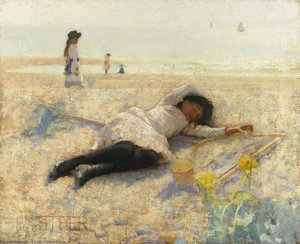


Biografie artist
Începuturile unui Maestru: Philip Wilson Steer și Formarea Artistică
Philip Wilson Steer, născut în Birkenhead în 1860, a fost un artist al cărui destin a fost modelat de o familie profund ancorată în lumea artei. Tatăl său, pictor portretist și dedicat profesor de artă, i-a insuflat pasiunea pentru creație încă din copilărie. Mutarea familiei la Whitchurch, lângă Monmouth, când avea doar trei ani, a creat o legătură puternică cu peisajele rurale britanice, care va deveni o sursă constantă de inspirație în opera sa. Educația formală și-a început-o la Hereford Cathedral School, primind o bază solidă înainte de a se dedica cu totul aspirațiilor sale artistice. Steer și-a continuat studiile la Gloucester School of Art și South Kensington Drawing Schools, dar adevărata transformare a avut loc odată cu șederea sa la Paris între 1880 și 1884. Aici, la Académie Julian și ulterior sub îndrumarea lui Alexandre Cabanel la École des Beaux Arts, a descoperit o lume plină de idei noi și abordări inovatoare ale picturii.Parisul și Îmbrățișarea Impresionismului
Parisul s-a dovedit a fi un punct crucial în dezvoltarea artistică a lui Steer. A fost profund impresionat de operele lui Édouard Manet și James McNeill Whistler, absorbind tehnicile lor inovatoare de captare a luminii, culorii și atmosferei. Această experiență i-a aprins pasiunea pentru impresionism, dar Steer nu s-a limitat la o simplă replicare a stilului francez. A reușit să îmbine cu măiestrie aceste influențe cu sensibilitățile sale englezești înnăscute, creând un stil unic și personal. Picturile sale se remarcă prin capacitatea de a surprinde momente efemere – jocul razelor solare pe apă, calitatea trecătoare a aerului marin. A folosit tușe libere și culori vibrante nu doar pentru a descrie scene, ci și pentru a evoca emoții și a crea o senzație de imersiune imediată. Temele recurente în opera sa includ scene de pe plajă și peisaje marine, adesea scăldate într-o lumină argintie și translucidă, demonstrând măiestria sa în redarea prospețimii și luminozității acestor medii. Lucrări precum The Music Room, realizată la începutul carierei sale, evidențiază abilitățile sale emergente în compoziție și lumină, în timp ce piese ca Girls Running: Walberswick Pier explodează cu energia și vitalitatea unui oraș de coastă din Suffolk.Un Promotor al Artei Moderne și Influența Etaples
Steer nu s-a mulțumit doar să picteze; a contribuit activ la modelarea peisajului artistic britanic. A jucat un rol esențial în fondarea New English Art Club, o organizație dedicată promovării expresiei artistice moderne – o mișcare îndrăzneață într-o perioadă în care gusturile tradiționale încă dominau. Prin această platformă și prin expozițiile regulate de la Royal Academy, inclusiv participarea la revoluționara London Impressionist Exhibition din 1889, a contribuit la introducerea unor idei noi și la contestarea normelor convenționale. Timpul petrecut în colonia artistică Etaples în 1887 i-a rafinat și mai mult viziunea artistică. Această comunitate vibrantă de artiști a oferit un mediu stimulant pentru experimentare și colaborare, consolidându-i capacitatea de a surprinde lumina și atmosfera cu o nuanță și o abilitate din ce în ce mai mari. Steer s-a inspirat dintr-o gamă diversă de maeștri – John Constable, J.M.W. Turner și chiar François Boucher – dar a filtrat întotdeauna aceste influențe prin propria sa perspectivă unică.Moștenirea, Recunoașterea și Influența Durabilă
Philip Wilson Steer a continuat să picteze prolifice până când problemele de sănătate l-au forțat să se oprească în 1940, decedând doi ani mai târziu la vârsta de 81 de ani. Contribuțiile sale au fost recunoscute pe deplin în timpul vieții sale, culminând cu Ordinul Meritului. Astăzi, operele sale sunt păstrate în colecții prestigioase din întreaga lume, inclusiv Tate Gallery și chiar Galeria Uffizi – o mărturie a aprecierii sale internaționale. Dincolo de picturile sale, moștenirea lui Steer se extinde prin lunga sa activitate ca profesor de pictură la Slade School of Art. Timp de mulți ani, el a influențat profund generații de tineri artiști, oferindu-le nu doar abilități tehnice, ci și o apreciere profundă pentru observație și integritate artistică. Contribuția sa la dezvoltarea și acceptarea impresionismului în Marea Britanie este incontestabilă, consolidându-i poziția ca figură importantă în istoria artei britanice – un pictor care a reușit să facă legătura între tradiție și modernitate, lăsând o amprentă durabilă asupra peisajului artistic britanic. Lucrări notabile precum Convalescent, cu texturile sale bogate și privirea evocatoare, și The Teme at Ludlow, care evidențiază frumusețea senină și măiestria execuției, continuă să captiveze publicul astăzi, demonstrând calitatea atemporală a viziunii sale artistice.
Philip Wilson Steer
1860 - 1942 , Regatul Unit
Informații rapide
- Artiști Care L-Au Influențat:
- Manet
- Whistler
- Constable
- Turner
- Artiști/Curente Influențate: ['Impresionism britanic']
- Curent Artistic: Impresionism
- Data Decesului: 18 martie 1942
- Data Nașterii: 28 decembrie 1860
- Locul Nașterii: Birkenhead, UK
- Naționalitate: Britanic
- Nume Complet: Philip Wilson Steer
- Opere Notabile:
- The Music Room
- Girls Running
- Convalescent
- The Teme at Ludlow
Articole conexe

Capturing the Light: A Journey Through the Ethereal Magic of Impressionism and Post-Impressionism
Embark on a cultural journey through the luminous world of Impressionism. Discover the profound beauty of Monet, Van Gogh, and Cézanne through expert art history insights and explore how to bring these timeless masterpieces into your home with museum-quality hand-painted reproductions.
Explorați opere de artă organizate pe teme, stiluri și caracteristici.
