

Prezentat: · Cu ramă:
 Previzualizare
 Trimite prin felicitare
 Distribuie
 Detalii despre lucrare
 Ghid
Ghid

 Descarcă imaginea
 Produse similare
 Radiografie
 Galerie foto
 Întrebări și răspunsuri
 Statistici

lei 1284
Reproducere pictată manual în ulei
Pictură în ulei pe pânză, pictată manual de artiștii noștri la dimensiunea și ramele dorite de dumneavoastră, pe comandă. ( Comută pe versiunea Print Comută pe Imagine Digitală)
Dimensiune
·Standard
personalizat
CM
INCH
Alegeți dintre dimensiunile noastre prestabilite, care respectă proporțiile originale ale operei de artă.
Se încarcă dimensiunile...

lățime
înălțime
Introduceți lățimea și înălțimea necesare pentru a se potrivi ramei sau peretelui dumneavoastră. Această lucrare este pictată manual, așa că, pentru o dimensiune cu o formă diferită, artistul poate picta puțin mai mult în jurul imaginii sau poate tăia puțin din margini — dumneavoastră decideți. Vă vom trimite o simulare digitală pentru aprobare înainte de a începe pictarea. Imaginea afișată pe această pagină nu reprezintă rezultatul real — doar simularea este reprezentativă.
 Citește mai mult
Finalizare
·
Alb lei1

Margini difuze lei1

Extins lei1

P118B lei10

P118H lei10

P118W lei10

P438Z lei10

P508JH lei12

P508YH lei12

P805H lei10

P805Z lei10

P919BZ lei10

P919G lei10

P919XJ lei10

P959ZH lei10

P968JZ lei12

W106C lei8

W218G lei10

W218JH lei8

W218Y lei10

W307PJ lei10

W316G lei10

W316PJ lei8

W316Y lei10

W398PJ lei8

W4111J lei10

W500HY lei15

W500JH lei15

W692G lei12

W849H lei8

W940BG lei15

W953PJ lei8

H24-GOLD lei30

H24-SILVER lei30

H36-GOLD lei45

H36-SILVER lei45
Expediat într-un tub protector, gata pentru montarea la propria ramă.
Servicii suplimentare
opționalCe includ extrasele?
Exemple de elemente care pot fi modificate: Înlocuirea feței cu fotografia clientului; Adăugarea unui animal de companie (de ex., înlocuirea unei pisici cu un câine); Includerea unui mesaj ascuns în fundal; Modificarea peisajului sau a elementelor din fundal.
După plasarea comenzii, echipa TopImpressionists.com va contacta clientul prin e-mail pentru instrucțiuni și va furniza o previzualizare (mockup)
După plasarea comenzii, echipa TopImpressionists.com va contacta clientul prin e-mail pentru instrucțiuni și va furniza o previzualizare (mockup)
Livrare în întreaga lume () în 3-4 săptămâni, în loc de cele 5 săptămâni standard. (10 Noiembrie). Fără compromisuri în ceea ce privește calitatea.
Lac de protecție
Etichetă de prezentare
Detalii plăcuță din bronz gravat
This elegant plaque features the artist's name and the title of the artwork, finely engraved for a timeless presentation.
It is made from bronze with a refined, elegant finish. The text is precisely laser-engraved for a sharp and permanent result. Measuring 9x2 cm, the plaque is compact yet easy to read. It's built to be durable and scratch-resistant, offering a professional, museum-quality look. Mounting is simple thanks to the included adhesive backing.
Detalii plăcuță din acril transparent
The plaque includes essential engraved details such as the artist's name, the title of the artwork, the date it was created, the type of media used-like oil on canvas or watercolor-a brief description of the piece, and a QR code that links to the complete artwork information.
It is crafted from clear acrylic, offering a sleek, modern appearance. The text is UV-engraved in black to ensure strong visual contrast. With a size of 10x15 cm, it ensures optimal readability. It comes equipped with two metal hooks for secure wall mounting. The plaque is designed to be weather-resistant, making it suitable for various environments, and it includes interactive features that work seamlessly with smartphone scanning.
Detalii placă din acril negru
This elegant plaque includes engraved information such as the artist's name, the title of the artwork, the date it was created, the type of media used (like oil on canvas or watercolor), a short description of the artwork, and a QR code for quick access to more information.
The plaque itself is made from refined black acrylic with a premium finish. The text is laser-engraved in white for high contrast and readability. Its size is 10x15 cm, designed to be easy to read. It comes with two metal hooks for professional mounting. The design is sleek and fits any interior style. It is also weather-resistant and durable, with built-in digital integration for mobile compatibility.
Opțiunea cu sticlă este disponibilă doar pentru dimensiuni de sub 110 cm
 Opțiunea cu sticlă este disponibilă doar pentru dimensiuni de sub 110 cm
- Livrare expres gratuită la nivel mondial
- Pânză de in de înaltă calitate
- Asigurare completă pentru transport
- Garanție de rambursare a taxelor vamale
- Garanția fidelității culorilor
- Politica de retur în 100 de zile (doar pentru defecte de fabricație)
- Garanție de rambursare 100%
- Ofertă pentru comenzi multiple


Descriere obiect de colecție
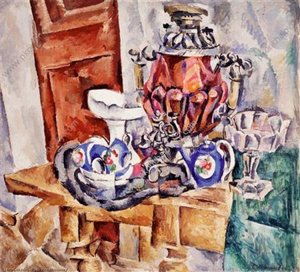
Explore Pyotr Konchalovsky's captivating Begonia – a still life masterpiece depicting vibrant red and pink flowers within elegant vases alongside delicate cups, capturing the spirit of Russian art history.
Biografie artist
Pyotr Konchalovsky (1876-1956) a fost un pictor rus esențial, cu stil inovator ce îmbină impresionismul, fauvizmul și realismul socialist. Explorează portrete, peisaje și opere iconice!
Despre pictură
A Portrait of Turbulent Russia: Exploring Pyotr Konchalovsky’s “Begonia”
Pyotr Petrovich Konchalovsky's "Begonia," painted circa 1908, stands as a poignant emblem of the Russian avant-garde’s fascination with capturing fleeting moments of beauty amidst societal upheaval. More than just a depiction of flowers—specifically a begonia blossom—the painting embodies a broader artistic impulse to distill emotion and intellect into visual form, reflecting the anxieties and aspirations of a nation grappling with rapid modernization.
Style & Technique: Konchalovsky’s approach aligns squarely with Neo-Impressionism, championed by artists like Georges Seurat and Paul Cézanne. Unlike Impressionists who sought to capture atmospheric effects, Konchalovsky meticulously applied small dots of pure pigment—primarily reds, pinks, and yellows—to build up tonal variations within the flower petals and vases. This technique, known as Pointillisme, wasn’t merely a stylistic choice; it represented a deliberate rejection of traditional brushstrokes in favor of scientific observation and mathematical precision. The artist painstakingly analyzed how light interacts with color, striving to reproduce its nuances with unparalleled accuracy.
Historical Context: Painted during the Belle Époque—a period characterized by optimism and artistic experimentation—"Begonia" speaks to a Russia undergoing significant transformations under Tsar Nicholas II’s reign. While outward appearances suggested prosperity and grandeur (the opulent palaces of St. Petersburg), beneath the surface simmered discontent fueled by social inequalities and burgeoning revolutionary sentiment. The painting's stillness contrasts sharply with this turbulent backdrop, inviting contemplation on themes of fragility and resilience.
Symbolism & Composition: The begonia itself carries considerable symbolic weight. Traditionally associated with femininity, beauty, and rebirth—often depicted as a symbol of resurrection—the flower’s delicate petals symbolize the ephemeral nature of life and the importance of savoring every moment. The vases serve as containers for this beauty, mirroring the role of art in preserving and transmitting cultural values. Furthermore, the arrangement of objects – the vases, cups, and begonia – contributes to a carefully constructed visual narrative that emphasizes balance and harmony despite the underlying tension.
Emotional Impact: Viewing “Begonia” evokes a sense of quiet contemplation and melancholic beauty. The artist’s masterful use of color and technique captures not only the physical appearance of the flower but also its emotional essence—a subtle suggestion of vulnerability amidst grandeur, mirroring the complexities of Russian society at the turn of the century. It's a piece that lingers in the mind long after viewing, prompting reflection on themes of beauty, decay, and the enduring power of artistic expression.
- Artist: Pyotr Petrovich Konchalovsky
- Year Painted: Circa 1908
- Style: Neo-Impressionism
- Technique: Pointillisme (Dot Painting)
Întrebări și răspunsuri
Ce ton emoțional transmite stilul Russian Symbolism din "Begonia"?
"Begonia" emană o Tranquil notă emoțională, specifică mișcării Russian Symbolism.
Ce emoție transmit culorile din "Begonia" de Pyotr Konchalovsky?
Paleta Neutrals a operei "Begonia" de Pyotr Konchalovsky se armonizează cu tonul său Tranquil. Culoarea este una dintre modalitățile prin care o lucrare transmite emoție.
Unde ar trebui expusă o reproducere a "Begonia" de Pyotr Konchalovsky?
Formatul (Portrait) și spațiul recomandat (Living Room) sunt cele două detalii de amplasare înregistrate pentru "Begonia" de Pyotr Konchalovsky.
Informații rapide și quiz despre artă
Despre Pyotr Konchalovsky

Pyotr Konchalovsky
1876 - 1956, Rusia
Biografie artist
A Life Immersed in the Russian Artistic Spirit
Pyotr Petrovich Konchalovsky, născut pe 21 februarie 1876, în satul Slavianka, lângă Harkov, a fost mult mai mult decât un simplu pictor; a fost un cronist vizual al Rusiei care trecea printr-o transformare profundă. Călătoria sa artistică s-a oglindit în propriile schimbări tumultuoase ale națiunii, marcate de o căutare constantă a unor forme noi de expresie. Educația lui timpurie l-a impregnat cu un spirit bogat în curente intelectuale și creative. Tatăl său, Petr Petrovich Konchalovsky, era un traducător respectat și editor de artă, iar casa sa din Moscova devenise un centru vibrant, frecventat de artiști de renume precum Valentin Serov, Mihail Vrubel, Vasili Surikov – toți vizitând rezidența familiei după mutarea lor în capitală în 1889. Această expunere timpurie nu a fost doar observativă; a impregnat-o pe tânărul Pyotr cu o apreciere profundă pentru expresia artistică și a pus bazele drumului său viitor. Week-endurile petrecute absorbând capodoperele la Galeria Tretiakov au modelat sensibilitatea sa estetică, inspirată de măreția maeștrilor ruși.From Parisian Influences to Avant-Garde Innovation
Formarea lui formală a început la Școala de Pictură, Sculptură și Arhitectură din Moscova, dar a urmat o perioadă transformatoare în Paris între 1896 și 1898 la Académie Julian. Imersiunea în lumea artistică franceză s-a dovedit a fi revoluționară. A întâlnit opera inovatoare a lui Paul Cézanne și Vincent van Gogh, artiști care au provocat reprezentarea convențională și au explorat noi modalități de percepție a formei și culorii. O călătorie ulterioară în Arles i-a oferit o înțelegere mai profundă a viziunii artistice a lui Van Gogh – o peregrinare în inima intensității expresive. Întoarcerea în Rusia, a continuat studiile la Academia Imperială de Arte din Sânt Petersburg, absolvând în 1907. Cu toate acestea, odată cu întoarcerea sa, Konchalovsky a început cu adevărat să-și modeleze propriul stil distinctiv. A devenit o figură centrală în mișcarea rusă de avangardă, cofondând grupul influent “Jack of Diamonds” (Knave of Diamonds) în 1910. Acest grup a respins tradițiile academice și a pledat pentru experimentare, căutând inspirație nu numai din modernismul european occidental, ci și din arta populară rusă – iconițe, panouri publicitare colorate, cunoscute sub numele de *lubok*. Ca primedinte al grupului, Konchalovsky a jucat un rol vital în modelarea direcției sale și promovarea ideilor sale radicale.Navigating Shifting Ideologies: Style and Subject Matter
Stilul artistic al lui Konchalovsky s-a evoluat de-a lungul carierei sale, reflectând atât explorarea personală, cât și schimbările politice din Rusia. Inițial influențat de Fauvism și Cézanne, primele sale lucrări au fost caracterizate de culori îndrăznețe, forme simplificate și un accent pe structură. Piese precum “Still Life with a Coffeepot” exemplifică această perioadă, prezentând o paletă vibrantă și o compoziție dinamică. După serviciul în armata rusă în timpul Primului Război Mondial, stilul lui Konchalovsky a început să se schimbe. Ascensiunea realismului socialist sub regimul sovietic a impus arta să servească scopurilor ideologice, celebrând idealurile socialiste și reprezentând figuri proeminente. Deși aceasta a marcat o abatere de la explorările sale avangardiste anterioare, Konchalovsky s-a adaptat, devenind cunoscut pentru portrete ceremoniale. În ciuda acestor schimbări, a menținut o voce artistică distinctivă, infuzând chiar și în lucrările sale mai politizate un sentiment de soliditate și monumentalitate. Pe parcursul carierei sale productive – estimate la peste 5.000 de piese – a explorat constant stilizări, peisaje și portrete, demonstrând o versatilitate remarcabilă și o dedicare neclintită artei picturii. Nu s-a conformat pur și simplu; a găsit modalități de a-și exprima sensibilitatea artistică în cadrul unor noi ere.Legacy and Enduring Significance
Contribuția lui Pyotr Konchalovsky la arta rusă este incontestabilă. A legat între modernismul timpuriu și realismul socialist, navigând prin curenți politici complicați, menținându-și în același timp o figură artistică semnificativă. Prima sa expoziție solo la Galeria Tretiakov din 1922 a consolidat reputația sa ca unul dintre cei mai importanți artiști ai Rusiei. Dincolo de propria sa operă, Konchalovsky a cultivat o familie profund implicată în artă; fiul său, Mikhail Petrovich Konchalovsky, a devenit un regizor de film renumit, iar fiica sa, Natalia Konchalovskaya, a fost o artistă remarcabilă. Picturile sale nu sunt doar obiecte estetic plăcute, ci și documente istorice, reflectând perioada tumultuoasă în care au fost create. Ele oferă perspective valoroase asupra evoluției artei rusești și provocările cu care s-au confruntat artiștii operând într-o societate aflată în schimbare rapidă. Abilitatea sa de a se adapta, menținând în același timp un stil distinctiv, l-a consacrat ca o figură cheie în istoria artei rusești, lăsând în urmă un moștenire care continuă să inspire și să captiveze publicul astăzi. Lucrările sale sunt mărturie a rezistenței expresiei artistice în fața crizelor politice, iar influența sa poate fi încă observată în arta contemporană rusă.Informații rapide despre Pyotr Konchalovsky
- Artistic Movement Or Style: Avant-garde, Fauvism, Realism
- Artists Or Movements Influenced By This Artist: ['Mir Iskusstva']
- Artists Who Influenced This Artist:
- Cézanne
- Van Gogh
- Date Of Birth: 21 Feb 1876
- Date Of Death: 2 Feb 1956
- Full Name: Pyotr Petrovich Konchalovsky
- Nationality: Rusian
- Notable Artworks:
- Still Life
- Jack Diamond
- Place Of Birth: Kharkiv, Rusia




Explorați opere de artă organizate pe teme, stiluri și caracteristici.


Pyotr Konchalovsky
Begonia
() ·
Cu ramă: · Pictată manual în ulei pe pânză de in
Total