


 Vezi în context
 Trimite
 Distribuie
 Detalii
 Ghidul

 Descarcă
 Produse similare
 Radiografie
 Diaporama
 Statistici
Central Australia
 Oil On Board
- WallArt
- Cubist
 1949
1949- Modern
 92.0 x 121.0 cm
 Galeria Națională din Melbourne
Experience the shifting patterns of Central Australia with Sidney Nolan's evocative 1949 landscape; discover this masterpiece capturing the vast Australian spirit.
 Citește mai mult
Sir Sidney Nolan (1917-1992) a fost un pictor australian revoluționar, cunoscut pentru operele sale iconice despre Ned Kelly și peisajele australiene. Stilul său unic combină mitologie, istorie și emoție intensă, influențând generații de artiști.
Lucrarea de artă afișată pe această pagină este protejată de legile privind drepturile de autor, ceea ce înseamnă că nu putem crea sau vinde în mod legal o reproducere identică. Această protecție este garantată prin acorduri internaționale, precum Convenția de la Berna și de legile naționale, inclusiv cele prevăzute de Legea dreptului de autor din S.U.A. – Titlul 17. Toate drepturile rezervate. Orice reproducere neautorizată este interzisă.
Această metodă respectă pe deplin reglementările privind drepturile de autor, deoarece nu implică copierea sau duplicarea operei protejate. În schimb, este o reinterpretare creativă – o pictură nouă, influențată de original, dar care nu este identică cu acesta.
Giclée / Imprimare artistică
Printuri giclée sau pe canvas de calitate muzeală, cu proces de producție rapid și opțiuni flexibile de finisare. ( Comandă pictură realizată manual Treci la imagine digitală)




P118B lei10

P118H lei10

P118W lei10

P438Z lei10

P508JH lei12

P508YH lei12

P805H lei10

P805Z lei10

P919BZ lei10

P919G lei10

P919XJ lei10

P959ZH lei10

P968JZ lei12

W106C lei8

W218G lei10

W218JH lei8

W218Y lei10

W307PJ lei10

W316G lei10

W316PJ lei8

W316Y lei10

W398PJ lei8

W4111J lei10

W500HY lei15

W500JH lei15

W692G lei12

W849H lei8

W940BG lei15

W953PJ lei8




Dimensiuni standard
personalizat
CM
INCH
Alegeți dintre dimensiunile noastre prestabilite, care respectă proporțiile originale ale operei de artă.
Loading sizes...

lățime
înălțime
Introduceți lățimea și înălțimea de care aveți nevoie, pentru a se potrivi ramei sau peretelui dumneavoastră. O printare poate fi doar tăiată, niciodată extinsă dincolo de dimensiunea imaginii originale, astfel încât o dimensiune cu o formă diferită va pierde o parte din imagine. Vă trimitem o simulare digitală pentru aprobare înainte de a imprima orice. Imaginea afișată pe această pagină nu prezintă tăierea reală — doar simularea arată acest lucru.
Livrare în întreaga lume () în 2 săptămâni, în loc de cele 4/5 săptămâni standard. (18 Octombrie)

Livrare expres gratuită la nivel mondial

Pânză de in premium

Asigurare completă pentru transport

Garanție de rambursare a taxelor vamale

Garanția fidelității culorilor

Politica de retur în 100 de zile (doar pentru defecte)

Garanție de rambursare 100%

Reducere pentru comenzi multiple
 Opțiunea cu sticlă este disponibilă doar pentru dimensiuni de sub 110 cm

Central Australia
Giclée / Imprimare artistică
Dimensiune reproducere
-


Preț total
lei 317
A Vision of the Red Centre: The Abstracted Majesty of Central Australia
In the vast, sun-drenched expanse of the Australian interior, where the horizon blurs between earth and sky, Sir Sidney Robert Nolan captured a reality that transcends mere topography. Central Australia is not simply a landscape painting; it is a profound meditation on pattern, perception, and the mythic quality of the outback. Created in 1949, this masterpiece invites the viewer to experience the desert not as a static scene, but as a living, breathing entity. Nolan, a titan of 20th-century Australian art, possessed a singular ability to distill the raw, often harsh essence of the continent into a visual language that feels both ancient and avant-garde. Through his eyes, the rugged mountain ranges and undulating hills become part of a rhythmic dance, where geological forms appear to emerge from and dissolve back into the earth.
The painting’s power lies in its unique stylistic synthesis, reminiscent of Cubist collage and the spontaneous abstractions of Paul Klee. Nolan famously drew inspiration from the perspective of an aerial view, imagining the landscape from an altitude of 10,000 feet. This elevated vantage point allowed him to strip away the clutter of the foreground and focus on the mesmerizing, random patterns etched upon the earth’s surface. The result is a composition that feels remarkably modern—a tapestry of shifting shapes where the distinction between solid rock and ephemeral shadow is intentionally blurred. For the discerning collector or interior designer, this work offers a sophisticated focal point that brings a sense of structured movement and intellectual depth to any curated space.
Technique and the Texture of Drought
To touch the surface of this work—even through a high-quality reproduction—is to encounter the ruggedness of the Australian spirit. Nolan utilized a specialized drybrush technique, applying thin, deliberate layers of oil paint onto hardboard. This method was essential for capturing the parched, textured reality of the desert. By manipulating the pigment to create a sense of friction and grit, he successfully evoked the heat of the sun and the desiccated nature of the terrain. The color palette is a masterful study in contrast: deep, earthy ochres and burnt siennas collide with sudden bursts of brilliant orange and cool, atmospheric blues. These hues do more than represent color; they communicate the intense thermal shifts of the desert, where the warmth of the day gives way to the biting chill of the nocturnal air.
This technical mastery serves a deeper symbolic purpose. The painting was conceived during a period when Nolan was documenting the devastating effects of drought in the rural interior. Every stroke carries the weight of this environmental struggle, imbuing the landscape with a sense of vulnerability and resilience. The mountains, appearing like ghostly silhouettes against an incandescent sky, act as monuments to endurance. For those seeking to decorate a space with art that possesses true emotional gravity, Central Australia provides a window into a world where nature is both beautiful and formidable, offering a timeless connection to the primal elements of our planet.
An Invitation to Wonder
Beyond its historical significance and technical brilliance, Central Australia serves as an emotional gateway. It evokes a sense of profound wonder, pulling the viewer into a space of quiet contemplation. There is a rhythmic, almost musical quality to the way the hills rise and fall, a visual cadence that can soothe the mind while stimulating the imagination. Whether placed in a contemporary gallery setting or a warm, residential study, this painting acts as an anchor of authenticity and mythic storytelling.
Owning a reproduction of such a seminal work allows one to inhabit Nolan’s dreamscape daily. It is an opportunity to surround oneself with the legacy of the Angry Penguins movement and the enduring mystery of the Australian outback. As a piece of fine art, it transcends decoration; it becomes a conversation starter, a piece of history, and a permanent tribute to the breathtaking complexity of the natural world.
Întrebări și răspunsuri
Există o fișă informativă despre "Central Australia" de Sir Sidney Robert Nolan pentru studenți?
Ghidul pentru "Central Australia" este pagina de Ghid a operei de artă – o fișă informativă imprimabilă care prezintă lucrarea împreună cu legenda sa, linia de credit și tabelul de identificare (artist, date, tehnică, dimensiunea originală, colecție).
Ce paletă de culori este folosită în "Central Australia" de Sir Sidney Robert Nolan?
"Central Australia" de Sir Sidney Robert Nolan utilizează o paletă de culori Dark. Această paletă sintetizează caracterul cromatic general al operei.
Care este locul ocupat de "Central Australia" de Sir Sidney Robert Nolan în istoria artei?
Din punct de vedere istoric, „Central Australia” este o operă Cubist din cadrul erei mai largi Modern.
Biografie artist
A Life Painted in Myth and Landscape
Sir Sidney Robert Nolan, born in Melbourne in 1917, stands as a monumental figure in 20th-century Australian art. His journey was not one of conventional artistic training but rather an explosive emergence from the working-class streets of St Kilda into a world of vibrant imagination and relentless experimentation. Nolan wasn’t simply a painter; he was a visual storyteller, a mythmaker who wrestled with Australia's history, its landscapes, and its very identity. From his early days as a runner for an illegal betting ring to his eventual acclaim on the international stage, Nolan’s life was marked by a restless energy and a refusal to be confined by artistic norms. He absorbed influences from diverse sources – the poetry of Rimbaud, the spatial innovations of Cézanne, the raw emotion of Danila Vassilieff – yet forged a style uniquely his own, one that resonated with a distinctly Australian sensibility. His early exposure to the harsh realities of Melbourne life and the allure of its underbelly would profoundly shape his artistic vision, imbuing his work with a sense of both defiance and vulnerability.Early Life and Influences
Nolan’s formative years were steeped in intellectual ferment. The Heide Circle, centered around patrons John and Sunday Reed, proved pivotal. This haven for artists and writers fostered a spirit of radical experimentation and provided Nolan with crucial support during his developing phase. It was at Heide that he encountered kindred spirits – Albert Tucker, Joy Hester, Arthur Boyd – all grappling with the challenge of creating a distinctly Australian modernism. The influence of modernist literature, particularly the Symbolist poets, cannot be overstated. Rimbaud’s call for a “systematic derangement of the senses” became a guiding principle for Nolan, liberating him from representational constraints and encouraging him to explore the emotional power of color, form, and symbolism. He wasn't interested in merely depicting reality; he sought to capture its essence, its underlying emotions, and its hidden narratives. His early works demonstrate this influence, often featuring fragmented figures and dreamlike landscapes that hint at deeper psychological truths. He studied at the National Gallery of Victoria’s School of Art in 1934 and 1936 but educated himself primarily through books on Pablo Picasso, Paul Klee, Henri Matisse and the surrealists. From 1938 he was encouraged and supported by art patrons Sunday and John Reed. Their house, ‘Heide’, in the outer Melbourne suburb of Heidelberg (now Heide Museum of Modern Art), was a meeting place for the avant-garde group known as the Angry Penguins, named after the radical cultural journal. The group included the artists Albert Tucker, Joy Hester, John Perceval and Arthur Boyd. The Angry Penguins sought to modernise Australian art and poetry by adopting spontaneous and visionary processes influenced by surrealism.The Heide Circle and Artistic Exploration
Nolan’s engagement with the Heide Circle solidified his commitment to artistic experimentation and fueled his exploration of diverse mediums. He embraced Cézanne's spatial innovations, seeking to convey depth and perspective in his paintings—a deliberate departure from traditional representational techniques. Tucker, Hester and Boyd shared Nolan’s fascination for capturing the emotional resonance of landscapes and figures, mirroring Rimbaud’s belief that art should transcend mere observation. This collaborative spirit fostered a dynamic exchange of ideas and encouraged Nolan to push boundaries, constantly striving for new forms of expression. He was particularly drawn to Danila Vassilieff's raw emotion and unflinching honesty—values he carried throughout his artistic career. His early works reflect this multifaceted influence, demonstrating both intellectual rigor and profound sensitivity.The Iconic Ned Kelly Series
Nolan’s magnum opus is undoubtedly the Ned Kelly series, a monumental undertaking that cemented his place as Australia's foremost modernist artist. Beginning in 1946, he embarked on a systematic exploration of Australian history and mythology—specifically, the legend of Ned Kelly, the charismatic outlaw who defied Victorian law and embodied defiance against authority. He approached Kelly not as a historical figure to be accurately portrayed but as a symbol for Australia itself—a land grappling with its past, confronting its contradictions, and yearning for identity. Nolan’s stylistic innovation was transformative: he employed a technique of layering color over black silhouettes, creating images that were simultaneously starkly graphic and imbued with emotional depth. This method—the use of bold black forms against vibrant hues—became his signature visual device, reflecting Rimbaud's concept of “systematic derangement of the senses.” The Kelly paintings captured the spirit of a generation grappling with disillusionment and searching for meaning in a rapidly changing world. They remain among Australia’s most recognizable artworks, embodying the nation’s fascination with its rebellious heroes and its complex relationship to its history.A Legacy of Visionary Art
Throughout his prolific career, Nolan continued to explore themes drawn from Australian folklore and mythology—the Burke and Wills Expedition, Antarctica—each series characterized by his distinctive blend of poetic intensity and historical awareness. He experimented with ceramics, stage design, and opera sets, demonstrating a remarkable versatility that defied categorization. His landscapes—often desolate yet imbued with an underlying sense of beauty—captured the vastness and grandeur of the Australian Outback. Nolan’s influence extended far beyond his own lifetime, inspiring countless contemporary artists who embraced experimentation and sought to convey emotion through unconventional techniques. He received numerous accolades throughout his career, including appointments as an Officer of the Order of Merit (OM), a Companion of the Order of Australia (AC), and a Commander of the Order of the British Empire (CBE). His paintings are held in major museums and collections around the world, ensuring that his legacy will endure for generations to come. To explore more of his artwork, platforms like TopImpressionists offer a wide range of reproductions, allowing art lovers to experience the power and beauty of his vision firsthand. He left behind not just a collection of paintings but a new way of seeing Australia—a land of myth, mystery, and enduring artistic potential.
Sir Sidney Robert Nolan
1917 - 1992 , Australia
Informații rapide
- Artistic Movement Or Style: Modernist
- Artists Or Movements Influenced By This Artist: ['Contemporary Art Society']
- Artists Who Influenced This Artist:
- Rimbaud
- Cézanne
- Kandinsky
- Klee
- Date Of Birth: April 22, 1917
- Date Of Death: November 28, 1992
- Full Name: Sir Sidney Robert Nolan
- Nationality: Australian
- Notable Artworks:
- Ned Kelly series
- Carriers of Horses
- AFL Series
- Place Of Birth: Melbourne, Australia
Articole conexe
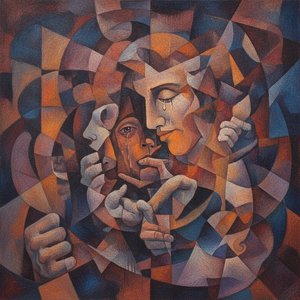
Beyond the Surface: Exploring the Emotional Depth of Cubist Expressionism
Discover the profound emotional resonance within Cubist Expressionism. Explore how fragmented forms and geometric abstraction convey deep human feeling through an expert art-historical lens for the discerning collector.

Fragmented Beauty: Exploring the Soul and Geometric Depth of Cubist Landscapes
Embark on a cultural journey through the soul of Cubist landscapes. Discover how masters like Braque and Rivera redefined nature through geometric beauty, fragmented forms, and profound abstraction in this expert art-history exploration.

Breaking Reality: A Sophisticated Guide to the Power of Cubist Fragmentation and Geometric Reimagination
Explore the profound depth of Cubist fragmentation. Our expert guide delves into the revolutionary techniques of Picasso and Braque, offering art collectors a sophisticated understanding of how deconstructed forms redefine modern perception and luxury curation.
Explorați opere de artă organizate pe teme, stiluri și caracteristici.


