

Shown: · With its frame:
 Previzualizare
 Trimite prin felicitare
 Distribuie
 Detalii despre lucrare
 Ghid
Ghid

 Descarcă imaginea
 Produse similare
 Radiografie
 Galerie foto
 Q&A
Q&A Statistici
- 127.0 x 174.0 cm


lei 1276
Reproducere pictată manual în ulei
Pictură în ulei pe pânză, pictată manual de artiștii noștri la dimensiunea și ramele dorite de dumneavoastră, pe comandă. ( Comută pe versiunea Print Comută pe Imagine Digitală)
Această lucrare este protejată de drepturile de autor
Lucrarea de artă afișată pe această pagină este protejată de legile privind drepturile de autor, ceea ce înseamnă că nu putem crea sau vinde în mod legal o reproducere identică. Această protecție este garantată prin acorduri internaționale, precum Convenția de la Berna și de legile naționale, inclusiv cele prevăzute de Legea dreptului de autor din S.U.A. – Titlul 17. Toate drepturile rezervate. Orice reproducere neautorizată este interzisă.
Ca alternativă respectuoasă și legală, oferim tablouri pictate manual, personalizate, inspirate de original. Artistii noștri experimentați și profesioniști studiază cu atenție stilul, starea de spirit și esența artistică a originalului pentru a crea o piesă nouă și unică, care evocă aceeași emoție – rămânând, în același timp, o creație originală în sine.
Această metodă respectă pe deplin reglementările privind drepturile de autor, deoarece nu implică copierea sau duplicarea operei protejate. În schimb, este o reinterpretare creativă – o pictură nouă, influențată de original, dar care nu este identică cu acesta.
 Citește mai mult
Size
·Standard
personalizat
CM
INCH
Alegeți dintre dimensiunile noastre prestabilite, care respectă proporțiile originale ale operei de artă.
Loading sizes...

lățime
înălțime
Introduceți lățimea și înălțimea necesare pentru a se potrivi ramei sau peretelui dumneavoastră. Această lucrare este pictată manual, așa că, pentru o dimensiune cu o formă diferită, artistul poate picta puțin mai mult în jurul imaginii sau poate tăia puțin din margini — dumneavoastră decideți. Vă vom trimite o simulare digitală pentru aprobare înainte de a începe pictarea. Imaginea afișată pe această pagină nu reprezintă rezultatul real — doar simularea este reprezentativă.
Finish
·
White lei1

Blurside lei1

Extended lei1

P118B lei10

P118H lei10

P118W lei10

P438Z lei10

P508JH lei12

P508YH lei12

P805H lei10

P805Z lei10

P919BZ lei10

P919G lei10

P919XJ lei10

P959ZH lei10

P968JZ lei12

W106C lei8

W218G lei10

W218JH lei8

W218Y lei10

W307PJ lei10

W316G lei10

W316PJ lei8

W316Y lei10

W398PJ lei8

W4111J lei10

W500HY lei15

W500JH lei15

W692G lei12

W849H lei8

W940BG lei15

W953PJ lei8

H24-GOLD lei30

H24-SILVER lei30

H36-GOLD lei45

H36-SILVER lei45
Shipped in a protective tube, ready for your own framer.
Above 105 cm the frame is shipped as a kit for a professional framer — read the details.
Extras
optionalWhat do the extras include?
Examples of what can be changed: Replace face with customer photo; Add pet (e.g., replace cat with dog); Include hidden message in background; Change background landscape or elements.
After order, TopImpressionists.com team will email client for instructions and provide a mockup preview
After order, TopImpressionists.com team will email client for instructions and provide a mockup preview
Livrare în întreaga lume () în 3-4 săptămâni, în loc de cele 5 săptămâni standard. (31 Octombrie). Fără compromisuri în ceea ce privește calitatea.
Lac de protecție
Etichetă de prezentare
Detalii plăcuță din bronz gravat
This elegant plaque features the artist's name and the title of the artwork, finely engraved for a timeless presentation.
It is made from bronze with a refined, elegant finish. The text is precisely laser-engraved for a sharp and permanent result. Measuring 9x2 cm, the plaque is compact yet easy to read. It's built to be durable and scratch-resistant, offering a professional, museum-quality look. Mounting is simple thanks to the included adhesive backing.
Detalii plăcuță din acril transparent
The plaque includes essential engraved details such as the artist's name, the title of the artwork, the date it was created, the type of media used-like oil on canvas or watercolor-a brief description of the piece, and a QR code that links to the complete artwork information.
It is crafted from clear acrylic, offering a sleek, modern appearance. The text is UV-engraved in black to ensure strong visual contrast. With a size of 10x15 cm, it ensures optimal readability. It comes equipped with two metal hooks for secure wall mounting. The plaque is designed to be weather-resistant, making it suitable for various environments, and it includes interactive features that work seamlessly with smartphone scanning.
Detalii placă din acril negru
This elegant plaque includes engraved information such as the artist's name, the title of the artwork, the date it was created, the type of media used (like oil on canvas or watercolor), a short description of the artwork, and a QR code for quick access to more information.
The plaque itself is made from refined black acrylic with a premium finish. The text is laser-engraved in white for high contrast and readability. Its size is 10x15 cm, designed to be easy to read. It comes with two metal hooks for professional mounting. The design is sleek and fits any interior style. It is also weather-resistant and durable, with built-in digital integration for mobile compatibility.
Opțiunea cu sticlă este disponibilă doar pentru dimensiuni de sub 110 cm
 Opțiunea cu sticlă este disponibilă doar pentru dimensiuni de sub 110 cm
- Livrare expres gratuită la nivel mondial
- Pânză de in de înaltă calitate
- Asigurare completă pentru transport
- Garanție de rambursare a taxelor vamale
- Garanția fidelității culorilor
- Politica de retur în 100 de zile (doar pentru defecte de fabricație)
- Garanție de rambursare 100%
- Ofertă pentru comenzi multiple


Descriere obiect de colecție
Gillies’ artistic development was significantly shaped by his exposure to Cubist principles and the visionary aesthetics of Paul Klee.
Biografie artist
W.G. Gillies a fost un pictor scoțian remarcabil, cunoscut pentru peisajele sale lirice și stilul său unic, influențat de cubism și Paul Klee. A fost un educator influent și o figură cheie în scena artistică scoțiană din secolul XX.
About the painting
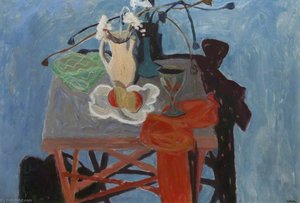
A Window Into Domestic Tranquility: Exploring William Gillies’ “Interior”
William George Gillies (1898 – 1973), a Scottish painter whose career spanned decades of artistic exploration, remains an enduring figure in British Modernism. His work embodies a quiet contemplation of everyday life, capturing the essence of domestic serenity with remarkable precision and subtle emotional resonance. “Interior,” completed in 1938, exemplifies Gillies’ distinctive approach – blending influences from Cézanne and Picasso with a burgeoning fascination for Paul Klee’s imaginative use of colour.
Subject Matter & Composition: The painting depicts a familial scene within a living room. A man and woman stand attentively near a window, bathed in diffused light—a deliberate choice that underscores the importance of natural illumination in Gillies' aesthetic vision. Two children are present, one playfully holding a ball, injecting an element of youthful energy into the otherwise tranquil composition. The arrangement is carefully considered, prioritizing balance and visual harmony.
Style & Technique: Gillies’ style leans heavily towards Cézanne’s geometric simplification and Picasso’s muted palette, yet he transcends mere imitation. He achieves a remarkable level of realism through meticulous observation—evident in the depiction of textures like the worn upholstery of the armchair and the smooth surface of the vases. However, unlike purely representational art, Gillies imbues his canvases with an underlying sense of abstraction. The fragmented planes of colour and form subtly suggest movement and depth, mirroring the complexities hidden beneath the surface of domestic life.
Historical Context: “Interior” was created during a period of significant artistic experimentation in Britain following World War I. Gillies’ engagement with Cubism reflected the broader intellectual currents of the time—a desire to challenge traditional perspectives and embrace new visual languages. Simultaneously, his encounter with Klee signaled a shift towards incorporating childlike spontaneity and emotional expression into his art – a reaction against the perceived rigidity of earlier artistic movements.
Symbolism & Emotional Impact: Beyond its formal qualities, “Interior” speaks to deeper themes of family connection and domestic comfort. The window serves as a visual metaphor for openness and contemplation—a reminder that beauty can be found in simplicity and stillness. The carefully placed objects – vases, bowls, apples – contribute to the overall atmosphere of refined elegance. Ultimately, Gillies’ masterpiece evokes a feeling of warmth, tranquility, and understated joy—capturing the quiet dignity of everyday life with an artist's unwavering eye.
Reproductions & Inspiration: Today, “Interior” continues to inspire artists and designers alike. High-quality reproductions allow viewers to appreciate Gillies’ masterful technique and capture the painting’s evocative mood. Consider incorporating elements of Cézanne’s geometric precision alongside Picasso’s muted palette into your own interior design projects – a testament to the enduring legacy of this remarkable Scottish painter.
Întrebări și răspunsuri
"Interior" de William George Gillies este o pictură, un desen sau o printă?
În catalog, "Interior" de William George Gillies este clasificat ca WallArt. Această categorie facilitează găsirea unor lucrări similare.
Cât de cunoscută este opera „Interior” în cadrul mișcării Cubist Influences?
În cadrul mișcării Cubist Influences, „Interior” are un nivel de popularitate Recognized.
Cine este autorul operei "Interior" și din ce curent artistic face parte?
"Interior" a fost creat de William George Gillies, în stilul Cubist Influences. Artistul și mișcarea definesc tradiția acestei opere.
Quick facts and art quiz
About William George Gillies

William George Gillies
1898 - 1973, Regatul Unit al Marii Britanii și Irlandei de Nord
Biografie artist
Early Life and Artistic Beginnings
Sir William George Gillies, born in Haddington, a charming market town nestled in East Lothian, Scotland, on September 21st, 1898, embarked on an artistic journey that would profoundly shape the landscape of Scottish art. His early years were marked by a deep connection to his native land – a connection that would become inextricably woven into the very fabric of his paintings. Initially enrolled at the Edinburgh College of Art, Gillies’ studies were abruptly interrupted by the exigencies of World War I, where he served with distinction as an engineer in the Royal Engineers. This experience, steeped in the realities of conflict and loss, undoubtedly left an indelible mark on his psyche and would later inform the somber undertones that occasionally permeate his work. Following the war’s conclusion, Gillies returned to complete his education at the Edinburgh College of Art, ultimately graduating and dedicating himself to a career as both a painter and a teacher – a dual role that profoundly shaped his artistic development and legacy.A Journey Through Modernism: Cubism and Beyond
Gillies' artistic trajectory began with an enthusiastic exploration of Cubism in the early 1920s, spurred by his studies under André Lhote in Paris and a subsequent visit to Italy. This initial foray into the avant-garde movement is vividly reflected in works such as “Two Pots, Saucer and Fruit” (1933), where he skillfully employed Cézanne’s principles of spatial arrangement alongside the understated color palettes characteristic of artists like Braque and Picasso. However, Gillies possessed a deeply rooted sensibility that resisted rigid adherence to any single style. A pivotal moment arrived in 1934 when he encountered the evocative works of Paul Klee – an encounter that ignited within him a desire for greater imaginative freedom and a more childlike approach to composition. This influence is particularly evident in his later paintings, where bold colors and simplified forms create a sense of wonder and delight. Gradually, Gillies moved away from the strict constraints of Cubism, forging a distinctive style firmly rooted in Scottish landscape traditions and still life compositions.The 1922 Group: A Hub of Innovation
In 1922, Gillies played a crucial role in establishing the “1922 Group,” alongside fellow artists such as William Crozier, William Geissler, and William MacTaggart. This collective served as more than just an exhibition society; it functioned as a vital incubator for emerging Scottish talent, providing a platform for their work to be showcased at the New Gallery in Edinburgh – a space that had previously been dominated by established artists. The “1922 Group” fostered a remarkable sense of community and collaboration within the Scottish art scene, encouraging experimentation and pushing the boundaries of artistic expression. It was a period of intense creativity and shared ambition, laying the groundwork for future generations of Scottish painters.Themes and Artistic Expressions: Landscape, Still Life, and Loss
Gillies’ artistic output is characterized by two primary thematic concerns: landscapes and still lifes. He possessed an extraordinary ability to capture the essence of the Lothian, Fife, and Border regions of Scotland – translating their rugged beauty, atmospheric subtleties, and intimate details onto canvas with remarkable sensitivity. His landscapes are not merely depictions of scenery; they are imbued with a profound sense of place, reflecting his deep connection to the land and its history. Simultaneously, Gillies devoted considerable attention to still life compositions, often featuring ceramics crafted by his younger sister, Emma Smith Gillies – whose untimely death in 1936 profoundly impacted him. These still lifes, frequently dominated by muted tones and melancholic subjects, serve as poignant reminders of loss and the fragility of life. The influence of Klee is particularly apparent in these works, where a childlike quality and imaginative use of color are employed to evoke emotion and create a sense of intimacy.Recognition and Legacy: A Lasting Impact
Throughout his distinguished career, Sir William George Gillies received numerous accolades recognizing his artistic merit and contributions to the Scottish art world. He was elected as an Associate of the Royal Scottish Academy in 1940 and subsequently became a full Academician in 1947. In 1957, he was awarded the Commander of the Order of the British Empire (CBE) for his services to art, followed by knighthood in 1970. His legacy extends far beyond his individual paintings; he served as Principal of the Edinburgh College of Art from 1959 until his retirement in 1966, shaping the artistic development of countless students and leaving an enduring mark on the institution. His works are now held in prestigious collections across Scotland and internationally, including the National Galleries of Scotland, Aberdeen Art Gallery, and the Royal Scottish Academy – a testament to the lasting impact of this remarkable artist. Gillies died peacefully at his home in Temple, Midlothian, on April 15th, 1973, leaving behind a body of work that continues to captivate and inspire viewers today.Quick facts about William George Gillies
- Artistic Movement Or Style:
- Cubism
- Landscapes
- Artists Or Movements Influenced By This Artist: ['Scottish Colourists']
- Artists Who Influenced This Artist:
- André Lhote
- Cézanne
- Braque
- Picasso
- Paul Klee
- Date Of Birth: 1898
- Date Of Death: 1973
- Full Name: Sir William George Gillies
- Nationality: Scottish
- Notable Artworks:
- Two Pots...
- Mediterranean...
- Still Life – Yellow Jug...
- Place Of Birth: Haddington, UK
Opere similare


Explorați opere de artă organizate pe teme, stiluri și caracteristici.




William George Gillies
Interior
() ·
With its frame: · Hand-painted in oil on linen
Total