


 Vezi în context
 Trimite
 Distribuie
 Detalii
 Ghidul

 Descarcă
 Produse similare
 Radiografie
 Diaporama
 Statistici
Self portrait with hat
 Painting
- Post-Impressionism
 1909
1909- Modern
 15.0 x 14.0 cm
A striking close-up portrait of a man with an expressive open mouth set against a vibrant yellow background, this 1909 painting by Theo van Doesburg captures raw emotion and invites you to explore his early mastery.
 Citește mai mult
Theo van Doesburg (1883-1931): revoluționarul De Stijl, fondator al abstracționismului geometric și pionier al artei moderne. Geometrie, culoare pură și o viziune unică!
Giclée / Imprimare artistică
Printuri giclée sau pe canvas de calitate muzeală, cu proces de producție rapid și opțiuni flexibile de finisare. ( Comandă pictură realizată manual Treci la imagine digitală)




P118B lei10

P118H lei10

P118W lei10

P438Z lei10

P508JH lei12

P508YH lei12

P805H lei10

P805Z lei10

P919BZ lei10

P919G lei10

P919XJ lei10

P959ZH lei10

P968JZ lei12

W106C lei8

W218G lei10

W218JH lei8

W218Y lei10

W307PJ lei10

W316G lei10

W316PJ lei8

W316Y lei10

W398PJ lei8

W4111J lei10

W500HY lei15

W500JH lei15

W692G lei12

W849H lei8

W940BG lei15

W953PJ lei8




Dimensiuni standard
personalizat
CM
INCH
Alegeți dintre dimensiunile noastre prestabilite, care respectă proporțiile originale ale operei de artă.
Loading sizes...

lățime
înălțime
Introduceți lățimea și înălțimea de care aveți nevoie, pentru a se potrivi ramei sau peretelui dumneavoastră. O printare poate fi doar tăiată, niciodată extinsă dincolo de dimensiunea imaginii originale, astfel încât o dimensiune cu o formă diferită va pierde o parte din imagine. Vă trimitem o simulare digitală pentru aprobare înainte de a imprima orice. Imaginea afișată pe această pagină nu prezintă tăierea reală — doar simularea arată acest lucru.
Livrare în întreaga lume () în 2 săptămâni, în loc de cele 4/5 săptămâni standard. (23 Octombrie)

Livrare expres gratuită la nivel mondial

Pânză de in premium

Asigurare completă pentru transport

Garanție de rambursare a taxelor vamale

Garanția fidelității culorilor

Politica de retur în 100 de zile (doar pentru defecte)

Garanție de rambursare 100%

Reducere pentru comenzi multiple
 Opțiunea cu sticlă este disponibilă doar pentru dimensiuni de sub 110 cm

Self portrait with hat
Giclée / Imprimare artistică
Dimensiune reproducere
-


Preț total
lei 320
A Moment Captured in Amber: The Raw Humanity of Van Doesburg
In the quiet moments before his radical departure into the geometric purity of De Stijl, Theo van Doesburg captured something profoundly intimate and startlingly human. Self-portrait with hat, painted in 1909, serves as a breathtaking window into the artist's psyche during his formative years. Unlike the rigid lines and primary colors that would later define his legacy as the architect of abstraction, this work vibrates with an almost visceral energy. The subject—a man caught in a transient, candid gesture—appears to be mid-sentence or perhaps lost in a sudden yawn, lending the piece an unexpected sense of life and spontaneity. It is not merely a likeness; it is a captured breath, a fleeting second of existence frozen against a luminous, sun-drenched yellow backdrop.
The composition is masterfully focused, pulling the viewer into an immediate, face-to-face encounter with the artist. The stark contrast between the deep, obsidian black of the hat and the radiant warmth of the background creates a visual tension that commands attention. This interplay of light and shadow does more than just define form; it establishes a psychological depth. The yellow expanse behind him is not a flat void but a textured atmosphere that seems to pulse with the same vitality found in the man's expressive features. For the discerning collector, this painting offers a rare glimpse into the evolution of a master, showcasing a period where emotion and physical presence reigned supreme over mathematical precision.
Technique and the Beauty of the Visible Hand
To gaze upon this reproduction is to appreciate the tactile romance of traditional oil painting. The technique employed here celebrates the impasto spirit, where every brushstroke tells a story of movement and intention. One can almost feel the rhythmic motion of the bristles as they layered pigment to sculpt the contours of the face and the heavy fabric of the clothing. These visible strokes provide a wonderful sense of texture and depth, making the artwork feel alive and multidimensional. This handmade quality is what distinguishes a true fine art reproduction from a mere print; it possesses a soul that resonates within a room.
The artistry lies in the balance between detail and impression. While the facial features are rendered with enough precision to convey character and emotion, there is an intentional looseness that prevents the portrait from feeling static or overly academic. This stylistic choice creates an emotional resonance that is both accessible and profound. For interior designers, this piece serves as a sophisticated focal point—a conversation starter that brings a sense of historical weight and artistic integrity to any modern or classical space. It is a work that does not just decorate a wall; it anchors a room with its vibrant energy and timeless human connection.
Întrebări și răspunsuri
Ce dimensiune de tipar pentru "Self portrait with hat" de Theo van Doesburg se potrivește cu camera recomandată?
Combinația recomandată pentru "Self portrait with hat" de Theo van Doesburg: o printare de dimensiunea Small, ideală pentru o Studio Apartment.
Din ce perioadă a carierei lui Theo van Doesburg face parte „Self portrait with hat”?
"Self portrait with hat" reprezintă perioada Early Period a lui Theo van Doesburg.
Ce configurare de imprimare este recomandată pentru "Self portrait with hat" de Theo van Doesburg?
Pentru o printare a lucrării "Self portrait with hat" de Theo van Doesburg, recomandăm dimensiunea de Small în orientare Square.
Opere similare


Biografie artist
The Architect of Abstraction: A Life in Geometric Harmony
Theo van Doesburg, born Christian Emil Marie Küpper in 1883 in Utrecht, Netherlands, wasn’t merely a painter; he was a revolutionary force who fundamentally reshaped the very foundations of modern art. His journey began amidst the lingering echoes of Impressionism and Post-Impressionism, initially mirroring styles reminiscent of Vincent van Gogh – both in subject matter and emotional intensity. However, this early phase served as a crucial prelude, a necessary stepping stone toward the radical transformation that would define his enduring legacy. A pivotal moment arrived in 1913 with his encounter with Wassily Kandinsky’s *Rückblicke*. This text sparked within van Doesburg a profound realization: true artistic expression lay not in replicating the external world but in channeling an inner, spiritual reality through pure abstraction. It was this conviction that birthed Neoplasticism, more commonly known as De Stijl – a movement he founded and fiercely championed, becoming its most ardent advocate.Forging a New Visual Language: The Principles of De Stijl
De Stijl wasn’t merely an artistic style; it was a comprehensive philosophical manifesto translated into visual form. Van Doesburg believed in stripping art down to its most essential elements – straight lines, right angles, and the primary colors of red, yellow, and blue, alongside black, white, and gray. This austere palette wasn't born from limitation but from a desire for universality—a belief that these fundamental forms resonated with an underlying cosmic order. He envisioned a *total* work of art, extending beyond the canvas to encompass architecture, design, and even everyday objects. Collaboration was key; van Doesburg worked closely with architects like J.J.P. Oud and Gerrit Rietveld, designing stained glass windows, furniture, and entire interiors that embodied the principles of De Stijl. His collaborations extended to fellow artists such as Piet Mondrian, with whom he co-founded the influential journal *De Stijl*, a platform for disseminating their ideas and attracting like-minded creatives. However, despite their shared origins, tensions arose between van Doesburg and Mondrian regarding the rigidity of Neoplasticism. Van Doesburg introduced “Elementarism” in 1926, advocating for diagonal lines and more dynamic compositions – a departure that ultimately led to a schism within the movement, revealing his restless spirit and constant pursuit of artistic evolution.The Early Years & The Seeds of Abstraction
Theo van Doesburg’s early life was marked by a surprising lack of formal artistic training. Born into a family of artists—his father, Wilhelm Küpper, was a photographer—he initially pursued acting and singing before finding his calling as a shop assistant. This seemingly mundane occupation provided him with a keen eye for detail and an appreciation for the beauty of everyday objects – qualities that would later inform his artistic vision. It wasn’t until 1908, when he exhibited his paintings in the Hague, that he began to establish himself as a serious artist. His early works were characterized by a sensitivity reminiscent of Vincent van Gogh—both in subject matter and emotional intensity. However, this initial phase served as a crucial prelude, a necessary stepping stone toward the radical transformation that would define his enduring legacy. The turning point arrived in 1913 with his encounter with Wassily Kandinsky’s *Rückblicke*. This text sparked within van Doesburg a profound realization: true artistic expression lay not in replicating the external world but in channeling an inner, spiritual reality through pure abstraction.The Birth of De Stijl & The Pursuit of Totality
In 1917, amidst the turmoil of World War I, Theo van Doesburg, along with Piet Mondrian, Bart van der Leck, and others, founded *De Stijl* (The Style), a journal dedicated to exploring the principles of pure abstraction. They sought to create a “total work of art” – an encompassing aesthetic that extended beyond painting to encompass architecture, design, and all aspects of human experience. This ambition led them to develop a rigorous set of rules: only primary colors, straight lines, right angles, and black and white were permitted. The goal was to achieve a sense of harmony and universality through the reduction of form to its most essential elements. *De Stijl* quickly became a focal point for avant-garde artists and designers, shaping the visual language of the interwar period.Beyond Painting: A Multifaceted Artistic Vision
While celebrated as a painter, van Doesburg’s artistic pursuits were remarkably diverse. He was a prolific writer, poet, critic, and designer, using his pen to articulate the theoretical underpinnings of De Stijl and challenge conventional notions of art. His engagement with Dadaism in the early 1920s further broadened his artistic horizons, leading to experimental works that incorporated collage and typography. This period also saw him teaching at the Bauhaus, where he shared his ideas with a new generation of artists and designers. He wasn’t content to remain within the confines of traditional art forms; van Doesburg actively sought to integrate art into everyday life, believing it had the power to transform society. His designs for interiors and furniture weren't merely aesthetic exercises but attempts to create harmonious living spaces that reflected the principles of De Stijl.Legacy & Lasting Influence
Theo van Doesburg’s life was tragically cut short in 1931 at the age of 47, yet his impact on modern art remains profound. De Stijl, though relatively short-lived as a cohesive movement, exerted an enormous influence on subsequent artistic developments, including Bauhaus design, Minimalism, and Constructivism. His emphasis on geometric abstraction, pure color, and functionalism continues to resonate with artists and designers today. His work serves as a reminder that art is not merely about representation but about the exploration of fundamental forms and ideas. Van Doesburg’s legacy extends beyond his paintings and designs; it lies in his unwavering commitment to artistic innovation and his belief in the transformative power of abstraction. His vision of a unified, harmonious world – expressed through the language of De Stijl – continues to inspire those who seek to create a more beautiful and meaningful environment.
Theo van Doesburg
1883 - 1931 , Olanda
Informații rapide
- Artistic Movement Or Style: De Stijl, Neoplasticism
- Artists Or Movements Influenced By This Artist:
- Bauhaus
- Minimalism
- Artists Who Influenced This Artist:
- Kandinsky
- Van Gogh
- Date Of Birth: 30 august 1883
- Date Of Death: 7 martie 1931
- Full Name: Theo van Doesburg
- Nationality: Olandez
- Notable Artworks:
- Compoziție cu roșu...
- Compoziție II cu linii...
- Danci
- Place Of Birth: Utrecht, Olanda
Articole conexe
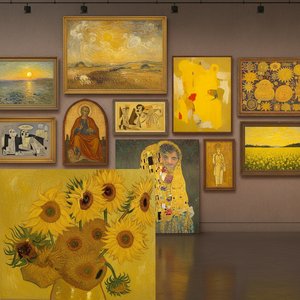
Top 10 Capodopere Picturale Dominate de Galben Crom: Artă, Istorie și Decor
Descoperă top 10 tablouri celebre dominate de galben crom! Van Gogh, Monet și alți maeștri ai impresionismului. Istorie, tehnică și inspirație pentru decorul casei tale. Reproduceri de artă de calitate muzeală pe TopImpressionists.com

Top 10 Tablouri Celebre Dominante de Negru: Artă, Istorie și Decor Rafinat
Descoperă Top 10 tablouri celebre dominate de negru! Explorează istoria, simbolismul și tehnicile artistice ale unor opere iconice de Rembrandt, Goya și alți maeștri. Reproduceri de artă de calitate muzeală pe TopImpressionists.com – inspiră-ți decorul!
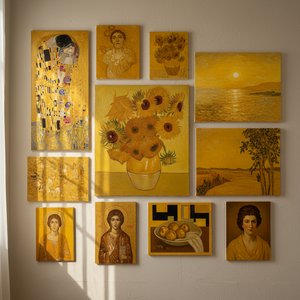
Top 10 Capodopere Pictate în Nuanțe de Ocră Galben: Artă și Decor Inspirat
Descoperă top 10 picturi celebre dominate de nuanțe calde de ocră galben! Explorează poveștile lui Van Gogh, Monet și Rembrandt. Găsește inspirație pentru decorul tău cu reproduceri artă de calitate muzeală pe TopImpressionists.com

The Golden Hue: Exploring Symbolism & Emotion in Yellow Art
Explore the rich symbolism & emotional power of yellow in art history! From Van Gogh to Kandinsky, discover how artists used this vibrant hue. Expert analysis & high-quality reproductions at TopImpressionists.

Top 10 Capodopere Picturale Dominante de Tonuri 'Mars Black' | Artă & Decor
Descoperă top 10 picturi celebre dominate de tonuri 'Mars Black', de la Rembrandt la Picasso. Explorează istoria, tehnicile și emoțiile din spatele acestor capodopere artistice. Reproduceri tablouri de calitate muzeală pe TopImpressionists.com!
Explorați opere de artă organizate pe teme, stiluri și caracteristici.
