

Shown: · With its frame:
 Previzualizare
 Trimite prin felicitare
 Distribuie
 Detalii despre lucrare
 Ghid
Ghid

 Descarcă imaginea
 Produse similare
 Radiografie
 Galerie foto
 Q&A
Q&A Statistici


lei 1262
Reproducere pictată manual în ulei
Pictură în ulei pe pânză, pictată manual de artiștii noștri la dimensiunea și ramele dorite de dumneavoastră, pe comandă. ( Comută pe versiunea Print Comută pe Imagine Digitală)
Size
·Standard
personalizat
CM
INCH
Alegeți dintre dimensiunile noastre prestabilite, care respectă proporțiile originale ale operei de artă.
Loading sizes...

lățime
înălțime
Introduceți lățimea și înălțimea necesare pentru a se potrivi ramei sau peretelui dumneavoastră. Această lucrare este pictată manual, așa că, pentru o dimensiune cu o formă diferită, artistul poate picta puțin mai mult în jurul imaginii sau poate tăia puțin din margini — dumneavoastră decideți. Vă vom trimite o simulare digitală pentru aprobare înainte de a începe pictarea. Imaginea afișată pe această pagină nu reprezintă rezultatul real — doar simularea este reprezentativă.
 Citește mai mult
Finish
·
White lei1

Blurside lei1

Extended lei1

P118B lei10

P118H lei10

P118W lei10

P438Z lei10

P508JH lei12

P508YH lei12

P805H lei10

P805Z lei10

P919BZ lei10

P919G lei10

P919XJ lei10

P959ZH lei10

P968JZ lei12

W106C lei8

W218G lei10

W218JH lei8

W218Y lei10

W307PJ lei10

W316G lei10

W316PJ lei8

W316Y lei10

W398PJ lei8

W4111J lei10

W500HY lei15

W500JH lei15

W692G lei12

W849H lei8

W940BG lei15

W953PJ lei8

H24-GOLD lei30

H24-SILVER lei30

H36-GOLD lei45

H36-SILVER lei45
Shipped in a protective tube, ready for your own framer.
Above 105 cm the frame is shipped as a kit for a professional framer — read the details.
Extras
optionalWhat do the extras include?
Examples of what can be changed: Replace face with customer photo; Add pet (e.g., replace cat with dog); Include hidden message in background; Change background landscape or elements.
After order, TopImpressionists.com team will email client for instructions and provide a mockup preview
After order, TopImpressionists.com team will email client for instructions and provide a mockup preview
Livrare în întreaga lume () în 3-4 săptămâni, în loc de cele 5 săptămâni standard. (31 Octombrie). Fără compromisuri în ceea ce privește calitatea.
Lac de protecție
Etichetă de prezentare
Detalii plăcuță din bronz gravat
This elegant plaque features the artist's name and the title of the artwork, finely engraved for a timeless presentation.
It is made from bronze with a refined, elegant finish. The text is precisely laser-engraved for a sharp and permanent result. Measuring 9x2 cm, the plaque is compact yet easy to read. It's built to be durable and scratch-resistant, offering a professional, museum-quality look. Mounting is simple thanks to the included adhesive backing.
Detalii plăcuță din acril transparent
The plaque includes essential engraved details such as the artist's name, the title of the artwork, the date it was created, the type of media used-like oil on canvas or watercolor-a brief description of the piece, and a QR code that links to the complete artwork information.
It is crafted from clear acrylic, offering a sleek, modern appearance. The text is UV-engraved in black to ensure strong visual contrast. With a size of 10x15 cm, it ensures optimal readability. It comes equipped with two metal hooks for secure wall mounting. The plaque is designed to be weather-resistant, making it suitable for various environments, and it includes interactive features that work seamlessly with smartphone scanning.
Detalii placă din acril negru
This elegant plaque includes engraved information such as the artist's name, the title of the artwork, the date it was created, the type of media used (like oil on canvas or watercolor), a short description of the artwork, and a QR code for quick access to more information.
The plaque itself is made from refined black acrylic with a premium finish. The text is laser-engraved in white for high contrast and readability. Its size is 10x15 cm, designed to be easy to read. It comes with two metal hooks for professional mounting. The design is sleek and fits any interior style. It is also weather-resistant and durable, with built-in digital integration for mobile compatibility.
Opțiunea cu sticlă este disponibilă doar pentru dimensiuni de sub 110 cm
 Opțiunea cu sticlă este disponibilă doar pentru dimensiuni de sub 110 cm
- Livrare expres gratuită la nivel mondial
- Pânză de in de înaltă calitate
- Asigurare completă pentru transport
- Garanție de rambursare a taxelor vamale
- Garanția fidelității culorilor
- Politica de retur în 100 de zile (doar pentru defecte de fabricație)
- Garanție de rambursare 100%
- Ofertă pentru comenzi multiple


Descriere obiect de colecție
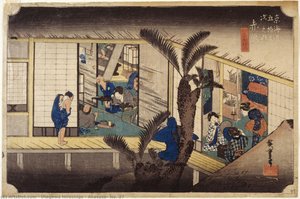
Experience Utagawa Hiroshige's "Asakusa River" – a stunning woodblock print capturing a serene night scene with boats and figures, reflecting Edo Japan’s poetic beauty.
Biografie artist
Utagawa Hiroshige (1797-1858) a fost un maestru al gravurii ukiyo-e japoneze, renumit pentru peisajele sale poetice și evocatoare, precum "Cele 53 de Stații ale Tōkaidō". Stilul său unic a influențat artiști europeni precum Van Gogh, marcând începutul Japonismului.
About the painting
The Essence of a Nighttime Journey
Utagawa Hiroshige’s “Asakusa River” isn't merely a depiction of a scene; it’s an immersion into the heart of Edo-era Tokyo. Painted in 1857, during a period of profound transformation for Japan – grappling with Western influence while clinging fiercely to its traditions – this woodblock print captures a fleeting moment of serenity amidst bustling urban life. The image unfolds like a carefully orchestrated memory: a lone boat glides along the Sumida River under a velvet night sky, reflecting the distant glow of lanterns and the subtle shimmer of water. It’s a scene imbued with a quiet melancholy, a poignant awareness of time's passage, characteristic of Hiroshige’s signature style.
Technique and the Art of *Ukiyo-e*
Hiroshige’s mastery lies in his meticulous application of *ukiyo-e*, or “pictures of the floating world.” This technique, perfected over centuries, involved carving intricate designs onto wooden blocks – one block for each color – then painstakingly printing them onto paper. “Asakusa River” exemplifies this process brilliantly. The artist employs a delicate gradation of Prussian blue and grey to render the sky, creating an atmospheric depth that belies the relatively flat surface of the print. Notice how subtle variations in tone suggest movement within the water and the gentle sway of the boat. The use of *nagashi-zuri*, or loose-ink washes, adds a sense of fluidity and spontaneity, mimicking the ephemeral nature of light and shadow. The composition itself is carefully balanced – the boat’s trajectory draws the eye across the scene, while the distant trees and buildings provide grounding elements.
A Window into Edo Life
Asakusa in 1857 was a vibrant hub, a crossroads of commerce, religion, and entertainment. The temple of Sensō-ji, visible faintly in the background, stood as a focal point for pilgrims and locals alike. The river served as a vital artery for trade and transportation, connecting the city to its surrounding regions. Hiroshige’s choice to depict a simple boat journey – a commonplace activity for many Edo residents – elevates it into something profound. It speaks to the everyday rhythms of life, the quiet moments of contemplation amidst the constant flow of urban activity. The inclusion of figures in the boat, though largely obscured, hints at the human element within this landscape.
Symbolism and a Poetic Mood
Beyond its realistic depiction, “Asakusa River” is rich with symbolic meaning. The lone boat can be interpreted as representing the journey of life itself – a solitary voyage through an uncertain world. The river, a recurring motif in Hiroshige’s work, symbolizes both passage and transformation. The muted colors and soft lighting evoke a sense of nostalgia and melancholy, reflecting the artist's awareness of the fleeting nature of beauty and the inevitable decline of traditional Japan. It is a testament to Hiroshige’s ability to capture not just a scene, but an entire mood – a poignant meditation on time, memory, and the enduring spirit of Edo.
Collecting and Displaying This Masterpiece
Reproductions of “Asakusa River” are available in various sizes and mediums, offering collectors a chance to bring this iconic image into their homes. Consider framing it with simple, natural wood to complement the print’s understated elegance. Its calming aesthetic would be particularly well-suited for spaces seeking tranquility – bedrooms, libraries, or meditation rooms. The print's subtle color palette also harmonizes beautifully with a range of interior design styles, from minimalist to traditional Japanese.
Întrebări și răspunsuri
Este "Asakusa River:" în domeniul public?
În ceea ce privește drepturile de autor, "Asakusa River:" este în domeniul public – drepturile de autor au expirat.
"Asakusa River:" de Hiroshige este o operă de artă luminoasă sau întunecată?
"Asakusa River:" de Hiroshige este înregistrat cu o deep_shadow, având o luminanță de Soft Shadow.
În ce etapă a carierei lui Hiroshige se încadrează "Asakusa River:", având în vedere data sa de execuție?
Având în vedere data de 1857, „Asakusa River:” aparține perioadei Late Period a lui Hiroshige.
Quick facts and art quiz
About Hiroshige

Hiroshige
1797 - 1858, Japonia
Biografie artist
A Poetic Vision of Edo Japan: The Life and Art of Utagawa Hiroshige
Utagawa Hiroshige, născut Andō Tokutarō în 1797 în orașul vibrant Edo (Tokyo modern), se ridică ca o figură centrală în lumea *ukiyo-e*, sau “imagini ale lumii plutitoare”. Deși profund înrădăcinat în tradițiile tipografiei japoneze pe lemn, Hiroshige a transcendat simpla reproducere, infuzând peisajele cu o sensibilitate poetică care a rezonat adânc atât în Japonia, cât și mai târziu, peste granițele sale, în lumea de artă occidentală. Viața sa s-a desfășurat într-o perioadă de pace relativă și prosperitate sub shogunatul Tokugawa, dar și una marcată de schimbări sociale crescânde și de eventuala vestimizare – forțe care au contribuit în cele din urmă la declinul *ukiyo-e*, chiar dacă au amplificat moștenirea sa durabilă. Inițial destinat unui drum mai convențional în cadrul unei familii samurai – tatăl său fiind paznic al focului, Hiroshige a fost atras de aspirațiile sale artistice, începând un stagiu de ucenicie sub îndrumarea lui Utagawa Toyohiro, un maestru al școlii Utagawa. Aceasta s-a dovedit a fi o întorsătură crucială, îndepărtându-l de reprezentările populare ale curtezanelor și actrițelor favorizate de mulți artiști *ukiyo-e*, către un focus pe peisaj, un gen pe care l-a redefinit în cele din urmă.From Genre Scenes to Evocative Landscapes
Lucrările timpurii ale lui Hiroshige au respectat convențiile școlii sale, prezentând portrete și scene din viața de zi cu zi. Cu toate acestea, îmbrățișarea peisajului l-a diferențiat cu adevărat. Influentați de maeștrii anteriori precum Hokusai – ale cărui *Cele Treizeci și șase de vederi ale Muntelui Fuji* captivează deja publicul, Hiroshige a dezvoltat un stil unic caracterizat prin perspectivă atmosferică, palete subtile de culori și o sensibilitate profundă la schimbările anotimpurilor. El nu doar reprezenta locuri; el evoca starea lor de spirit, surprinzând esența unui moment specific în timp. Seria *Cele cincizeci și trei de stații ale Tōkaidō* (1833–1834), probabil cea mai celebră realizare a sa, documenta călătoria de-a lungul drumului Tōkaidō, ruta principală care lega Edo de Kyoto, nu ca un simplu jurnal de călătorie, ci ca o serie de vignette evocatoare – o ploaie bruscă la Shono, o vedere îndepărtată a Muntelui Fuji din Kanaya, activitatea aglomerată de la Odawara. Fiecare print este impregnat cu un sentiment de trecătoare și liniște, invitând privitorii să experimenteze călătoria alături de călătorii. A maîtrizat *bokashi*, o tehnică care implică mai multe impresii pentru a crea gradații subtile de culoare, adăugând profunzime și atmosferă compozițiilor sale.A Master of Atmosphere and Technique
Abilitățile tehnice ale lui Hiroshige au fost la fel de remarcabile ca viziunea sa artistică. El nu se concentra doar pe reprezentarea precisă; el căuta să surprindă *sentimentul* unui loc. Utilizarea culorilor sale, deși adesea restrânsă comparativ cu a unor contemporani, a fost crucială pentru a obține acest efect. De multe ori, el a folosit mai multe plăci pentru o singură culoare, permițându-i să creeze nuanțe subtile și efecte atmosferice care au fost incredibil de dificil de replicat. Culoarea delicată albastră în reprezentările sale ale ploii sau ceața, tonurile calde ale frunzișului toamnei – acestea nu au fost accidentale; erau elemente deliberate concepute pentru a evoca emoții și senzații specifice. Dincolo de *bokashi*, Hiroshige era priceput la utilizarea spațiului liber – *ma* – un concept central al esteticii japoneze, permițând zonelor de pe print să „respire” și îmbunătățind în același timp sentimentul general de liniște. Seria sa *O sută de vederi celebre din Edo* (1856–1858) a demonstrat în continuare măiestria sa, oferind perspective intime asupra vieții și peisajelor orașului său iubit.The Enduring Legacy: Japonisme and Beyond
Deși tradiția *ukiyo-e* a început să slăbească după moartea lui Hiroshige în 1858 – o scădere accelerată de către venirea culturii occidentale sub Restaurarea Meiji și fluxul ulterior de cultură occidentală – influența sa asupra lumii artistice s-a dovedit remarcabil de durabilă. În ultimele decenii ale secolului al XIX-lea, printurile japoneze au inundat Europa, declanșând un fenomen cunoscut sub numele de *Japonisme*. Artiști precum Édouard Manet, Claude Monet și Edgar Degas au fost captivați de compozițiile îndrăznețe, perspectivele aplatizate și schemele de culori neconvenționale ale *ukiyo-e*, incorporând aceste elemente în propriile lor lucrări. Vincent van Gogh a fost în special fascinat de printurile lui Hiroshige, creând copii mai multor dintre ele, inclusiv „Plum Park in Kameido”, demonstrând admirația sa profundă pentru stilul japonez al maestrului. Moartea lui Hiroshige a marcat începutul rapid al declinului genului *ukiyo-e*, în special în fața vestimizării care a urmat Restaurarea Meiji și fluxul ulterior de cultură occidentală. Opera sa a avut o influență puternică asupra picturii europene occidentale spre sfârșitul secolului al XIX-lea, fiind parte a unei tendințe de a împrumuta estetica japoneză în alte domenii. Hiroshige este amintit astăzi nu numai ca un artist strălucit, ci și ca un ambasador cultural care a ajutat la punerea în legătură Estul și Vestul, lăsând o amprentă indelebilă asupra istoriei artei.Notable Works
- Cele cincizeci și trei de stații ale Tōkaidō: Cea mai celebră serie a lui Hiroshige, reprezentând călătoria de-a lungul drumului Tōkaidō.
- O sută de vederi celebre din Edo: O reprezentare captivantă a vieții și peisajelor din orașul său iubit.
- Influența seriei lui Van Gogh "Japonaiserie": Include "Plum Park in Kameido", demonstrând admirația profundă a lui Van Gogh pentru stilul japonez al maestrului Hiroshige.
Quick facts about Hiroshige
- Artistic Movement Or Style: *Ukiyo-e*
- Artists Or Movements Influenced By This Artist:
- Manet
- Monet
- Artists Who Influenced This Artist: ['Hokusai']
- Date Of Birth: 1797
- Date Of Death: 1858
- Full Name: Utagawa Hiroshige
- Nationality: Japonez
- Notable Artworks:
- Cele 53 Stații
- Vederi Faimoase
- Place Of Birth: Tokyo, Japonia
Explorați opere de artă organizate pe teme, stiluri și caracteristici.




Hiroshige
Asakusa River:
() ·
With its frame: · Hand-painted in oil on linen
Total