

 Previzualizare
 Trimite prin felicitare
 Distribuie
 Detalii despre lucrare
 Ghid
Ghid

 Descarcă imaginea
 Produse similare
 Radiografie
 Galerie foto
 Statistici
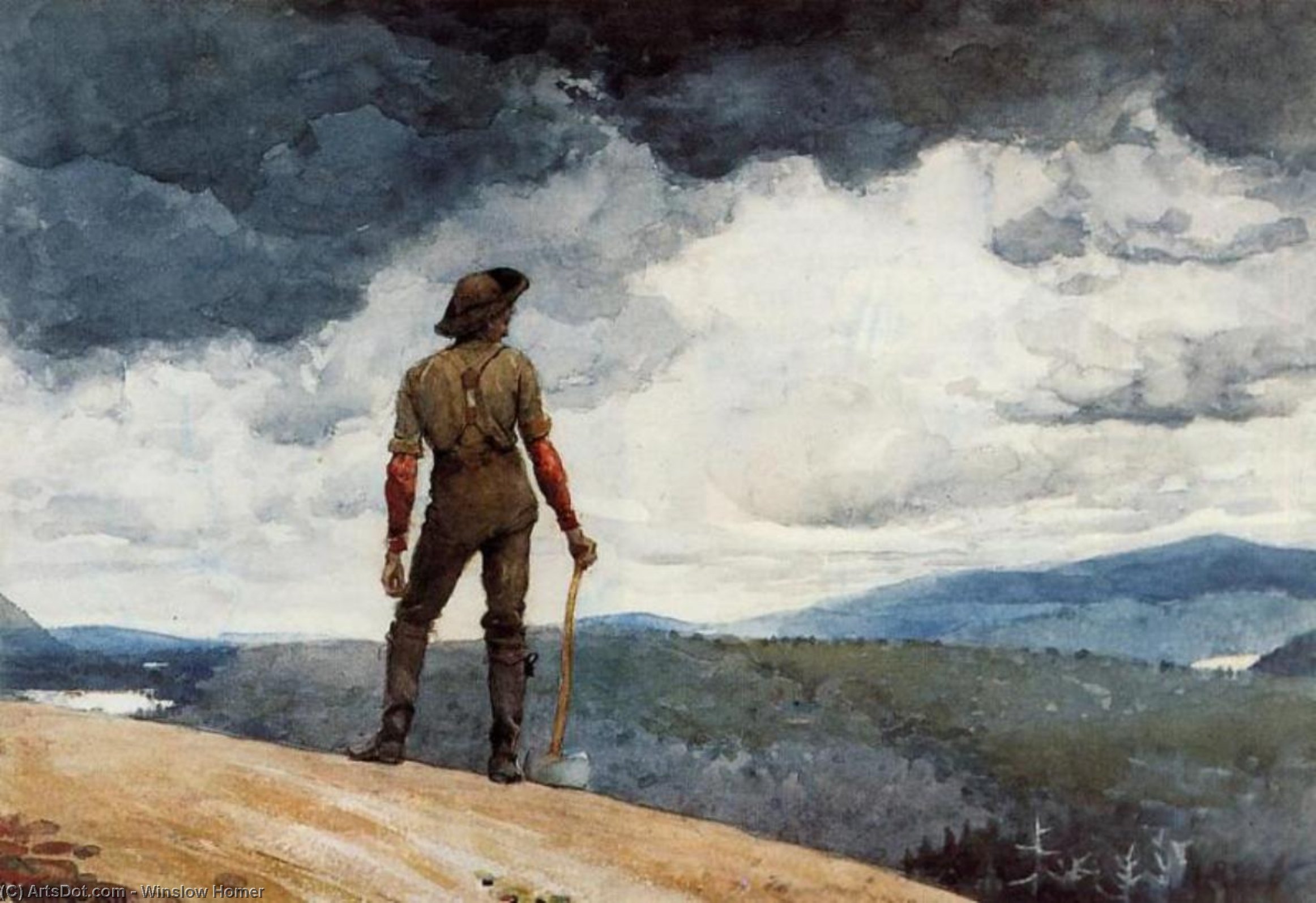
The woodcutter


Experience Winslow Homer's masterful watercolor depiction of a solitary woodcutter amidst stormy skies—a poignant reflection on labor, observation, and the enduring spirit of America.
 Vezi mai mult
Descoperă operele impresionante ale lui Winslow Homer! Pictorul american realist celebru pentru scene marine și peisaje evocatoare, Homer rămâne unul dintre cei mai influenți artiști ai Secolului XIX.
Giclée / Imprimare artistică
Printuri giclée sau pe canvas de calitate muzeală, cu proces de producție rapid și opțiuni flexibile de finisare. ( Comandă pictură realizată manual Comută pe Imagine Digitală)




P118B lei10

P118H lei10

P118W lei10

P438Z lei10

P508JH lei12

P508YH lei12

P805H lei10

P805Z lei10

P919BZ lei10

P919G lei10

P919XJ lei10

P959ZH lei10

P968JZ lei12

W106C lei8

W218G lei10

W218JH lei8

W218Y lei10

W307PJ lei10

W316G lei10

W316PJ lei8

W316Y lei10

W398PJ lei8

W4111J lei10

W500HY lei15

W500JH lei15

W692G lei12

W849H lei8

W940BG lei15

W953PJ lei8




Standard
personalizat
CM
INCH
Alegeți dintre dimensiunile noastre prestabilite, care respectă proporțiile originale ale operei de artă.
Loading sizes...

lățime
înălțime
Introduceți lățimea și înălțimea necesare pentru a se potrivi ramei sau peretelui dumneavoastră. O printare poate fi doar tăiată, niciodată extinsă dincolo de dimensiunea imaginii originale, astfel încât o dimensiune cu o formă diferită va pierde o parte din imagine. Vă trimitem o simulare digitală pentru aprobare înainte de a imprima orice. Imaginea afișată pe această pagină nu prezintă tăierea reală — doar simularea arată acest lucru.
Livrare în întreaga lume () în 2 săptămâni, în loc de cele 4/5 săptămâni standard. (25 Octombrie)

Livrare expres gratuită la nivel mondial

Pânză de in de înaltă calitate

Asigurare completă pentru transport

Garanție de rambursare a taxelor vamale

Garanția fidelității culorilor

Politica de retur în 100 de zile (doar pentru defecte de fabricație)

Garanție de rambursare 100%

Ofertă pentru comenzi multiple
 Opțiunea cu sticlă este disponibilă doar pentru dimensiuni de sub 110 cm

The woodcutter
Giclée / Imprimare artistică
Dimensiune reproducere
-


Preț total calculat
lei 319
A Portrait of Quiet Resolve: Exploring Winslow Homer’s “The Woodcutter”
Winslow Homer's "The Woodcutter," painted in 1891, isn’t merely a depiction of a man amidst a storm; it’s a masterful distillation of the American experience itself. Born in Boston, Homer eschewed formal artistic training, prioritizing observation and practicality—a path that profoundly shaped his distinctive vision. His early career as an illustrator for Harper's Weekly instilled within him an unparalleled ability to convey atmosphere and detail with remarkable precision – skills he seamlessly transferred to his paintings, establishing a style characterized by understated emotion and unwavering realism. Unlike many of his European counterparts preoccupied with grand narratives, Homer focused on capturing the essence of everyday life in America, from the bustling streets of Boston to the serene landscapes of New England.- Subject Matter: The painting portrays a solitary woodcutter standing atop a hill, rifle in hand, gazing out at a turbulent sky. This seemingly simple composition speaks volumes about themes of resilience, contemplation, and connection with the natural world.
- Style & Technique: Homer employed watercolor over graphite—a technique that lends itself beautifully to capturing subtle tonal variations and conveying mood. The delicate washes of color create an ethereal quality, juxtaposed against the grounding presence of graphite, resulting in a harmonious blend of texture and luminescence.
Historical Context & Literary Resonance
Painted during Homer’s prolific period, “The Woodcutter” reflects the broader artistic currents of Impressionism and Symbolism. However, Homer's approach diverges from these movements by prioritizing direct observation and conveying psychological depth without resorting to elaborate embellishments. The painting resonates powerfully with themes explored in American literature of the time—particularly those concerning the hardships faced by rural laborers and the importance of confronting adversity with fortitude. It embodies a spirit of quiet dignity and perseverance, mirroring the values championed by Homer himself.Symbolism & Emotional Impact
The stormy sky serves as more than just a backdrop; it symbolizes challenges and uncertainties—forces that confront humanity constantly. Yet, despite the oppressive weather conditions, the woodcutter remains steadfastly focused on his task, representing inner strength and determination. The rifle is not merely a tool for hunting but also a symbol of preparedness and self-reliance – qualities deeply ingrained in the American psyche. Homer’s masterful use of color and composition invites viewers to contemplate profound questions about human existence and our relationship with nature.Why Choose a Reproduction?
A high-quality reproduction of “The Woodcutter” allows you to bring Homer's evocative vision into your home or studio. TopImpressionists offers meticulously crafted reproductions that faithfully capture the original artwork’s tonal nuances and textural subtleties, ensuring that you experience its beauty and emotional resonance firsthand. Explore our collection today and discover the enduring power of American art!Întrebări și răspunsuri
Care este motivul statutului drepturilor de autor pentru "The woodcutter"?
Statutul drepturilor de autor pentru "The woodcutter" - în domeniul public – drepturile de autor au expirat - este determinat de data decesului artistului, în anul 1910.
Pot vedea "The woodcutter" de Winslow Homer pe propriul meu perete înainte de achiziție?
Pagina Previzualizare în AR pentru "The woodcutter" de Winslow Homer folosește realitatea augmentată pentru a vizualiza opera de artă în propriul tău spațiu, pe un dispozitiv compatibil.
Ce reprezintă "The woodcutter"?
Temele prezente în "The woodcutter" de Winslow Homer includ landscape, stormy sky, hunter, observation, rural life, solitude, graphite pencil. Împreună, acestea definesc subiectul întregii opere de artă.
Opere similare


Biografie artist
A Brush with the American Spirit: The Life and Art of Winslow Homer
Winslow Homer, born in Boston in 1836, wasn’t sculpted by the traditional European art academies that shaped so many of his contemporaries. Instead, he emerged from a distinctly American experience, one rooted in practicality and observation. His journey began not with grand historical canvases, but as a commercial illustrator at the tender age of twelve for Harper's Weekly. This early apprenticeship was formative, honing an exceptional ability to capture scenes with clarity and detail – skills that would become hallmarks of his mature work. He wasn’t learning perspective in Paris; he was learning to *see* America, its people, and its unfolding story. The bustling streets of Boston, the quiet dignity of rural New England life, these were his first subjects, rendered with a precision born of necessity for the demands of print media. This foundation allowed him to transition into painting, initially in watercolor, before fully embracing the expressive potential of oil paints.From Pastoral Scenes to the Raw Power of Nature
Homer’s early paintings often depicted idyllic scenes – children playing, farmers tending their fields, quiet moments of domesticity. These works, while charming, hinted at a deeper artistic sensibility waiting to be unleashed. The catalyst for this transformation was undoubtedly the Civil War. As a war correspondent for Harper's Weekly, Homer witnessed firsthand the brutal realities of conflict. He didn’t focus on heroic battles or grand strategies; instead, he documented the everyday lives of soldiers and civilians, the quiet moments of grief and resilience amidst chaos. This experience profoundly altered his artistic vision. The pastoral scenes gave way to more challenging subjects: veterans grappling with trauma, freed slaves navigating a new world, and the stark beauty of landscapes touched by hardship. He began to explore themes of struggle, isolation, and humanity’s precar He wasn't interested in imitating European styles; he wanted to create an art that was uniquely American, reflecting its landscapes, its people, and its challenges. His style also evolved, becoming bolder and more direct, reflecting the raw emotional impact of what he had witnessed. Breezing Up (A Fair Wind), painted in 1876, exemplifies this skill – a quintessential depiction of American maritime life, brimming with energy and movement. The Gulf Stream, created decades later, is perhaps his most iconic work, a powerful and symbolic portrayal of a lone man battling the forces of nature, a metaphor for human struggle against overwhelming odds. He possessed an extraordinary ability to capture light, whether it was the dazzling glare of the sun on the ocean or the soft glow of twilight over a rural landscape. This mastery extended to his watercolors, where he achieved remarkable atmospheric effects through vibrant colors and delicate washes. Innocence, a poignant portrayal of childhood set against the backdrop of nature, and **Man of Science** demonstrate this commitment.Mastering Light, Texture, and the American Landscape
Winslow Homer's artistic technique is immediately recognizable for its solidity and texture. He wasn’t interested in fleeting impressions; he wanted to build up a sense of tangible reality on the canvas. His oil paintings are characterized by a direct painting approach – layers of paint applied with confidence, creating depth and luminosity. He possessed an extraordinary ability to capture light, whether it was the dazzling glare of the sun on the ocean or the soft glow of twilight over a rural landscape. This mastery extended to his watercolors, where he achieved remarkable atmospheric effects through vibrant colors and delicate washes. His unwavering dedication to observation—a cornerstone of American Realism—allowed him to translate the visual world onto canvas with unparalleled accuracy and emotional resonance.A Legacy Forged in American Realism
Winslow Homer's art offers a profound window into 19th-century America, providing invaluable insights into the social, political, and cultural landscape of his time. His paintings are not merely beautiful representations; they are powerful statements about human resilience, the beauty and power of nature, and the complexities of the American experience. He died in 1910, leaving behind a prolific body of work that continues to resonate with audiences today. His ability to depict America with honesty and authenticity—rejecting romantic idealism for gritty realism—established him as one of America’s most important and enduring artists. He wasn't just painting pictures; he was documenting a moment in time, preserving it for generations to come.- His work continues to inspire contemporary artists.
- Homer remains a pivotal figure in the development of American Realism.

Winslow Homer
1836 - 1910 , Statele Unite ale Americii
Detalii rapide
- Artistic Movement Or Style: Realism american
- Artists Or Movements Influenced By This Artist: ['Pictori americani']
- Artists Who Influenced This Artist:
- Barbizon
- Courbet
- Millet
- Date Of Birth: 3 octombrie 1836
- Date Of Death: 1910
- Full Name: Winslow Homer
- Nationality: American
- Notable Artworks:
- Breezing Up
- Gulf Stream
- Inocență
- Place Of Birth: Boston, SUA
Articole similare

Capturing the Soul of Nature: A Journey Through the Sublime Majesty of American Romanticism
Explore the breathtaking beauty of American Romanticism. Discover how Hudson River School masters captured the sublime spirit of the wilderness through luminous oil landscapes and emotional depth. A journey into the soul of nature for the true art enthusiast.
Explorați opere de artă organizate pe teme, stiluri și caracteristici.


