


 Примерить в интерьере
 Отправить
 Поделиться
 Подробнее
 Руководство

 Скачать
 Похожие объекты
 Рентгенография
 Слайд-шоу
 Статистика
Clouds

Explore Arkhip Kuindzhi’s ‘Clouds,’ a mesmerizing landscape painting of muted tones & atmospheric depth. Impressionistic brushwork evokes mood & tranquility. A unique piece for art lovers.
Архип Куинджи (1842-1910) – выдающийся русский пейзажист, мастер световых эффектов и передатчик душевной красоты украинских пейзажей. Познайте его шедевры!
 Развернуть текст
Жикле / Арт-принты
Печать (жикле) или холст музейного качества с быстрыми сроками изготовления и широким выбором вариантов отделки. ( Заказать репродукцию ручной работы Перейти к цифровым изображениям)




































Стандартный размер
индивидуальный заказ
CM
INCH
Выберите один из наших стандартных размеров, соответствующих оригинальным пропорциям произведения искусства.
Loading sizes...

ширина
высота
Введите необходимую ширину и высоту, чтобы репродукция подошла к вашей раме или стене. При печати изображение можно только уменьшить, но нельзя увеличить больше оригинала, поэтому при выборе другого формата часть изображения может быть обрезана. Перед печатью мы отправим вам цифровой макет на утверждение. Изображение на этой странице не отображает реальную обрезку — ее можно увидеть только на макете.
Доставка по всему миру () за 2 недели вместо стандартных 4–5 недель. (22 Октябрь)

Бесплатная экспресс-доставка по всему миру

Высококачественный льняной холст

Полное страхование при транспортировке

Гарантия возврата таможенных пошлин

Гарантия точного цветового соответствия

100-дневный период возврата (только при обнаружении дефектов)

Гарантия возврата 100% средств

Скидка при заказе нескольких работ
 Вариант со стеклом доступен только для размеров менее 110 см

Clouds
Жикле / Арт-принты
Размер репродукции
-


Итоговая стоимость
$ 69
Похожие произведения


Биография художника
A Life Illuminated: The World of Arkhip Kuindzhi
Arkhip Ivanovich Kuindzhi (Архи́п Ива́нович Куи́нджи; Russian: Архи́п Ива́нович Куи́нджи; Ukrainian: Архип Іванович Куї́нджі; January 27, 1842(?) – July 24, 1910) was a Russian landscape painter. Arkhip Kuinji’s exact date of birth is not known. Although it was believed that he was born in 1842, the latest discoveries in archives suggest that he was born in 1841. Kuindzhi himself, when asked by St. Petersburg Academy of Arts to clarify his date of birth, “clearly wrote 1841, then, with doubt, January, and then several times crossed out the month”. The researchers believe he was born somewhere between January and March 1841. The commonly recognized date is January 27, although Kuindzhi celebrated his name day on February 19 (O.S.) (March 4 N.S.), on the feast of Archippus. His family background was a blend of Greek and Ukrainian heritage – his father, Ivan Khristoforovich Kuindzhi, was a Greek shoemaker who had sought refuge near the Azov Sea during Catherine II’s reign, while his mother was Ukrainian. This multicultural upbringing profoundly shaped his artistic vision, imbuing it with a sensitivity to both landscapes and human experiences.Early Years and Artistic Beginnings
Kuindzhi's childhood in Mariupol was marked by hardship and labor. Orphaned at a young age, he worked diligently from an early age, contributing to the family income through various jobs – assisting on church construction sites, tending livestock, and working as a corn merchant’s assistant. Despite these challenging circumstances, a nascent artistic inclination began to blossom, nurtured by a Greek family friend who provided him with rudimentary education and introduced him to the world of art. This early exposure sparked his interest in drawing and painting, laying the foundation for his future career. Following his parents' death, Kuindzhi moved to Taganrog, where he found work as a retoucher for photographs, a skill that would later prove invaluable in understanding light and shadow – essential elements of his artistic practice. This period honed his eye for detail and precision, developing the technical skills necessary to capture the nuances of color and form. He briefly attempted to establish his own photographic studio but faced financial difficulties, leading him to relocate to Saint Petersburg in 1865.Saint Petersburg: Academy and Independent Development
In Saint Petersburg, Kuindzhi enrolled at the Imperial Academy of Arts, though he largely pursued his artistic development independently. While he received formal training, he primarily learned through observation and experimentation, absorbing influences from various artists and movements. He initially studied under Ivan Aivazovsky, a renowned marine painter, gaining valuable insights into color theory and composition. However, Kuindzhi’s artistic interests extended beyond the sea; he was particularly drawn to landscape painting, seeking to capture the essence of nature's beauty and atmosphere. He also worked as a freelance artist, contributing to various exhibitions and developing his unique style. His early works, such as “Na ostrove Valaam” (On the Island of Valaam) from 1873, demonstrated his technical skill and an emerging interest in capturing the effects of light. This painting, depicting the serene beauty of Lake Ladoga, showcased Kuindzhi’s meticulous attention to detail and his ability to evoke a sense of tranquility.The Alchemy of Light: A Revolutionary Technique
Kuindzhi's artistic breakthrough came with his exploration of “luminism,” a style characterized by its emphasis on capturing the effects of light and atmosphere. Unlike traditional landscape painting, which often focused on precise representation, Kuindzhi sought to recreate the *experience* of being immersed in nature – the warmth of sunlight, the coolness of shadow, the ethereal glow of twilight. He achieved this through innovative techniques, including composite methods and layering pigments to create an unparalleled luminosity. His most celebrated works—"Ukrainian Night," "Birch Grove," and “Moonlit Night on the Dnieper”—are prime examples of his mastery of luminism. “Ukrainian Night” (1876), for instance, depicts a moonlit landscape with an almost supernatural glow, achieved through careful manipulation of color and texture. Similarly, “Birch Grove” (1879) captures the dappled light filtering through the trees, creating a sense of depth and atmosphere that is both captivating and dreamlike. “Moonlit Night on the Dnieper” (1880), perhaps his most iconic work, depicts a river scene bathed in an ethereal moonlight, evoking a profound sense of mystery and beauty. These paintings weren’t merely representations of scenes; they were immersive experiences, designed to transport the viewer into the heart of nature.Legacy and Recognition
Despite achieving significant success and recognition during his lifetime, Kuindzhi withdrew from public exhibitions after 1880, choosing a more solitary existence. He continued to teach at the St. Petersburg Academy of Arts, imparting his knowledge and expertise to generations of aspiring artists. His work was admired by many prominent figures, including Pavel Tretyakov, who acquired several of his paintings for his renowned collection. Arkhip Kuindzhi died in 1910, leaving behind a legacy as one of Russia’s most beloved landscape painters – a master of light and color whose works continue to inspire awe and wonder. His paintings are now housed in major museums around the world, testament to their enduring beauty and artistic significance.- A Pioneer of Luminism: Kuindzhi is considered a key figure in the development of luminism, an artistic style emphasizing the effects of light in landscapes.
- Influence on Symbolism: His dramatic use of light and atmosphere also foreshadowed elements found in symbolist painting.
- National Identity & Ukrainian Pride: His depictions of Ukrainian landscapes contributed to a growing sense of national identity and artistic pride within Ukraine, even as his work was celebrated across Russia.

Архип Куинджи
1842 - 1910 , Украина
Краткая справка
- Artistic Movement Or Style: Реализм, Импрессионизм
- Artists Or Movements Influenced By This Artist: ['Символизм']
- Artists Who Influenced This Artist:
- Иван Айвазовский
- Адольф Фесслер
- Date Of Birth: Янв 27, 1842 (или 1841)
- Date Of Death: Июл 24, 1910
- Full Name: Архип Иванович Куинджи
- Nationality: Русский/Украинский/Греческий
- Notable Artworks:
- Вечер в Украине
- Дубовая роща
- Ночь на Днепре
- Place Of Birth: Мариуполь, Украина
Похожие статьи
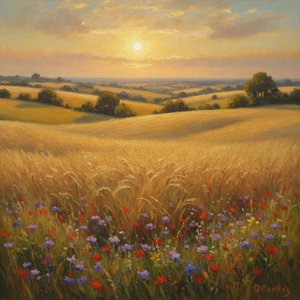
Golden Fields & Sun-Drenched Meadows: Capturing the Soul of Impressionist Landscapes
Immerse yourself in the luminous world of Impressionist landscapes. Discover how masters like Monet and Gauguin captured ephemeral light through plein air painting, and learn to bring the soul of sun-drenched meadows into your home with exquisite, hand-painted oil reproductions.

Capturing the Soul: The Most Emotionally Moving Impressionist and Post-Impressionist Masterpieces
Discover the profound emotional depth of Impressionist and Post-Impressionist masterpieces. Explore how legends like Monet, Van Gogh, and Gauguin captured light and soul through evocative landscapes and vibrant brushwork for a timeless connection to art history.

Beyond the Light: Capturing Raw Emotion and Subjective Vision in Post-Impressionist Landscapes
Explore the profound emotional depth of Post-Impressionist landscapes. Discover how masters like Van Gogh moved beyond light to capture raw human feeling through vibrant color and expressive texture in this expert art history retrospective.

The Beauty of Impermanence: Capturing Decay through Impressionist Eyes
Explore the profound beauty of impermanence through Impressionist and Post-Impressionist eyes. Discover how masters like Monet and Van Gogh captured fleeting light and the poetic essence of nature's transitions in our deep dive into art history and emotional landscapes.

Capturing the Soul of Russia: A Reflective Journey Through the Profound Beauty of Breathtaking Landscape Art
Embark on a soulful journey through Russia's breathtaking landscapes. Discover exquisite, hand-painted oil reproductions of Peredvizhniki masterpieces, meticulously crafted to bring the emotional depth and timeless beauty of Russian fine art into your personal sanctuary.