

На картине: · В раме:
 Поделиться
 Поделиться
 Детали произведения
 Руководство

 Скачать
 Похожие предметы
 Слайд-шоу
 Вопросы и ответы
 Статистика просмотров
- 26.0 x 33.0 cm


$ 269
Масляная репродукция ручной работы
Картина маслом на холсте в выбранном вами размере и раме, написанная на заказ нашими художниками. ( Перейти к печатным копиям Перейти к цифровым изображениям)
Размер
·Стандартный размер
на заказ
CM
INCH
Выберите один из наших стандартных размеров, соответствующих оригинальным пропорциям произведения искусства.
Загрузка размеров...

ширина
высота
Введите необходимую ширину и высоту, чтобы репродукция подошла к вашей раме или стене. Поскольку работа выполняется вручную, при изменении пропорций художник может немного увеличить область вокруг картины или, наоборот, обрезать края — выбор за вами. Перед началом работы мы пришлем вам цифровой макет на утверждение. Изображение на этой странице не является точным результатом — увидеть реальный вид можно только на макете.
 Узнать больше
Завершить
·
Белый торцевой край $1

Размытый край $1

С продолжением изображения $1

P118B $10

P118H $10

P118W $10

P438Z $10

P508JH $12

P508YH $12

P805H $10

P805Z $10

P919BZ $10

P919G $10

P919XJ $10

P959ZH $10

P968JZ $12

W106C $8

W218G $10

W218JH $8

W218Y $10

W307PJ $10

W316G $10

W316PJ $8

W316Y $10

W398PJ $8

W4111J $10

W500HY $15

W500JH $15

W692G $12

W849H $8

W940BG $15

W953PJ $8

H24-GOLD $30

H24-SILVER $30

H36-GOLD $45

H36-SILVER $45
Поставляется в защитной тубусе, готовый к оформлению в багет вашей мастерской.
Дополнительные услуги
необязательноЧто входит в дополнительные услуги?
Примеры того, что можно изменить: заменить лицо фотографией клиента; добавить питомца (например, заменить кошку на собаку); добавить скрытое послание на задний план; изменить пейзаж или элементы фона.
После оформления заказа команда TopImpressionists.com свяжется с клиентом по электронной почте для получения инструкций и предоставит предварительный макет
После оформления заказа команда TopImpressionists.com свяжется с клиентом по электронной почте для получения инструкций и предоставит предварительный макет
Доставка по всему миру () за 3–4 недели вместо стандартных 5 недель. (9 Ноябрь). Без компромиссов в качестве.
Защитный лак
Этикетка
Детали гравировки на бронзовой плакетке
This elegant plaque features the artist's name and the title of the artwork, finely engraved for a timeless presentation.
It is made from bronze with a refined, elegant finish. The text is precisely laser-engraved for a sharp and permanent result. Measuring 9x2 cm, the plaque is compact yet easy to read. It's built to be durable and scratch-resistant, offering a professional, museum-quality look. Mounting is simple thanks to the included adhesive backing.
Детали прозрачной акриловой таблички
The plaque includes essential engraved details such as the artist's name, the title of the artwork, the date it was created, the type of media used-like oil on canvas or watercolor-a brief description of the piece, and a QR code that links to the complete artwork information.
It is crafted from clear acrylic, offering a sleek, modern appearance. The text is UV-engraved in black to ensure strong visual contrast. With a size of 10x15 cm, it ensures optimal readability. It comes equipped with two metal hooks for secure wall mounting. The plaque is designed to be weather-resistant, making it suitable for various environments, and it includes interactive features that work seamlessly with smartphone scanning.
Информация о чёрной акриловой табличке
This elegant plaque includes engraved information such as the artist's name, the title of the artwork, the date it was created, the type of media used (like oil on canvas or watercolor), a short description of the artwork, and a QR code for quick access to more information.
The plaque itself is made from refined black acrylic with a premium finish. The text is laser-engraved in white for high contrast and readability. Its size is 10x15 cm, designed to be easy to read. It comes with two metal hooks for professional mounting. The design is sleek and fits any interior style. It is also weather-resistant and durable, with built-in digital integration for mobile compatibility.
Вариант со стеклом доступен только для размеров менее 110 см
 Вариант со стеклом доступен только для размеров менее 110 см
- Бесплатная экспресс-доставка по всему миру
- Высококачественный льняной холст
- Полное страхование при доставке
- Гарантия возмещения таможенных пошлин
- Гарантия точного цветового соответствия
- 100-дневная гарантия возврата (только при обнаружении дефектов)
- Гарантия возврата 100% средств
- Скидка при оптовом заказе


Описание предмета коллекционирования
Marvel at Benvenuto Cellini's opulent 'Salt Cellar,' a Renaissance masterpiece of gold, enamel, and intricate symbolism—a testament to artistry & luxury from 1543 Vienna.
Биография художника
Бенвенуто Челлини (1500-1571): Мастер ювелирного искусства и скульптуры эпохи маньеризма, прославившийся "Персеем" и изысканным Соляником для Франциска I. Откройте его искусство и жизнь!
Об этой картине
A Gilded Echo of Antiquity
Benvenuto Cellini's Salt Cellar, a shimmering testament to the heights of Renaissance goldsmithing, isn’t merely a container for salt; it’s a miniature cosmos, a meticulously crafted allegory brimming with symbolism and technical brilliance. Completed in 1543 for King Francis I of France, this extraordinary object transcends its functional purpose, becoming a profound meditation on the relationship between earth and sea, divinity and humanity. It's a piece that whispers tales of ambition, artistry, and the intoxicating allure of the Italian Renaissance—a world where beauty was paramount and skill elevated to an almost religious pursuit.
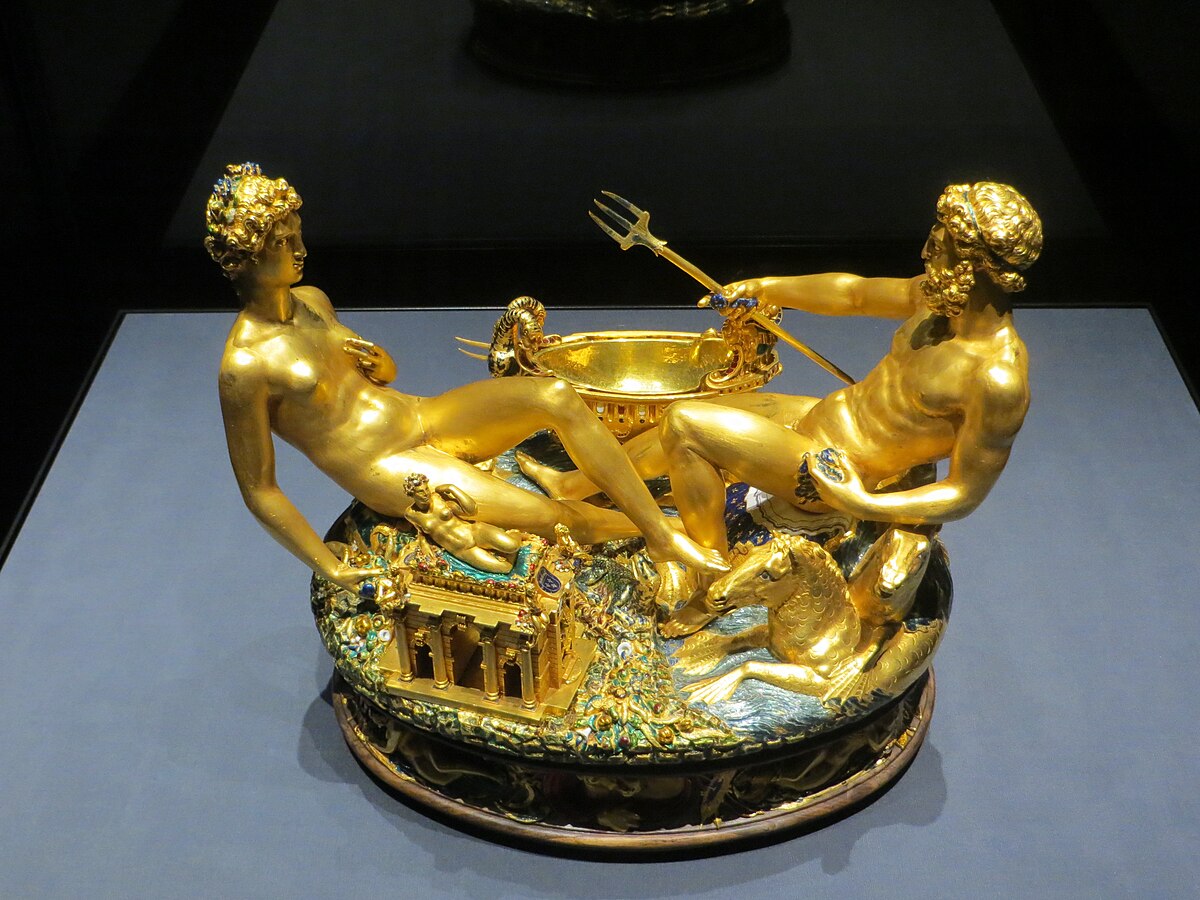
Image of Benvenuto Cellini’s Salt Cellar
The Anatomy of a Masterpiece
Crafted primarily from gold, the Salt Cellar is an astonishing feat of technical mastery. Cellini, renowned for his flamboyant personality and equally impressive skill, eschewed traditional casting methods, instead meticulously hammering the gold into its delicate, flowing form by hand. The base is elegantly fashioned from ebony, providing a striking contrast to the radiant gold, while ivory bearings allow the sculpture to gracefully roll across a banquet table – a deliberate feature designed for display and conversation. But it’s the enameling that truly elevates the piece; intricate scenes depicting figures representing the four seasons and the four winds are painstakingly applied, adding layers of visual complexity and narrative depth. The sheer scale of detail—from the meticulously rendered folds of clothing to the lifelike expressions on the faces of Neptune and Tellus – speaks volumes about Cellini’s dedication and unparalleled skill.
- Material: Gold, Ebony, Ivory, Enamel
- Dimensions: Approximately 10.5 inches (267 mm) tall, 13.1 inches (333 mm) wide
- Technique: Hand-hammered gold, intricate enamel work
A Dialogue with the Divine
The Salt Cellar’s symbolism is as captivating as its aesthetic beauty. At its heart lies a potent allegory of Terra e Mare – Earth and Sea – embodied by the figures of Neptune, god of the ocean, and Tellus, goddess of the earth. These two powerful deities are depicted in an intimate embrace, their legs intertwined, suggesting a harmonious connection between the terrestrial and aquatic realms. The sculpture is further enriched with symbolic details: a small boat carries the salt, representing the flow of commerce and sustenance; a temple dedicated to peppercorns stands alongside Tellus, signifying the pleasures of earthly life. The inclusion of animals—horses, dogs, dolphins—adds another layer of meaning, drawing upon classical iconography and reinforcing the sculpture’s connection to mythology and antiquity.
A Legacy Forged in Ambition
Cellini's autobiography, *Vita*, offers invaluable insight into the creation of this extraordinary piece. He recounts his initial reluctance to accept the commission from Cardinal Ippolito d’Este, dismissing the cardinal’s suggestions with characteristic arrogance and asserting sole credit for the design. The story is rife with anecdotes about Cellini’s daring exploits—including a dramatic escape from bandits while transporting the gold—further cementing his image as a larger-than-life figure of Renaissance Italy. The Salt Cellar, therefore, isn't just an artistic achievement; it’s a reflection of Cellini’s own complex and often contradictory personality – a testament to ambition, skill, and a profound appreciation for beauty. It remains one of the most celebrated examples of Renaissance goldsmithing, captivating viewers with its exquisite detail and enduring symbolism.
Вопросы и ответы
Насколько выражен контраст в «Salt Cellar», Бэнвентуто Челлини?
В работе «Salt Cellar», Бэнвентуто Челлини наблюдается Gentle контраст между светлыми и темными участками.
Как эмоции и повод для подарка сочетаются в работе «Salt Cellar», Бэнвентуто Челлини?
Reflective настроение произведения «Salt Cellar», Бэнвентуто Челлини идеально подходит для такого случая, как: Anniversary.
Какому периоду творчества Бэнвентуто Челлини соответствует дата создания «Salt Cellar» (1540 г.)?
Учитывая дату создания — 1540, работа «Salt Cellar» относится к Mature Renaissance художника Бэнвентуто Челлини.
Краткие факты и викторина об искусстве
Об авторе Бэнвентуто Челлини

Бэнвентуто Челлини
1500 - 1571, Италия
Биография художника
Бенвенуто Челлини: Золотое Сердце Ренессанса
Бенвенуто Челлини – имя, звучащее как заклинание, воплощение эпохи Возрождения во всем его великолепии и противоречивости. Он был не просто ювелиром или скульптором; он был музыкантом, солдатом, писателем, авантюристом, чья жизнь была столь же яркой и драматичной, как и его произведения искусства. Челлини оставил после себя наследие, которое продолжает восхищать и вдохновлять, свидетельствуя о гении, способном соединить в себе мастерство ремесла и пыл страсти.
От Флорентийской Музыки к Золотому Ремеслу
Родившийся во Флоренции в 1500 году, Бенвенуто рос в семье музыканта и мастера по изготовлению музыкальных инструментов. Сначала его отец видел будущее сына в музыке, но юный Челлини был очарован искусством обработки металла. В пятнадцать лет он настоял на ученичестве у Антонио ди Сандро, известного как Марконе, одного из лучших флорентийских ювелиров. Этот выбор стал поворотным моментом в его жизни, определив его путь к славе и признанию. Однако бурная молодость не обошлась без происшествий: драки и стычки с друзьями привели к ссылке из Флоренции, а затем – к работе в Сиене под руководством ювелира Фракасторо. Именно там Челлини оттачивал свое мастерство, постигая секреты тонкой работы с металлом.
Мастерство в Золоте и Бронзе: Вершины Творчества
Рим стал следующим этапом в творческой биографии Челлини. Здесь он создавал изысканные шкатулки, канделябры и вазы для кардиналов и епископов, заслужив признание Папы Климента VII. Но настоящая слава пришла к нему благодаря заказам французского короля Франциска I. Среди его самых известных работ – позолоченный серебряный столбовый подсвечник, поражающий своей сложностью и динамизмом, а также бронзовая скульптура «Персей с головой Медузы», воплощающая триумф героя над чудовищем. Эта работа стала квинтэссенцией его стиля – сочетания классической монументальности с маньеристской экспрессией. Не менее значимым является золотая медаль с изображением Леды и лебедя, демонстрирующая умение Челлини гармонично сочетать мифологические сюжеты с безупречным мастерством.
Автобиография: Исповедь Гения
Однако наследие Бенвенуто Челлини не ограничивается только его произведениями искусства. Его автобиография – это бесценный документ эпохи Возрождения, написанный с поразительной живостью и откровенностью. В ней он рассказывает о своей жизни, своих страстях, своих друзьях и врагах, раскрывая секреты мастерства и описывая придворные интриги. Автобиография Челлини – это не просто хроника событий; это яркий портрет художника-творца, полного энергии и амбиций, готового бросить вызов условностям и идти своим путем. Она является уникальным источником информации о жизни и искусстве эпохи Возрождения, позволяя нам заглянуть в мир, где гений и безумие шли рука об руку.
Наследие Челлини: Влияние на Искусство и Культуру
Бенвенуто Челлини ушел из жизни во Флоренции в 1571 году, оставив после себя богатое творческое наследие. Его произведения искусства до сих пор восхищают своей красотой и мастерством, а его автобиография остается одним из самых интересных и значительных произведений ренессансной литературы. Челлини оказал огромное влияние на последующие поколения ювелиров и скульпторов, вдохновляя их на создание новых шедевров. Он стал символом эпохи Возрождения – времени великих открытий, творческих экспериментов и безграничной веры в человеческий потенциал.
Краткая информация об авторе: Бэнвентуто Челлини
- Дата Рождения: 1 ноября 1500 г.
- Дата Смерти: 13 февраля 1571 г.
- Заметные Произведения:
- Соляной бак Франциска I
- Персей с головой Медузы
- Золотая медаль Леда и лебедя
- Место Рождения: Флоренция, Италия
- Национальность: Итальянец
- Полное Имя: Бенвенуто Челлини
- Художественное Направление: Маньеризм
- Художники, Повлиявшие На Него: ['Микеланджело']
Откройте для себя произведения искусства, распределенные по темам, стилям и характеристикам.


Бэнвентуто Челлини
Salt Cellar
() ·
В раме: · Масло по льну, ручная работа
Итого