

На картине: · В раме:
 Предпросмотр
 Поделиться
 Поделиться
 Детали произведения
 Руководство

 Скачать
 Похожие предметы
 Рентгенография
 Слайд-шоу
 Вопросы и ответы
 Статистика просмотров
- 92.0 x 127.0 cm


$ 269
Масляная репродукция ручной работы
Картина маслом на холсте в выбранном вами размере и раме, написанная на заказ нашими художниками. ( Перейти к печатным копиям Перейти к цифровым изображениям)
Данное произведение защищено авторским правом
Произведение искусства, представленное на этой странице, защищено законом об авторском праве, что исключает возможность законного создания или продажи его точной репродукции. Данная защита обеспечивается международными соглашениями, такими как Бернская конвенция и национальным законодательством, включая положения, изложенные в Закон США об авторском праве — Раздел 17.
В качестве достойной и законной альтернативы мы предлагаем авторские картины ручной работы, вдохновленные оригиналом. Наши опытные профессиональные художники тщательно изучают стиль, настроение и художественную суть оригинала, чтобы создать новое, уникальное произведение, которое вызывает те же чувства, оставаясь при этом самостоятельным оригинальным творением.
Этот метод полностью соответствует нормам авторского права, так как он не предполагает копирования или дублирования защищенного произведения. Напротив, это творческая реинтерпретация — создание новой картины, которая вдохновлена оригиналом, но не является его точной копией.
 Узнать больше
Размер
·Стандартный размер
на заказ
CM
INCH
Выберите один из наших стандартных размеров, соответствующих оригинальным пропорциям произведения искусства.
Загрузка размеров...

ширина
высота
Введите необходимую ширину и высоту, чтобы репродукция подошла к вашей раме или стене. Поскольку работа выполняется вручную, при изменении пропорций художник может немного увеличить область вокруг картины или, наоборот, обрезать края — выбор за вами. Перед началом работы мы пришлем вам цифровой макет на утверждение. Изображение на этой странице не является точным результатом — увидеть реальный вид можно только на макете.
Завершить
·
Белый торцевой край $1

Размытый край $1

С продолжением изображения $1

P118B $10

P118H $10

P118W $10

P438Z $10

P508JH $12

P508YH $12

P805H $10

P805Z $10

P919BZ $10

P919G $10

P919XJ $10

P959ZH $10

P968JZ $12

W106C $8

W218G $10

W218JH $8

W218Y $10

W307PJ $10

W316G $10

W316PJ $8

W316Y $10

W398PJ $8

W4111J $10

W500HY $15

W500JH $15

W692G $12

W849H $8

W940BG $15

W953PJ $8

H24-GOLD $30

H24-SILVER $30

H36-GOLD $45

H36-SILVER $45
Поставляется в защитной тубусе, готовый к оформлению в багет вашей мастерской.
Дополнительные услуги
необязательноЧто входит в дополнительные услуги?
Примеры того, что можно изменить: заменить лицо фотографией клиента; добавить питомца (например, заменить кошку на собаку); добавить скрытое послание на задний план; изменить пейзаж или элементы фона.
После оформления заказа команда TopImpressionists.com свяжется с клиентом по электронной почте для получения инструкций и предоставит предварительный макет
После оформления заказа команда TopImpressionists.com свяжется с клиентом по электронной почте для получения инструкций и предоставит предварительный макет
Доставка по всему миру () за 3–4 недели вместо стандартных 5 недель. (10 Ноябрь). Без компромиссов в качестве.
Защитный лак
Этикетка
Детали гравировки на бронзовой плакетке
This elegant plaque features the artist's name and the title of the artwork, finely engraved for a timeless presentation.
It is made from bronze with a refined, elegant finish. The text is precisely laser-engraved for a sharp and permanent result. Measuring 9x2 cm, the plaque is compact yet easy to read. It's built to be durable and scratch-resistant, offering a professional, museum-quality look. Mounting is simple thanks to the included adhesive backing.
Детали прозрачной акриловой таблички
The plaque includes essential engraved details such as the artist's name, the title of the artwork, the date it was created, the type of media used-like oil on canvas or watercolor-a brief description of the piece, and a QR code that links to the complete artwork information.
It is crafted from clear acrylic, offering a sleek, modern appearance. The text is UV-engraved in black to ensure strong visual contrast. With a size of 10x15 cm, it ensures optimal readability. It comes equipped with two metal hooks for secure wall mounting. The plaque is designed to be weather-resistant, making it suitable for various environments, and it includes interactive features that work seamlessly with smartphone scanning.
Информация о чёрной акриловой табличке
This elegant plaque includes engraved information such as the artist's name, the title of the artwork, the date it was created, the type of media used (like oil on canvas or watercolor), a short description of the artwork, and a QR code for quick access to more information.
The plaque itself is made from refined black acrylic with a premium finish. The text is laser-engraved in white for high contrast and readability. Its size is 10x15 cm, designed to be easy to read. It comes with two metal hooks for professional mounting. The design is sleek and fits any interior style. It is also weather-resistant and durable, with built-in digital integration for mobile compatibility.
Вариант со стеклом доступен только для размеров менее 110 см
 Вариант со стеклом доступен только для размеров менее 110 см
- Бесплатная экспресс-доставка по всему миру
- Высококачественный льняной холст
- Полное страхование при доставке
- Гарантия возмещения таможенных пошлин
- Гарантия точного цветового соответствия
- 100-дневная гарантия возврата (только при обнаружении дефектов)
- Гарантия возврата 100% средств
- Скидка при оптовом заказе


Описание предмета коллекционирования
Биография художника
Эдвард Хоппер: Мастер американского реализма, передающий тишину и городскую жизнь через тонкое использование света и тени. Откройте для себя его культовые картины, такие как Нighthawks и Дом у железнодорожного пути.
Об этой картине
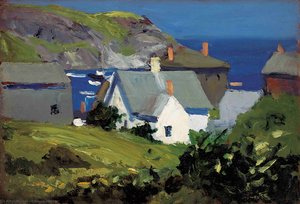
A Portrait of Rural Isolation – Edward Hopper’s Ryder’s House
Edward Hopper’s “Ryder’s House,” completed in 1933, stands as a quintessential emblem of American Realism during the Depression era. More than just a depiction of a simple farmhouse nestled within a tranquil field, it's a masterful exploration of solitude and unspoken emotion—themes that would become hallmarks of Hopper’s oeuvre and continue to resonate with audiences today.
- Subject Matter: The painting centers around a modest white house adorned with a vibrant red door, positioned prominently in the middle of an expansive expanse of grass. Two chimneys punctuate the roofline on either side, anchoring the composition while simultaneously emphasizing the building’s isolation against the vastness of nature.
- Style: Hopper's signature style—characterized by stark lighting and geometric precision—is evident throughout “Ryder’s House.” The artist eschews dramatic narratives or exuberant color palettes, opting instead for a restrained aesthetic that prioritizes observation and psychological depth. This deliberate simplicity serves to heighten the painting’s emotional impact.
- Technique: Executed in oil on canvas, Hopper employs meticulous brushwork—often subtle and blended—to capture the textures of the house’s surfaces and the muted tones of the surrounding landscape. The artist skillfully utilizes chiaroscuro – the interplay between light and shadow – to sculpt form and convey a sense of stillness and melancholy.
Historical Context: Depression-Era America
Painted during the Great Depression, “Ryder’s House” reflects the pervasive anxieties and uncertainties of the time. Hopper's depiction of rural life—characterized by quiet desperation and unspoken longing—captures a mood that mirrored the experiences of many Americans grappling with economic hardship and social displacement. The painting speaks to a broader cultural preoccupation with themes of alienation and detachment.
Symbolism: Light, Shadow, and Absence
The dominant use of light in “Ryder’s House” is particularly significant. Hopper illuminates the interior space with a cool, diffused glow that casts long shadows across the walls—creating an atmosphere of profound stillness and hinting at hidden narratives. The absence of human figures contributes to the painting's sense of isolation, prompting viewers to contemplate the unspoken emotions conveyed by the scene.
Emotional Impact: A Meditation on Loneliness
"Ryder’s House" transcends mere visual representation; it invites contemplation and introspection. Hopper’s masterful composition—coupled with his subtle manipulation of light and shadow—elicits a feeling of melancholy and yearning, capturing the essence of human experience in its most vulnerable form. It remains a powerful reminder that beauty can reside in quietude and that art possesses the capacity to illuminate the complexities of the human condition.
Вопросы и ответы
Из каких стран приезжают посетители «Ryder's House», Эдвард Хоппер?
Страница Статистика просмотров для работы «Ryder's House», Эдвард Хоппер содержит публичную статистику посещений: ежемесячное количество просмотров данного произведения, сравнение с наиболее популярными работами автора, а также географию посетителей.
Можно ли скачать изображение «Ryder's House» в высоком разрешении?
Чтобы приобрести цифровую копию работы «Ryder's House», Эдвард Хоппер, оформите скачивание цифрового изображения в высоком разрешении на странице Цифровое изображение в высоком разрешении.
Насколько сильно цвета в произведении «Ryder's House» кажутся отражающими свет?
Яркость произведения «Ryder's House», Эдвард Хоппер составляет Bright Balance. Яркость определяет, какой объем света отражают цвета.
Краткие факты и викторина об искусстве
Об авторе Эдвард Хоппер

Эдвард Хоппер
1931 - 1967, Соединенные Штаты Америки
Биография художника
A Solitude Observed: The Life and Art of Edward Hopper
Edward Hopper, имя, неразрывно связанное с тишиной и тонкой меланхолией, пронизывавшей американскую жизнь XX века, был не просто художником сцен; он был поэтом света и тени, летописцем современной изоляции. Родился в Няке, штат Нью-Йорк, в 1882 году, в семье среднего класса с голландскими корнями, ранние годы Эдварда Хоппера были наполнены стабильным воспитанием, которое питало его художественные стремления. Уже с детства тщательно датированные и подписанные наброски свидетельствовали о тонком наблюдении и врожденном таланте к рисованию – они стали основой его будущей карьеры. Хотя изначально его родители поощряли коммерческое рисование – прагматичное предложение, основанное на их ожиданиях, амбиции Эдварда тянулись к живописи, что привело его в Нью-Йоркскую школу искусств, где он учился у Уильяма Мерритта Чеза и Роберта Ганри. Эти формирующие годы не только заложили техническую базу, но и воспитали в нем любовь к реализму и стремление изображать мир таким, каким он его видел – незагробленным и честным. Письма Ральфа Уолдо Эмерсона глубоко резонировали с Хоппером, укрепляя его индивидуализм и остроту наблюдения – качества, которые стали отличительными чертами его художеческого видения. Ранние путешествия в Париж позволили ему познакомиться с импрессионизмом, но Хоппер быстро отошел от его мимолетных мазков, создав свой собственный уникальный путь.Finding His Voice: Realism and the American Scene
Художественное путешествие Эдварда Хоппера не было мгновенным и легким. Он боролся с тем, чтобы найти свой отличительный голос, экспериментируя с различными стилями, прежде чем укрепиться в реализме, который определил его карьеру. Это был не просто копирование реальности; это была ее суть, отбрасывающая излишние детали, чтобы раскрыть лежащие в основе эмоциональные истины. Его картины начали фокусироваться на повседневных сценах – домах, закусочных, офисах, гостиничных номерах – наполненных ощущением покоя и часто одиночеством. Он обладал необычайной способностью улавливать психологическое состояние своих субъектов, намекая на истории без их прямого обозначения. Точное изображение света и тени стало ключевым моментом, не только как описательный элемент, но и как эмоциональный сигнал, создавая атмосферы, которые одновременно завораживают и тревожат. House by the Railroad (1925), одна из его ранних шедевров, иллюстрирует этот подход – кажущаяся простой композиция излучает глубокое чувство изоляции и тайны. Увлечение Хоппера гравюрой также было важным аспектом его творчества, отражая схожие темы и стилистические особенности живописи. Он не стремился к грандиозным историческим повествованиям или аллегорическим символам; он сосредоточился на обыденном, возвышая его за счет внимательного наблюдения и эмоционального резонанса.Iconic Visions: Nighthawks and Beyond
Хотя карьера Хоппера развивалась постепенно, определенные работы сделали его широко известным. Nighthawks (1942), вероятно, самая знаменитая картина Хоппера, мгновенно стала иконой американской культуры. Ночная сцена закусочной, залитая резким флуоресцентным светом, идеально воплощает чувство одиночества и анонимности современной городской жизни. Фигуры внутри потеряны в своих мыслях, отстраненные друг от друга, несмотря на их близость – трогательный комментарий о человеческой природе. Gas (1940), с его поразительным изображением заправочной станции, демонстрирует увлечение Хоппера американскими пейзажами и развивающейся автомобильной культурой. Другие заметные работы, такие как *Automat*, *Office in a Small City* и *Summertime*, каждая предлагают уникальные взгляды на сложности американского общества середины XX века. Эти картины не были просто изображениями мест; это были исследования настроения, психологии и тонких драматических событий, разворачивающихся в обычных обстановках. Его жена, Josephine Nivison Hopper, сыграла важную роль не только как его верная спутница, но и как частый модел, значительно способствуя характеристике женских фигур в его картинах.Themes and Legacy: A Lasting Influence
В творчестве Хоппера прослеживаются несколько повторяющихся тем. Одиночество в городе – пожалуй, самая заметная из них – ощущение изоляции, испытываемое отдельными людьми даже среди толпы. Он исследовал американский пейзаж, как сельский, так и городской, часто подчеркивая его суровость и пустоту. Его работы затрагивают психологический реализм, исследуя внутренние жизни своих субъектов с чувствительностью, выходящей за рамки простого представления. Существует также подтекст ностальгии по более простому прошлому, противопоставленный осознанию сложностей и тревог современной жизни. Влияние Хоппера на последующих художников неоспоримо. Его уникальный стиль вдохновил бесчисленное количество художников, включая Пьера Санфорд Росса, и продолжает резонировать с современными художниками, стремящимися уловить суть человеческого опыта. Его картины остаются востребованными коллекционерами и выставляются в крупных музеях по всему миру, укрепляя его место в истории американского искусства. Более чем просто художник, Эдвард Хоппер был визуальным философом, предлагающим глубокие инсайты в человеческое состояние посредством своего мастерства в изображении света, тени и композиции.- Его наследие заключается не только в красоте его картин, но и в их способности постоянно вызывать размышления, пробуждать эмоции и напоминать нам о тихой изоляции, которая часто определяет нашу жизнь.
- Работы Хоппера продолжают очаровывать аудиторию, потому что они говорят на универсальных темах одиночества, изоляции и поиска смысла в быстро меняющемся мире.
- Его картины стали иконическими представлениями американской культуры, часто используемыми для символизации тревог и стремлений XX века – и за его пределами.
- Эстетика Хоппера оказала глубокое влияние на таких кинематографистов, как Альфред Хичкок, и писателей, вдохновляя бесчисленные работы, исследующие подобные темы изоляции и психологического напряжения.
Краткая информация об авторе: Эдвард Хоппер
- Artistic Movement Or Style: Реализм
- Artists Or Movements Influenced By This Artist: ['Росс']
- Artists Who Influenced This Artist:
- Чейз
- Ганри
- Date Of Birth: 22 июля 1882
- Date Of Death: 15 мая 1967
- Full Name: Edward Hopper
- Nationality: Американский
- Notable Artworks:
- Nighthawks
- House by the Railroad
- Gas
- Place Of Birth: Няк, США


Откройте для себя произведения искусства, распределенные по темам, стилям и характеристикам.




Эдвард Хоппер
Ryder's House
() ·
В раме: · Масло по льну, ручная работа
Итого