


 Примерить в интерьере
 Отправить
 Поделиться
 Подробнее
 Руководство

 Скачать
 Похожие объекты
 Рентгенография
 Слайд-шоу
 Статистика
Lone Tenement


Experience the vibrant energy of George Bellows' 'Lone Tenement,' a pivotal realist painting capturing urban life in 1909. A stunning reproduction from the National Gallery of Art, showcasing American dynamism and artistic skill.
 Развернуть текст
Георг Белловс – американский художник-реалист, известный своими яркими картинами городских пейзажей и боксерских поединков начала XX века. Его работы отражают динамику Нью-Йорка и социальные проблемы того времени, а стиль характеризуется энергией и драматизмом.
Масляная репродукция ручной работы
Картина маслом на холсте в выбранном вами размере и раме, написанная на заказ нашими художниками. ( Переключиться на печать Перейти к цифровым изображениям)




P118B $10

P118H $10

P118W $10

P438Z $10

P508JH $12

P508YH $12

P805H $10

P805Z $10

P919BZ $10

P919G $10

P919XJ $10

P959ZH $10

P968JZ $12

W106C $8

W218G $10

W218JH $8

W218Y $10

W307PJ $10

W316G $10

W316PJ $8

W316Y $10

W398PJ $8

W4111J $10

W500HY $15

W500JH $15

W692G $12

W849H $8

W940BG $15

W953PJ $8




Стандартный размер
индивидуальный заказ
CM
INCH
Выберите один из наших стандартных размеров, соответствующих оригинальным пропорциям произведения искусства.
Loading sizes...

ширина
высота
Вы можете указать собственные размеры, чтобы картина идеально вписалась в выбранную раму или пространство. Если выбранный вами размер не соответствует пропорциям оригинала, мы либо обрежем полотно, либо расширим его за счет дополнительных элементов, написанных вручную. Цифровой макет будет отправлен вам на утверждение перед началом производства.
Обратите внимание, что предварительный просмотр на экране не отражает фактическую обрезку или расширение. Только макет точно покажет окончательную композицию.
Хотя доступны индивидуальные размеры, мы рекомендуем выбирать вариант из предопределенного списка, чтобы сохранить исходные пропорции.
Примеры возможных изменений: замена лица на фото клиента; добавление домашнего животного (например, замена кошки на собаку); добавление скрытого послания на фоне; изменение пейзажа или элементов фона.
После оформления заказа команда TopImpressionists.com свяжется с клиентом по электронной почте для уточнения деталей и предоставит предварительный макет
После оформления заказа команда TopImpressionists.com свяжется с клиентом по электронной почте для уточнения деталей и предоставит предварительный макет
Доставка по всему миру () за 3–4 недели вместо стандартных 5 недель. (12 Октябрь). Без компромиссов в качестве.

Бесплатная экспресс-доставка по всему миру

Высококачественный льняной холст

Полное страхование при транспортировке

Гарантия возврата таможенных пошлин

Гарантия точного цветового соответствия

100-дневный период возврата (только при обнаружении дефектов)

Гарантия возврата 100% средств

Скидка при заказе нескольких работ
 Вариант со стеклом доступен только для размеров менее 110 см

Lone Tenement
Материал репродукции
Размер репродукции
-


Итоговая стоимость
$ 269
A Snapshot of Urban Life: Exploring George Bellows’ “Lone Tenement”
George Wesley Bellows' "Lone Tenement," painted in 1909, isn’t merely a depiction of a city street; it’s a vibrant pulse captured on canvas. This oil on canvas, now residing within the esteemed collection of the National Gallery of Art in Washington D.C., offers a remarkably honest and unromanticized portrayal of American urban existence during a period of rapid transformation. Bellows, already establishing himself as a key figure in the realist movement, masterfully utilizes composition and color to convey an immediate sense of energy and activity – a feeling that resonates powerfully even today.
The scene unfolds with a dynamic immediacy. A bustling street is populated by figures engaged in everyday tasks: individuals hurrying along, carrying umbrellas against a likely rain, and the quiet observation of a horse tethered to a post on the left foreground. The inclusion of two boats moored in the background hints at the proximity of water – perhaps a river or harbor – further grounding the scene within a larger urban context. Bellows’ eye for detail is evident in the subtle variations of light and shadow, lending depth and realism to each element of the composition. It's a testament to his ability to distill complex scenes into powerfully evocative images.
The Realist Vision: Technique and Composition
Bellows’ approach to painting is distinctly rooted in American Realism, a style that sought to represent life as it truly was – without idealization or embellishment. This is particularly evident in the brushwork; it's loose and expressive, capturing movement and texture with remarkable skill. Notice how he uses short, broken strokes to suggest the flow of traffic and the hurried steps of pedestrians. The color palette leans towards muted tones—grays, browns, and blues—reflecting the atmosphere of a city street, yet punctuated by brighter accents that draw the eye to key figures and details. The strategic placement of the horse, slightly out of focus, creates an intriguing foreground element, subtly shifting the viewer’s perspective and inviting closer inspection.
Furthermore, Bellows' background elements – the boats – aren’t simply decorative; they contribute significantly to the painting’s narrative. They suggest a connection to commerce, transportation, and perhaps even a sense of longing for escape or adventure. The overall composition is carefully balanced, drawing the viewer into the heart of the scene while simultaneously conveying a feeling of movement and dynamism.
Historical Context and Enduring Relevance
“Lone Tenement” was created during a period of immense social and economic change in America – the dawn of the 20th century. Rapid industrialization, urbanization, and immigration were reshaping the nation’s landscape and its people. Bellows' work reflects this transformation, offering a glimpse into the lives of ordinary Americans navigating these complex changes. The painting speaks to themes of community, labor, and the challenges faced by those living in densely populated urban environments – issues that remain remarkably relevant today.
Considering the artist’s biography, it's clear that Bellows’ background as an athlete profoundly influenced his artistic perspective. His keen observation skills, honed through years of physical activity, translated into a remarkable ability to capture movement and form with precision and power. The National Gallery of Art’s Chester Dale Collection provides invaluable context for understanding Bellows’ work and its place within the broader history of American art.
Bringing “Lone Tenement” Home: Reproduction Options
TopImpressionists offers meticulously crafted, hand-painted reproductions of George Bellows' "Lone Tenement," allowing you to experience this iconic artwork in stunning detail. Each reproduction is created by skilled artists who painstakingly recreate the original’s textures, colors, and brushstrokes, ensuring an authentic representation of Bellows’ vision. Whether displayed as a striking statement piece or incorporated into a broader interior design scheme, a TopImpressionists reproduction of “Lone Tenement” will undoubtedly become a focal point, sparking conversation and evoking the energy and spirit of early 20th-century America. Explore our collection today to bring this remarkable work of art into your space.
Вопросы и ответы
Является ли «Lone Tenement» одной из самых популярных работ George Wesley Bellows?
«Lone Tenement» классифицируется как Recognized.
Какая комната лучше всего сочетается с цветами произведения «Lone Tenement», George Wesley Bellows?
Цветовая палитра Earthy в работе «Lone Tenement», George Wesley Bellows идеально гармонирует с рекомендованным пространством: Living Room.
Какой размер и ориентацию вы рекомендуете для печати работы "Lone Tenement"?
Для «Lone Tenement» рекомендуется использовать размер Large и Landscape ориентацию.
Какой размер «Lone Tenement» рекомендуется для Living Room?
Рекомендуемое сочетание для «Lone Tenement», George Wesley Bellows: принт размером Large в интерьере Living Room.
Какой преобладающий цвет в произведении «Lone Tenement», George Wesley Bellows?
Driftwood (#876f4b) — преобладающий цвет в работе «Lone Tenement», George Wesley Bellows.
К какому художественному направлению относится «Lone Tenement», George Wesley Bellows?
Художественное направление, к которому относится «Lone Tenement», George Wesley Bellows, — это American Realism. Такая классификация позволяет соотнести данную работу с другими произведениями и мастерами того же периода.
Какова дата создания и художественный стиль произведения «Lone Tenement», George Wesley Bellows?
Работа «Lone Tenement», George Wesley Bellows датирована 1909 годом и относится к направлению American Realism.
Насколько насыщенны цвета в «Lone Tenement», George Wesley Bellows?
Насыщенность цветов в работе «Lone Tenement» составляет Balanced. Насыщенность описывает, насколько выраженными кажутся цвета.
Биография художника
George Wesley Bellows: A Visionary of American Modernity
George Wesley Bellows, имя, которое навсегда связано с бурной энергией и зарождающейся модерностью раннего 20-го века Америки, стал ключевой фигурой в реалистической живописи. Родился в Колумбусе, штат Огайо, 12 или 19 августа 1882 года, его путь от спортивного обещания к художественной славе – это свидетельство страсти и непоколебимой преданности своему делу. Еще до формального обучения молодой Джордж проявлял врожденный талант к рисованию, заполняя блокноты эскизами, намекающими на наблюдательный взгляд и развивающийся навык внутри него. Его воспитание не было сосредоточено исключительно на искусстве; он преуспевал в спорте, играя как бейсбол, так и баскетбол в Университете штата Огайо – это двойственность глубоко повлияла на его художественный взгляд, наделив его работу ощущением динамичного движения и физической силы. Этот спортивный опыт не только привил ему дисциплину, но и восславил его к человеческой форме в действии, тему, которая стала центральной для его самых известных картин. Он покинул университет незадолго до окончания, движимый неотвратимым влечением к Нью-Йорку и обещанием художественного обучения.Формирование Пути: Аштанская Школа и За Ее Пределами
Прибыв в Нью-Йорк в 1904 году, Бэллоуэс быстро нашел наставничество у Роберта Генри, ведущей фигуры Аштанской школы. Эта группа художников – включая Джона Слоуна, Уильяма Глаккена и Джорджа Льюкса – намеренно отвернулась от академических традиций, предпочитая изображать грязную реальность городской жизни: переполненные чердаки, оживленные улицы и повседневные трудности рабочих американцев. Бэллоуэс с энтузиазмом принял эту этику, первоначально отражая свободный мазок Генри и приверженность социальному реализму. Однако он не был доволен тем, чтобы просто копировать стиль своего учителя; у него была амбиция создать свой собственный уникальный художественный голос. В 1906 году он основал студию с другим художником Эдвардом Кифом, что ознаменовало начало плодотворной экспериментальной эпохи.Арена Жизни: Бокс и Городские Спектакли
Хотя палитра Бэллоуэса включала широкий спектр тем – портреты, пейзажи, морские виды – он наиболее известен своими мощными изображениями боксерских матчей. Эти не были просто спортивные события для него; они были микрокосмом человеческой драмы, воплощающими темы борьбы, стойкости и первобытных инстинктов, которые движут соревнованием. Он посещал дымные боксерские клубы, тщательно изучая движения бойцов, интенсивность их взгляда и энергию толпы. Картины, такие как *Both Members of This Club* (1909) и *Stag at Sharkey’s* (1909), являются прекрасными примерами его способности передать эту атмосферу, используя драматическое освещение, динамичные композиции и ощутимое чувство напряжения. Боксерские сцены не были просто о спорте; это были метафоры жизни, отражающие социальную дарвиновскую теорию, распространенную в американском обществе того времени. Помимо бокса, Бэллоуэс находил вдохновение в других городских зрелищах – парадах, цирках и переполненных улицах – все это предлагало возможности для исследования тем движения, энергии и коллективного опыта.Эволюция Стиля и Наследие
По мере того как Бэллоуэс созревал как художник, его стиль претерпел тонкое, но значительное изменение. Хотя он сохранил свою приверженность реализму, он начал отодвигаться от свободного мазка ранних лет, принимая более стилизованный эстетический вид, характеризующийся плавными кривыми, монументальными формами и повышенным чувством драмы. Этот сдвиг заметен в поздних работах, таких как *Dempsey and Firpo* (1924), монументальная картина, изображающая кульминационный момент легендарного боксерского матча с захватывающей дух интенсивностью. Он также экспериментировал с литографией, создавая серию впечатляющих гравюр, демонстрирующих свое мастерство в линии и тоне.Ключевые Работы и Признание
- *Both Members of This Club* (1909) – Знаковая работа, изображающая атмосферу боксерского клуба.
- *Stag at Sharkey’s* (1909) – Еще одна культовая картина боксерского матча, известная своим драматическим освещением и композицией.
- *Men of the Docks* (1912) – Мощное изображение рабочих на пристани, демонстрирующее мастерство Бэллоуэса в передаче физической силы и текстуры.
- *The Germans Arrive* (1918) – Серия литографий, изображающих ужасы Первой мировой войны, демонстрирующая его вовлеченность в социальные и политические вопросы.
- *Dempsey and Firpo* (1924) – Монументальная картина, изображающая кульминационный момент легендарного боксерского матча, демонстрирующая эволюционировавший стиль Бэллоуэса и его мастерство композиции.

George Wesley Bellows
1882 - 1925 , США
Краткая справка
- Artistic Movement Or Style: Реализм, Ashcan School
- Artists Or Movements Influenced By This Artist: ['Хенри']
- Artists Who Influenced This Artist: ['Роберт Хенри']
- Date Of Birth: 1882
- Date Of Death: 1925
- Full Name: George Wesley Bellows
- Nationality: Американский
- Notable Artworks:
- Центральный парк
- Мужчины на пристани
- Боксеры
- Place Of Birth: Колумбус, США
Похожие статьи

The Unvarnished Truth: A Cultural Journey Through the Soul of American Realism
Explore the profound beauty of American Realism. From the Ashcan School's urban grit to intimate portraits, discover how artists captured the authentic soul of a nation through unvarnished truth and masterful observation.
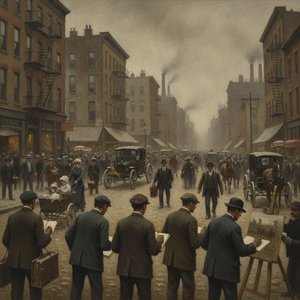
The Ashcan School: Capturing the Raw, Unfiltered Soul of Urban Life through American Realism
Discover the raw beauty of the Ashcan School. Explore how masters like Bellows and Henri captured the gritty, vibrant soul of early 20th-century New York through profound American Realism and evocative urban landscapes.
Откройте для себя произведения искусства, распределенные по темам, стилям и характеристикам.
