


 Примерить в интерьере
 Отправить
 Поделиться
 Подробнее
 Руководство

 Скачать
 Похожие объекты
 Рентгенография
 Слайд-шоу
 Q&A
Q&A Статистика
Nature studies


Explore Giuseppe Arcimboldo’s ‘Nature Studies,’ whimsical watercolor portraits crafted from flora & fauna. A unique Mannerist masterpiece – timeless art for your collection!
 Развернуть текст
Арчимбольдо – итальянский художник, известный своими сюрреалистическими портретами из фруктов, овощей и книг. Его уникальный стиль предвосхитил сюрреализм и поражает воображение!
Жикле / Арт-принты
Печать (жикле) или холст музейного качества с быстрыми сроками изготовления и широким выбором вариантов отделки. ( Заказать репродукцию ручной работы Перейти к цифровым изображениям)




P118B $10

P118H $10

P118W $10

P438Z $10

P508JH $12

P508YH $12

P805H $10

P805Z $10

P919BZ $10

P919G $10

P919XJ $10

P959ZH $10

P968JZ $12

W106C $8

W218G $10

W218JH $8

W218Y $10

W307PJ $10

W316G $10

W316PJ $8

W316Y $10

W398PJ $8

W4111J $10

W500HY $15

W500JH $15

W692G $12

W849H $8

W940BG $15

W953PJ $8




Стандартный размер
индивидуальный заказ
CM
INCH
Выберите один из наших стандартных размеров, соответствующих оригинальным пропорциям произведения искусства.
Loading sizes...

ширина
высота
Введите необходимую ширину и высоту, чтобы репродукция подошла к вашей раме или стене. При печати изображение можно только уменьшить, но нельзя увеличить больше оригинала, поэтому при выборе другого формата часть изображения может быть обрезана. Перед печатью мы отправим вам цифровой макет на утверждение. Изображение на этой странице не отображает реальную обрезку — ее можно увидеть только на макете.
Доставка по всему миру () за 2 недели вместо стандартных 4–5 недель. (29 Октябрь)

Бесплатная экспресс-доставка по всему миру

Высококачественный льняной холст

Полное страхование при транспортировке

Гарантия возврата таможенных пошлин

Гарантия точного цветового соответствия

100-дневный период возврата (только при обнаружении дефектов)

Гарантия возврата 100% средств

Скидка при заказе нескольких работ
 Вариант со стеклом доступен только для размеров менее 110 см

Nature studies
Жикле / Арт-принты
Размер репродукции
-


Итоговая стоимость
$ 69
Giuseppe Arcimboldo: A Renaissance Visionary Reimagined
Giuseppe Arcimboldo (1527 – 1593), an Italian Mannerist painter, stands apart from his contemporaries not merely for his technical prowess but for a singular artistic concept—the creation of portrait heads entirely composed of meticulously arranged objects. This revolutionary approach challenged conventional artistic norms and cemented his place as one of the most inventive figures in Renaissance art history. Born in Milan during a period marked by intellectual ferment and religious upheaval, Arcimboldo’s career unfolded amidst the opulent courts of Europe, where he served as court painter to emperors Rudolf II and Maximilian II, demonstrating an unparalleled ability to capture the spirit of his time through visual symbolism.- The Composite Portrait: Arcimboldo's technique involved transforming recognizable human faces into fantastical representations using fruits, vegetables, flowers, fish, books, musical instruments—a deliberate departure from traditional portraiture that prioritized idealized beauty and anatomical accuracy.
- Mannerist Influence: His work embodies the core tenets of Mannerism, an artistic movement characterized by stylized forms, exaggerated proportions, and a preoccupation with illusionistic effects. Unlike the serene harmony championed by High Renaissance artists like Leonardo da Vinci and Raphael, Arcimboldo embraced discordance and theatricality to convey complex ideas.
- Symbolic Depth: Each element incorporated into Arcimboldo’s portraits carried significant symbolic weight, reflecting Renaissance humanist thought and astrological beliefs. For instance, “Vertumnus,” depicting Rudolf II as a head of intertwined plants and animals, embodies the Roman god of fertility and transformation—a deliberate allusion to Rudolf II's ambition to rule over all realms.
Technique and Materials: Watercolor Alchemy
Arcimboldo’s mastery lay not only in his conceptual vision but also in his meticulous execution. He primarily utilized watercolor paint on parchment, a medium known for its delicate luminosity and ability to achieve subtle tonal variations—qualities perfectly suited to capturing the ethereal beauty of his composite heads. The artist painstakingly glued together meticulously cut-out objects onto the parchment surface, creating an intricate mosaic that demanded extraordinary precision and patience. This painstaking process ensured that every detail contributed to the overall illusionistic effect, reinforcing Arcimboldo’s commitment to Mannerist principles.- Layering Techniques: Arcimboldo skillfully employed layering techniques—applying thin washes of watercolor over multiple layers—to build up depth and texture, enhancing the visual impact of his compositions.
- Color Palette: The artist favored muted palettes dominated by browns, blacks, creams, and whites, creating a sense of solemn grandeur and emphasizing the symbolic significance of each element.
- Precision Cutting & Gluing: Achieving the astonishing realism of Arcimboldo’s portraits required exceptional skill in cutting out objects with exacting accuracy and gluing them onto the parchment surface—a testament to his dedication to craftmanship.
Historical Context: Rudolf II's Court and Renaissance Curiosity
Arcimboldo’s artistic endeavors flourished during the reign of Rudolf II, Holy Roman Emperor (1576–1613), a ruler renowned for his patronage of arts and sciences—a period characterized by an unprecedented fascination with exotic cultures and intellectual exploration. Rudolf II’s court embraced Arcimboldo's unconventional style as a reflection of the broader Renaissance spirit—a desire to transcend conventional boundaries and engage in imaginative contemplation. The emperor recognized Arcimboldo’s genius, commissioning numerous portraits that served as visual emblems of his authority and embodying the humanist ideals prevalent at the time.- The Habsburg Court: Arcimboldo's work resonated deeply with Rudolf II and his court, who appreciated its intellectual complexity and artistic daring—a counterpoint to the prevailing aesthetic sensibilities of the era.
- Renaissance Symbolism: The artist’s use of symbolic imagery aligned seamlessly with Renaissance humanist thought, which emphasized the importance of reason and observation in understanding the natural world—a legacy that continues to inspire artists and scholars today.
- Influence on Later Artists: Arcimboldo's innovative technique and conceptual vision exerted a considerable influence on subsequent generations of painters, establishing him as a pivotal figure in the development of Mannerist art and shaping the trajectory of artistic expression for centuries to come.
Emotional Resonance: Beyond Representation – An Invitation to Wonder
Ultimately, Arcimboldo’s portraits transcend mere visual representation—they invite viewers into a realm of imaginative contemplation and evoke a profound sense of wonder. By transforming familiar objects into evocative symbols, Arcimboldo compels us to reconsider our perceptions of beauty and reality—challenging the conventions of portraiture while simultaneously celebrating the richness and complexity of the natural world. His work remains a testament to the enduring power of artistic innovation and its ability to capture the spirit of an era—a timeless masterpiece that continues to captivate audiences with its arresting visual impact and intellectual depth.Вопросы и ответы
Каков эмоциональный тон произведения «Nature studies», Жозеф Арчимбольдо?
«Nature studies», Жозеф Арчимбольдо передает Tranquil эмоциональный настрой.
Что изображено на картине «Nature studies», Жозеф Арчимбольдо?
На полотне «Nature studies», Жозеф Арчимбольдо изображены: botanical art, fruit & flowers, portrait composition, renaissance still life, arcimboldo style, nature studies, watercolor portraiture.
Какой формат у произведения «Nature studies»?
«Nature studies», Жозеф Арчимбольдо — это композиция в формате Tall. Перед выбором размера печати стоит проверить пропорции.
Биография художника
Giuseppe Arcimboldo: Мастер Иллюзий и Символов
Имя Giuseppe Arcimboldo – это синоним не только гения, но и загадочности. Этот итальянский художник, живший в XVI веке, оставил после себя наследие, которое продолжает восхищать и удивлять зрителей по всему миру. Его работы, особенно знаменитые портреты, созданные из фруктов, овощей, цветов и других предметов, – это не просто визуальные иллюзии, но и сложные аллегории, пронизанные глубоким символизмом и отражающие дух эпохи Возрождения.
Родившийся в Милане в 1527 году, Giuseppe Arcimboldo начал свой путь в искусстве как мастер по созданию витражей для соборов. Уже тогда проявился его талант к детальной проработке и умение создавать сложные композиции. Его отец, Биagio Arcimboldo, был художником, что, несомненно, повлияло на формирование его художечного видения. В 1549 году он получил заказ на создание витражей для Миланского собора, включая знаменитые изображения Святой Екатерины Александрийской – работы, которые стали отправной точкой в его карьере.
Королевский Художник и Покровитель
Переломным моментом в жизни Arcimboldo стал 1562 год, когда он был назначен придворным портретистом императора Фердинанда I Габсбурга в Вене. Это назначение открыло перед ним двери в мир роскоши и великолепия, где он мог проявить свою фантазию и творческий потенциал. В последующие годы Arcimboldo служил художником для императоров Максимилиана II и Рудольфа II, создавая костюмы для балов и фестивалей, оформляя дворцы и даже разрабатывая проекты для императорского сада. Его работа была высоко ценимой при дворе, что позволило ему не только развивать свой талант, но и получить доступ к самым редким и дорогим материалам.
Уникальный Стиль: Композитные Портреты
Главным отличием творчества Arcimboldo стали его знаменитые "композитные портреты" – изображения людей, созданные из тщательно подобранных предметов. Фрукты, овощи, цветы, книги, музыкальные инструменты – все это превращалось в лица, отражающие характер и статус изображенного человека. В отличие от традиционных портретов, где акцент делался на реалистичное изображение внешности, Arcimboldo создавал образы, которые требовали от зрителя интерпретации и размышления. Он не просто рисовал лицо; он рассказывал историю, передавал определенное послание.
Важно отметить, что этот стиль не возник из ниоткуда. Arcimboldo опирался на традиции Renaissance, в частности, на интерес к головоломкам, загадкам и символизму. Он также был знаком с работами других художников, таких как Леонардо да Винчи, который экспериментировал с искажением перспективы и созданием иллюзий.
Символизм и Аллегория: Загадки в Каждом Детале
Каждый предмет, используемый Arcimboldo для создания своих портретов, имел свое значение. Например, в портрете "Библиотекарь" книги символизируют знания и интеллект, а цветы – красоту и гармонию. В портрете императора Рудольфа II, изображенного как бог весенних садов (Vertumnus), можно увидеть множество растений, которые ассоциируются с плодородием и процветанием. Arcimboldo не просто создавал красивые картинки; он использовал их для передачи определенного смысла, часто скрытого под поверхностью.
Интересно отметить, что многие из его работ содержат двойной смысл – они могут быть интерпретированы по-разному в зависимости от угла обзора и знаний зрителя. Это придает им дополнительную глубину и загадочность.
Влияние и Наследие
Несмотря на то, что имя Arcimboldo не было столь известно во время его жизни, как сейчас, его работы оказали значительное влияние на развитие искусства. В начале XX века его творчество было переоценено, а его портреты стали символом сюрреализма. Художники, такие как Сальвадор Дали, были вдохновлены его умением создавать иллюзии и играть с восприятием зрителя. Сегодня Giuseppe Arcimboldo считается одним из самых оригинальных и талантливых художников эпохи Возрождения – мастером иллюзий и символов, чьи работы продолжают восхищать и удивлять людей по всему миру.
Основные Работы
- "Библиотекарь" (1566) - Изображает императора Рудольфа II, чье лицо создано из книг, символизирующих знания и мудрость.
- "Вертумн" (Vertumnus) – портрет императора Рудольфа II в образе бога весенних садов, наполненный цветами и растениями.
- "Флористический пейзаж" (1591) - Изображает человека, сотканного из цветов и листьев, демонстрируя гармонию между человеком и природой.
- "Лето" – часть серии "Четыре времени года", изображающая летний портрет.

Жозеф Арчимбольдо
1527 - 1593 , Италия
Краткая справка
- Artistic Movement Or Style: Маньеризм, сюрреализм
- Artists Or Movements Influenced By This Artist:
- Сальвадор Дали
- Сюрреализм
- Artists Who Influenced This Artist: ['Леонардо да Винчи']
- Date Of Birth: 5 апреля 1527 г.
- Date Of Death: 11 июля 1593 г.
- Full Name: Giuseppe Arcimboldo
- Nationality: Итальянец
- Notable Artworks:
- «Цветочный пейзаж»
- «Библиотекарь»
- «Осень»
- Place Of Birth: Милан, Италия
Похожие статьи
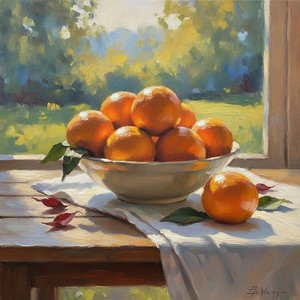
Sun-Drenched Citrus: The Vibrant Beauty of Oranges in Impressionist Masterpieces
Embark on a sensory journey through Impressionist masterpieces. Discover how Renoir and Cézanne captured the vibrant light and luscious textures of sun-drenched oranges in exquisite still life paintings designed to inspire and transform your home.
Откройте для себя произведения искусства, распределенные по темам, стилям и характеристикам.


