


 Примерить в интерьере
 Отправить
 Поделиться
 Подробнее
 Руководство

 Скачать
 Похожие объекты
 Рентгенография
 Слайд-шоу
 Статистика
Bathsheba at the Bath
 Acrylic On Canvas
- WallArt
- Baroque
 1640
1640 22.0 x 32.0 cm
 Национальные музеи Ливерпуля
Delve into Guercino's dramatic Baroque masterpiece, 'Bathsheba at the Bath,' depicting biblical storytelling with masterful chiaroscuro and evocative detail – a timeless exploration of faith and emotion.
 Развернуть текст
Гуерчино – великий художник барокко, известный драматическим использованием света и тени, эмоциональной глубиной и яркими религиозными картинами.
Масляная репродукция ручной работы
Картина маслом на холсте в выбранном вами размере и раме, написанная на заказ нашими художниками. ( Переключиться на печать Перейти к цифровым изображениям)




P118B $10

P118H $10

P118W $10

P438Z $10

P508JH $12

P508YH $12

P805H $10

P805Z $10

P919BZ $10

P919G $10

P919XJ $10

P959ZH $10

P968JZ $12

W106C $8

W218G $10

W218JH $8

W218Y $10

W307PJ $10

W316G $10

W316PJ $8

W316Y $10

W398PJ $8

W4111J $10

W500HY $15

W500JH $15

W692G $12

W849H $8

W940BG $15

W953PJ $8




Стандартный размер
индивидуальный заказ
CM
INCH
Выберите один из наших стандартных размеров, соответствующих оригинальным пропорциям произведения искусства.
Loading sizes...

ширина
высота
Введите необходимую ширину и высоту, чтобы репродукция подошла к вашей раме или стене. Поскольку работа выполняется вручную, при изменении пропорций художник может немного увеличить область вокруг картины или, наоборот, обрезать края — выбор за вами. Перед началом работы мы пришлем вам цифровой макет на утверждение. Изображение на этой странице не является точным результатом — увидеть реальный вид можно только на макете.
Примеры возможных изменений: замена лица на фото клиента; добавление домашнего животного (например, замена кошки на собаку); добавление скрытого послания на фоне; изменение пейзажа или элементов фона.
После оформления заказа команда TopImpressionists.com свяжется с клиентом по электронной почте для уточнения деталей и предоставит предварительный макет
После оформления заказа команда TopImpressionists.com свяжется с клиентом по электронной почте для уточнения деталей и предоставит предварительный макет
Доставка по всему миру () за 3–4 недели вместо стандартных 5 недель. (25 Октябрь). Без компромиссов в качестве.

Бесплатная экспресс-доставка по всему миру

Высококачественный льняной холст

Полное страхование при транспортировке

Гарантия возврата таможенных пошлин

Гарантия точного цветового соответствия

100-дневный период возврата (только при обнаружении дефектов)

Гарантия возврата 100% средств

Скидка при заказе нескольких работ
 Вариант со стеклом доступен только для размеров менее 110 см

Bathsheba at the Bath
Материал репродукции
Размер репродукции
-


Итоговая стоимость
$ 269
A Vision Steeped in Shadow: Guercino’s ‘Bathsheba at the Bath’
Giovanni Francesco Barbieri, known universally as Il Guercino – “the squinter” – wasn't merely a painter; he was an architect of feeling. Born in Cento, Italy, in 1591, his artistic trajectory defied convention, prioritizing raw emotion and dramatic illumination over the polished idealism favored by many of his contemporaries. Unlike artists obsessed with replicating classical ideals, Guercino’s gaze turned inward, reflecting the turbulent spiritual landscape of Baroque Italy – a period defined by religious fervor and intellectual upheaval. His formative years under Ludovico Carracci instilled in him a foundational understanding of disegno, emphasizing observation and anatomical accuracy alongside expressive gesture. This dedication would become the hallmark of his distinctive style: an unsettling beauty born from profound darkness, punctuated by bursts of radiant light.- Subject Matter & Narrative
- Style & Technique: Caravaggesque Influence
- Historical Context: The Reformation’s Echoes
- Symbolism: Light Versus Darkness – A Moral Allegory
- Emotional Impact: Capturing Vulnerability and Resilience
Subject Matter & Narrative
Guercino’s ‘Bathsheba at the Bath,’ completed around 1636-37, depicts a pivotal biblical scene – David’s clandestine observation of Bathsheba bathing. The composition isn't merely a recounting of events; it’s an exploration of psychological drama. Three figures dominate the canvas: Bathsheba herself, her infant son, and David, positioned behind her, gazing intently at the woman. This deliberate arrangement underscores the tension between desire and piety, vulnerability and power. Guercino eschewed idealized representations, favoring a realism that captured the palpable discomfort and apprehension of the moment. The artist’s meticulous attention to detail—the folds of Bathsheba's robe, David’s furrowed brow—serves not just as visual accuracy but as conduit for conveying profound emotional depth.Style & Technique: Caravaggesque Influence
Guercino’s artistic vision owes a significant debt to Caravaggio, whose revolutionary use of chiaroscuro – dramatic contrasts between light and dark – profoundly impacted the Baroque aesthetic. Like Caravaggio, Guercino employed tenebrismo—a technique characterized by plunging darkness punctuated by pools of intense illumination—to heighten emotional impact and create an atmosphere of suspense. The subdued palette contributes to this effect, emphasizing the shadows that envelop the figures and amplifying their psychological vulnerability. Furthermore, Guercino’s brushwork is loose and expressive, eschewing smooth blending for textured surfaces that convey a sense of immediacy and spontaneity. This stylistic choice aligns perfectly with his intention: to portray not just what he saw but how he *felt*.Historical Context: The Reformation’s Echoes
The painting emerged during the Protestant Reformation, a period marked by intense religious debate and artistic experimentation. Guercino's depiction of Bathsheba reflects the broader anxieties surrounding moral conduct and divine judgment prevalent in Catholic Italy. David’s gaze is not one of triumphant conquest but of tormented contemplation—a visual manifestation of the internal struggle between earthly desire and spiritual righteousness. The artist subtly communicates a moral allegory, suggesting that true piety demands vigilance against temptation and an unwavering commitment to ethical behavior.Symbolism: Light Versus Darkness – A Moral Allegory
The interplay of light and darkness within ‘Bathsheba at the Bath’ operates on multiple symbolic levels. The radiant glow emanating from Bathsheba's son symbolizes purity and innocence, representing a beacon of hope amidst the encroaching shadows of sin. Conversely, David’s darkened visage embodies guilt and remorse—a visual representation of his transgression against God’s law. Guercino skillfully utilizes chiaroscuro to heighten dramatic tension and underscore the psychological complexities inherent in the narrative.Emotional Impact: Capturing Vulnerability and Resilience
Ultimately, Guercino's masterpiece succeeds in conveying a powerful emotional resonance. The painting captures not merely the factual recounting of an illicit affair but its devastating consequences on human psyche—the palpable discomfort, apprehension, and moral anguish experienced by David. Through masterful composition and expressive brushwork, Guercino compels viewers to confront uncomfortable truths about human nature and the enduring struggle between passion and conscience. ‘Bathsheba at the Bath’ remains a testament to Guercino's ability to transform biblical narrative into an unforgettable exploration of human emotion—a timeless depiction of vulnerability and resilience illuminated by the unsettling beauty of Baroque art.Вопросы и ответы
Насколько гармонично сочетаются цвета в работе "Bathsheba at the Bath"?
В работе «Bathsheba at the Bath», Гуерчино (Il Guercino) представлена Unified Palette цветовая гармония.
Позволяет ли авторское право на «Bathsheba at the Bath», Гуерчино (Il Guercino) делать репродукции?
Статус авторского права на «Bathsheba at the Bath», Гуерчино (Il Guercino) определен однозначно: произведение находится в является общественным достоянием — срок действия авторского права истек. Его нахождение в Национальные музеи Ливерпуля не меняет этого статуса.
Для какой комнаты рекомендуется «Bathsheba at the Bath», Гуерчино (Il Guercino), учитывая его цветовую гамму?
Цветовая палитра Monochrome в работе «Bathsheba at the Bath», Гуерчино (Il Guercino) идеально гармонирует с рекомендованным пространством: Living Room.
Биография художника
Giovanni Francesco Barbieri (Il Guercino): A Master of Shadow and Emotion
Giovanni Francesco Barbieri, universally known as Il Guercino – “the squint” – was a name born from a physical characteristic that ultimately defined an artistic vision of extraordinary power. Born in 1591 in Cento, a small town nestled between Ferrara and Bologna in the heart of Italy’s Emilia region, his journey began not within the gilded halls of formal academies, but through a profound self-discovery shaped by early apprenticeship and a relentless pursuit of individual expression. Guercino's life was one of dramatic contrasts – from humble beginnings to recognition as a leading figure of the Baroque period, marked by both intense darkness and breathtaking luminosity in his art.Early Influences and the Caravaggist Spirit
Guercino’s artistic development unfolded during a time of immense change and religious fervor in Italy. His early years were profoundly influenced by Ludovico Carracci, a pivotal figure in the Renaissance revival, whose studio provided him with a foundational understanding of classical composition and technique. However, it was the revolutionary naturalism of Caravaggio that truly ignited his artistic spirit. Guercino’s initial works – paintings like *Amnon and Tamar* – demonstrate this early debt to Caravaggism: stark contrasts of light and shadow (tenebrismo), a gritty realism depicting human flaws and passions, and an unflinching portrayal of biblical narratives. Unlike many artists seeking the idealized perfection of classical antiquity, Guercino embraced the raw, visceral energy of Caravaggio’s style, capturing the drama and intensity of human experience with remarkable immediacy. This early period established his reputation for dramatic intensity and a willingness to confront difficult subjects – a characteristic that would define much of his later work.A Shift Towards Classical Grace: The 1630s Transformation
Around the 1630s, a significant transformation occurred in Guercino’s artistic style. Responding to both artistic curiosity and the demands of discerning patrons, he began to temper the harshness of Caravaggism, moving towards a more balanced and luminous approach. This wasn't merely a stylistic adjustment; it reflected a deeper engagement with classical ideals – a desire to create works that were not only emotionally resonant but also aesthetically refined. He softened his palette, introducing subtle gradations of color and employing a greater sense of spatial depth. This period witnessed the emergence of masterpieces like *The Return of the Prodigal Son*, showcasing a newfound harmony and elegance alongside the enduring intensity of his emotional vision. The influence of Guido Reni, another prominent Bolognese painter, is also evident in this shift towards a more balanced composition and refined technique.Biblical Narratives and Psychological Depth
Guercino’s artistic focus consistently revolved around biblical narratives – stories of faith, doubt, redemption, and human suffering. However, he didn't simply illustrate these tales; he imbued them with profound psychological depth and emotional resonance. His figures are not idealized saints but flawed individuals grappling with complex moral dilemmas, wrestling with their beliefs, and experiencing the full spectrum of human emotions. *The Vocation of Saint Aloysius Gonzaga* is a particularly compelling example – a powerful depiction of religious awakening rendered with breathtaking skill and sensitivity. Guercino’s ability to capture the inner lives of his subjects, to portray their vulnerabilities and struggles with honesty and empathy, set him apart from many of his contemporaries. He understood that true piety wasn't about outward displays of devotion but about the internal battles and sacrifices that defined a life dedicated to faith. This psychological realism, combined with his masterful use of light and shadow, created paintings that were both visually stunning and emotionally compelling – works that continue to resonate deeply with viewers today.Legacy and Rediscovery
Despite facing periods of relative obscurity in the 18th and 19th centuries, Guercino’s artistic genius was eventually rediscovered thanks to the tireless efforts of art historian Sir Denis Mahon. Mahon's meticulous research, particularly his analysis of Guercino’s account book – a detailed record of his commissions and payments – provided invaluable insights into the artist’s life and career. His work highlighted Guercino’s innovative approach to composition, his masterful use of light and shadow (chiaroscuro), and his profound understanding of human psychology. Today, Guercino's paintings are celebrated in prestigious museums across Europe – from the Pinacoteca Nazionale in Ferrara to the National Gallery in London – serving as a testament to his enduring artistic legacy. His influence can be seen in the works of subsequent generations of artists, and his paintings continue to captivate viewers with their dramatic intensity, emotional depth, and unparalleled beauty.- Key Museums: Works by Guercino are prominently displayed at institutions like the Pinacoteca Nazionale (Ferrara), Palazzo Brignole-Sale (Genoa), and the National Gallery (London).
- The Power of Light and Shadow: His signature use of chiaroscuro remains a defining element of his distinctive style.
- A Portrait of Humanity: He masterfully depicted biblical narratives with an unparalleled focus on human emotion and psychological complexity.

Гуерчино (Il Guercino)
1591 - 1666 , Италия
Краткая справка
- Artistic Movement Or Style: Барокко
- Artists Or Movements Influenced By This Artist: ['Карваггизм']
- Artists Who Influenced This Artist: ['Лудовико Карраччи']
- Date Of Birth: 8 февраля 1591 г.
- Date Of Death: 22 декабря 1666 г.
- Full Name: Giovanni Francesco Barbieri
- Nationality: Итальянец
- Notable Artworks:
- Возвращение блудного сына
- Встреча с сыном
- Place Of Birth: Центо, Италия
Похожие статьи
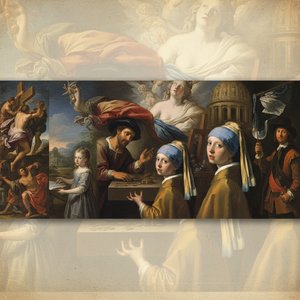
10 Шедевров Барокко: Искусство, изменившее мир | TopImpressionists.com
Погрузитесь в мир барокко! 10 шедевров Караваджо, Рембрандта и других великих художников. Узнайте историю создания культовых картин и найдите идеальную репродукцию для вашего интерьера на TopImpressionists.com

The Dramatic Flourish: Exploring the Baroque Movement's Enduring Legacy in Art History
Explore the dramatic world of Baroque art! Discover iconic artists like Caravaggio & Rubens, defining techniques, and its lasting impact on art history. Expert insights for collectors & enthusiasts at TopImpressionists.

Theatricality & Triumph: Baroque Drama in Painting & Sculpture
Explore the dramatic world of Baroque art! Discover its history, defining characteristics, & lasting influence on painting & sculpture. Expert insights into Caravaggio, Zurbarán, and Bernini – plus high-quality reproductions at TopImpressionists.

Guercino: A Baroque Master Between Caravaggism & Classicism – Exploring Innovation & Emotional Depth
Explore the captivating world of Guercino, a Baroque master bridging Caravaggism & Classicism. Discover his dramatic chiaroscuro, emotional depth, and lasting influence on art history with TopImpressionists.

The Visceral Stage: Exploring Dramatic Narratives & Emotional Intensity in Baroque Art
Explore the dramatic world of Baroque art! Discover iconic masters like Caravaggio & Rembrandt, their techniques, and the movement's lasting impact. Expert insights for collectors & enthusiasts at TopImpressionists.