Биография художника
A Dubliner’s Grace: The Life and Art of Hugh Douglas Hamilton
Hugh Douglas Hamilton, born in the bustling heart of 18th-century Dublin around 1740, stands as a remarkably significant figure in Irish portraiture. He bridged the elegant Rococo styles of his early career with the emerging Neoclassical sensibilities that defined an era – a testament to his adaptability and artistic vision. The son of a peruke maker, a trade demanding precision and artistry in its own right, young Hamilton was steered towards the visual arts from a young age, receiving foundational training at the Dublin Society House under the tutelage of Robert West and James Mannin. Even within these formative years, his innate talent shone brightly; he earned early accolades for his drawings as early as 1756, hinting at the considerable skill that would soon captivate both Irish and British society. Crucially, Hamilton cultivated a network of influential patrons – most notably through connections with the esteemed La Touche banking family – a connection that proved invaluable in establishing his burgeoning career, opening doors to a world he was destined to beautifully capture on canvas and pastel. These relationships weren’t merely transactional; they were gateways into the social circles and artistic currents that shaped his work.
Early Years and London's Salons
Hamilton’s ambition led him to London in the early 1760s, a move that proved pivotal to his success. It was in the vibrant atmosphere of London’s salons that he quickly established himself as a leading portraitist, renowned for his distinctive oval pastel portraits. These weren't grandiose, imposing statements of power; rather, they were lively, affordable representations – remarkably accessible to a growing middle class eager to possess images of themselves and their loved ones. His talent was immediately recognized by the highest echelons of society; he received commissions from the British royal family, including a portrait of Queen Charlotte in 1764, solidifying his reputation as one of the most sought-after artists of his time. He exhibited regularly at both the Society of Artists and the Free Society of Artists, steadily building a loyal clientele and refining his artistic style. Around the mid-1770s, Hamilton embarked on an innovative experiment – developing a unique “fresco” pastel technique, skillfully blending crayons and chalk to achieve a richer texture and depth in his work. This groundbreaking approach marked a turning point, showcasing his willingness to push boundaries and demonstrate his technical versatility. It allowed him to mimic the appearance of oil paint with a softer, more delicate finish, appealing to a wider range of patrons.
The Roman Years: A Shift in Style
Around 1779, driven by a desire for inspiration and artistic growth, Hamilton traveled to Italy – a journey that profoundly shaped his artistic development. He spent the next twelve years exploring the art and culture of Rome, occasionally visiting Florence but primarily establishing himself in the Eternal City. It was during this period that he encountered the intellectual circles of the time, befriending figures like Antonio Canova, a renowned sculptor whose influence subtly permeated Hamilton’s work. More significantly, he received guidance from John Flaxman, a Scottish artist and designer, who encouraged him to transition to oil painting – a medium that offered greater nuance and detail than pastel. This shift marked a significant evolution in his style, moving away from the delicate, powdery textures of pastel towards the richer colors and broader brushstrokes of oil paint. The Italian years were not merely a period of artistic exploration; they also provided Hamilton with invaluable experience in painting large-scale history scenes, reflecting the prevailing Neoclassical trends of the era.
A Master of Likeness: Technique and Portraiture
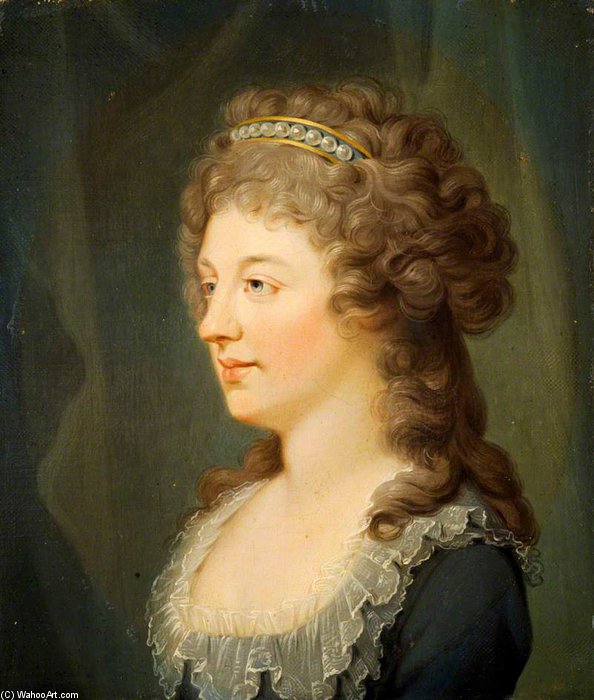
Hamilton’s artistic signature lay in his remarkable ability to capture not just the *likeness* of his sitters, but also their character and social standing. He possessed an almost uncanny eye for detail, meticulously observing every nuance of expression and posture. While he initially gained renown for his pastel portraits – particularly those charming oval compositions – his later work in oils demonstrated a growing mastery of technique. His process was remarkably efficient; many of his portraits were completed in a single sitting from life, testament to his observational skills and confident hand. He favored handmade cream or off-white paper for his pastels, providing a subtle warmth to the finished pieces. His pastel process involved a meticulous layering: outlining with light tones, building features with carmine shades, blending delicately with his fingers, establishing broad backgrounds, and finally adding precise details using both pastel sticks and graphite. This careful approach allowed him to create portraits that were both realistic and flattering – often imbued with an air of quiet dignity and sophistication. He was acutely attuned to the demands of the market, balancing artistic expression with the expectations of his patrons, ensuring that each portrait reflected not only their physical likeness but also their social status and personality.
Legacy and Rediscovery
Throughout his career, Hamilton’s brush (or pastel stick) immortalized many prominent figures – from members of the British royal family to leading politicians and celebrities. Beyond the celebrated portrait of Queen Charlotte, he depicted Charles Edward Stuart and his family between 1785 and 1788, capturing a poignant moment in Jacobite history. His portrait of Dean Kirwan remains a treasured piece at the Royal Dublin Society, while other notable works include portraits of George John, 2nd Earl Spencer, and Countess Cowper. “Diana and Endymion” (1783) represents an early foray into large-scale oil painting, showcasing his ambition to tackle more complex compositions. However, it was perhaps the rediscovery of a sketchbook containing sixty-six drawings of Dublin street hawkers in 2002 that truly cemented Hamilton’s historical significance. These sketches – unearthed from Australia – offer a rare and invaluable glimpse into the everyday life of 18th-century Dublin, providing social historians with rich visual documentation of a bygone era. Hugh Douglas Hamilton passed away in 1808, leaving behind a legacy as a versatile and insightful portraitist whose work continues to resonate with its blend of Rococo elegance and Neoclassical refinement. His portraits remain not merely images, but windows into the lives and times of those who shaped his world.


 Заказать репродукцию
 Поделиться
 Поделиться
 Детали произведения

 Скачать
 Похожие работы
 Рентгенография
 Слайд-шоу
 Читать далее






































 Вариант со стеклом доступен только для размеров менее 110 см



