The Luminosity of Landscape: Joseph Mallord William Turner
Joseph Mallord William Turner, a name synonymous with the Romantic spirit in art, was born in London on April 23, 1775, and passed away in December 1851. He wasn’t merely a painter; he was an explorer of light, color, and atmosphere, transforming landscape painting into something profoundly emotional and visionary. His father, James Turner, was a barber and wigmaker who also served as an art dealer, fostering young Joseph's early artistic inclinations by displaying his drawings in his shop. This initial exposure to the public, coupled with private lessons and self-study at the British Museum, laid the foundation for a career that would redefine how we perceive the natural world. Turner’s London was one of burgeoning industry and imperial power, but he increasingly turned away from depicting urban life, finding instead inspiration in the raw energy of nature – storms, seascapes, mountains, and sunsets became his enduring subjects.
Early Career & The Rise to Prominence
Turner’s talent was recognized early on; he exhibited at the Royal Academy as a teenager and was accepted into the academy's schools in 1789. Initially, his work adhered to topographical traditions – precise renderings of architectural subjects and landscapes. However, even these early pieces hinted at a burgeoning fascination with light effects. He quickly moved beyond mere documentation, embracing a more expressive approach. His travels throughout England and Wales fueled this development, allowing him to directly experience the dramatic beauty he would later immortalize on canvas. By the late 1790s, Turner was gaining recognition for his seascapes, particularly those depicting shipwrecks and naval battles – themes that resonated with a nation engaged in prolonged conflict with France. He wasn’t simply recording events; he infused them with a sense of awe and terror, foreshadowing the emotional intensity that would characterize his later work. His early success allowed him to establish himself as a professional artist, supporting himself through commissions and sales, and steadily building his reputation within the London art world.
Influences & Artistic Development
Turner’s artistic journey was shaped by a diverse range of influences. He deeply admired the Dutch masters – particularly Aelbert Cuyp and Philip de Loutherbourg – for their mastery of light and atmospheric effects. The work of Claude Lorrain, with its idealized landscapes bathed in golden sunlight, also exerted a significant impact on his early style. However, Turner wasn’t content to simply imitate these artists; he synthesized their techniques with his own unique sensibility. He was fascinated by the scientific study of optics and color theory, attempting to translate complex phenomena into visual form. His later work demonstrates an increasing abstraction, moving away from precise representation towards a more subjective experience of light and atmosphere. The advent of photography also played a role, challenging traditional notions of realism and encouraging artists to explore new ways of depicting the world.
The Fighting Temeraire, painted in 1839, is often seen as a pivotal work, marking a transition towards his more experimental style – a poignant depiction of a warship being towed to its final resting place, shrouded in mist and bathed in an ethereal glow.
Major Achievements & Late Period Innovations
Turner’s prolific career spanned over half a century, producing an enormous body of work that includes oil paintings, watercolors, and engravings. He was elected Professor of Perspective at the Royal Academy in 1811 and later became its Keeper. His most celebrated works include
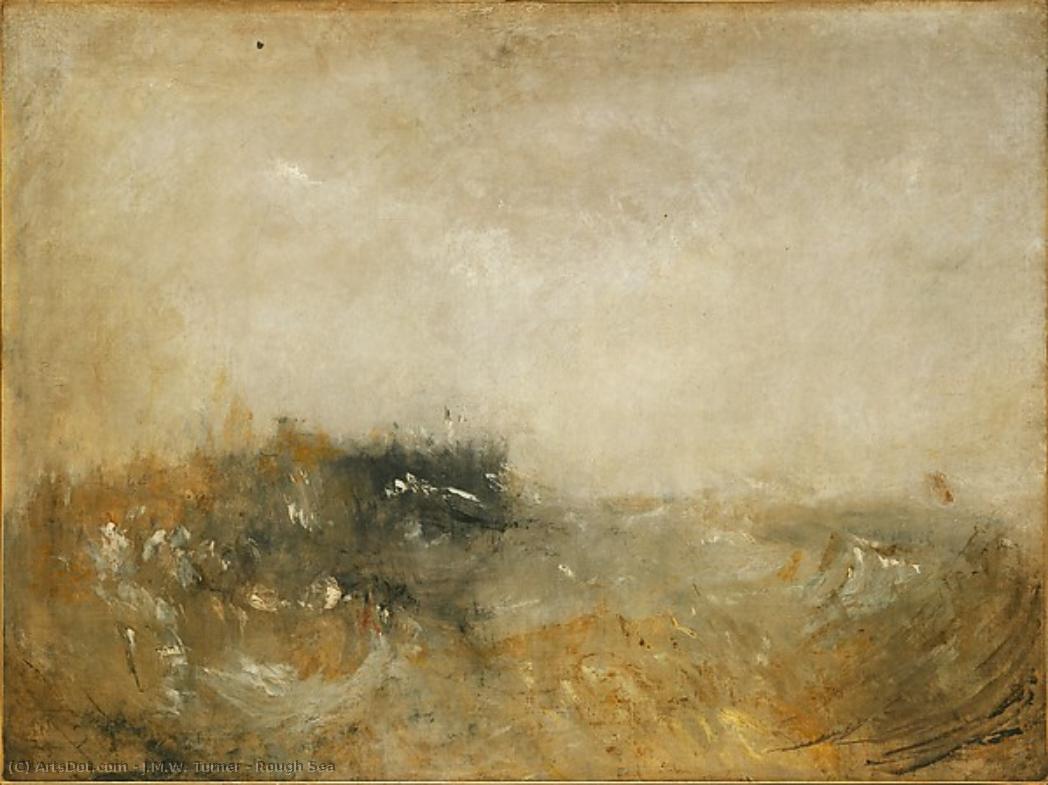
Rain, Steam and Speed – The Great Western Railway, painted in 1844, which captured the dynamism of the industrial age, and a series of Venetian scenes that explored the city’s unique light and atmosphere. In his late period, Turner pushed the boundaries of painting even further, creating increasingly abstract compositions characterized by swirling colors and blurred forms. He experimented with new techniques, applying paint in thin washes and using unconventional tools to achieve his desired effects. His studio at Margate became a laboratory for these explorations, where he sought to capture the fleeting beauty of sunlight on water. These late works were often met with criticism – some viewers found them incomprehensible – but they anticipated many of the developments of modern art.
Historical Significance & Legacy
Joseph Mallord William Turner’s impact on the history of art is profound and enduring. He elevated landscape painting to a new level of emotional intensity, transforming it from a descriptive genre into a vehicle for expressing subjective experience. His exploration of light, color, and atmosphere paved the way for Impressionism and other modern movements.
- He challenged traditional notions of realism, embracing abstraction and subjectivity.
- His work influenced generations of artists, inspiring them to explore new ways of depicting the natural world.
- Turner’s legacy extends beyond painting; he is also celebrated as a visionary artist who captured the spirit of his time – a period of rapid change and profound social upheaval.
Today, Turner's paintings are held in major museums around the world, and his work continues to captivate audiences with its beauty, power, and emotional depth. The Tate Britain houses a significant collection of his works, including the Turner Bequest – a gift he left to the nation upon his death, ensuring that future generations could experience the luminosity of his landscapes. He remains a towering figure in British art history, a testament to the enduring power of vision and imagination.


 Предпросмотр
 Купить картину ручной работы
 Поделиться
 Поделиться
 Детали произведения

 Скачать
 Похожие работы
 Рентгенография
 Слайд-шоу

 Читать далее






































 Вариант со стеклом доступен только для размеров менее 110 см



