


 Примерить в интерьере
 Отправить
 Поделиться
 Подробнее
 Руководство

 Скачать
 Похожие объекты
 Рентгенография
 Слайд-шоу
 Статистика
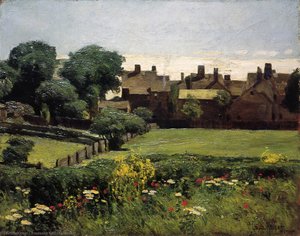
The Old Elms
 Oil
Oil- WallArt
- Impressionism
 1901
1901- 19th Century
 72.0 x 62.0 cm
An idyllic depiction of small-town life unfolds in Konstantin Yuon's The Old Elms, where rustic wooden houses and wandering figures create a peaceful 1901 scene that invites you to bring this nostalgic charm into your home.
 Развернуть текст
Константин Юон (1875-1958) – выдающийся русский художник, соединивший импрессионизм и символизм с реализмом советского периода. Знаменитые работы: «Парад на Красной площади». Его творчество отражает историю России.
Произведение искусства, представленное на этой странице, защищено законом об авторском праве, что исключает возможность законного создания или продажи его точной репродукции. Данная защита обеспечивается международными соглашениями, такими как Бернская конвенция и национальным законодательством, включая положения, изложенные в Закон США об авторском праве — Раздел 17.
В качестве достойной и законной альтернативы мы предлагаем авторские картины ручной работы, вдохновленные оригиналом. Наши опытные профессиональные художники тщательно изучают стиль, настроение и художественную суть оригинала, чтобы создать новое, уникальное произведение, которое вызывает те же чувства, оставаясь при этом самостоятельным оригинальным творением.
Этот метод полностью соответствует нормам авторского права, так как он не предполагает копирования или дублирования защищенного произведения. Напротив, это творческая реинтерпретация — создание новой картины, которая вдохновлена оригиналом, но не является его точной копией.
Масляная репродукция ручной работы
Картина маслом на холсте в выбранном вами размере и раме, написанная на заказ нашими художниками. ( Переключиться на печать Перейти к цифровым изображениям)




P118B $10

P118H $10

P118W $10

P438Z $10

P508JH $12

P508YH $12

P805H $10

P805Z $10

P919BZ $10

P919G $10

P919XJ $10

P959ZH $10

P968JZ $12

W106C $8

W218G $10

W218JH $8

W218Y $10

W307PJ $10

W316G $10

W316PJ $8

W316Y $10

W398PJ $8

W4111J $10

W500HY $15

W500JH $15

W692G $12

W849H $8

W940BG $15

W953PJ $8




Стандартный размер
индивидуальный заказ
CM
INCH
Выберите один из наших стандартных размеров, соответствующих оригинальным пропорциям произведения искусства.
Loading sizes...

ширина
высота
Введите необходимую ширину и высоту, чтобы репродукция подошла к вашей раме или стене. Поскольку работа выполняется вручную, при изменении пропорций художник может немного увеличить область вокруг картины или, наоборот, обрезать края — выбор за вами. Перед началом работы мы пришлем вам цифровой макет на утверждение. Изображение на этой странице не является точным результатом — увидеть реальный вид можно только на макете.
Примеры возможных изменений: замена лица на фото клиента; добавление домашнего животного (например, замена кошки на собаку); добавление скрытого послания на фоне; изменение пейзажа или элементов фона.
После оформления заказа команда TopImpressionists.com свяжется с клиентом по электронной почте для уточнения деталей и предоставит предварительный макет
После оформления заказа команда TopImpressionists.com свяжется с клиентом по электронной почте для уточнения деталей и предоставит предварительный макет
Доставка по всему миру () за 3–4 недели вместо стандартных 5 недель. (21 Октябрь). Без компромиссов в качестве.

Бесплатная экспресс-доставка по всему миру

Высококачественный льняной холст

Полное страхование при транспортировке

Гарантия возврата таможенных пошлин

Гарантия точного цветового соответствия

100-дневный период возврата (только при обнаружении дефектов)

Гарантия возврата 100% средств

Скидка при заказе нескольких работ
 Вариант со стеклом доступен только для размеров менее 110 см

The Old Elms
Материал репродукции
Размер репродукции
-


Итоговая стоимость
$ 269
A Window into a Bygone Era
In the gentle embrace of Konstantin Yuon’s 1901 masterpiece, The Old Elms, we are transported to a serene moment in time, where the frantic pace of modernity has yet to touch the quietude of village life. This exquisite painting serves as more than just a landscape; it is a nostalgic portal into an idyllic era of rustic simplicity. The scene unfolds with a delicate balance of human presence and natural grandeur, capturing a small village nestled among ancient, towering trees. As the eye wanders through the composition, one encounters the soft rhythm of daily existence: two figures strolling leisurely down a dirt path, a faithful dog wandering near the center, and birds dancing across a vast, breathing sky. It is a composition that breathes with life, inviting the viewer to step out of the present and into a world defined by peace and permanence.
The artistry of Yuon is on full display through his masterful command of light and texture. Influenced by his early encounters with the Impressionist movement in Paris, the artist employs a technique that prioritizes the atmospheric quality of the air itself. The wooden houses, rendered with a tactile sense of age and weathered charm, anchor the scene in a tangible reality, while the foliage of the namesake elms seems to shimmer under a soft, diffused light. Each brushstroke contributes to a sense of movement—the flutter of wings, the slow gait of the travelers, and the subtle swaying of branches. For the discerning collector or interior designer, this piece offers a sophisticated interplay of organic tones and soft highlights, making it an ideal centerpiece for spaces that aim to evoke tranquility and warmth.
Beyond its aesthetic allure, The Old Elms carries a profound emotional resonance. There is a subtle symbolism in the way the figures are integrated into the landscape; they do not dominate nature but rather exist as a harmonious part of it. The presence of the birds and the dog suggests a symbiotic relationship between humanity and the natural world, a theme that remains deeply poignant in our contemporary age. This painting evokes a sense of "sehnsucht"—a longing for a simpler, more grounded way of life. Whether displayed in a sunlit gallery or as a focal point in a refined living room, this reproduction brings with it an aura of timelessness and a quiet, contemplative grace that enriches any environment.
Вопросы и ответы
Когда было создано произведение «The Old Elms» и к какому направлению оно относится?
«The Old Elms» была создана в 1901 году в рамках направления Impressionism.
Как можно использовать «The Old Elms», Константин Юон в домашнем декоре?
Рекомендуется использовать «The Old Elms», Константин Юон для Relaxation, в идеале — в помещении типа Living Room. Сочетание способа использования и пространства поможет определить, где именно будет уместна репродукция.
К какому периоду творчества Константин Юон относится произведение «The Old Elms»?
В рамках творчества Константин Юон работа «The Old Elms» относится к периоду Early Period. Этот этап позволяет сопоставить её с другими произведениями художника.
Похожие произведения




Биография художника
Early Life and Artistic Foundations
Konstantin Fyodorovich Yuon, a name synonymous with the vibrant heart of Russian art, was born on October 24th, 1875, in the bustling metropolis of Moscow. His lineage intertwined threads of Swiss-Russian heritage, a unique blend that would subtly influence his artistic perspective. His father, a diligent employee within an insurance firm, carried the legacy of Switzerland, while his mother, rooted firmly in German traditions, instilled a deep appreciation for culture and beauty. From his earliest years, Konstantin demonstrated a profound sensitivity to the visual world – a nascent talent nurtured by a mother who actively encouraged artistic pursuits within their home. This early exposure wasn’t merely casual; it was a deliberate cultivation of creativity, laying the foundational stones upon which his future artistic endeavors would be built. The Moscow School of Painting, Sculpture and Architecture became Konstantin's formal training ground from 1892 to 1898. Here, he found himself immersed in a rich environment of artistic discourse, guided by distinguished masters such as Konstantin Savitsky and Konstantin Korovin – figures whose techniques and philosophies would profoundly shape his initial artistic trajectory. These formative years weren’t confined solely to the walls of the school; Yuon embarked on journeys across Europe, particularly to Paris, where he encountered the revolutionary currents of Impressionism. He was captivated by artists like Camille Pissarro, not simply mimicking their style but absorbing and synthesizing their techniques into a distinctly Russian aesthetic – a harmonious blend of Western innovation and deeply rooted national identity.From Symbolism to Socialist Realism
Yuon’s early artistic output is characterized by an evocative interplay between Impressionistic landscapes and the subtle whispers of Symbolism. Paintings such as *To the Trinity* (1903) and *Tverskoy Boulevard* (1909) exemplify this period, capturing fleeting moments of light and atmosphere with a remarkable sensitivity to color and texture. Yet, these works aren’t merely depictions of scenery; they carry an undercurrent of emotional resonance, hinting at deeper, unspoken narratives – a hallmark of Symbolist art. He wasn't content to remain solely within the confines of Impressionism; Yuon began experimenting with lyrical landscapes that incorporated elements drawn from traditional Russian artistic forms—the delicate precision reminiscent of Palekh miniature painting and the spiritual depth echoing the iconography of ancient icons. This fusion created a visual language entirely his own, imbued with a potent sense of national identity while simultaneously embracing innovation and experimentation. However, the tumultuous political landscape of the early 20th century dramatically altered the course of Yuon’s artistic journey. The rise of the Soviet Union ushered in an era of ideological shifts, demanding artists align their work with the new regime's goals. Yuon navigated this complex transition, gradually adapting his style to reflect the prevailing demands – a shift that ultimately led him towards embracing the tenets of Socialist Realism. This stylistic evolution is powerfully illustrated in *Parade on the Red Square on November 7, 1941*, a monumental work depicting Soviet strength and resilience during wartime—a testament to the power of art as a tool for propaganda and national unity.A Multifaceted Career and Institutional Leadership
Konstantin Yuon’s artistic contributions extended far beyond the creation of individual paintings; he was a pivotal figure in the organization and administration of the Russian art world. He didn't merely paint; he actively shaped the direction of artistic expression within his nation. Alongside his brother, Paul Juon (a renowned composer), he co-founded both the Union of Russian Artists and, later, the Association of Artists of Revolutionary Russia – institutions that played a crucial role in fostering artistic collaboration and promoting national identity. His administrative talents were further recognized through significant leadership roles: he served as director of the Research Institute of the Academy of Arts (1948–1950) and, culminating in a distinguished career, became the First Secretary of the Union of Soviet Artists (1956–1958). These positions afforded him considerable influence over artistic policy and education, allowing him to champion his vision for Russian art. His dedication was formally acknowledged with prestigious accolades – including the Stalin Prize in 1943 and the Order of Lenin—solidifying his status as a national treasure and a respected figure within the Soviet artistic community. Throughout his career, Yuon remained committed to nurturing young artists, establishing his own private painting and drawing school in Moscow, where he imparted his knowledge and techniques to a new generation of creative minds.Legacy and Enduring Influence
Konstantin Yuon’s legacy is complex and profoundly significant—a testament to an artist who navigated turbulent times while remaining steadfastly committed to his craft. He stands as a pivotal figure in Russian art history, bridging the gap between the aesthetic sensibilities of the late 19th century and the ideological demands of the Soviet era. His early Symbolist landscapes possess a haunting beauty that continues to resonate with viewers, while his later Socialist Realist works offer valuable insights into the artistic strategies employed by the Soviet regime. Today, Yuon’s paintings are proudly displayed in prominent museum collections across Russia – including the Tretyakov Gallery and the Taganrog Art Museum—ensuring their accessibility for generations to come. His work remains a subject of study and admiration, a lasting tribute to a remarkable artist who indelibly shaped the cultural landscape of Russia.- Notable Works: New Planet, Bean Vine, Parade on the Red Square on November 7, 1941.
- Key Influences: Konstantin Savitsky, Konstantin Korovin, Valentin Serov, Camille Pissarro.
- Artistic Movements: Impressionism, Symbolism, Socialist Realism.

Константин Юон
1875 - 1958 , Россия
Краткая справка
- Artistic Movement Or Style: Импрессионизм, Символизм, Социалистический реализм
- Artists Or Movements Influenced By This Artist: ['Социалистический реализм']
- Artists Who Influenced This Artist:
- Константин Коровин
- Валентин Серов
- Камиль Писarro
- Date Of Birth: 24 октября 1875
- Date Of Death: 11 апреля 1958
- Full Name: Константин Федорович Юон
- Nationality: Русский
- Notable Artworks:
- Новая планета
- Подсолнух
- Парад на Красной площади
- Place Of Birth: Москва, Россия
Похожие статьи

Capturing Emotion: A Journey Through the Soul of Expressionist Landscapes
Explore the profound emotional depth of Expressionist landscapes. Discover how Post-Impressionist masters moved beyond light to capture the soul through vibrant color and form. A curated journey for true art lovers seeking the beauty of expressive mastery.