
 Примерить в интерьере
 Отправить
 Поделиться
 Подробнее
 Руководство

 Скачать
 Похожие объекты
 Рентгенография
 Слайд-шоу
 Q&A
Q&A Статистика
The Herald newspaper

- 43.0 x 57.0 cm


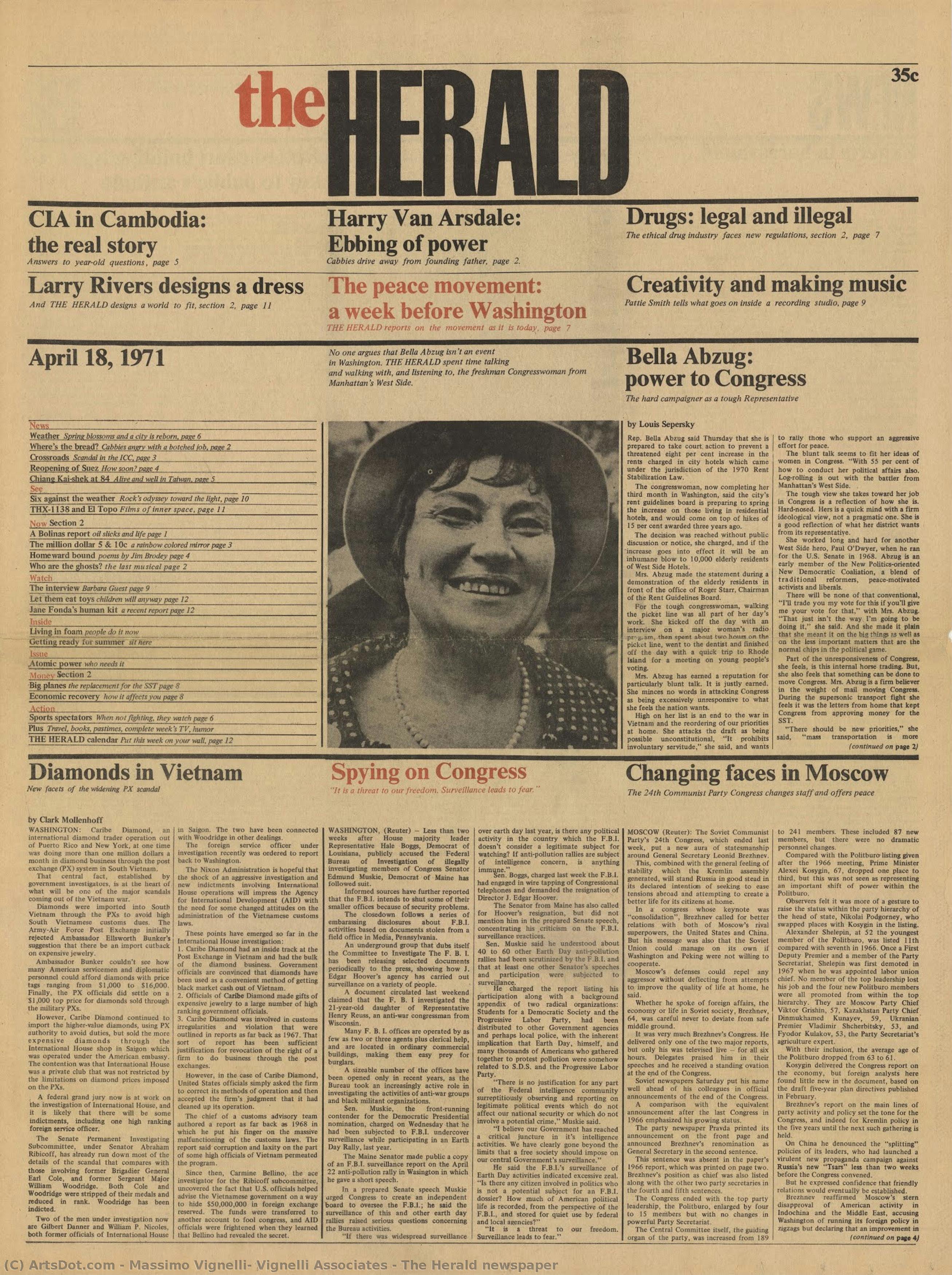
Experience the modernist grid design of The Herald newspaper by Massimo Vignelli (1971), showcasing vintage graphic communication art; discover this iconic piece today.
 Развернуть текст
Массимо Виньелли был итальянским дизайнером эпохи модернизма и минимализма, известным своим инновационным проектом карты Нью-Йоркского метро и созданием узнаваемых корпоративных логотипов. Исследуйте его наследие!
Произведение искусства, представленное на этой странице, защищено законом об авторском праве, что исключает возможность законного создания или продажи его точной репродукции. Данная защита обеспечивается международными соглашениями, такими как Бернская конвенция и национальным законодательством, включая положения, изложенные в Закон США об авторском праве — Раздел 17.
Этот метод полностью соответствует нормам авторского права, так как он не предполагает копирования или дублирования защищенного произведения. Напротив, это творческая реинтерпретация — создание новой картины, которая вдохновлена оригиналом, но не является его точной копией.
Жикле / Арт-принты
Печать (жикле) или холст музейного качества с быстрыми сроками изготовления и широким выбором вариантов отделки. ( Заказать репродукцию ручной работы Перейти к цифровым изображениям)




P118B $10

P118H $10

P118W $10

P438Z $10

P508JH $12

P508YH $12

P805H $10

P805Z $10

P919BZ $10

P919G $10

P919XJ $10

P959ZH $10

P968JZ $12

W106C $8

W218G $10

W218JH $8

W218Y $10

W307PJ $10

W316G $10

W316PJ $8

W316Y $10

W398PJ $8

W4111J $10

W500HY $15

W500JH $15

W692G $12

W849H $8

W940BG $15

W953PJ $8




Стандартный размер
индивидуальный заказ
CM
INCH
Выберите один из наших стандартных размеров, соответствующих оригинальным пропорциям произведения искусства.
Loading sizes...

ширина
высота
Введите необходимую ширину и высоту, чтобы репродукция подошла к вашей раме или стене. При печати изображение можно только уменьшить, но нельзя увеличить больше оригинала, поэтому при выборе другого формата часть изображения может быть обрезана. Перед печатью мы отправим вам цифровой макет на утверждение. Изображение на этой странице не отображает реальную обрезку — ее можно увидеть только на макете.
Доставка по всему миру () за 2 недели вместо стандартных 4–5 недель. (1 Ноябрь)

Бесплатная экспресс-доставка по всему миру

Высококачественный льняной холст

Полное страхование при транспортировке

Гарантия возврата таможенных пошлин

Гарантия точного цветового соответствия

100-дневный период возврата (только при обнаружении дефектов)

Гарантия возврата 100% средств

Скидка при заказе нескольких работ
 Вариант со стеклом доступен только для размеров менее 110 см

The Herald newspaper
Жикле / Арт-принты
Размер репродукции
-


Итоговая стоимость
$ 69
The Grid of Modern Communication: Vignelli's The Herald
To encounter this piece is to step directly into the vibrant, structured chaos of mid-century New York journalism. This reproduction of The Herald newspaper from April 1971, conceived by Massimo Vignelli and his associates, is far more than mere ephemera; it is a meticulously designed artifact of visual communication history. It captures a moment when design principles—simplicity, functionality, and rigorous structure—were being aggressively applied to the seemingly unruly medium of print journalism. The very act of presenting this newspaper front page transforms what might be considered disposable media into a profound study in modernist graphic discipline.
A Masterclass in Structured Design
Vignelli’s genius, always rooted in an almost architectural understanding of space, is on full display here. The description notes the structure: a rigid grid of six columns and sixteen modules per column. This underlying skeleton dictates every element—the placement of headlines like "Diamonds in Vietnam," the accompanying portrait of the smiling woman, and the smaller articles detailing everything from spying congress to changing leaves in Moscow. Vignelli’s commitment to using a single typeface, Times Roman, across various weights and sizes, speaks volumes about his belief in universal legibility. It is a powerful testament to the idea that restraint—the disciplined use of negative space and consistent typography—can generate an overwhelming sense of order and sophistication.
Historical Resonance and Materiality
The year 1971 places this work within a fascinating cultural nexus, post-war modernism grappling with the burgeoning media landscape. While the paper itself ultimately folded due to distribution issues, its surviving design remains potent. For the collector or designer, understanding this context is key. This piece speaks to an era obsessed with efficiency and clarity in information transfer. When considering a reproduction for your space, you are not just acquiring art; you are curating a dialogue about how we consume knowledge—a conversation between the fleeting headline and the enduring power of good design.
Symbolism of the Grid
The grid itself functions as the primary symbolic element. In an age where digital information often feels overwhelming, this physical manifestation of order offers a visual anchor. It symbolizes control, but not oppressive control; rather, it suggests that even complex narratives—the confluence of international events and local interest—can be organized into digestible, beautiful patterns. The interplay between the large, arresting photograph and the tightly packed textual modules creates a dynamic tension, mirroring the very energy of a bustling city like New York in that era.
Bringing Modernist Precision Home
For interior design or gallery display, this piece offers an unparalleled opportunity to inject intellectual rigor into a space. It pairs beautifully with minimalist furniture, mid-century modern accents, or any setting that appreciates the clean lines of 20th-century industrial aesthetics. Owning this reproduction is an homage to Massimo Vignelli’s lifelong dedication to elevating the mundane—the daily newspaper—into something enduringly beautiful and intellectually stimulating.
Вопросы и ответы
К какому стилю относится «The Herald newspaper»?
Художественное направление, к которому относится «The Herald newspaper», Massimo Vignelli, Vignelli Associates, — это Modernism. Такая классификация позволяет соотнести данную работу с другими произведениями и мастерами того же периода.
Для каких целей рекомендуется использовать репродукцию картины «The Herald newspaper»?
Рекомендуемый способ использования репродукции «The Herald newspaper» — это Statement.
Каковы пропорции и размеры произведения «The Herald newspaper», Massimo Vignelli, Vignelli Associates?
Формат произведения «The Herald newspaper» — Portrait, а оригинальная работа имеет размер 43 x 57 cm. Эти данные полезны при планировании репродукции.
Биография художника
Жизнь, посвященная форме: мир Массимо Виньелли
Рожденный в Милане в 1931 году, Массимо Виньелли прошел путь непоколебимой преданности принципам модернистского дизайна. С юных лет он демонстрировал врожденное понимание визуальной коммуникации, начав свое формальное обучение архитектуре в Политехническом институте Милана, а затем продолжив его в Университете Иуав в Венеции. Однако именно стажировка у прославленных братьев Кастильони — первопроходцев итальянского промышленного дизайна — по-налостоящему зажгла в нем страсть к преобразованию мира через осмысленное созидание. Этот ранний опыт привил ему веру в функциональность, простоту и силу элегантных решений повседневных задач. Он не просто проектировал объекты; он создавал впечатления, оптимизировал взаимодействия и возвышал обыденное, превращая его в запоминающееся. Этот период становления заложил фундамент карьеры, которой суждено было переосмыслить визуальную культуру на разных континентах.Из Италии в Нью-Йорк: трансатлантическое видение
Путь Виньелли привел его в Америку в 1966 году, где он сыграл ключевую роль в создании нью-йоркского офиса Unimark International. Это стало поворотным моментом не только для его карьеры, но и для всего ландшафта американского дизайна. Компания Unimark быстро завоевала признание, а вклад Виньелли — наиболее заметным из которых стал легендарный логотип American Airlines — закрепил за ним репутацию мастера корпоративной идентичности. Однако растущие расхождения в творческой философии побудили его к независимому предприятию. В 1971 году вместе со своей женой и бессменным партнером Леллой Виньелли он основал Vignelli Associates. Этот союз оказался чрезвычайно плодотворным, став синонимом изысканных дизайнерских решений, охватывающих графический, интерьерный и промышленный дизайн, а также архитектуру. Этика фирмы уходила корнями в убеждение, что хороший дизайн должен быть доступным, вневременным и глубоко полезным — принципы, которые они последовательно отстаивали на протяжении всей своей деятельности.Непреходящее влияние: за пределами эстетики
Влияние Массиму Виньелли выходит далеко за рамки отдельных проектов; он фундаментально изменил то, как мы воспринимаем сам дизайн. Он был ярым сторонником типографической дисциплины, прославившись призывом к ограниченной палитре шрифтов — веря, что истинное творчество заключается не в бесконечном выборе, а в мастерском исполнении с помощью тщательно подобранных инструментов. Его книга The Vignelli Canon стала манифестом для дизайнеров, излагающим его принципы ясности, простоты и непреходящей элегантности. Он не просто создавал визуально приятные объекты; он стремился упорядочить хаос, эффективно передавать смыслы и возвышать человеческий опыт через вдумчивый дизайн. Его работы продолжают вдохновлять поколения дизайнеров, напоминая им, что истинная инновация заключается в отсечении лишнего и сосредоточении на существенном. Центр исследований дизайна имени Виньелли в Рочестерском технологическом институте служит вечным памятником его наследию, сохраняя обширный архив его работ и способствуя дальнейшему изучению его новаторских идей. Он ушел из жизни в 2014 году, но его проекты остаются мощно присутствующими в нашей реальности, формируя наш мир своей непреходящей элегантностью и непоколебимой верностью ясности.
Massimo Vignelli, Vignelli Associates
1931 - 2014 , Италия
Краткая справка
- Artistic Movement Or Style: Модернизм
- Artists Or Movements Influenced By This Artist: ['Хинз Вайлб']
- Artists Who Influenced This Artist: ['Эррерстором Р.']
- Date Of Birth: 1931
- Full Name: Massimo Vignelli
- Nationality: Итальянский
- Notable Artworks:
- Логотип American Airlines
- Карта метро Нью-Йорка
- Place Of Birth: Милан
Похожие статьи

TopImpressionists.com F.A.Q.: Discover the Vibrant Beauty of Our Premium Art Poster Prints
Explore the technical excellence of TopImpressionists.com's premium art poster prints. Discover how our 12-color pigment system and archival inks capture the luminous beauty of Impressionist masterpieces with unmatched color fidelity and museum-grade durability for the discerning collector.
Откройте для себя произведения искусства, распределенные по темам, стилям и характеристикам.


