

Shown: · With its frame:
 Примерить в интерьере
 Отправить
 Поделиться
 Подробнее
 Руководство

 Скачать
 Похожие объекты
 Рентгенография
 Слайд-шоу
 Q&A
Q&A Статистика
 Acrylic On Canvas
- WallArt
- German Romanticism
 1809
1809- 19th Century
 225.0 x 189.0 cm
 Хамбургская художественная галерея
$ 269
Масляная репродукция ручной работы
Картина маслом на холсте в выбранном вами размере и раме, написанная на заказ нашими художниками. ( Переключиться на печать Перейти к цифровым изображениям)
Size
·Стандартный размер
индивидуальный заказ
CM
INCH
Выберите один из наших стандартных размеров, соответствующих оригинальным пропорциям произведения искусства.
Loading sizes...

ширина
высота
Введите необходимую ширину и высоту, чтобы репродукция подошла к вашей раме или стене. Поскольку работа выполняется вручную, при изменении пропорций художник может немного увеличить область вокруг картины или, наоборот, обрезать края — выбор за вами. Перед началом работы мы пришлем вам цифровой макет на утверждение. Изображение на этой странице не является точным результатом — увидеть реальный вид можно только на макете.
 Подробнее
Finish
·
White $1

Blurside $1

Extended $1

P118B $10

P118H $10

P118W $10

P438Z $10

P508JH $12

P508YH $12

P805H $10

P805Z $10

P919BZ $10

P919G $10

P919XJ $10

P959ZH $10

P968JZ $12

W106C $8

W218G $10

W218JH $8

W218Y $10

W307PJ $10

W316G $10

W316PJ $8

W316Y $10

W398PJ $8

W4111J $10

W500HY $15

W500JH $15

W692G $12

W849H $8

W940BG $15

W953PJ $8

H24-GOLD $30

H24-SILVER $30

H36-GOLD $45

H36-SILVER $45
Shipped in a protective tube, ready for your own framer.
Above 105 cm the frame is shipped as a kit for a professional framer — read the details.
Extras
optionalWhat do the extras include?
Examples of what can be changed: Replace face with customer photo; Add pet (e.g., replace cat with dog); Include hidden message in background; Change background landscape or elements.
After order, TopImpressionists.com team will email client for instructions and provide a mockup preview
After order, TopImpressionists.com team will email client for instructions and provide a mockup preview
Доставка по всему миру () за 3–4 недели вместо стандартных 5 недель. (31 Октябрь). Без компромиссов в качестве.
Защитный лак
Экспликация
Детали гравировки на бронзовой плакетке
This elegant plaque features the artist's name and the title of the artwork, finely engraved for a timeless presentation.
It is made from bronze with a refined, elegant finish. The text is precisely laser-engraved for a sharp and permanent result. Measuring 9x2 cm, the plaque is compact yet easy to read. It's built to be durable and scratch-resistant, offering a professional, museum-quality look. Mounting is simple thanks to the included adhesive backing.
Информация об акриловой табличке
The plaque includes essential engraved details such as the artist's name, the title of the artwork, the date it was created, the type of media used-like oil on canvas or watercolor-a brief description of the piece, and a QR code that links to the complete artwork information.
It is crafted from clear acrylic, offering a sleek, modern appearance. The text is UV-engraved in black to ensure strong visual contrast. With a size of 10x15 cm, it ensures optimal readability. It comes equipped with two metal hooks for secure wall mounting. The plaque is designed to be weather-resistant, making it suitable for various environments, and it includes interactive features that work seamlessly with smartphone scanning.
Информация о чёрной акриловой табличке
This elegant plaque includes engraved information such as the artist's name, the title of the artwork, the date it was created, the type of media used (like oil on canvas or watercolor), a short description of the artwork, and a QR code for quick access to more information.
The plaque itself is made from refined black acrylic with a premium finish. The text is laser-engraved in white for high contrast and readability. Its size is 10x15 cm, designed to be easy to read. It comes with two metal hooks for professional mounting. The design is sleek and fits any interior style. It is also weather-resistant and durable, with built-in digital integration for mobile compatibility.
Вариант со стеклом доступен только для размеров менее 110 см
 Вариант со стеклом доступен только для размеров менее 110 см
- Бесплатная экспресс-доставка по всему миру
- Высококачественный льняной холст
- Полное страхование при транспортировке
- Гарантия возврата таможенных пошлин
- Гарантия точного цветового соответствия
- 100-дневный период возврата (только при обнаружении дефектов)
- Гарантия возврата 100% средств
- Скидка при заказе нескольких работ


Описание предмета
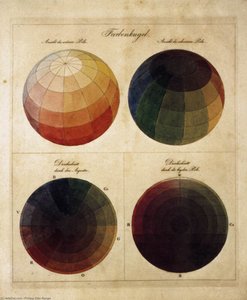
Experience 'Colour Spheres' by Philipp Otto Runge – a mesmerizing 1809 engraving depicting vibrant color spheres arranged in a harmonious circular design. A captivating piece of Romantic art.
Биография художника
Филипп Отто Рунге (1777-1810) – немецкий художник-романтик, известный своими символическими пейзажами и портретами, а также новаторской теорией цвета («Сфера Цвета»). Откройте для себя его мистическое искусство и влияние на последующие поколения.
About the painting
A Symphony of Color: Philipp Otto Runge’s “Colour Spheres”
Philipp Otto Runge's "Colour Spheres," painted in 1809, isn’t merely a depiction of spheres; it’s an intensely personal and profoundly symbolic exploration of color theory, spirituality, and the very essence of perception. Created during a pivotal moment in German Romanticism – a period grappling with tradition versus innovation, reason versus emotion – Runge sought to move beyond the constraints of academic painting and forge a new visual language rooted in his own deeply felt inner world. The work, now housed within the Kunsthalle in Hamburg, Germany, is a testament to this ambition, radiating an almost palpable sense of contemplative energy.
The composition itself is deceptively simple: four distinct spheres dominate the canvas, each imbued with a unique chromatic harmony. These aren’t static objects; they appear to pulse with light and movement, their surfaces shimmering with subtle gradations of color. Runge masterfully employs a technique reminiscent of both pastel drawing and early Impressionism – delicate layering of translucent washes creates an ethereal quality, while careful attention to value and hue establishes a remarkable sense of depth and luminosity. The spheres aren’t rendered with photographic realism; instead, they are idealized forms, suggesting a connection to the divine or the abstract realms of consciousness. The choice of materials—engraving media—contributes to this luminous effect, allowing for a richness of tone rarely achieved with oil paint alone.
The Roots of Color Theory and Spiritual Symbolism
Runge’s fascination with color stemmed from his deep engagement with the philosophy of Jakob Böhme, a 17th-century German mystic who believed that colors possessed inherent spiritual significance. Böhme posited that each hue corresponded to a specific stage of human development or a particular aspect of the divine. Runge sought to translate these esoteric ideas into visual form, believing that color could be used to unlock deeper levels of understanding and experience. His work reflects this intellectual pursuit, moving beyond mere representation to become a vehicle for conveying complex philosophical concepts.
The arrangement of the spheres themselves is laden with symbolic meaning. The central sphere, predominantly red, often represents passion, energy, and earthly existence – the realm of the senses. The green sphere embodies growth, harmony, and connection to nature. Blue signifies intellect, contemplation, and the spiritual realm. Yellow, positioned furthest from the viewer, evokes joy, enlightenment, and divine grace. The circular arrangement suggests a cyclical process—a journey through different states of consciousness or stages of life. It’s important to note that Runge's color theory was radically different from prevailing scientific understanding at the time; he prioritized subjective experience over objective measurement.
A Dialogue with Goethe and the Romantic Spirit
Runge’s work resonated deeply with his contemporary, Johann Wolfgang von Goethe, who shared a profound interest in color theory. The two artists engaged in extensive correspondence, exchanging ideas about the nature of perception and the expressive potential of color. Indeed, Runge's exploration of color was heavily influenced by Goethe’s theories on optics and aesthetics. This intellectual exchange highlights the vibrant artistic and philosophical ferment of the early 19th century – a period marked by a renewed interest in spirituality, emotion, and the power of individual experience.
Furthermore, “Colour Spheres” embodies the core tenets of German Romanticism: an emphasis on intuition, imagination, and the sublime. It rejects the rationalism of the Enlightenment in favor of a more subjective and emotionally charged approach to art. The painting’s evocative atmosphere—its sense of mystery, wonder, and spiritual yearning—captures the essence of this artistic movement perfectly. It invites the viewer not simply to *see* the colors but to *feel* them, to connect with their own inner world.
Collecting a Timeless Masterpiece
Reproductions of “Colour Spheres” offer a remarkable opportunity to bring Runge’s visionary aesthetic into any interior space. The delicate layering and luminous quality of the original are faithfully reproduced in high-quality prints, allowing the painting's subtle nuances to shine through. Whether displayed as a statement piece or incorporated into a more restrained color scheme, this artwork will undoubtedly serve as a focal point, sparking conversation and inspiring contemplation. Consider commissioning a hand-painted reproduction – a truly unique and authentic representation of this seminal work of German Romantic art.
Вопросы и ответы
Для каких целей рекомендуется использовать репродукцию картины «Colour Spheres»?
Рекомендуемый способ использования репродукции «Colour Spheres» — это Statement.
Насколько выражен контраст в «Colour Spheres», Филипп Отто Рунге?
Светотеневой контраст произведения «Colour Spheres» составляет Statement. Контраст определяет степень различия между светлыми и темными участками.
Доступна ли предварительный просмотр в дополненной реальности для «Colour Spheres»?
Страница Предпросмотр в AR для работы «Colour Spheres», Филипп Отто Рунге использует дополненную реальность, чтобы показать произведение в вашем интерьере на совместимом устройстве.
Quick facts and art quiz
About Филипп Отто Рунге

Филипп Отто Рунге
1777 - 1810, Германия
Биография художника
Жизнь, озаренная внутренним видением
Филипп Отто Рунге – имя, звучащее в унисон с расцветом немецкого романтизма, художника, чья трагически короткая жизнь не помешала ему достичь глубочайшей оригинальности и проницательности. Родился он в 1777 году в Вольгасте, тогда части Шведской Померании, в семье кораблестроителей, связанной с прусской знатью. Ранние годы Рунге были отмечены болезнями, что способствовало развитию созерцательного характера, глубоко повлиявшего на его художественные поиски. Этот период физической хрупкости также взрастил ранний талант к *силуэтным вырезкам из бумаги*, практике, которой он посвятил всю свою жизнь – свидетельство его врожденной способности дистиллировать форму и эмоции с замечательной точностью. Его формальное обучение началось позже, сначала через коммерческое ученичество в Гамбурге в фирме его брата Даниеля. Однако стремление к художественному самовыражению оказалось слишком сильным, что привело его в Копенгаген в 1799 году для изучения живописи под руководством Йенса Юэля. Это ознаменовало истинное начало пути Рунге к становлению одного из самых новаторских и духовно одаренных художников Германии.Рассвет романтического символизма
Художественное развитие Рунге было глубоко сформировано его переездом в Дрезден в 1801 году, где он встретил ключевых фигур, таких как Каспар Давид Фридрих и Людвиг Тик. Именно здесь он познакомился с Паулиной Бассенге, на которой женился в 1804 году. В этот период у него возник интерес к мистическим трудам Якоба Бёме, философские размышления которого о скрытых гармониях вселенной глубоко отозвались в духовных стремлениях Рунге. Поворотным моментом стала неожиданная встреча с Иоганном Вольфгангом фон Гёте в Веймаре в 1803 году, завязавшая дружбу, основанную на общих интересах в теории цвета и художественном самовыражении. Эта встреча оказалась преобразующей, побудив Рунге глубже погрузиться в символический язык искусства и исследовать взаимосвязь всего сущего. Его ранние работы начали отражать эту растущую романтическую чувствительность, отходя от неоклассической сдержанности к эмоционально заряженным пейзажам и портретам, наполненным личным смыслом. Например, *Дети Хюльсбеков* (1805) – это не просто портрет, а трогательное изображение семейной близости и невинности детства, выполненное с почти эфирной легкостью.Цвет как космический язык
Наиболее значительным наследием Рунге является его новаторская работа в области теории цвета. Он верил, что цвет – это не просто визуальное явление, а фундаментальная сила, формирующая наше восприятие реальности и отражающая божественный порядок. Эта убежденность привела к разработке его *Farben-Kugel* (Сферы Цветов), опубликованной в 1810 году, незадолго до его преждевременной смерти от туберкулеза в возрасте тридцати трех лет. Сфера Цветов была не просто научным трактатом; это была попытка отобразить весь спектр цвета на трехмерную форму, где белый и черный представляли противоположные полюса, а основные цвета – синий, желтый и красный – символизировали христианскую Троицу. Синий олицетворял Бога и ночь, красный – утро, вечер и Иисуса, в то время как желтый воплощал Святого Духа. Тщательные эксперименты Рунге по смешиванию дисков цветов были попыткой предоставить эмпирические доказательства его теоретической основы, демонстрируя, как цвета могут гармонично сочетаться для создания широкого спектра оттенков. Это исследование было не изолированным; оно переплеталось с его художественной практикой, влияя на символическое использование цвета в его картинах и рисунках.Незавершенная симфония «Времен года»
Рунге представлял себе *Gesamtkunstwerk* – тотальное произведение искусства – которое объединило бы живопись, поэзию, музыку и архитектуру в единый чувственный опыт. Эта амбиция нашла свое наиболее смелое выражение в его серии *Tageszeiten* (Времена года), начатой в 1803 году. Проект состоял из четырех монументальных картин, изображающих утро, полдень, вечер и ночь, каждая из которых была предназначена для просмотра в специально построенном здании в сопровождении музыки и поэзии. Хотя были завершены только две версии «Утра», рисунки всего цикла показывают глубокое понимание Рунге символизма и его стремление запечатлеть духовную сущность самого времени. Эти работы ознаменовали отход от традиционной пейзажной живописи, наполняя природу религиозным и эмоциональным значением. Он стремился не просто изображать внешний мир, а передавать его внутреннюю гармонию и божественное присутствие. Эта концепция была революционной для своего времени, предвосхищая более поздние разработки в абстрактном искусстве и мультимедийных инсталляциях.Прочное влияние
Хотя его карьера была прервана болезнью, влияние Филипа Отто Рунге на немецкий романтизм и развитие современного искусства неоспоримо. Его исследование теории цвета повлияло на поколения художников, в том числе тех, кто был связан с движением Баухаус. Его акцент на символизме и эмоциональном выражении проложил путь для более поздних экспрессионистов. Рунге уникальное сочетание научного исследования, духовной убежденности и художественной инновации продолжает очаровывать и вдохновлять. Он остается ключевой фигурой в истории искусства – дальновидным художником, который осмелился исследовать скрытые глубины человеческого восприятия и тайны вселенной через язык цвета, формы и символизма. Его работы – это не просто картины; они окна в мир, озаренный внутренним видением, приглашающие нас задуматься о глубокой взаимосвязанности всего сущего.Quick facts about Филипп Отто Рунге
- Влияние Художников:
- Якоб Бёме
- Гёте
- Дата Рождения: 1777
- Дата Смерти: 1810
- Известные Работы:
- Дети Хюльсбек
- Великое утро
- Сфера цвета
- Место Рождения: Wolgast, Германия
- Национальность: Немец
- Полное Имя: Philipp Otto Runge
- Последователи: ['Каспар Давид Фридрих']
- Художественное Направление: Романтизм
Откройте для себя произведения искусства, распределенные по темам, стилям и характеристикам.

Филипп Отто Рунге
Colour Spheres
() ·
With its frame: · Hand-painted in oil on linen
Total