Примерить в интерьере
 Отправить
 Поделиться
 Подробнее
 Руководство

 Скачать
 Похожие объекты
 Рентгенография
 Слайд-шоу
 Статистика
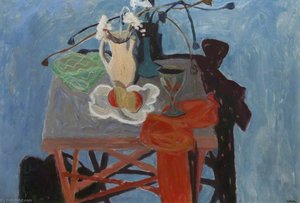
Florence
 Acrylic On Canvas
- WallArt
- Cubist Modernism
 1924
1924 66.0 x 91.0 cm
 Royal Scottish Academy of Art - Architecture
Sir William George Gillies’ "Florence" captures the vibrant Italian city with its iconic bridge and bustling scene. A stunning example of his artistic style, this painting showcases a beautiful representation of Florence's charm.
 Развернуть текст
Уильям Гиллес – выдающийся шотландский художник, известный лирическими пейзажами и проникновенными натюрмортами. Его работы сочетают влияние кубизма и Клея с глубокой связью со шотландской природой, а группа "1922" внесла значительный вклад в развитие искусства страны.
Произведение искусства, представленное на этой странице, защищено законом об авторском праве, что исключает возможность законного создания или продажи его точной репродукции. Данная защита обеспечивается международными соглашениями, такими как Бернская конвенция и национальным законодательством, включая положения, изложенные в Закон США об авторском праве — Раздел 17.
Этот метод полностью соответствует нормам авторского права, так как он не предполагает копирования или дублирования защищенного произведения. Напротив, это творческая реинтерпретация — создание новой картины, которая вдохновлена оригиналом, но не является его точной копией.
Жикле / Арт-принты
Печать (жикле) или холст музейного качества с быстрыми сроками изготовления и широким выбором вариантов отделки. ( Заказать репродукцию ручной работы Перейти к цифровым изображениям)




P118B $10

P118H $10

P118W $10

P438Z $10

P508JH $12

P508YH $12

P805H $10

P805Z $10

P919BZ $10

P919G $10

P919XJ $10

P959ZH $10

P968JZ $12

W106C $8

W218G $10

W218JH $8

W218Y $10

W307PJ $10

W316G $10

W316PJ $8

W316Y $10

W398PJ $8

W4111J $10

W500HY $15

W500JH $15

W692G $12

W849H $8

W940BG $15

W953PJ $8




Стандартный размер
индивидуальный заказ
CM
INCH
Выберите один из наших стандартных размеров, соответствующих оригинальным пропорциям произведения искусства.
Loading sizes...

ширина
высота
Введите необходимую ширину и высоту, чтобы репродукция подошла к вашей раме или стене. При печати изображение можно только уменьшить, но нельзя увеличить больше оригинала, поэтому при выборе другого формата часть изображения может быть обрезана. Перед печатью мы отправим вам цифровой макет на утверждение. Изображение на этой странице не отображает реальную обрезку — ее можно увидеть только на макете.
Доставка по всему миру () за 2 недели вместо стандартных 4–5 недель. (26 Октябрь)

Бесплатная экспресс-доставка по всему миру

Высококачественный льняной холст

Полное страхование при транспортировке

Гарантия возврата таможенных пошлин

Гарантия точного цветового соответствия

100-дневный период возврата (только при обнаружении дефектов)

Гарантия возврата 100% средств

Скидка при заказе нескольких работ
 Вариант со стеклом доступен только для размеров менее 110 см

Florence
Жикле / Арт-принты
Размер репродукции
-


Итоговая стоимость
$ 69
The Heart of Tuscany Captured: An Exploration of Gillies’ “Florence”
William George Gillies' "Florence," painted in 1924, isn’t merely a depiction of an Italian city; it’s a vibrant distillation of its spirit – a testament to the enduring beauty and bustling life of one of Europe’s most historically significant urban centers. This captivating canvas transports us directly to the heart of Tuscany, offering a glimpse into a world brimming with energy, commerce, and artistic resonance. The painting immediately draws the eye towards the graceful bridge that dominates the composition, its arched form acting as a visual anchor amidst the dynamic scene below. This isn’t a photographic representation; rather, Gillies employs a masterful blend of observation and imagination to create an atmosphere thick with movement and light.
Gillies, a key figure in the 1922 Group – a collective dedicated to promoting modern art in Scotland – was deeply influenced by both the Impressionists and the burgeoning Cubist movement. His early travels to Paris and Italy exposed him to these revolutionary styles, which he skillfully integrated into his own distinctive approach. “Florence” showcases this evolution; while retaining elements of traditional landscape painting, it’s imbued with a sense of fractured perspective and flattened planes reminiscent of Cubism, particularly in the treatment of the buildings lining the riverbank. The careful layering of color and brushstrokes creates an illusion of depth, inviting the viewer to lose themselves within the bustling cityscape.
A Symphony of Color and Light
The painting’s palette is remarkably rich and evocative. Gillies masterfully utilizes a range of warm ochres, deep blues, and vibrant reds to capture the essence of Florentine light. The sun, though not explicitly depicted, casts a golden glow across the scene, illuminating the reflections shimmering on the river's surface. Notice how he employs broken color – small dabs and strokes of contrasting hues – to suggest texture and form, particularly in the details of the buildings and boats. This technique adds a dynamic quality to the composition, preventing it from feeling static or overly formal.
- Dominant Colors: Warm ochres, deep blues, vibrant reds, and touches of green.
- Light & Shadow: Gillies expertly utilizes light and shadow to create a sense of depth and atmosphere.
- Brushwork: Loose, expressive brushstrokes contribute to the painting’s dynamic feel.
Symbolism and Historical Context
Beyond its aesthetic qualities, “Florence” is steeped in historical significance. The city itself represents a pivotal moment in Western civilization – the birthplace of the Renaissance, a period marked by an unprecedented flourishing of art, science, and culture. The bridge, a recurring motif in Gillies’ work, symbolizes connection and transition, linking the past with the present. The numerous boats navigating the river evoke the importance of trade and commerce to Florence's prosperity during this era. Furthermore, the painting subtly references the city’s architectural grandeur – the imposing buildings lining the riverbank are reminiscent of the palaces and churches that define Florence’s iconic skyline.
Painted in 1924, “Florence” reflects a period of renewed interest in classical art and culture following World War I. Gillies' work embodies a spirit of optimism and renewal, capturing the vibrant energy of a city poised to embrace the future while honoring its rich heritage. The painting’s enduring appeal lies not only in its technical brilliance but also in its ability to transport us back in time and evoke the timeless beauty of Florence.
Bringing “Florence” Home: A Reproduction for Your Space
TopImpressionists offers meticulously crafted, hand-painted reproductions of William George Gillies’ "Florence," ensuring that you can experience the full impact of this remarkable artwork within your own home. Our skilled artisans use traditional techniques and high-quality materials to faithfully recreate Gillies' unique style and color palette. Whether you are an art collector, a design enthusiast, or simply someone seeking to add a touch of timeless elegance to your space, our reproduction of “Florence” is the perfect choice. It’s more than just a print; it’s a window into the heart of Tuscany, capturing the spirit and beauty of one of the world's most beloved cities.
Вопросы и ответы
В каком возрасте Уильям Джордж Гиллес создал(а) «Florence»?
Когда в 1924 году было создано произведение «Florence», художнику Уильям Джордж Гиллес (родившемуся в 1898) было 26 лет.
Какой цвет наиболее заметен в произведении «Florence»?
Espresso (#513e27) — преобладающий цвет в работе «Florence», Уильям Джордж Гиллес.
Где я могу найти статистику по поводу «Florence», Уильям Джордж Гиллес?
Для произведения «Florence» доступна страница Статистика. На ней представлен график ежемесячных просмотров данного произведения и других работ автора с разбивкой по странам и языкам.
Биография художника
Early Life and Artistic Beginnings
Sir William George Gillies, a name synonymous with the evocative beauty of Scottish landscapes and poignant still lifes, was born in Haddington, East Lothian, in 1898. His early life, steeped in the traditions of his native region, would profoundly shape his artistic vision. Initially enrolled at the Edinburgh College of Art, his studies were abruptly interrupted by the exigencies of World War I, where he served with distinction as a Royal Engineer. This experience, marked by both hardship and camaraderie, undoubtedly left an indelible mark on his psyche – a sensitivity to human experience that would later permeate his art. Following the war’s conclusion, Gillies returned to complete his education at the Edinburgh College of Art, ultimately securing a position as a dedicated teacher there for over four decades, shaping the artistic sensibilities of countless students.A Journey Through Modernism: Influences and Early Works
Gillies' artistic trajectory began with an enthusiastic exploration of Cubism following his studies under André Lhote in Paris (1923) and a subsequent journey to Italy (1924). This period exposed him to the radical innovations of European modern art, particularly the works of Picasso and Braque. His early paintings, such as “Two Pots, Saucer and Fruit” (1933), demonstrate this initial influence – a Cézanne-inspired arrangement characterized by carefully constructed compositions and an understated palette. However, a pivotal moment arrived in 1934 with his encounter with the art of Paul Klee. Klee’s imaginative use of color, his playful approach to form, and his embrace of childlike qualities profoundly impacted Gillies' style, leading him to incorporate elements of whimsy and emotional depth into his compositions. This shift marked a departure from strict Cubism, laying the foundation for his distinctive, deeply personal artistic voice rooted in Scottish traditions.The 1922 Group: A Hub of Innovation
In 1922, Gillies played a crucial role in establishing the “1922 Group,” alongside fellow artists including William Crozier, William Geissler, and William MacTaggart. This collective, operating out of the New Gallery in Edinburgh for a decade, served as a vital platform for emerging Scottish artists to showcase their work and foster a sense of community and artistic exchange. The 1922 Group was more than just an exhibition society; it represented a concerted effort to nurture and promote a new generation of Scottish painters, challenging established norms and pushing the boundaries of contemporary art. It’s a testament to Gillies' leadership and vision that he spearheaded this initiative, contributing significantly to the vibrant artistic landscape of Edinburgh at the time.Themes and Subject Matter: A Reflection of Scotland
Gillies’ artistic focus centered primarily on two distinct yet interconnected themes: landscapes and still lifes. His depictions of the Lothian, Fife, and Border regions of Scotland are renowned for their sensitivity and evocative power. He possessed a remarkable ability to capture not just the visual appearance of these areas but also the essence of their character – the rugged beauty of the Highlands, the tranquility of the coastal villages, and the timeless quality of the Scottish countryside. Simultaneously, Gillies developed a profound interest in still life compositions, often featuring ceramics created by his younger sister, Emma Smith Gillies, whose untimely death in 1936 deeply affected him. These poignant still lifes, frequently imbued with a sense of melancholy and remembrance, stand as powerful testaments to the artist’s personal grief and artistic exploration. While he experimented with portraiture early in his career, landscapes and still lifes ultimately became the dominant subjects of his oeuvre.Recognition and Legacy
Throughout his distinguished career, Sir William George Gillies received numerous accolades recognizing his contributions to Scottish art. He was elected a Royal Academician (RA) in 1964, a prestigious honor signifying recognition within the broader British art world. In 1970, he was knighted, further cementing his place as a leading figure in the nation’s artistic heritage. Gillies served as Principal of the Edinburgh College of Art from 1959 until his retirement in 1966, leaving behind a legacy not only through his paintings but also through his influence on generations of students. His works are now held in prominent collections across Scotland and internationally, including the National Galleries of Scotland, demonstrating the enduring appeal and critical acclaim of his art. Sir William George Gillies remains a pivotal figure in 20th-century Scottish art – an artist whose evocative landscapes and poignant still lifes continue to resonate with audiences today.
Уильям Джордж Гиллес
1898 - 1973 , Великобритания
Краткая справка
- Artistic Movement Or Style: Кубизм, шотландский колоризм
- Artists Or Movements Influenced By This Artist:
- Paul Klee
- Шотландская школа
- Artists Who Influenced This Artist:
- André Lhote
- Клод Моне
- Пикассо
- Date Of Birth: 1898
- Date Of Death: 1973
- Full Name: Sir William George Gillies
- Nationality: Шотландец
- Notable Artworks:
- Two Pots, Saucer and Fruit
- Mediterranean Landscape
- Place Of Birth: Хаддингтон, Великобритания
Похожие статьи

Школа реки Гудзон: 10 шедевров, изменивших американскую живопись | TopImpressionists
Погрузитесь в мир Школы реки Гудзон! 10 шедевров Томаса Коула, Фредерика Чёрча и других мастеров американского романтизма. Купите репродукции картин высокого качества для вашего интерьера на TopImpressionists.com.

Романтический пейзаж: 10 шедевров, изменивших искусство | TopImpressionists.com
Погрузитесь в мир романтического пейзажа! 10 шедевров Фридриха, Тёрнера и других гениев. Узнайте историю создания культовых картин и вдохновитесь для декора интерьера. Репродукции высокого качества на TopImpressionists.com.

Джон Констебль: 25 шедевров английского пейзажа для вашего интерьера
Погрузитесь в мир английского пейзажа с Джоном Констеблом! 25 шедевров романтизма, история создания картин и вдохновение для вашего интерьера. Репродукции высокого качества на TopImpressionists.com – искусство для ценителей.

Evocations of Place: A Historical Journey Through Landscape Art
Explore the rich history of landscape art with TopImpressionists. Discover renowned artists, movements like Impressionism & tonalism, and expert guidance for collecting timeless pieces. Find your perfect serene escape today!

Evocations of Place: A Historical Journey Through Landscape Art
Explore the rich history of landscape art with TopImpressionists. Discover renowned artists, movements like Impressionism & Romanticism, and expert guidance for collecting timeless pieces. Find your perfect serene escape today!
Откройте для себя произведения искусства, распределенные по темам, стилям и характеристикам.