


 Примерить в интерьере
 Отправить
 Поделиться
 Подробнее
 Руководство

 Скачать
 Похожие объекты
 Рентгенография
 Слайд-шоу
 Статистика
Self portrait with hat
 Painting
- Post-Impressionism
 1909
1909- Modern
 15.0 x 14.0 cm
A striking close-up portrait of a man with an expressive open mouth set against a vibrant yellow background, this 1909 painting by Theo van Doesburg captures raw emotion and invites you to explore his early mastery.
 Развернуть текст
Тео ван Досбург – революционер искусства! Основатель «Де Стиля», новатор геометрической абстракции, архитектуры и дизайна. Его работы вдохновляют на создание гармонии и красоты!
Жикле / Арт-принты
Печать (жикле) или холст музейного качества с быстрыми сроками изготовления и широким выбором вариантов отделки. ( Заказать репродукцию ручной работы Перейти к цифровым изображениям)




P118B $10

P118H $10

P118W $10

P438Z $10

P508JH $12

P508YH $12

P805H $10

P805Z $10

P919BZ $10

P919G $10

P919XJ $10

P959ZH $10

P968JZ $12

W106C $8

W218G $10

W218JH $8

W218Y $10

W307PJ $10

W316G $10

W316PJ $8

W316Y $10

W398PJ $8

W4111J $10

W500HY $15

W500JH $15

W692G $12

W849H $8

W940BG $15

W953PJ $8




Стандартный размер
индивидуальный заказ
CM
INCH
Выберите один из наших стандартных размеров, соответствующих оригинальным пропорциям произведения искусства.
Loading sizes...

ширина
высота
Введите необходимую ширину и высоту, чтобы репродукция подошла к вашей раме или стене. При печати изображение можно только уменьшить, но нельзя увеличить больше оригинала, поэтому при выборе другого формата часть изображения может быть обрезана. Перед печатью мы отправим вам цифровой макет на утверждение. Изображение на этой странице не отображает реальную обрезку — ее можно увидеть только на макете.
Доставка по всему миру () за 2 недели вместо стандартных 4–5 недель. (23 Октябрь)

Бесплатная экспресс-доставка по всему миру

Высококачественный льняной холст

Полное страхование при транспортировке

Гарантия возврата таможенных пошлин

Гарантия точного цветового соответствия

100-дневный период возврата (только при обнаружении дефектов)

Гарантия возврата 100% средств

Скидка при заказе нескольких работ
 Вариант со стеклом доступен только для размеров менее 110 см

Self portrait with hat
Жикле / Арт-принты
Размер репродукции
-


Итоговая стоимость
$ 69
A Moment Captured in Amber: The Raw Humanity of Van Doesburg
In the quiet moments before his radical departure into the geometric purity of De Stijl, Theo van Doesburg captured something profoundly intimate and startlingly human. Self-portrait with hat, painted in 1909, serves as a breathtaking window into the artist's psyche during his formative years. Unlike the rigid lines and primary colors that would later define his legacy as the architect of abstraction, this work vibrates with an almost visceral energy. The subject—a man caught in a transient, candid gesture—appears to be mid-sentence or perhaps lost in a sudden yawn, lending the piece an unexpected sense of life and spontaneity. It is not merely a likeness; it is a captured breath, a fleeting second of existence frozen against a luminous, sun-drenched yellow backdrop.
The composition is masterfully focused, pulling the viewer into an immediate, face-to-face encounter with the artist. The stark contrast between the deep, obsidian black of the hat and the radiant warmth of the background creates a visual tension that commands attention. This interplay of light and shadow does more than just define form; it establishes a psychological depth. The yellow expanse behind him is not a flat void but a textured atmosphere that seems to pulse with the same vitality found in the man's expressive features. For the discerning collector, this painting offers a rare glimpse into the evolution of a master, showcasing a period where emotion and physical presence reigned supreme over mathematical precision.
Technique and the Beauty of the Visible Hand
To gaze upon this reproduction is to appreciate the tactile romance of traditional oil painting. The technique employed here celebrates the impasto spirit, where every brushstroke tells a story of movement and intention. One can almost feel the rhythmic motion of the bristles as they layered pigment to sculpt the contours of the face and the heavy fabric of the clothing. These visible strokes provide a wonderful sense of texture and depth, making the artwork feel alive and multidimensional. This handmade quality is what distinguishes a true fine art reproduction from a mere print; it possesses a soul that resonates within a room.
The artistry lies in the balance between detail and impression. While the facial features are rendered with enough precision to convey character and emotion, there is an intentional looseness that prevents the portrait from feeling static or overly academic. This stylistic choice creates an emotional resonance that is both accessible and profound. For interior designers, this piece serves as a sophisticated focal point—a conversation starter that brings a sense of historical weight and artistic integrity to any modern or classical space. It is a work that does not just decorate a wall; it anchors a room with its vibrant energy and timeless human connection.
Вопросы и ответы
Какой размер печати «Self portrait with hat», Тео ван Досбург подойдет для рекомендованной комнаты?
Рекомендуемое сочетание для «Self portrait with hat», Тео ван Досбург: принт размером Small в интерьере Studio Apartment.
К какому периоду творчества Тео ван Досбург относится произведение «Self portrait with hat»?
«Self portrait with hat» представляет собой Early Period художника Тео ван Досбург.
Какой формат и ориентацию печати рекомендуют для «Self portrait with hat», Тео ван Досбург?
Для работы «Self portrait with hat», Тео ван Досбург рекомендуется печать в размере Small с ориентацией Square.
Похожие произведения


Биография художника
The Architect of Abstraction: A Life in Geometric Harmony
Theo van Doesburg, born Christian Emil Marie Küpper in 1883 in Utrecht, Netherlands, wasn’t merely a painter; he was a revolutionary force who fundamentally reshaped the very foundations of modern art. His journey began amidst the lingering echoes of Impressionism and Post-Impressionism – initially mirroring styles reminiscent of Vincent van Gogh – both in subject matter and emotional intensity. However, this early phase served as a crucial prelude, a necessary stepping stone toward the radical transformation that would define his enduring legacy. A pivotal moment arrived in 1913 with his encounter with Wassily Kandinsky’s *Rückblicke*. This text ignited within van Doesburg a profound realization: true artistic expression lay not in replicating the external world but in channeling an inner, spiritual reality through pure abstraction. It was this conviction that birthed Neoplasticism – more commonly known as De Stijl – a movement he founded and fiercely championed, becoming its most ardent advocate.Forging a New Visual Language: The Principles of De Stijl
De Stijl wasn’t simply an artistic style; it was a comprehensive philosophical manifesto translated into visual form. Van Doesburg believed in stripping art down to its most essential elements – straight lines, right angles, and the primary colors of red, yellow, and blue, alongside black, white, and gray. This austere palette wasn't born from limitation but from a desire for universality—a belief that these fundamental forms resonated with an underlying cosmic order. He envisioned a *total* work of art, extending beyond the canvas to encompass architecture, design, and even everyday objects. Collaboration was key; van Doesburg worked closely with architects like J.J.P. Oud and Gerrit Rietveld, designing stained glass windows, furniture, and entire interiors that embodied the principles of De Stijl. His collaborations extended to fellow artists such as Piet Mondrian, with whom he co-founded the influential journal *De Stijl*, a platform for disseminating their ideas and attracting like-minded creatives. However, despite their shared origins, tensions arose between van Doesburg and Mondrian regarding the rigidity of Neoplasticism. Van Doesburg introduced “Elementarism” in 1926, advocating for diagonal lines and more dynamic compositions – a departure that ultimately led to a schism within the movement, revealing his restless spirit and constant pursuit of artistic evolution.The Early Years & Influences: From Impressionism to Kandinsky
Van Doesburg’s early artistic development was deeply influenced by the vibrant colors and emotional intensity of Vincent van Gogh. His initial paintings often depicted landscapes and portraits imbued with a sense of melancholy and introspection, mirroring Van Gogh's expressive brushstrokes and use of color. However, this early phase served as a crucial prelude, a necessary stepping stone toward the radical transformation that would define his enduring legacy. The turning point came in 1913 with his encounter with Wassily Kandinsky’s *Rückblicke*. This text, exploring the spiritual dimension of art and advocating for abstraction, profoundly impacted van Doesburg's artistic vision. He began to experiment with simplified forms and non-representational imagery, moving away from traditional subject matter and seeking a more direct connection to inner experience. The influence of Japanese prints – particularly their use of flat planes of color and geometric patterns – also played a significant role in shaping his aesthetic sensibilities.A Revolutionary Movement: The Birth of De Stijl
De Stijl, meaning “The Style,” emerged as a multifaceted movement encompassing painting, architecture, design, and typography. It wasn’t merely an artistic style; it was a comprehensive philosophical manifesto translated into visual form. Van Doesburg believed in stripping art down to its most essential elements – straight lines, right angles, and the primary colors of red, yellow, and blue, alongside black, white, and gray. This austere palette wasn't born from limitation but from a desire for universality—a belief that these fundamental forms resonated with an underlying cosmic order. He envisioned a *total* work of art, extending beyond the canvas to encompass architecture, design, and even everyday objects. The core tenets of De Stijl were rigorously defined: absolute geometric abstraction, the use of primary colors and neutral tones, and a rejection of illusionistic space. The group’s journal, *De Stijl*, became a vital vehicle for disseminating these ideas and attracting like-minded creatives, fostering a vibrant intellectual community dedicated to exploring the possibilities of pure abstraction.Beyond Painting: A Multifaceted Artistic Vision
While celebrated as a painter, van Doesburg’s artistic pursuits were remarkably diverse. He was a prolific writer, poet, and critic, using his pen to articulate the theoretical underpinnings of De Stijl and challenge conventional notions of art. His engagement with Dadaism in the early 1920s further broadened his artistic horizons, leading to experimental works that incorporated collage and typography. This period also saw him teaching at the Bauhaus, where he shared his ideas with a new generation of artists and designers. He wasn’t content to remain within the confines of traditional art forms; van Doesburg actively sought to integrate art into everyday life, believing it had the power to transform society. His designs for interiors and furniture weren't merely aesthetic exercises but attempts to create harmonious living spaces that reflected the principles of De Stijl. A prime example is his collaboration with Sophie Taeuber-Arp and Georges Vantongerloo on designing artist residences, showcasing a holistic approach to artistic creation – an attempt to build a world *in* the image of his ideals.Legacy & Enduring Influence: A Pioneer of Modernism
Theo van Doesburg’s life was tragically cut short in 1931 at the age of 47, yet his impact on modern art remains profound. De Stijl, though relatively short-lived as a cohesive movement, exerted an enormous influence on subsequent artistic developments, including Bauhaus design, Minimalism, and Constructivism. His emphasis on geometric abstraction, pure color, and functionalism continues to resonate with artists and designers today. His work serves as a reminder that art is not merely about representation but about the exploration of fundamental forms and ideas. Van Doesburg’s legacy extends beyond his paintings and designs; it lies in his unwavering commitment to artistic innovation and his belief in the transformative power of abstraction. His vision of a unified, harmonious world – expressed through the language of De Stijl – continues to inspire those who seek to create a more beautiful and meaningful environment.Key Works & Lasting Impact
- Study for Simultaneous Compositions XXII (1922): A quintessential example of Neoplasticism, showcasing the movement’s signature geometric forms and limited color palette.
- Composition with half values (1928): Demonstrates van Doesburg's exploration of tonal variations within the De Stijl aesthetic.
- Dancers (1917-1918): Represents a transitional phase in his work, blending figurative elements with emerging abstract tendencies.
- Collaboration on *De Stijl* journal: A crucial platform for disseminating the movement’s ideas and fostering dialogue among artists and intellectuals.
- Elementarism (1926): Van Doesburg's attempt to inject dynamism into Neoplasticism, introducing diagonal lines and a more fluid approach to composition.

Тео ван Досбург
1883 - 1931 , Нидерланды
Краткая справка
- Artistic Movement Or Style: Де Стиль, Неопластицизм
- Artists Or Movements Influenced By This Artist:
- Бхауэиз
- Минимализм
- Artists Who Influenced This Artist:
- Ван Гог
- Кандинский
- Date Of Birth: 30 августа 1883
- Date Of Death: 7 марта 1931
- Full Name: Тео ван Досбург
- Nationality: Нидерландский
- Notable Artworks:
- Изучение для одновременных композиций XXII
- Композиция с полутонами
- Танцоры
- Place Of Birth: Утрехт, Нидерланды
Похожие статьи
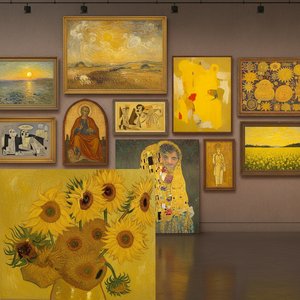
Топ-10 шедевров живописи в доминирующих оттенках хромового жёлтого | TopImpressionists
Погрузитесь в мир хромового жёлтого! 10 знаменитых картин Ван Гога, Моне и других мастеров. История искусства, техника живописи и вдохновение для декора интерьера. Репродукции музейного качества на TopImpressionists.com

Топ-10 знаменитых картин в черных тонах: шедевры искусства для вашего интерьера
Погрузитесь в мир темных шедевров! Топ-10 знаменитых картин в черных тонах от Гойи, Рембрандта и Мунка. История искусства, техники живописи и вдохновение для вашего интерьера. Купите репродукции высокого качества на TopImpressionists.com
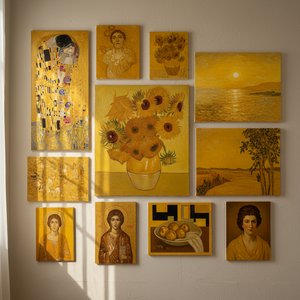
Топ-10 знаменитых картин в охристых тонах: искусство и декор от TopImpressionists
Погрузитесь в мир искусства с 10 знаменитыми картинами, где доминирует охристый цвет! Узнайте истории Ван Гога, Моне и других мастеров. Репродукции высокого качества для вашего интерьера от TopImpressionists.com. Откройте всю коллекцию онлайн!

The Golden Hue: Exploring Symbolism & Emotion in Yellow Art
Explore the rich symbolism & emotional power of yellow in art history! From Van Gogh to Kandinsky, discover how artists used this vibrant hue. Expert analysis & high-quality reproductions at TopImpressionists.

Топ-10 шедевров в оттенках черного: искусство, история и декор с TopImpressionists
Погрузитесь в мир великих шедевров, где черный цвет – символ страсти и драмы. От Караваджо до Мунка, откройте историю искусства с TopImpressionists. Купите репродукции картин онлайн и преобразите свой интерьер! Explore the full collection on TopImpressionists.com
Откройте для себя произведения искусства, распределенные по темам, стилям и характеристикам.
