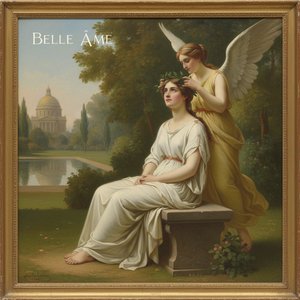
The Life and Art of Louis Billotey
Born in Paris, France, Louis Billotey was a painter who emerged from a lineage of artists, being both the son and grandson of painters. His formal training began at the École des Beaux-Arts in 1901, where he was presented by Jules Lefebvre and Robert Fleury, and he also studied under Jules Lefebvre at the Académie Julian. A significant milestone in his career occurred in 1907 when he was named a laureate for his work Virgile contemplant une scène rustique, an achievement that led to several years at the Villa Médicis between 1908 and 1912, followed by a stay in Athens.
His artistic output is characterized by a figurative, powerful, and classical style, often described as a decorative cubism. His technique is noted for its excellence in drawing, subtle composition, mannerist elongation, and an elegant treatment of drapery. Throughout his career, he produced numerous works, including Les Cavaliers, La Dame au cerf, and Le Paradis terrestre. His mastery was further recognized when his work Départ des cavaliers was selected by the Gobelins manufacture to be translated into tapestry between 1935 and 1936.
Legacy and Later Works
Beyond the canvas, Billotey was a dedicated educator, serving as a drawing professor at the Académie des Beaux-Arts de Valenciennes and later teaching at the École Elisa-Lemonnier in Paris. During the First World War, he served in the infantry, participating in the battle of Dinan and being taken prisoner at Charleroi. In the post-war years, he contributed to the reconstruction of churches in the Aisne region, providing stained glass designs and frescoes, such as the large fresco of Le bon pasteur in Fontenoy.
One of his most significant later achievements was the creation of La Tragédie, painted directly onto cement for the Palais de Chaillot between 1937 and 1938, for which he received a medal at the International Exhibition. His work Le sacrifice d'Iphigénie was acquired by the State in 1935 for the Musée national d'Art moderne. Billotey passed away in Paris in 1940. His studio collection was preserved by his widow, Marie-Rose Billotey, and later served as the basis for a retrospective exhibition in 2002.
Вопросы и ответы
К какой исторической эпохе относится Louis Billotey?
Louis Billotey работал в эпоху Modern. Этот период позволяет определить место творчества художника в истории.
Под какими еще именами известен Louis Billotey?
Louis Billotey также известен под именами Louis Leon Eugene Billotey.
Можно ли просматривать работы Louis Billotey по цветовой палитре?
Чтобы найти работы Louis Billotey в определенной цветовой гамме, воспользуйтесь страницей художника По палитрам.