


 Zobraziť v interiéri
 Odoslať
 Zdieľať
 Podrobnosti
 Príručka

 Stiahnuť
 Podobné položky
 RTG skúška
 Prehliadanie diapo\]
 Štatistiky
Model


Cristóbal Balenciaga’s ‘Model’ (1967) captures a striking tweed suit – elegant, geometric & timeless. Explore this iconic fashion photograph and discover the legacy of the 'Master Couturier'.
 Prečítať si viac
Cristóbal Balenciaga: Španielskeho módneho génia, ktorý preskúmal hranice elegance a inovácie v haute couture. Obdivuhodné diela a trvalá inšpirácia pre svet módy.
Umelecké dielo zobrazené na tejto stránke je chránené autorským zákonom, čo znamená, že nemôžeme legálne vytvárať ani predávať jeho identickú reprodukciu. Táto ochrana je vymáhaná na základe medzinárodných dohôd, ako napríklad Bernská konvencia a národnými zákonmi, vrátane tých, ktoré sú stanovené v Autorské právo USA – Title 17. Všetky práva vyhradené.
Táto metóda plne dodržiava autorské práva, pretože nezahŕňa kopírovanie ani duplikovanie chráneného diela. Ide skôr o kreatívnu reinterpretáciu – nový obraz, ktorý je ovplybnený originálom, no nie je s ním identický.
Giclée / Umenotlač
Giclée tlač alebo plátno múzeálnej kvality s rýchlou výrobou a rôznymi možnosťami povrchovej úpravy. ( Objednať ručne maľovanú reprodukciu Prepnúť na digitálnu verziu obrazu)




P118B €10

P118H €10

P118W €10

P438Z €10

P508JH €12

P508YH €12

P805H €10

P805Z €10

P919BZ €10

P919G €10

P919XJ €10

P959ZH €10

P968JZ €12

W106C €8

W218G €10

W218JH €8

W218Y €10

W307PJ €10

W316G €10

W316PJ €8

W316Y €10

W398PJ €8

W4111J €10

W500HY €15

W500JH €15

W692G €12

W849H €8

W940BG €15

W953PJ €8




Štandardné rozmery
na mieru
CM
INCH
Vyberte si z našich preddefinovaných rozmerov, ktoré zodpovedajú pôvodným pomeroḿ diela.
Loading sizes...

šírka
výška
Zadajte šírku a výšku, ktoré potrebujete, aby sa reprodukcia hodila k vášmu rámu alebo stene. Print možno len orezávať, nikdy však nemennú veľkosť zvětšiť oproti pôvodnému obrázku, preto pri inom formáte stráca časť obrazu. Pred samotným vytlačiacím procesom vám pošleme digitálny náhľad na schválenie. Obrázok zobrazený na tejto stránke nezobrazuje reálny rez — len digitálny náhľad ukazuje presný výsledok.
Celosvetová doprava () do 2 týždňov namiesto štandardných 4 až 5 týždňov. (24 október)

Bezplatná expresná doprava po celom svete

Vysokokvalitné lnianske plátno

Úplné poistenie prepravy

Záruka vrátenia colného poplatku

Záruka presného farebného zhodnutia

100-dená politika vrátenia tovaru (iba pri vadách)

100% záruka vrátenia peňazí

Ponuka množstevnej zľavy
 Možnosť skla je dostupná len pri rozmeroch pod 110 cm

Model
Giclée / Umenotlač
Veľkosť reprodukcie
-


Celková cena
€ 61
The Enigmatic Silhouette: Unpacking Cristóbal Balenciaga’s ‘Model’
Cristóbal Balenciaga’s 1966 photograph, “Model,” isn't merely a portrait; it’s a distilled essence of the designer’s revolutionary approach to fashion. The image captures a woman, her form enveloped in a striking tweed suit – a garment that immediately speaks of geometric precision and timeless elegance. Yet, beneath this surface simplicity lies a profound exploration of structure, proportion, and the very nature of representation. The photograph, often cited as one of Balenciaga’s most iconic works, transcends its status as a simple fashion image, offering a glimpse into the meticulous process and philosophical underpinnings of his design philosophy.
Balenciaga's genius wasn’t simply about creating beautiful clothes; it was about dissecting them, understanding their fundamental components, and rebuilding them with an almost architectural rigor. “Model” exemplifies this perfectly. The tweed itself is a deliberate choice – a robust, slightly stiff material that resists the drape of traditional fabrics, demanding a precise construction. Notice how the seams are barely visible, suggesting a layering technique designed to create volume without adding bulk. This restraint, this careful control over the fabric’s behavior, is characteristic of Balenciaga's work and reflects his deep understanding of materials – he considered himself more a craftsman than a designer in the conventional sense.
A Masterclass in Architectural Form
The suit’s silhouette isn’t simply flattering; it’s deliberately constructed to evoke a sense of solidity and strength. The fitted bodice, the subtly flared skirt – each element contributes to an overall impression of contained power. Balenciaga was deeply influenced by the art movements of his time, particularly Surrealism and Cubism, which encouraged him to deconstruct familiar forms and reassemble them in unexpected ways. This is evident in the suit’s sharp angles and its almost sculptural quality. The photograph itself becomes a study in form – a meditation on how shape can convey meaning and emotion.
The choice of David Bailey as the photographer further enhances the image's impact. Bailey, known for his stark, black-and-white portraits, captures the subject with an unflinching gaze, emphasizing her posture and the suit’s impeccable tailoring. The lighting is carefully controlled, highlighting the textures of the tweed and casting subtle shadows that accentuate the garment’s three-dimensional form. Bailey's skill lies in revealing the underlying structure of the image, mirroring Balenciaga’s own approach to design.
Echoes of a Lost Era: Context and Legacy
“Model” was created during a pivotal moment in fashion history – the mid-1960s. While Yves Saint Laurent was injecting youthful energy into Parisian couture with his Le Smoking tuxedo, Balenciaga remained steadfastly committed to his own vision of timeless elegance. His designs were often perceived as being ahead of their time, challenging conventional notions of beauty and femininity. The photograph serves as a reminder of this period of creative experimentation and the enduring influence of Balenciaga’s work.
The image also speaks to the broader cultural context of the era – a fascination with architecture, technology, and industrial design. Balenciaga's designs were often described as “architectural,” reflecting a growing interest in geometric forms and functional aesthetics. The photograph captures this spirit perfectly, suggesting that fashion could be both beautiful and intellectually stimulating.
A Timeless Icon: Reproduction and Inspiration
Today, “Model” remains one of the most recognizable images in the history of fashion photography. Its enduring appeal lies in its combination of technical skill, artistic vision, and emotional resonance. Reproductions of this photograph are highly sought after by collectors and interior designers alike, who appreciate its timeless elegance and its ability to evoke a sense of sophistication and refinement. When commissioning a hand-painted reproduction, it’s crucial to select an artist who understands Balenciaga's meticulous approach to detail and his commitment to capturing the essence of his designs.
Otázky a odpovede
Čo vysvetľuje situáciu s autorskými právami diela „Model“ od Cristóbal Balenciaga Eizaguirre?
Autorské práva k dielu „Model“ – stále chránené autorským právom – vyplývajú zo smrti umelca v roku 1972.
Z akého materiálu je vyrobené dielo „Model“ a v akom je štýle?
„Model“ je vytvorené v technike Acrylic On Canvas v štýle Early Modernism.
Zostalo dielo „Model“ v domovskej krajine svojho umelca?
Áno – dielo sa nachádza v domovskej krajine umelca. Rodinná krajina, v ktorej sa narodil/a Cristóbal Balenciaga Eizaguirre, je Španielsko, zatiaľ čo múzeum uchovávajúce originál diela „Model“ sa nachádza v krajine Španielsko.
Biografia umelca
Cristóbal Balenciaga Eizaguirre: The Architect of Couture
Cristóbal Balenciaga Eizaguirre, známy ako Balenciaga, bol jednou z najvýznamnejších a najinovatívnejších módnych návrhárov 20. storočia. Narodil sa v malebnom meste Getaria na pobreží Pyrenejí v roku 1895 a jeho dielo, charakterizované elegantou, jednoduchosťou a precíznym spracovaním, zásadným spôsobom zmenilo krajinu haute couture. Balenciaga si zaslúžil titul “majster všetkých” od Christiana Diora a označenie “iba pravý módny návrhář” od Coco Chanel – tituly, ktoré odrážajú jeho nekompromisný prístup k svojej práci a hlboké pochopenie princípov krásy. Jeho tvorba bola ovplyvnená avantgardným umením, čo sa prejavilo v jeho odvážnych a inovatívnych dizajnoch, ktoré presahovali konvenčné poňatie módy.Ranné roky a vzostup v Španielskej módnej scéne
Balenciaga vyrastal v prostredí remeselníkov – jeho matka bola švecová a jeho otec loďkár. Už od detstva prejavil mimoriadnu zručnosť a cit pre textil, čo ho priviedlo k štúdiu šitia v San Sebastián. Počas svojho pobytu v San Sebastián získal vzácne príležitosti – pracoval u renomovaného talianskeho návrhára Jacquesa Douceta a bol spojenec s módnou ikonou Coco Chanel. Jeho prvé ateliéry v Madridi, Barcelone a elegantnom letovisku San Sebastián rýchlo získali obdiv a popularitu medzi španielskou aristokraciou a kráľovskou rodinou. V roku 1937 sa Balenciaga presadil do Paríža, centra módneho sveta, kde založil nový ateliér na Avenue George V.Vplyvy a inovatívne formy
Balenciagových návrhov charakterizovali precízne spracovanie, elegantné siluety a dôraz na detail. Bol ovplyvnený španielskou národnou výzdobou, ale zároveň sa neváhal zapojiť do trendov avantgardného umenia – surrealizmu a primitivismu. Jeho diela často obsahujú symboliku a odkazy na históriu a kultúru. Napríklad jeho dizajn “Infanta” bol inšpirovaný obrazmi Diego Velázqueza, oficiálneho portrétistu kráľovského dvora, zatiaľ čo krátke, zdobené šaty s volánmi boli založené na tradičných šatách worných počas Holy Week v Španielskej náboženskej svätej zmŕtvanej. Jeho schopnosť manipulovať s materiálmi a vytvárať nové siluety – ako napríklad ikonický “sack dress” z roku 1957, ktorý úplne eliminoval pás – bola bezprecedentná a zásadným spôsobom ovplyvnila vývoj módneho sveta.Kľúčové diela a uznanie
Medzi Balenciagovými najvýznamnejšími dielami patrí “Song of Songs IV” (primitívna maľba), “Tree Roots” (post-impressionistická olejomaľba) a “Acrobat” (surrealistické dielo). Jeho tvorba bola uznávaná v celej Európe, pričom mu mnohí návrhári, vrátane Christiana Diora a Elsy Schiaparelli, vyjadrovali obdiv. Balenciaga bol tiež spojenec s módnymi ikonami ako Grace Kelly a Audrey Hepburn, čo zvýšilo jeho presnosť a prestíž. V roku 1957 získal titul Légie čestu od francúzskej vlády v uznaní svojho významného prínosu do sveta módy.Dielo a dedičstvo
Cristóbal Balenciaga Eizaguirre uzavrel svoju módnu kariéru v roku 1968, ale jeho dielo i dnes inšpiruje návrhárov po celom svete. Jeho precíznym spracovaním, elegantnými siluetami a nekonvenčným prístupom k móde zmenil krajinu haute couture a vytvoril nový štandard krásy a elegancie. Balenciaga je dodnes považovaný za “majstra” – architekta módy, ktorý zásadným spôsobom ovplyvnil vývoj módneho sveta a jeho dielo bude žiť v pamäti ďalších generácií.
Cristóbal Balenciaga Eizaguirre
1895 - 1972 , Španielsko
Rýchle fakty
- Artistic Movement Or Style: Avant-garde / Surrealizmus
- Artists Or Movements Influenced By This Artist: ['Velázquez']
- Artists Who Influenced This Artist:
- Chanel
- Dior
- Date Of Birth: 21. január 1895
- Date Of Death: 23. marec 1972
- Full Name: Cristóbal Balenciaga Eizaguirre
- Nationality: Španielsky
- Notable Artworks:
- Study 'Song of Songs IV'
- Stromorody
- Acrobát
- Place Of Birth: Getaria, Španielsko
Súvisiace články

Gianfranco Ferré: Deconstructing Haute Couture – A Legacy of Architectural Form
Explore the revolutionary world of Gianfranco Ferré, 'the architect of fashion.' Discover his architectural approach to haute couture, iconic Dior designs, and lasting influence on luxury style. A deep dive for collectors & enthusiasts.

Cristóbal Balenciaga: Deconstructing Haute Couture's Architectural Legacy
Explore the revolutionary world of Cristóbal Balenciaga, the 'couturier's couturier'. Discover his architectural designs, lasting influence on haute couture, and guide to collecting rare pieces. A connoisseur’s resource.

Draped Narratives: Fashion as Symbol & Subject in Historical Art
Explore the fascinating history of fashion as a symbol of power & status in art! Discover masterpieces from Gainsborough to Tissot and learn how clothing shaped societal narratives. Find museum-quality reproductions at TopImpressionists.
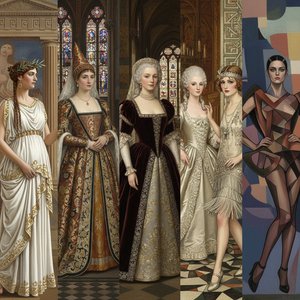
Style Through the Ages: Iconic Artworks That Defined the Evolution of Fashion Design
Explore the breathtaking intersection of fine art and high fashion. Discover how iconic masterpieces from Art Deco to Impressionism have shaped the world of luxury couture and timeless design in this curated visual journey.

The Lens of Luxury: A Visual Journey Through the Evolution and Artistry of Fashion Photography
Embark on a visual journey through the evolution of fashion photography. Discover how masters like Gianfranco Ferré blended geometry, surrealism, and texture to redefine high-fashion art for collectors and connoisseurs of luxury imagery.
Preskúmajte umelecká diela usporiadané podľa tém, štýlov a charakteristík.

