


 Zobraziť v interiéri
 Odoslať
 Zdieľať
 Podrobnosti
 Príručka

 Stiahnuť
 Podobné položky
 RTG skúška
 Prehliadanie diapo\]
 Štatistiky
Sunflower


A melancholic study of decay and fragility, Egon Schieles 1909 Expressionist Sunflower captures a hauntingly beautiful floral portrait that invites you to explore the profound depths of this timeless masterpiece.
 Prečítať si viac
Egon Schiele: expresionista s temnými témami, silnými portrétmi a unikátnymi čiarami. Objavte jeho podriadenú dušu v reprodukciách! #EgonSchiele #výtvarnýumelník #expresionizmus
Giclée / Umenotlač
Giclée tlač alebo plátno múzeálnej kvality s rýchlou výrobou a rôznymi možnosťami povrchovej úpravy. ( Objednať ručne maľovanú reprodukciu Prepnúť na digitálnu verziu obrazu)




P118B €10

P118H €10

P118W €10

P438Z €10

P508JH €12

P508YH €12

P805H €10

P805Z €10

P919BZ €10

P919G €10

P919XJ €10

P959ZH €10

P968JZ €12

W106C €8

W218G €10

W218JH €8

W218Y €10

W307PJ €10

W316G €10

W316PJ €8

W316Y €10

W398PJ €8

W4111J €10

W500HY €15

W500JH €15

W692G €12

W849H €8

W940BG €15

W953PJ €8




Štandardné rozmery
na mieru
CM
INCH
Vyberte si z našich preddefinovaných rozmerov, ktoré zodpovedajú pôvodným pomeroḿ diela.
Loading sizes...

šírka
výška
Type the width and the height you need, to fit your frame or your wall. A print can only be cut, never made bigger than the picture, so a size with a different shape loses a part of the image. We send you a digital mockup to approve before we print anything. The picture shown on this page does not show the real cut — only the mockup does.
Celosvetová doprava () do 2 týždňov namiesto štandardných 4 až 5 týždňov. (14 október)

Bezplatná expresná doprava po celom svete

Vysokokvalitné lnianske plátno

Úplné poistenie prepravy

Záruka vrátenia colného poplatku

Záruka presného farebného zhodnutia

100-dená politika vrátenia tovaru (iba pri vadách)

100% záruka vrátenia peňazí

Ponuka množstevnej zľavy
 Možnosť skla je dostupná len pri rozmeroch pod 110 cm

Sunflower
Giclée / Umenotlač
Veľkosť reprodukcie
-


Celková cena
€ 60
A Silent Bloom Amidst Darkness: The Haunting Beauty of Schiele’s Sunflower
In the vast landscape of early 20th-century art, few images possess the quiet, unsettling magnetism of Egon Schiele’s Sunflower. Created in 1909, this work transcends the traditional boundaries of botanical illustration to offer a profound psychological portrait. While many are familiar with the vibrant, sun-drenched ecstasy of Van Gogh’s sunflowers, Schiele presents us with something entirely different: a specimen that feels as much like a living soul as it does a flower. The painting captures a sense of fragile existence, where the sunflower stands not in triumph, but in a state of delicate, melancholic transition. It is a piece that invites the viewer into a world of introspection, making it an extraordinary choice for those who appreciate art that speaks to the deeper, more complex layers of the human condition.
The composition is defined by its striking, elongated format, which creates a sense of vertical tension and isolation. Schiele utilizes a stark, minimalist background that strips away all environmental context, forcing our gaze to confront the subject in its rawest form. The sunflower itself is depicted with an angularity and a certain skeletal grace characteristic of the Expressionist movement. We see a heavy, dark center—a void-like heart that seems to pull at the viewer’s attention—surrounded by petals that appear to be fading or perhaps even decaying. This deliberate focus on the ephemeral nature of life serves as a poignant metaphor for Schiele's own preoccupations with mortality and the fleeting beauty found within vulnerability.
Technique, Texture, and the Expressionist Spirit
Executed in oil on canvas, the technical mastery of this piece lies in its ability to balance intricate detail with raw, emotive energy. Schiele’s brushwork is deliberate and textured, creating a surface that feels palpable and alive. There is a rhythmic quality to the way he applies paint, using layered strokes to build a sense of weight in the flower's head while maintaining a delicate lightness in the surrounding smaller blooms. The color palette is a sophisticated study in contrasts; rich, vibrant yellows are tempered by earthy, autumnal tones and deep, shadowy hues. This interplay of light and dark does more than just create depth—it establishes a mood of "silent darkness," as if the flower is emerging from, or perhaps receding into, an internal psychological landscape.
For the discerning collector or interior designer, this painting offers a unique opportunity to introduce a focal point that is both intellectually stimulating and aesthetically profound. The way the light catches the textured oil pigments makes the piece dynamic, changing character depending on the lighting of the room. It possesses a timeless quality that complements both modern minimalist spaces and more traditional, classical settings. To possess a high-quality reproduction of this work is to bring a piece of art history into one's home—a piece that does not merely decorate a wall but serves as a window into the turbulent, beautiful spirit of the Austrian Expressionist era.
Ultimately, Schiele’s Sunflower is an invitation to contemplate the beauty found in imperfection and the strength found in fragility. It is a masterpiece of emotional resonance, capturing that precise moment where life meets its inevitable decline, yet doing so with such exquisite artistry that the viewer cannot help but be moved. Whether viewed as a study in color, a triumph of technique, or a profound philosophical statement, it remains an enduring icon of modern art.
Otázky a odpovede
Aký predmet a atmosféru spája „Sunflower“ od Egon Schiele?
„Sunflower“ od Egon Schiele zachytáva sunflower, floral arrangement, botanical painting, austrian art, symbolism, organic form, texture detail v Dramatic nálade. Predmet a atmosféra spoločne definujú toto dielo.
Kto vytvoril „Sunflower“ a v ktorom roku?
Egon Schiele vytvoril/a „Sunflower“ v roku 1909.
Je pre "Sunflower" k dispozícii stiahnutie?
Obraz diela „Sunflower“ od Egon Schiele si môžete stiahnuť na stránke s možnosťou stiahnutia pre dané dielo: Stiahnuť: stiahnutie digitálneho obrázka vo vysokom rozlíšení.
Biografia umelca
A Life Forged in Expression
Egon Schiele, narodený v roku 1890 v malej obci Tulln an der Donau, bol umelecký život plný dramatických zvratov a hlbokých osobnostných skúseností. Jeho rané roky boli ovládané chorobami a smútkom; jeho otec zomrel na spinu už len vo veku štrnásť rokov, čo zanechalo v jeho tvorbe trvalý odkaz úzkosti a reflexie nad plynulým časom. Vyrastal najprv pod starostlivosťou svojej matky a neskôr pod dočasnou ochranou svojho stríka Leopolda Czihacka, čo neprinieslo stabilný život, ale posilnilo jeho nezávislý duch. Už ako dieťa prejavoval intenzívny záujem o vlaky – motív, ktorý sa neskôr jemne objavil v jeho maľbách – a darovaniu kreslenia, hoci to bolo na začiatku potrestané jeho otcom, ktorý ho považoval za rozptylujúcu činnosť. Ranná smrť jeho sestry Elviry tiež ovplyvnila jeho psychiku. Tieto rané skúsenosti vložili doňho citlivosť a emocionálnu uprosedenosť, ktoré sa stali charakteristickými znakmi jeho umeleckého vyjadrenia – neustále boj s témami života, smrti a ľudského stavu.The Crucible of Vienna: Artistic Development
Schiele začal svoju formálnu umelckú cestu na Kunstgewerbeschule viedeňskej, ale rýchlo sa cítil stlačený konzervatívnym prístupom. Prešiel na Akademie der bildenden Künste, kde však čakal ďalší rozčarovanie z prísnych akademických tradícií. Táto nespokojnosť ho priviedla k tomu, aby úplne zahodil formálne vzdelanie a zvolil si vlastnú cestu – dôkaz jeho neochrabného umeleckého presvedčenia. Vplyv Gustava Klimta bol v týchto raných rokoch zásadný; Schiele obdivoval Klimtov dekoratívny štýl a skúmanie symboliky, čo ho priviedlo k mentorstvu známeho umelca. Postupne sa však odlišil od Klimtovho estetického prístupu, vyvinul si vlastný jedinečný hlas, charakterizovaný uprosedenosťou, úprimnosťou a psychologickou intenzitou. Spoločne s ďalšími umelcami založil v roku 1909 skupinu Neues Wiener Kunstgruppe (Novú umeleckú skupinu), ktorá sa snažila o výzvu platných umeleckých konvencií. Jeho prvé diela, často znepokojivé portréty a sebaobrazky, predstavovali silné vyjadrenie emocionálnej ťažkosti – nepríjemné postavy a pociťovanie zraniteľnosti. Tieto maľby neboli len reprezentáciou fyzického vzhladu, ale skúmaním vnútornej krajiny – obavy, túžby a strachy, ktoré trápili ľudské duše. Hľadal nie to, čo *videl*, ale to, čo *pocítil*.Raw Emotion and Unflinching Truth
Umelecké diela Egon Schiele sú okamžite rozpoznateľné svojou uprosedenosťou a psychologickou hĺbkou. Bez váhania sa vyrovnával s témami, ktoré boli vtedy považované za tabu – sexualita, smrť, úzkosť, izolácia – s neochabujúcou pohľadom. Jeho charakteristický štýl sa vyznačuje predlžitými postavami, zakrivelenými postojmi a expresívnymi čiarami, ktoré vyjadrujú pocit znepokojenia a emocionálnej intenzity. Človek, najmä nahá, stal sa jeho hlavným témou – nie ako ideálnym objektom krásy, ale ako prenosnou nádobou pre skúmanie ľudského zážitku. Sebaobrazky predstavovali významnú časť jeho diela, ponúkali intímne pohľady dovnútra jeho sveta – svet často poznačený osamotenosťou a sebepochybom. Nevyhýbal sa zobrazovať sám seba v nepríjemných alebo zraniteľných pózach, čo odhaľuje hlbokú úroveň sebavedomia a sebapoznania. Okrem sebaobraziek Schiele vytváral portréty iných ľudí, ktoré zachytávajú ich podobnosti s znepokojujúcou presnosťou, ktorá preniká pod povrch. Jeho krajiny zobrazovali rovnakú emocionálnu intenzitu ako jeho portréty – nie sú to len vizuálne reprezentácie, ale vyjadrenie pocitov a stavov mysle. Použitie čiary je v dielach Schiele zvlášť výrazné; nie je to len nástroj na definovanie tvaru, ale expresívna sila, ktorá prenasa emócie a psychologické napätie. Opakujúce sa motívy, ako napríklad *Physalis* – symbol smrti a plynulosti s jeho jemným, papierištným šupkom – ďalej zdôrazňujú toto zameranie na smrť.A Legacy Cut Short: Achievements & Significance
Hoci čelil cenzúre a právnym problémom – vrátane krátkeho väzenia za údajné podnecovanie detí proti jeho umeniu – Schiele získal uznanie v okruhu avantgardných umelcov vídeňskej. Jeho diela vyzvali platné konvencie, čo vyvolalo obdiv aj pobúrenie. Predčasná smrť počas španielskej chrípkovej pandémie v roku 1918 vo veku dvadsiatich ôsmich rokov však zanechala po ňom bohatý súbor grafických diel. Jeho diela sa dnes nachádzajú v hlavných múzeách sveta, vrátane Leopoldova muzea viedeňskej a Egon Schiele Art Centrum v Českom Krumlove, čo zabezpečuje, že jeho umelecké dedičstvo bude trvať ďalej. Bol to muž, ktorý odvážne bojoval za svoje umenie a svoj názor, a jeho diela sú dôkazom sílácie umenia pri konfrontácii s komplexnosťou existencie s úprimnosťou, odvahou a neochabujúcim videním.- Kľúčové témy: Smrt, sexualita, izolácia, emocionálna ťažkosť
- Vplyvy: Gustav Klimt, Vídeňská secesia, osobné traumy
- Štýlové charakteristiky: Predlžujúce sa postavy, zakrivelené postoje, expresívne čiary, uprosedená emócia

Egon Schiele
1890 - 1918 , Croatia
Rýchle fakty
- Full Name: Egon Schiele
- Nationality: Austrian
- Date Of Birth: 1890
- Date Of Death: 1918
- Place Of Birth: Vienna, Croatia
- Notable Artworks:
- Self-Portrait with Physalis
- Couple Embracing
- Field Landscape (Kreuzberg)
- Artistic Movement Or Style: Expressionism
- Artists Who Influenced This Artist: ['Gustav Klimt']
- Artists Or Movements Influenced By This Artist: ['Expressionism']
Súvisiace články

Top 10 slávnych obrazov v odtieňoch taupe: Krása umenia pre váš domov
Objavte top 10 slávnych obrazov v odtieňoch taupe! Prežite príbehy Van Gogha, Moneta a Rembrandta. Luxusné reprodukcie pre váš interiér – impresionizmus, moderné umenie a klasické maľby na TopImpressionists.com.

Exkluzivita a príbeh v dizajne interiérov: Umelecké diela pre luxusné suity a tematické izby
Objavte silu umeleckých diel v budovaní identity luxusných priestorov. Rady od expertov na výber obrazov, zakázkovú tvorbu a integráciu umenia do dizajnu interiéru hotela. Inšpirujte sa prípadovými štúdiami!

Top 10 expresionistických majstrovských diel: Umění plné emocí pre váš domov
Ponorte sa do sveta expresionizmu s 10 majstrovskými dielami od Muncha, van Gogha a ďalších. Objavte príbehy za ikonickými obrazmi plnými emócií a farieb. Reprodukcie vysokej kvality pre váš domov na TopImpressionists.com.
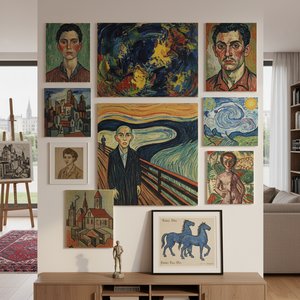
Top 10 majstrovských diel expresionizmu: Umění plné emócií pre váš domov | TopImpressionists.com
Ponorte sa do sveta expresionizmu s 10 majstrovskými dielami od Muncha, van Gogha a ďalších. Objavte príbehy umelcov, techniky a silné emócie v obrazoch. Reprodukcie obrazov pre váš domov na TopImpressionists.com! Preskúmajte kolekciu online.

Egon Schiele: Top 25 diel pre milovníkov umenia a luxusný interiérový dizajn | TopImpressionists.com
Ponorte sa do sveta Egona Schieleho! Objavte top 25 diel expresionistického majstra, jeho portréty a techniku. Luxusné reprodukcie obrazov pre váš interiér na TopImpressionists.com. Preskúmajte celú kolekciu online.
Preskúmajte umelecká diela usporiadané podľa tém, štýlov a charakteristík.


