

 Zobraziť v interiéri
 Odoslať
 Zdieľať
 Podrobnosti
 Príručka

 Stiahnuť
 Podobné položky
 RTG skúška
 Prehliadanie diapo\]
 Štatistiky
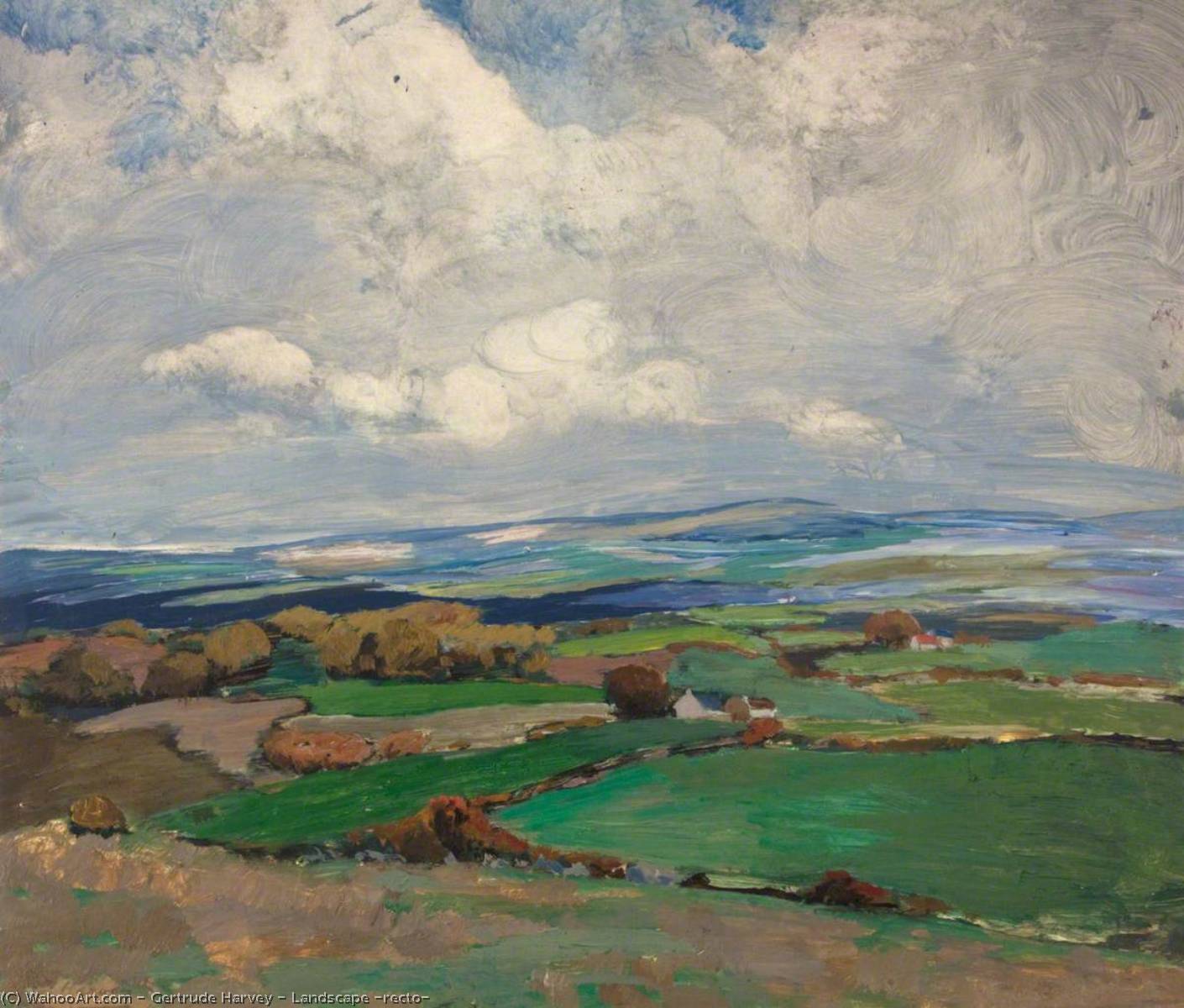
Landscape (recto)
 45.0 x 52.0 cm
Discover Gertrude Harvey, a British artist of the Newlyn School. Known for evocative landscapes & still lifes, her work reflects Cornish life & featured in Royal Academy exhibitions.
 Prečítať si viac
Umelecké dielo zobrazené na tejto stránke je chránené autorským zákonom, čo znamená, že nemôžeme legálne vytvárať ani predávať jeho identickú reprodukciu. Táto ochrana je vymáhaná na základe medzinárodných dohôd, ako napríklad Bernská konvencia a národnými zákonmi, vrátane tých, ktoré sú stanovené v Autorské právo USA – Title 17. Všetky práva vyhradené.
Táto metóda plne dodržiava autorské práva, pretože nezahŕňa kopírovanie ani duplikovanie chráneného diela. Ide skôr o kreatívnu reinterpretáciu – nový obraz, ktorý je ovplybnený originálom, no nie je s ním identický.
Giclée / Umenotlač
Giclée tlač alebo plátno múzeálnej kvality s rýchlou výrobou a rôznymi možnosťami povrchovej úpravy. ( Objednať ručne maľovanú reprodukciu Prepnúť na digitálnu verziu obrazu)




































Štandardné rozmery
na mieru
CM
INCH
Vyberte si z našich preddefinovaných rozmerov, ktoré zodpovedajú pôvodným pomeroḿ diela.
Loading sizes...

šírka
výška
Zadajte šírku a výšku, ktoré potrebujete, aby sa reprodukcia hodila k vášmu rámu alebo stene. Print možno len orezávať, nikdy však nemennú veľkosť zvětšiť oproti pôvodnému obrázku, preto pri inom formáte stráca časť obrazu. Pred samotným vytlačiacím procesom vám pošleme digitálny náhľad na schválenie. Obrázok zobrazený na tejto stránke nezobrazuje reálny rez — len digitálny náhľad ukazuje presný výsledok.
Celosvetová doprava () do 2 týždňov namiesto štandardných 4 až 5 týždňov. (22 október)

Bezplatná expresná doprava po celom svete

Vysokokvalitné lnianske plátno

Úplné poistenie prepravy

Záruka vrátenia colného poplatku

Záruka presného farebného zhodnutia

100-dená politika vrátenia tovaru (iba pri vadách)

100% záruka vrátenia peňazí

Ponuka množstevnej zľavy
 Možnosť skla je dostupná len pri rozmeroch pod 110 cm

Landscape (recto)
Giclée / Umenotlač
Veľkosť reprodukcie
-


Celková cena
€ 61
Biografia umelca
Gertrude Harvey: A Cornish Visionary Bridging Impressionism and Spiritual Renewal
In the salt-sprayed landscapes of early twentieth-century Cornwall, Gertrude Harvey (née Bodinnar, 1879–1966) emerged as a profound voice within the Newlyn School, a collective renowned for its devotion to the rugged coastal beauty and the intimate rhythms of local life. Her artistry was far more than a mere recording of scenery; it was a deeply personal dialogue between the external world and an internal landscape of faith and observation. Born into a family where the natural world was intimately understood—her maternal grandfather, William Curnow, being a notable botanist and market gardener—Gertrude possessed an innate sensitivity to the botanical intricacies and atmospheric shifts that define the Cornish peninsula. This early immersion in the textures of flora and earth provided the foundational vocabulary for a career defined by meticulous detail and an evocative use of light.
The trajectory of her creative life was irrevocably altered through her connection with Harold Harvey, a fellow artist whose professional and personal partnership would become a cornerstone of her legacy. Initially entering the artistic circle as a model for students at the Forbes School of Painting in Newlyn, Gertrude’s presence in the studio was transformative. Her role as a muse for Harold did not merely provide subject matter; it fostered a shared spiritual conviction and an aesthetic synergy that permeated their collaborative existence. Under the guidance of mentors like Norman Garstin at the Penzance School of Arts, she embraced the tenets of Impressionism, learning to manipulate loose brushstrokes and vibrant palettes to capture the ephemeral, fleeting qualities of light as it dances across the Atlantic swells and settles upon the rolling hills of her homeland.
Artistic Mastery and the Newlyn Legacy
Gertrude Harvey’s work is characterized by a remarkable ability to balance the structural integrity of her subjects with the atmospheric fluidity of the Impressionist style. Her paintings often serve as windows into a tranquil, pastoral world, where the boundaries between the earth and sky seem to dissolve in the mist. Whether depicting a solitary landscape or a delicate still life, her hand is evident in the nuanced textures that suggest both the weight of the Cornish soil and the lightness of coastal air. Her membership in the Newlyn School placed her at the heart of a movement dedicated to truth in painting, yet she infused this realism with a spiritual introspection that set her work apart.
Her achievements were recognized by the most prestigious institutions of her era, including regular exhibitions at the Royal Academy, which solidified her standing within the British art establishment. Her oeuvre remains a testament to several key artistic pillars:
- Impressionistic Technique: A mastery of light and color that captures the transient moods of the Cornish landscape.
- Botanical Precision: An inherited passion for the natural world, visible in her detailed floral compositions and verdant landscapes.
- Spiritual Depth: The integration of Christian faith and quiet contemplation into the very fabric of her visual narratives.
- Cultural Connection: A profound engagement with the Newlyn School’s mission to document the authentic character of Cornish life.
Today, the significance of Gertrude Harvey lies in her ability to have bridged the gap between the observational rigor of the Newlyn tradition and the emotive freedom of Impressionism. She remains a vital figure for those studying the evolution of British landscape painting, representing a period where art served as both a mirror to the natural world and a vessel for the enduring human spirit.

Rýchle fakty
- Artistic Movement Or Style: Newlyn School
- Artists Or Movements Influenced By This Artist: ['George Bernard Shaw']
- Artists Who Influenced This Artist: ['Harold Harvey']
- Date Of Birth: 1879 Cornwall, United Kingdom
- Date Of Death: 1966 St Just, Cornwall
- Full Name: Gertrude Harvey Bodinnar
- Nationality: British
- Notable Artworks:
- Landscape (verso)
- Landscape (recto)
- Farmhouse on a Mound
- Place Of Birth: Cornwall