

 Zobraziť v interiéri
 Odoslať
 Zdieľať
 Podrobnosti
 Príručka

 Stiahnuť
 Podobné položky
 RTG skúška
 Prehliadanie diapo\]
 Štatistiky
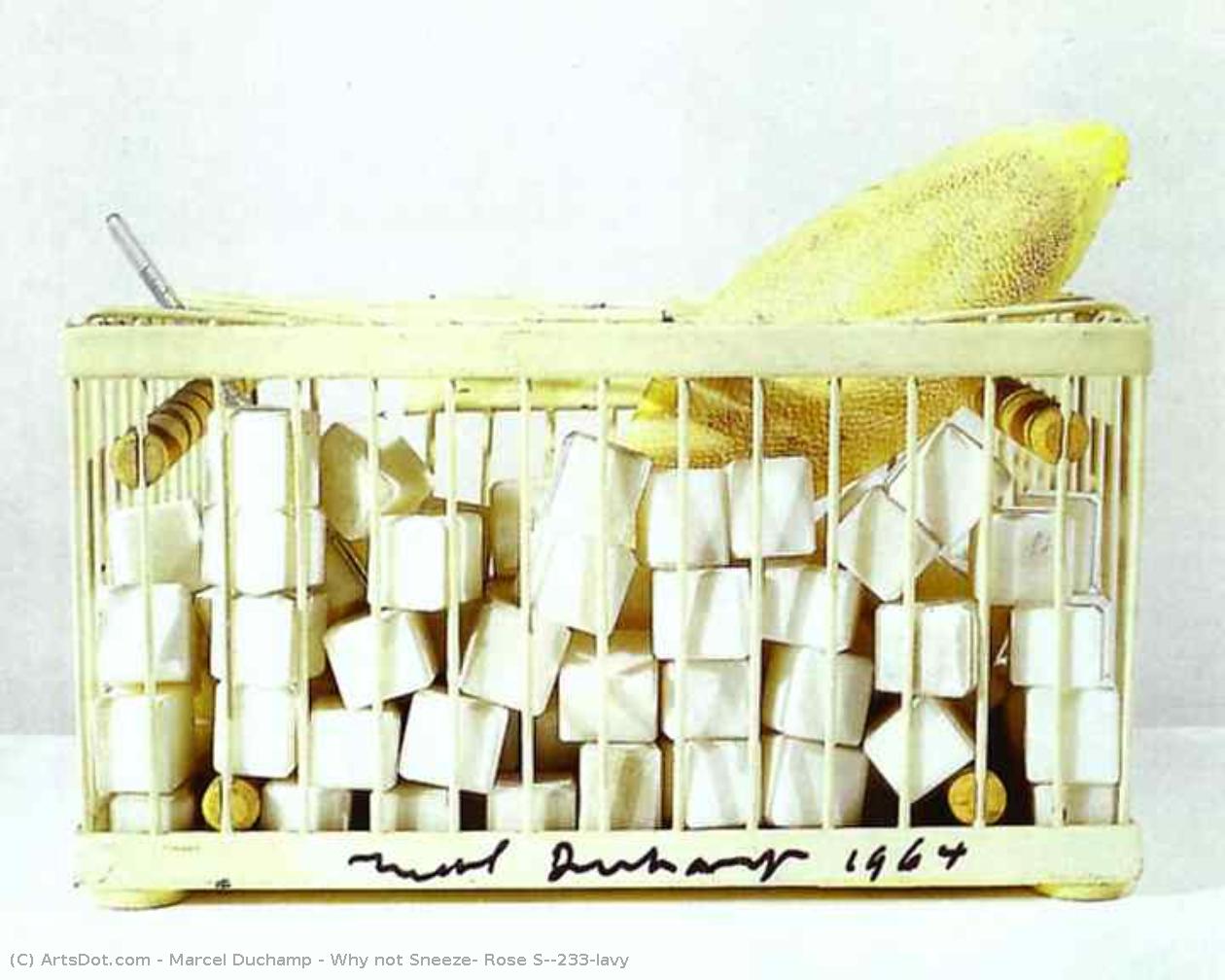
Why not Sneeze, Rose Sélavy
 Acrylic On Canvas
- WallArt
- Dada Gesamtkunstwerk
 1921
1921 12.0 x 22.0 cm
 Tate Modern
 Prečítať si viac
Marcel Duchampova ikonická dielka El Gran Vidrio (*La Mariée mise à nu par ses célibataires, même*) rozohráva surrealistický obraz ženy vystavenej mužom a vyjadruje základné princípy dadaizmu. Pozrite si viac!
Umelecké dielo zobrazené na tejto stránke je chránené autorským zákonom, čo znamená, že nemôžeme legálne vytvárať ani predávať jeho identickú reprodukciu. Táto ochrana je vymáhaná na základe medzinárodných dohôd, ako napríklad Bernská konvencia a národnými zákonmi, vrátane tých, ktoré sú stanovené v Autorské právo USA – Title 17. Všetky práva vyhradené.
Táto metóda plne dodržiava autorské práva, pretože nezahŕňa kopírovanie ani duplikovanie chráneného diela. Ide skôr o kreatívnu reinterpretáciu – nový obraz, ktorý je ovplybnený originálom, no nie je s ním identický.
Giclée / Umenotlač
Giclée tlač alebo plátno múzeálnej kvality s rýchlou výrobou a rôznymi možnosťami povrchovej úpravy. ( Objednať ručne maľovanú reprodukciu Prepnúť na digitálnu verziu obrazu)




P118B €10

P118H €10

P118W €10

P438Z €10

P508JH €12

P508YH €12

P805H €10

P805Z €10

P919BZ €10

P919G €10

P919XJ €10

P959ZH €10

P968JZ €12

W106C €8

W218G €10

W218JH €8

W218Y €10

W307PJ €10

W316G €10

W316PJ €8

W316Y €10

W398PJ €8

W4111J €10

W500HY €15

W500JH €15

W692G €12

W849H €8

W940BG €15

W953PJ €8




Štandardné rozmery
na mieru
CM
INCH
Vyberte si z našich preddefinovaných rozmerov, ktoré zodpovedajú pôvodným pomeroḿ diela.
Loading sizes...

šírka
výška
Zadajte šírku a výšku, ktoré potrebujete, aby sa reprodukcia hodila k vášmu rámu alebo stene. Print možno len orezávať, nikdy však nemennú veľkosť zvětšiť oproti pôvodnému obrázku, preto pri inom formáte stráca časť obrazu. Pred samotným vytlačiacím procesom vám pošleme digitálny náhľad na schválenie. Obrázok zobrazený na tejto stránke nezobrazuje reálny rez — len digitálny náhľad ukazuje presný výsledok.
Celosvetová doprava () do 2 týždňov namiesto štandardných 4 až 5 týždňov. (21 október)

Bezplatná expresná doprava po celom svete

Vysokokvalitné lnianske plátno

Úplné poistenie prepravy

Záruka vrátenia colného poplatku

Záruka presného farebného zhodnutia

100-dená politika vrátenia tovaru (iba pri vadách)

100% záruka vrátenia peňazí

Ponuka množstevnej zľavy
 Možnosť skla je dostupná len pri rozmeroch pod 110 cm

Why not Sneeze, Rose Sélavy
Giclée / Umenotlač
Veľkosť reprodukcie
-


Celková cena
€ 60
A Provocative Pause: Unpacking “Why Not Sneeze, Rose Sélavy”
Marcel Duchamp’s "Why Not Sneeze, Rose Sélavy," painted in 1921, isn't merely a still life; it’s an audacious declaration. This deceptively simple image – a white box containing a yellow banana alongside several cups and spoons – immediately throws the viewer off balance, demanding they reconsider their assumptions about art itself. Duchamp, a pivotal figure in the Dada movement, wasn’t interested in replicating reality or expressing personal emotion through traditional means. Instead, he sought to dismantle established artistic conventions, forcing us to confront the very definition of what constitutes “art” and its role within society.
The painting's genesis lies within Duchamp’s exploration of chance and readymades – everyday objects presented as art without alteration. "Why Not Sneeze" exemplifies this approach perfectly. The choice of a banana, an utterly mundane item, elevates it to the status of subject matter through its placement within the box, transforming it into something worthy of contemplation. The inclusion of the cups and spoons further complicates the scene, suggesting a potential for consumption or ritual – elements deliberately devoid of inherent meaning, yet imbued with a subtle tension.
Dadaist Disruptions: Style and Technique
“Why Not Sneeze” is firmly rooted in the principles of Dadaism, a movement born from the disillusionment following World War I. Rejecting logic and reason, Dada artists embraced absurdity, chance, and anti-art sentiments. Duchamp’s technique reflects this ethos; he employed a precise, almost clinical approach to rendering the objects, using oil paint on canvas with a smooth, matte finish. There's no attempt at illusionistic depth or vibrant color – instead, the focus is entirely on the arrangement of the elements and their juxtaposition. The stark white box acts as a frame, isolating the objects and intensifying their impact.
Interestingly, Duchamp’s process involved a degree of chance. He reportedly placed the banana in the box after it had been emptied, allowing the positioning to be determined by accident. This element of randomness underscores the movement's core belief that art should not be dictated by conscious intention but rather emerge from unexpected encounters and unforeseen circumstances.
Symbolic Whispers: Interpretation and Context
The symbolism within “Why Not Sneeze” is deliberately ambiguous, inviting multiple interpretations. The banana itself has been suggested to represent fertility, sexuality, or even a subtle critique of consumer culture – a small, yellow object placed in an enclosed space, hinting at both abundance and confinement. The cups and spoons could symbolize hospitality, offering, or perhaps the act of consuming – again, devoid of any specific narrative but laden with potential meanings.
Furthermore, the title itself, “Why Not Sneeze?”, is a direct challenge to conventional artistic expectations. Duchamp’s question implies that there are no rules governing art, no prescribed methods for creating it. It's an invitation to embrace spontaneity and reject rigid constraints. The painting can be viewed as a meditation on the absurdity of artistic norms and a playful provocation against established aesthetic values.
A Timeless Dialogue: Emotional Impact and Legacy
Despite its seemingly simple composition, “Why Not Sneeze, Rose Sélavy” possesses a profound emotional impact. It’s unsettling, humorous, and thought-provoking – qualities that have cemented its place as one of the most significant works in modern art history. Duchamp's work continues to resonate today, prompting us to question our own perceptions of beauty, value, and the very nature of artistic expression. A reproduction of this iconic piece offers a unique opportunity to engage with a pivotal moment in art history and contemplate the enduring legacy of Marcel Duchamp’s revolutionary spirit.
Otázky a odpovede
Je "Why not Sneeze, Rose Sélavy" k dispozícii ako umelecká tlač (fine art print)?
Ak si chcete objednať print diela „Why not Sneeze, Rose Sélavy“ od Marcel Duchamp, stačí si ho objednať priamo na jeho stránke Výškovotlač fine art: umelecká tlač na bavlnenom plátne alebo archivnom plátnovom papieri.
Akú náladu a emóciu spája dielo „Why not Sneeze, Rose Sélavy"?
V diele „Why not Sneeze, Rose Sélavy“ sprevádza Playful nálada Playful emóciu.
Do ktorej obdobia tvorby Marcel Duchamp spadá dielo "Why not Sneeze, Rose Sélavy"?
Dielo „Why not Sneeze, Rose Sélavy“ patrí do obdobia Dada Phase v tvorbe umelca Marcel Duchamp. Táto klasifikácia spája toto dielo s vývojom umeleckej dráhy autora.
Biografia umelca
Marcel Duchamp – Revolučný duch umenia
Marcel Duchamp, narodený Henri-Robert-Marcel Duchamp v roku 1887 v Blainville-sur-Mer, Normandia, bol viac ako umelec; bol filozofický provokatér, ktorý zásadne pozmenšil smer modernej tvorby. Jeho skoré životopisné obdobie – napriek tomu, že jeho brat Jacques Villon bol úspešný maliar a obaja jeho synovia nasledovali podobnú cestu – naznačovalo ikonoklasmus prichádzajúci. Duchamp začal svoje umelecké vzdelávanie tradičnými technikami a experimentoval s impresionistickým štýlom, no tieto akademické základy neslúžili len ako ukončenie procesu tvorby, ale ako základ pre otázku samotnej podstaty umenia, jeho účelu a definície. Nebol spokojný len vykresľovať svet; hľadal spôsob, ako ho pozrieť na svet, čo predstavuje umeleckú hodnotu. Táto nezastavená intelektuálna zvídavosť zostala základom jeho plodnej činnosti.Od kubizmu k dadaizmu – Odmietanie konvencie
Duchampova umelecká cesta bola poznamenaná neustálym vývojom, dôsledným odmietaním ustanovených pravidiel. Jeho prvý kontakt s kubizmom, ktorý je viditeľný v dielach ako *Portrét šachistov* (1911), ukázal záujem o zlúčené tvary a viacero perspektív – čo predstavuje odchod od tradičnej reprezentácie. Napriek tomu rýchlo prekročil estetické hranice, uznávajúc, že len preskladávanie vizuálnych prvkov nestačí riešiť hlbšie otázky, ktoré v ňom kolovali. Horor Prvej svetovej vojny poháľal túto nezaplatenú nespokojnosť a Duchamp prijala dadaizmus – pohyb narodený dezilúziou a odmietaniu logika, rozumu a tradičných umeleckých hodnôt. Dadaizmus bol reakciou na vojnu a jej následky. V rámci tejto filozofickej skupiny Duchamp začal rozoberať konvenčné chápanie umenia. Nebudoval krásne objekty; chcel vyvolať úzkosť, podpochádzať predpoklady a odhalené arbitrárnosť estetického hodnotenia. Tento čas prinášal narodenie jeho najradikálnejšej inovácie: „Čítanie“.Čítanie – Výzva konvenčnému umeniu
Duchampovo čítanie bolo zásadným krokom mimo tradičných umeleckých hraníc. Jeho hlavným cieľom bolo vyvolať otázky a podpochádzať publikum, nie len vytvoriť esteticky príjemný objekt. Článok *Čítanie* bol prvýkrát prezentovaný v roku 1916 na výstavbe Dadaistickej skupiny v Zürichu a predstavoval jednoduchý predmet – cestovné upozornenie – ktorý Duchamp umiestnil do galérie a vyhlásil ho za umelecké dielo. Tento čin odmietol tradičné hodnotenia umenia a vyzýval návštevníkov, aby si znovu položili otázku toho, čo predstavuje umelecká hodnota. Článok *Čítanie* bol prvýkrát prezentovaný v roku 1916 na výstavbe Dadaistickej skupiny v Zürichu a vyhlásil ho za umelecké dielo. Tento čin odmietol tradičné hodnotenia umenia a vyzýval návštevníkov, aby si znovu položili otázku toho, čo predstavuje umelecká hodnota. Duchamp veril, že umenie nespočíva len v estetických kvalitách objektu; má vyjadrovať základné filozofické hodnoty. Jeho čítanie bolo prvýkrát prezentované v roku 1916 na výstavbe Dadaistickej skupiny v Zürichu a vyhlásil ho za umelecké dielo. Tento čin odmietol tradičné hodnotenia umenia a vyzýval návštevníkov, aby si znovu položili otázku toho, čo predstavuje umelecká hodnota. Duchamp veril, že umenie nespočíva len v estetických kvalitách objektu; má vyjadrovať základné filozofické hodnoty.Čokoládový mlýn č.2 – Symbolický gesto odporu
Ďalšie významné dielo Marcela Duchampa je Čokoládový mlýn č.2 (*Chocolate Row*) vytvorený v roku 1915-1923. Tento objekt predstavoval jednoduchý predmet, ktorý umelec zvolil a prezentoval ako umelecké dielo – gesto odporu proti tradičnému umeniu. Čokoládový mlýn č.2 bol prvýkrát prezentovaný v roku 1915-1923. Tento objekt predstavoval jednoduchý predmet, ktorý umelec zvolil a prezentoval ako umelecké dielo – gesto odporu proti tradičnému umeniu. Čokoládový mlýn č.2 bol prvýkrát prezentovaný v roku 1915-1923. Tento objekt predstavoval jednoduchý predmet, ktorý umelec zvolil a prezentoval ako umelecké dielo – gesto odporu proti tradičnému umeniu. Čokoládový mlýn č.2 bol prvýkrát prezentovaný v roku 1915-1923. Tento objekt predstavoval jednoduchý predmet, ktorý umelec zvolil a prezentoval ako umelecké dielo – gesto odporu proti tradičnému umeniu. Čokoládový mlýn č.2 bol prvýkrát prezentovaný v roku 1915-1923. Tento objekt predstavoval jednoduchý predmet, ktorý umelec zvolil a prezentoval ako umelecké dielo – gesto odporu proti tradičnému umeniu. Čokoládový mlýn č.2 bol prvýkrát prezentovaný v roku 1915-1923. Tento objekt predstavoval jednoduchý predmet, ktorý umelec zvolil a prezentoval ako umelecké dielo – gesto odporu proti tradičnému umeniu. Čokoládový mlýn č.2 bol prvýkrát prezentovaný v roku 1915-1923. Tento objekt predstavoval jednoduchý predmet, ktorý umelec zvolil a prezentoval ako umelecké dielo – gesto odporu proti tradičnému umeniu. Čokoládový mlýn č.2 bol prvýkrát prezentovaný v roku 1915-1923. Tento objekt predstavoval jednoduchý predmet, ktorý umelec zvolil a prezentoval ako umelecké dielo – gesto odporu proti tradičnému umeniu. Čokoládový mlýn č.2 bol prvýkrát prezentovaný v roku 1915-1923. Tento objekt predstavoval jednoduchý predmet, ktorý umelec zvolil a prezentoval ako umelecké dielo – gesto odporu proti tradičnému umeniu. Čokoládový mlýn č.2 bol prvýkrát prezentovaný v roku 1915-1923. Tento objekt predstavoval jednoduchý predmet, ktorý umelec zvolil a prezentoval ako umelecké dielo – gesto odporu proti tradičnému umeniu. Čokoládový mlýn č.2 bol prvýkrát prezentovaný v roku 1915-1923. Tento objekt predstavoval jednoduchý predmet, ktorý umelec zvolil a prezentoval ako umelecké dielo – gesto odporu proti tradičnému umeniu. Čokoládový mlýn č.2 bol prvýkrát prezentovaný v roku 1915-1923. Tento objekt predstavoval jednoduchý predmet, ktorý umelec zvolil a prezentoval ako umelecké dielo – gesto odporu proti tradičnénému umeniu. Čokoládový mlýn č.2 bol prvýkrát prezentovaný v roku 1915-1923. Tento objekt predstavoval jednoduchý predmet, ktorý umelec zvolil a prezentoval ako umelecké dielo – gesto odporu proti tradičnénému umeniu. Čokoládový mlýn č.2 bol prvýkrát prezentovaný v roku 1915-1923. Tento objekt predstavoval jednoduchý predmet, ktorý umelec zvolil a prezentoval ako umelecké dielo – gesto odporu proti tradičnénému umeniu. Čokoládový mlýn č.2 bol prvýkrát prezentovaný v roku 1915-1923. Tento objekt predstavoval jednoduchý predmet, ktorý umelec zvolil a prezentoval ako umelecké dielo – gesto odporu proti tradičnénému umeniu. Čokoládový mlýn č.2 bol prvýkrát prezentovaný v roku 1915-1923. Tento objekt predstavoval jednoduchý predmet, ktorý umelec zvolil a prezentoval
Marcel Duchamp
1887 - 1968 , Francúzsko
Rýchle fakty
- Artistic Movement Or Style:
- Kubizmus
- Dadaizmus
- Konceptuálne umenie
- Artists Or Movements Influenced By This Artist:
- Pop Art
- Minimalizmus
- Date Of Birth: 28. júla 1887
- Date Of Death: 2. októbra 1968
- Full Name: Marcel Duchamp
- Nationality: Francúzsky-Američan
- Notable Artworks:
- Fontána
- L.H.O.O.Q.
- Veľký sklo
- Čokoládový mlýn č.2
- Place Of Birth: Blainville, Francúzsko
Súvisiace články

Dadaism Unveiled: The Beautiful Chaos of Art's Most Rebellious Movement
Explore the profound rebellion of Dadaism. Discover how this avant-garde movement emerged from the chaos of WWI to redefine art through absurdity, anti-logic, and a legacy that shaped Surrealism and Pop Art. A deep dive into the beautiful chaos of art history for the true enthusiast.

Pop Surrealism Unveiled: The Sophisticated Intersection of Vibrant Pop Art and Dreamlike Subconscious Landscapes
Explore the captivating world of Pop Surrealism. Discover how vibrant Pop Art meets dreamlike subconscious imagery through the works of masters like Jeff Soto and Ryan Heshka. An expert guide for discerning collectors seeking to understand this profound contemporary art movement.
Preskúmajte umelecká diela usporiadané podľa tém, štýlov a charakteristík.


