

 Zobraziť v interiéri
 Odoslať
 Zdieľať
 Podrobnosti
 Príručka

 Stiahnuť
 Podobné položky
 RTG skúška
 Prehliadanie diapo\]
 Štatistiky
Výstup do metra


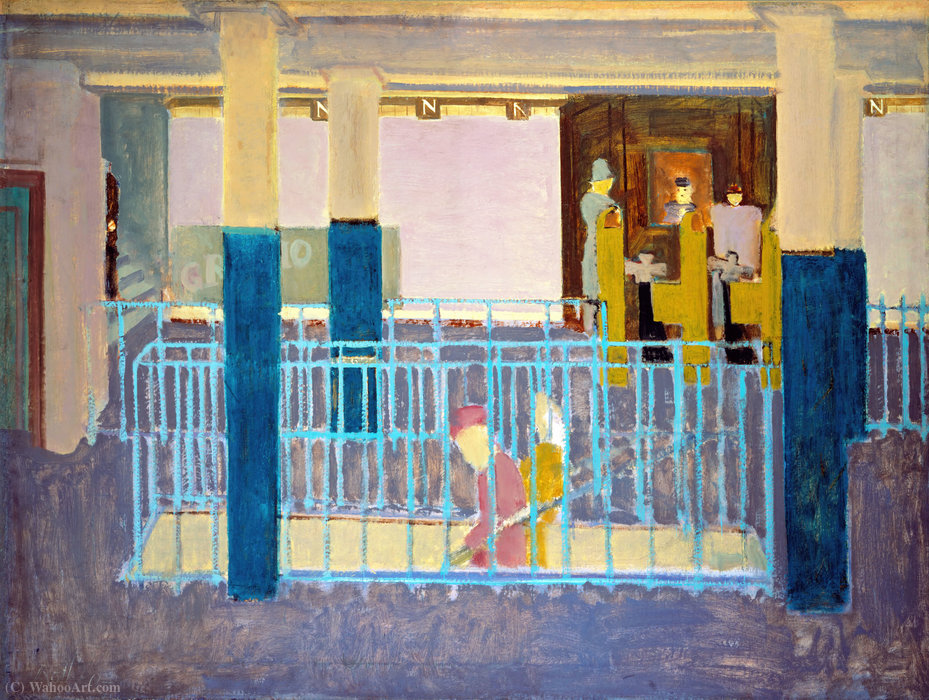
Výstup do metra od Marca Rothka je výrazný abstraktný obraz mesta New York, ktorý vyjadruje pocit osamelosti a ľudskej spojenia prostredníctvom kombinácie farieb a geometrických tvarov.
 Prečítať si viac
Pozrite si ikonické Color Field maľby Marka Rothka – abstraktné výtvory vyjadrujúce hlboké emócie a filozofický základ. Obrazárske diela svetového významu!
Umelecké dielo zobrazené na tejto stránke je chránené autorským zákonom, čo znamená, že nemôžeme legálne vytvárať ani predávať jeho identickú reprodukciu. Táto ochrana je vymáhaná na základe medzinárodných dohôd, ako napríklad Bernská konvencia a národnými zákonmi, vrátane tých, ktoré sú stanovené v Autorské právo USA – Title 17. Všetky práva vyhradené.
Ako rešpektujúca a legálna alternatíva ponúkame vlastné, ručne maľované diela inšpirované originálom. Naši skúsení a profesionálni umelci dôkladne študujú štýl, náladu a umelecký podnet originálu, aby vytvorili nové, jedinečné dielo, ktoré vyvoláva rovnaký pocit – pričom samo ostáva vlastným originálnym dielom.
Táto metóda plne dodržiava autorské práva, pretože nezahŕňa kopírovanie ani duplikovanie chráneného diela. Ide skôr o kreatívnu reinterpretáciu – nový obraz, ktorý je ovplybnený originálom, no nie je s ním identický.
Ručne maľovaná olejová reprodukcia
Ručne maľovaný olej na plátne vo vašej zvolenej veľkosti a v ráme, vyrobený na mieru našimi umelcami. ( Prepnúť na tlač Prepnúť na digitálnu verziu obrazu)




P118B €10

P118H €10

P118W €10

P438Z €10

P508JH €12

P508YH €12

P805H €10

P805Z €10

P919BZ €10

P919G €10

P919XJ €10

P959ZH €10

P968JZ €12

W106C €8

W218G €10

W218JH €8

W218Y €10

W307PJ €10

W316G €10

W316PJ €8

W316Y €10

W398PJ €8

W4111J €10

W500HY €15

W500JH €15

W692G €12

W849H €8

W940BG €15

W953PJ €8




Štandardné rozmery
na mieru
CM
INCH
Vyberte si z našich preddefinovaných rozmerov, ktoré zodpovedajú pôvodným pomeroḿ diela.
Loading sizes...

šírka
výška
Zadajte šírku a výšku, ktoré potrebujete, aby sa dielo hodilo k vášmu rámu alebo stene. Keďže ide o ručnú maľbu, pri rozmeroch s odlišným pomerom strán môže umelec namalovať o niečo viac okolo obrázka alebo ho mierne orezatú — výber patrí vám. Pred začatím maľovania vám pošleme digitálnu ukážku na schválenie. Obrázok zobrazený na tejto stránke nenahrádza reálny výsledok — ten zobrazuje iba digitálna ukážka.
Príklady možných zmien: nahradiť tvár fotografiou zákazníka; pridať domáce zviera (napr. nahradiť mačku psom); vložiť skryté posolstvo do pozadia; zmeniť krajinu alebo prvky pozadia.
Po odoslaní objednávky vám tím TopImpressionists.com pošle e-mail s pokynmi a poskytne náhľad na návrh
Po odoslaní objednávky vám tím TopImpressionists.com pošle e-mail s pokynmi a poskytne náhľad na návrh
Celosvetová doprava () za 3 až 4 týždne namiesto štandardných 5 týždňov. (22 október). Bez kompromisov v kvalite.

Bezplatná expresná doprava po celom svete

Vysokokvalitné lnianske plátno

Úplné poistenie prepravy

Záruka vrátenia colného poplatku

Záruka presného farebného zhodnutia

100-dená politika vrátenia tovaru (iba pri vadách)

100% záruka vrátenia peňazí

Ponuka množstevnej zľavy
 Možnosť skla je dostupná len pri rozmeroch pod 110 cm

Výstup do metra
Spôsob reprodukcie
Veľkosť reprodukcie
-


Celková cena
€ 236
Entrance to Subway (Subway Station.Subway Scene)
Mark Rothko's "Entrance to Subway" isn’t merely a depiction of a New York City subway station; it’s an immersion into the collective experience of urban life, a poignant meditation on anonymity and the fleeting nature of human connection. Painted in 1938 during a period of intense social and political upheaval – a time when the anxieties of war were beginning to surface – this large-scale oil painting captures not just a physical space but also an emotional landscape. Rothko, a key figure in the Abstract Expressionist movement, deliberately eschewed traditional representational techniques, opting instead for a bold simplification of form and color to evoke profound feelings within the viewer.
The dominant hues of blue and yellow immediately establish a dynamic atmosphere, far removed from the muted tones often associated with depictions of urban decay. These colors aren’t simply applied; they bleed into one another, creating a sense of movement and suggesting the constant flow of people through the station. The composition is anchored by two prominent benches – one centrally positioned, the other subtly placed on the right – offering momentary points of rest amidst the bustling scene. Notice how Rothko uses geometric forms—the rectangular shapes of the benches and the implied lines of the platform—to create a sense of structure within an otherwise amorphous space. These elements aren’t meant to define the scene precisely, but rather to provide a framework for the viewer’s interpretation.
The Language of Color: Rothko’s Abstract Expressionist Approach
Rothko’s technique is characterized by its deliberate lack of detail and emphasis on color fields. He applied paint in broad, sweeping strokes, allowing the colors to overlap and blend organically. This process—often described as “all-over” painting—means that there's no single focal point; instead, the viewer’s eye is invited to wander across the entire surface of the canvas, absorbing the interplay of hues and textures. The thickness of the paint itself contributes to the work’s tactile quality, inviting a physical engagement with the artwork.
It's crucial to understand Rothko’s artistic philosophy during this period. He wasn’t interested in creating images that could be easily identified or understood; rather, he sought to evoke primal emotions—a sense of awe, mystery, and perhaps even melancholy—through the pure experience of color. He famously stated, “Colors are performers,” suggesting that his paintings were meant to act upon the viewer’s subconscious, triggering a deeply personal response.
A Reflection of an Era: Contextualizing "Entrance to Subway"
“Entrance to Subway” was created during a time of significant social and political change in America. The Great Depression had left its mark on the nation, and anxieties about war were growing as Europe teetered on the brink of conflict. Rothko’s work reflects this atmosphere of uncertainty and displacement. The anonymous figures depicted in the painting—a collection of faces lost within the urban landscape—can be interpreted as symbols of the individual’s struggle to find meaning and connection in a rapidly changing world.
Interestingly, Rothko’s early career involved figurative work, depicting portraits and urban scenes. However, he gradually moved away from representational art, seeking a more direct means of expressing his emotions. This shift aligns with the broader trends of the Abstract Expressionist movement, which rejected traditional artistic conventions in favor of exploring new forms of expression.
Legacy and Reproduction: Bringing Rothko’s Vision to Life
Mark Rothko's influence extends far beyond the realm of abstract painting. Artists like Yayoi Kusama, known for her immersive installations that explore themes of infinity and self-obliteration, have cited Rothko as a key inspiration. His work continues to resonate with viewers today, prompting reflection on the nature of human experience and the complexities of modern life.
TopImpressionists is proud to offer meticulously crafted, hand-painted reproductions of “Entrance to Subway.” These aren’t simply prints; they are faithful interpretations of Rothko’s original masterpiece, capturing the vibrancy of color, the texture of paint, and the emotional depth of the artwork. Each reproduction is created by skilled artists who have a deep understanding of Rothko’s technique and philosophy. Explore the details and dimensions on TopImpressionists. For those seeking to delve deeper into Rothko’s life and work, we encourage you to visit Yayoi Kusama's website or explore the extensive resources available on Wikipedia: Wikipedia.
Otázky a odpovede
Akým množstvom svetla sa zdá odrážať farby diela „Výstup do metra"]?
Luminancia zaznamenaná pre dielo „Výstup do metra“ od Mark Rothko je Gentle Luminance.
Aká je vnímaná svetlostnosť diela „Výstup do metra“ od Mark Rothko?
Vnímaná jasnosť diela „Výstup do metra“ od Mark Rothko je bright. Je možné ju prispôsobiť osvetleniu určeného priestoru.
Patrí „Výstup do metra“ od Mark Rothko medzi známe umelecké diela?
Úroveň popularity zaznamenaná pre „Výstup do metra“ od Mark Rothko je Ikonické.
Biografia umelca
Early Life and the Seeds of Artistic Vision
Mark Rothko, narodil sa Markus Yakovlevich Rothkowitz v Dvinskú, Lotyšsku, roku 1903, a od začiatku niesol v sebe pocit vytrvalého preniesenia, ktorý zásadne ovplyvňoval jeho umelecké cestovanie. Jeho rané roky boli poznačené úzkosťami židovského rodinného života v Pale Siedliska, vyostrenými pogrommi a politickou nestabilitou. Táto atmosféra vybudovala hlbokú citlivosť na ľudské utrpenie – tému, ktorá sa odrazila v jeho dielach – a ktorá bude pokračovať až do konca jeho života. Rok 1913 znamenal emigráciu rodiny Rothkowitzovcov do Portlandu, Oregonsku, čo neznamenalo len geografické posunutie, ale kultúrnu revolúciu pre mladého Marka. Jeho otec, lekár a intelektuál s socialistačným sklonom, vytvoril dom plný diskusií a učenia – no strata Jakuba Rothkowitzovca krátko po ich prijatí priniesla dlhý tieň. Tento skorší zážitok zúženia, doplnený výzvami assimilácie, poháňal životné cestovanie za umeleckým vyjadrením – ktoré nakoniec vyzývalo konvenčné chápanie maľby a znovu získavalo emocionálnu silu farieb. Yale Univerzitná skúška ho však viac priťahovala živú energiu New Yorku, kde opustil formálne štúdium a venoval sa svojej vášni za umenie na Art Students League. Tieto výchovne roky položili základy umeleckej vizií, ktorá nakoniec vyhodnotila konvenčné chápanie maľby a znovu získala emocionálnu silu farieb. Jeho prvý obraz „Untitled No. 1“ už naznačoval psychologické hlboké porozumenie – základné otázky existencie, smrti a túžby po zmysle v chaotickom svete.From Figurative Beginnings to Abstract Expressionism
Rothko začal svoju tvorbu realisticky – zobrazoval mestské sceny a portréty s vysokou pozornosťou k detailu. Napriek tomu však tieto skoršie práce už naznačovali psychologické hlboké porozumenie – základné otázky existencie, smrti a túžby po zmysle v chaotickom svete. Jeho umelecká cesta začala ako pozorovateľ sveta okolo seba, čo ho naučilo pozorovať svet okolo seba s vysokou pozornosťou k detailu. V období druhej svetovej vojny Rothko výrazne prekonal svoj štýl – ovplyvnením Surrealizmu a mytológie sa odvrátil od reprezentácie obrazov a hľadal spôsob vyjadrenia univerzálnych ľudských emócií prostredníctvom symbolických tvarov. Tento čas bol poznačený vznikom mnohotvárnych obrazov – plátna obsadených ambivalentnými biomorfickými formami, ktoré vyzerali ako kombinácia figúry a abstrakcie. Nie sú tieto práce len experimentom s formou; sú hlboko pocitové odpovede na vojnové obavy a nejistoty. Už neskôr Rothko dosiahol svoj znakový štýl – veľké plochy farieb, ktoré zahŕňajú pozorovateľa do intenzívneho zážitku. Tento štýl bol zásadný rozvoj abstraktného expresionizmu a Rothka ustanovil za vedúceho predstaviteľa tejto revolučnej umeleckej oblasti. Jeho tvorba bola ovplyvnená svetovým dielom – najmä impresionistickou estetickou, ktorá ho naučila pozorovať svet okolo seba s vysokou pozornosťou k detailu.The Color Field and the Pursuit of Transcendence
Rothkoho hlavný štýl sa vyvinul v období druhéj svetovej vojny – ovplyvnením Surrealizmu a mytológie sa odvrátil od reprezentácie obrazov a hľadal spôsob vyjadrenia univerzálnych ľudských emócií prostredníšťom symbolických tvarov. Tento čas bol poznačený vznikom mnohotvárnych obrazov – plátna obsadených ambivalentnými biomorfickými formami, ktoré vyzerali ako kombinácia figúry a abstrakcie. Nie sú tieto práce len experimentom s formou; sú hlboko pocitové odpovede na vojnové obavy a nejistoty. Jeho hlavným cieľom bolo vyjadriť univerzálne ľudské emócie – najmä smútok, úzkosť a strach – prostredníctvom jednoduchých geometrických tvarov. Tento štýl bol zásadný rozvoj abstraktného expresionizmu a Rothka ustanovil za vedúceho predstaviteľa tejto revolučnej umeleckej oblasti. Jeho tvorba bola ovplyvnená svetovým dielom – najmä impresionistickou estetickou, ktorá ho naučila pozorovať svet okolo seba s vysokou pozornosťou k detailu. Jeho hlavným cieľom bolo vyjadriť univerzálne ľudské emócie – najmä smútok, úzkosť a strach – prostredníctvom jednoduchých geometrických tvarov. Tento štýl bol zásadný rozvoj abstraktného expresionizmu a Rothka ustanovil za vedúceho predstaviteľa tejto revolučnej umeleckej oblasti. Jeho hlavným cieľom bolo vyjadriť univerzálne ľudské emócie – najmä smútok, úzkosť a strach – prostredníctvom jednoduchých geometrických tvarov. Tento štýl bol zásadný rozvoj abstraktného expresionizmu a Rothka ustanovil za vedúceho predstaviteľa tejto revolučnej umeleckej oblasti. Jeho hlavným cieľom bolo vyjadriť univerzálne ľudské emócie – najmä smútok, úzkosť a strach – prostredníctvom jednoduchých geometrických tvarov. Tento štýl bol zásadný rozvoj abstraktného expresionizmu a Rothka ustanovil za vedúceho predstaviteľa tejto revolučnej umeleckej oblasti. Jeho hlavným cieľom bolo vyjadriť univerzálne ľudské emócie – najmä smútok, úzkosť a strach – prostredníctvom jednoduchých geometrických tvarov. Tento štýl bol zásadný rozvoj abstraktného expresionizmu a Rothka ustanovil za vedúceho predstaviteľa tejto revolučnej umeleckej oblasti. Jeho hlavným cieľom bolo vyjadriť univerzálne ľudské emócie – najmä smútok, úzkosť a strach – prostredníctvom jednoduchých geometrických tvarov. Tento štýl bol zásadný rozvoj abstraktného expresionizmu a Rothka ustanovil za vedúceho predstaviteľa tejto revolučnej umeleckej oblasti. Jeho hlavným cieľom bolo vyjadriť univerzálne ľudské emócie – najmä smútok, úzkosť a strach – prostredníctvom jednoduchých geometrických tvarov. Tento štýl bol zásadný rozvoj abstraktného expresionizmu a Rothka ustanovil za vedúceho predstaviteľa tejto revolučnej umeleckej oblasti. Jeho hlavným cieľom bolo vyjadriť univerzálne ľudské emócie – najmä smútok, úzkosť a strach – prostredníctvom jednoduchých geometrických tvarov. Tento štýl bol zásadný rozvoj abstraktného expresionizmu a Rothka ustanovil za vedúceho predstaviteľa tejto revolučnej umeleckej oblasti. Jeho hlavným cieľom bolo vyjadriť univerzálne ľudské emócie – najmä smútok, úzkosť a strach – prostredníctvom jednoduchých geometrických tvarov. Tento štýl bol zásadný rozvoj abstraktného expresionizmu a Rothka ustanovil za vedúceho predstaviteľa tejto revolučnej umeleckej oblasti. Jeho hlavným cieľom bolo vyjadriť univerzálne ľudské emócie – najmä smútok, úzkosť a strach – prostredníctvom jednoduchých geometrických tvarov. Tento štýl bol zásadný rozvoj abstraktného expresionizmu a Rothka ustanovil za vedúceho predstaviteľa tejto revolučnej umeleckej oblasti. Jeho hlavným cieľom bolo vyjadriť univerzálne ľudské emócie – najmä smútok, úzkosť a strach – prostredníctvom jednoduchých geometrických tvarov. Tento štýl bol zásadný rozvoj abstraktného expresionizmu a Rothka ustanovil za vedúceho predstaviteľa tejto revolučnej umeleckej oblasti. Jeho hlavným cieľom bolo vyjadriť univerzálne ľudské emócie – najmä smútok
Mark Rothko
1903 - 1970 , Lotyšsko
Rýchle fakty
- Artistic Movement Or Style: Color Field Malba
- Artists Or Movements Influenced By This Artist: ['Minimalizmus']
- Date Of Birth: 25. september 1903
- Date Of Death: 25. február 1970
- Full Name: Mark Rothko
- Nationality: Američan
- Notable Artworks:
- Číslo 1
- Zelená a pomarančová na červenej
- Place Of Birth: Dvinsk, Latvia
Súvisiace články

Color Field Painting: The Emotional Power of Pure Abstraction and Chromatic Depth
Explore the profound emotional depth of Color Field painting. Discover the history of mid-century abstraction, from Rothko to Newman, and learn how pure color transforms the viewer's experience through our expert art history guide.

Mark Rothko: Top 25 dielo pre milovníkov umenia a luxusného interiéru
Ponorte sa do sveta Marka Rothka s TopImpressionists.com! Objavte top 25 diel abstraktného expresionizmu, farebných plôch a hlbokých emócií. Kúpiť reprodukcie obrazov online a inšpirujte sa pre luxusný interiérový dizajn. Preskúmajte celú kolekciu na TopImpressionists.com

Top 10 majstrovských diel abstraktného expresionizmu pre váš domov | TopImpressionists.com
Ponorte sa do sveta abstraktného expresionizmu s Pollockom, Rothkom a ďalšími majstrami. Objavte príbehy za 10 ikonických diel, techniky a farby, ktoré definovali toto revolučné umenie. Kvalitné reprodukcie na TopImpressionists.com.

The Sublimity of Color: Exploring the Emotional Landscapes of Mark Rothko's Abstract Expressionism
Explore the profound emotional depth of Mark Rothko's abstract expressionism. Discover the history, techniques & lasting impact of this pivotal Color Field painter. Expert insights for collectors and art enthusiasts.

Beyond the Brushstroke: A Definitive Guide to the Emotional Power of Color Field Painting
Explore the profound history and emotional depth of Color Field painting. From Mark Rothko to Barnett Newman, discover how pure color redefined modern art through our expert-led guide for students and collectors alike.
Preskúmajte umelecká diela usporiadané podľa tém, štýlov a charakteristík.


