


 Zobraziť v interiéri
 Odoslať
 Zdieľať
 Podrobnosti
 Príručka

 Stiahnuť
 Podobné položky
 RTG skúška
 Prehliadanie diapo\]
 Štatistiky
Alter Mann (Vater Hirsch)


Explore Oskar Kokoschka’s ‘Alter Mann (Vater Hirsch)’ – a powerful 1909 oil painting capturing a stern figure. Discover this iconic work's emotive style and historical significance at our gallery.
 Prečítať si viac
Oskar Kokoschka (1886-1980): Rakúsky expresionista, známy svojimi psychologicky nabitými portrétmi a divokou tvorbou. Jeho diela odrážajú búrlivé životy a inovatívny umelecký štýl. #Kokoschka #Výrazy
Umelecké dielo zobrazené na tejto stránke je chránené autorským zákonom, čo znamená, že nemôžeme legálne vytvárať ani predávať jeho identickú reprodukciu. Táto ochrana je vymáhaná na základe medzinárodných dohôd, ako napríklad Bernská konvencia a národnými zákonmi, vrátane tých, ktoré sú stanovené v Autorské právo USA – Title 17. Všetky práva vyhradené.
Táto metóda plne dodržiava autorské práva, pretože nezahŕňa kopírovanie ani duplikovanie chráneného diela. Ide skôr o kreatívnu reinterpretáciu – nový obraz, ktorý je ovplybnený originálom, no nie je s ním identický.
Giclée / Umenotlač
Giclée tlač alebo plátno múzeálnej kvality s rýchlou výrobou a rôznymi možnosťami povrchovej úpravy. ( Objednať ručne maľovanú reprodukciu Prepnúť na digitálnu verziu obrazu)




P118B €10

P118H €10

P118W €10

P438Z €10

P508JH €12

P508YH €12

P805H €10

P805Z €10

P919BZ €10

P919G €10

P919XJ €10

P959ZH €10

P968JZ €12

W106C €8

W218G €10

W218JH €8

W218Y €10

W307PJ €10

W316G €10

W316PJ €8

W316Y €10

W398PJ €8

W4111J €10

W500HY €15

W500JH €15

W692G €12

W849H €8

W940BG €15

W953PJ €8




Štandardné rozmery
na mieru
CM
INCH
Vyberte si z našich preddefinovaných rozmerov, ktoré zodpovedajú pôvodným pomeroḿ diela.
Loading sizes...

šírka
výška
Zadajte šírku a výšku, ktoré potrebujete, aby sa reprodukcia hodila k vášmu rámu alebo stene. Print možno len orezávať, nikdy však nemennú veľkosť zvětšiť oproti pôvodnému obrázku, preto pri inom formáte stráca časť obrazu. Pred samotným vytlačiacím procesom vám pošleme digitálny náhľad na schválenie. Obrázok zobrazený na tejto stránke nezobrazuje reálny rez — len digitálny náhľad ukazuje presný výsledok.
Celosvetová doprava () do 2 týždňov namiesto štandardných 4 až 5 týždňov. (26 október)

Bezplatná expresná doprava po celom svete

Vysokokvalitné lnianske plátno

Úplné poistenie prepravy

Záruka vrátenia colného poplatku

Záruka presného farebného zhodnutia

100-dená politika vrátenia tovaru (iba pri vadách)

100% záruka vrátenia peňazí

Ponuka množstevnej zľavy
 Možnosť skla je dostupná len pri rozmeroch pod 110 cm

Alter Mann (Vater Hirsch)
Giclée / Umenotlač
Veľkosť reprodukcie
-


Celková cena
€ 61
Alter Mann (Vater Hirsch) – Oskar Kokoschka – A Portrait of Psychological Depth
Oskar Kokoschka’s “Alter Mann (Vater Hirsch)” (“Old Man”), completed in 1909, stands as a cornerstone of Expressionism and a haunting testament to the artist's profound understanding of human psychology. More than just a likeness, it’s an exploration of inner turmoil rendered with breathtaking visual intensity.
- Subject Matter: The portrait depicts Ernst Reinhold, a fellow actor whom Kokoschka befriended during his time in Vienna. Reinhold served as a model for numerous works by Kokoschka, capturing the artist’s fascination with portraying individuals grappling with existential anxieties.
- Style & Technique: Kokoschka employed oil paint on canvas—a technique favored by Expressionists—to achieve an unsettlingly realistic depiction of Reinhold's face. The brushstrokes are agitated and restless, conveying a palpable sense of unease and mirroring the psychological state of the sitter.
- Historical Context: Painted during the height of Vienna’s artistic ferment at the turn of the century, “Alter Mann” reflects the anxieties prevalent in European society following the assassination of Archduke Franz Ferdinand. Kokoschka's work aligns with the broader Expressionist movement’s rejection of academic conventions and embrace of subjective experience.
- Symbolism: The painting is rife with symbolic elements. Reinhold’s gaze directs outwards, seemingly confronting an unseen force—perhaps representing mortality or the confrontation with one’s own inner demons. Kokoschka's masterful use of color contributes to this emotional resonance; dark hues dominate the palette, amplifying the sense of melancholy and apprehension.
- Emotional Impact: “Alter Mann” transcends mere representation; it compels viewers to contemplate the complexities of human emotion. The portrait’s unsettling gaze and turbulent brushstrokes evoke feelings of vulnerability, isolation, and psychological struggle—themes that continue to resonate with audiences today.
Currently housed at Lentos Kunstmuseum Linz, Austria, this artwork exemplifies Kokoschka's unwavering commitment to capturing the essence of human consciousness. Its enduring power lies in its ability to provoke contemplation and illuminate the profound depths of the human psyche.
Detailed Analysis – Kokoschka’s Visionary Approach
Kokoschka’s artistic philosophy centered on exploring the relationship between inner vision and optical sight—a concept he articulated in his seminal essay “Von der Natur der Gesichte.” He believed that true art should strive to penetrate beyond superficial appearances, delving into the subconscious realm where emotions and instincts reside. This conviction is vividly realized in “Alter Mann,” where Kokoschka abandons traditional artistic conventions to prioritize conveying psychological truth.
Color Palette & Brushwork – Expressions of Emotion
The painting’s dominant color palette—characterized by deep blacks, browns, and muted reds—serves as a conduit for emotional expression. Kokoschka’s deliberate use of dark hues amplifies the sense of melancholy and apprehension inherent in Reinhold's portrait. Furthermore, his agitated brushstrokes—a hallmark of Expressionist technique—capture the dynamism of Reinhold’s psychological state, mirroring the turbulent emotions beneath the surface.
Kokoschka’s Influence & Legacy
Oskar Kokoschka’s groundbreaking approach to portraiture profoundly impacted subsequent generations of artists. His insistence on portraying subjects with unflinching honesty and capturing their inner turmoil paved the way for a new era of psychological realism in art history. “Alter Mann” remains an iconic exemplar of Expressionism—a timeless masterpiece that continues to inspire admiration and provoke discussion about the nature of human experience.
Otázky a odpovede
Čo zobrazuje „Alter Mann (Vater Hirsch)“ od Oskar Kokoschka?
„Alter Mann (Vater Hirsch)“ od Oskar Kokoschka zobrazuje: portrait painting, austrian art history, expressionist figure, stern expression, kokoschka portrait, early 20th century, male subject matter.
Kde by mala byť vystavená reprodukcia diela „Alter Mann (Vater Hirsch)“ od Oskar Kokoschka?
Formát Portrait diela „Alter Mann (Vater Hirsch)“ od Oskar Kokoschka je odporúčaný pre Living Room. Formát a priestor spoločne určujú najvhodnejšie umiestnenie reprodukcie.
Do ktorej časti domova sa hodí reprodukcia diela „Alter Mann (Vater Hirsch)“?
Reprodukcia diela „Alter Mann (Vater Hirsch)“ sa skvele hodí do Living Room.
Biografia umelca
A Life Etched in Expression: The World of Oskar Kokoschka
Oskar Kokoschka, born on March 1, 1886, in Pöchlarn, Austria, was a figurehead of early Expressionism, an artist whose work pulsed with the anxieties and passions of a rapidly changing world. His life, marked by both intense personal drama and historical upheaval, became inextricably woven into the fabric of his art. From humble beginnings as the son of a goldsmith and a mother who fostered his artistic inclinations, Kokoschka’s path diverged from conventional expectations. He rejected a scientific career to pursue his calling at the Kunstgewerbeschule in Vienna, a decision that set him on a course toward becoming one of the most psychologically penetrating portraitists of his time. Even as a young student, he displayed an unusual sensitivity and a willingness to challenge artistic norms, traits that would define his entire oeuvre. His early education was steeped in the atmosphere of fin-de-siècle Vienna, a city brimming with intellectual ferment and artistic innovation, yet also shadowed by a growing sense of unease. This duality – beauty and anxiety, tradition and modernity – became a central theme in Kokoschka’s work.The Viennese Years: Portraits and Passion
Kokoschka quickly established himself as a daring portraitist within the vibrant artistic community of Vienna. He didn't aim for mere likeness; instead, he sought to capture the inner turmoil and psychological complexity of his sitters. His portraits were often unsettling, even confrontational, revealing vulnerabilities and hidden depths. This approach resonated with an audience increasingly fascinated by the burgeoning field of psychoanalysis pioneered by Sigmund Freud. The influence of Freud is palpable in Kokoschka’s work, as he delved into the subconscious and explored themes of desire, alienation, and identity. A pivotal moment in his life – and art – was his passionate affair with Alma Mahler, the widow of composer Gustav Mahler. This tumultuous relationship inspired some of his most iconic works, including *The Bride of the Wind (The Tempest)*, a monumental canvas that is both a tribute to Alma and a haunting depiction of their fraught connection. The painting’s swirling forms and intense colors convey a sense of emotional turbulence and impending doom, reflecting the instability of their love affair. It stands as a testament to Kokoschka's ability to translate personal experience into universal themes. He was particularly interested in portraying the psychological state of his subjects, often using distorted features and exaggerated gestures to express their inner emotions.War, Exile, and Artistic Evolution
The outbreak of World War I dramatically altered Kokoschka’s life. He volunteered for service in the Austrian army, experiencing firsthand the horrors of trench warfare. Severely wounded in 1915, his experiences on the front lines left an indelible mark on his psyche and informed his later work. The war years saw a shift in his style, with landscapes becoming increasingly prominent alongside portraits. These landscapes were not idyllic depictions of nature but rather expressions of alienation and despair, reflecting the trauma he had endured. He often depicted desolate, storm-swept vistas, conveying a sense of isolation and unease. As political tensions escalated in Europe during the 1930s, Kokoschka found himself targeted by the Nazi regime due to his outspoken opposition to fascism and his association with avant-garde movements deemed “degenerate.” Forced into exile, he fled Austria in 1934, eventually settling in England in 1938. This period of displacement and uncertainty further deepened his sense of isolation but also fueled his artistic creativity. He became a British citizen in 1946, continuing to paint and exhibit internationally while remaining deeply committed to social justice and human rights.Kokoschka’s Enduring Influence
The impact of Kokoschka extends beyond his own artistic output, influencing subsequent generations of artists. Suzanne Sternberg, for example, directly studied under him, absorbing his expressive techniques and philosophical approach to art. His emphasis on emotional honesty and psychological insight resonated with Abstract Expressionists in the mid-20th century and later Neo-Expressionists. Kokoschka’s willingness to confront uncomfortable truths and challenge artistic conventions continues to inspire artists today. He demonstrated that art could be a powerful tool for social commentary, personal expression, and ultimately, a deeper understanding of ourselves and the world around us. His work remains a powerful testament to the enduring power of art to confront difficult truths and illuminate the depths of the human soul. Kokoschka’s legacy is not simply one of artistic innovation but also of unwavering commitment to expressing the complexities of the human condition through his unique and deeply personal vision.Kokoschka’s Key Works
- The Bride of the Wind (The Tempest) – 1914: A seminal work capturing the tumultuous relationship with Alma Mahler, characterized by swirling colors and distorted forms.
- Self-Portrait as Warrior – 1918: An intensely personal depiction reflecting Kokoschka’s wartime experiences and psychological struggles.
- Thésée et Antiope – 1920: A complex allegorical painting exploring themes of love, power, and illusion.
- Numerous portraits: Including portraits of Sigmund Freud, Gustav Mahler, and other prominent figures of his time.

Oskar Kokoschka
1886 - 1980 , Rakúsko
Rýchle fakty
- Artistic Movement Or Style: Expressionizmus
- Artists Or Movements Influenced By This Artist: ['Neo-expresionisti']
- Date Of Birth: 1. marec 1886
- Date Of Death: 22. február 1980
- Full Name: Oskar Kokoschka
- Nationality: Rakúske, Československé, Britské
- Notable Artworks:
- Svadobná róba
- Sebeobrazie ako válečník
- Place Of Birth: Pöchlarn, Rakúsko
Súvisiace články
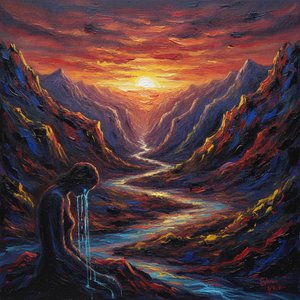
Capturing Emotion: A Journey Through the Soul of Expressionist Landscapes
Explore the profound emotional depth of Expressionist landscapes. Discover how Post-Impressionist masters moved beyond light to capture the soul through vibrant color and form. A curated journey for true art lovers seeking the beauty of expressive mastery.
Preskúmajte umelecká diela usporiadané podľa tém, štýlov a charakteristík.


