Claude Monet’s Parisian Reverie: “Park Monceau 3”
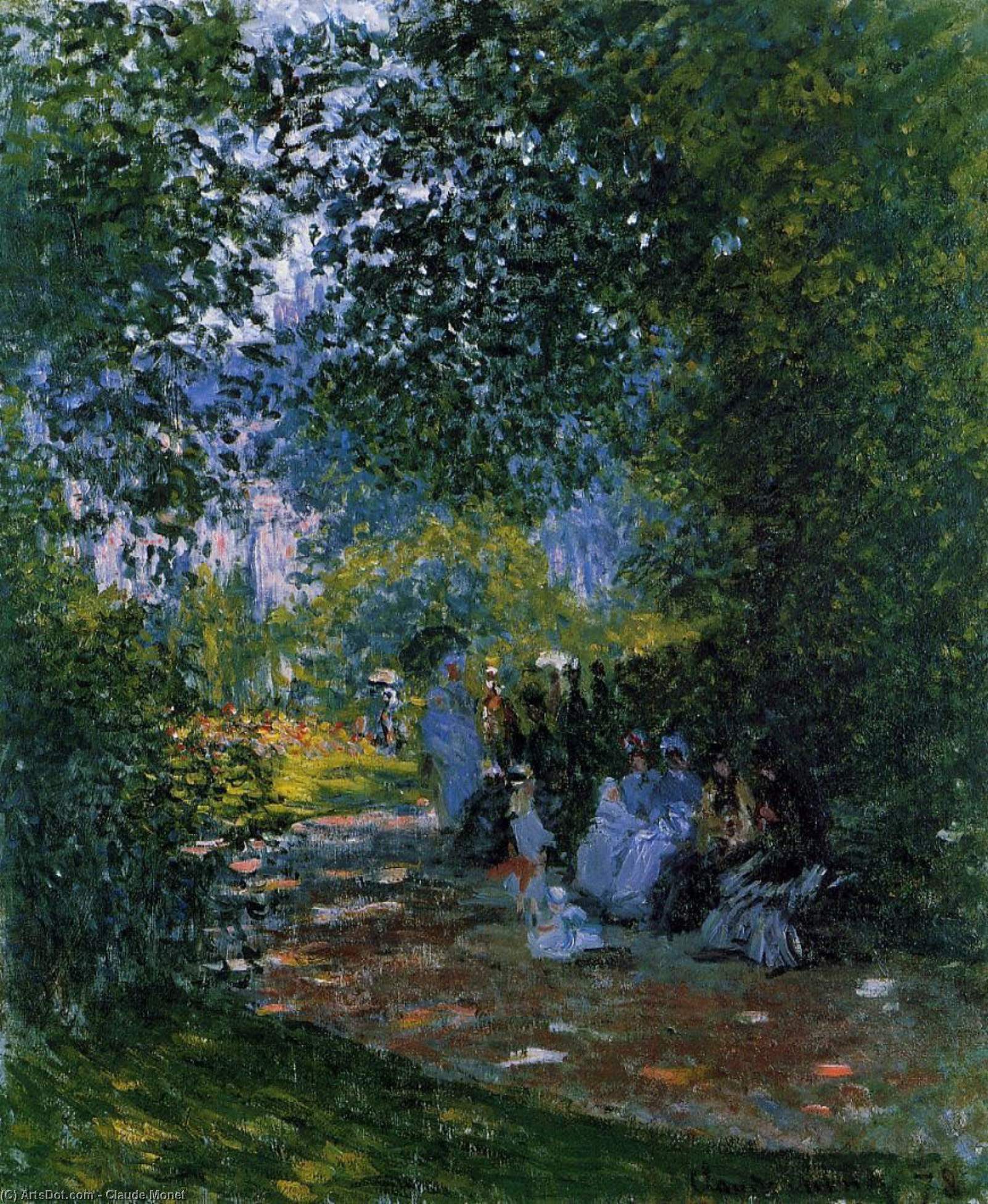
Claude Monet's "Park Monceau 3," painted in 1878, isn’t merely a depiction of a Parisian park; it’s a shimmering distillation of the Impressionist spirit – a fleeting moment captured and imbued with an atmosphere of serene leisure. This work, housed within the esteemed Kunstmuseum Winterthur, offers a captivating glimpse into Monet's fascination with light, color, and the everyday lives of his contemporaries. More than just a landscape, it’s a study in how perception itself can be rendered on canvas, inviting the viewer to step directly into the dappled shade beneath the park’s ancient trees.
The painting immediately draws the eye with its vibrant palette – not a photographic representation of reality, but rather an interpretation filtered through Monet's intensely personal vision. He employs broken brushstrokes, a hallmark of Impressionism, layering dabs and strokes of cerulean blue, emerald green, ochre yellow, and delicate pink to create a sense of luminous movement. The light itself seems to dance across the scene, shifting with every glance, as if Monet has captured not just a single instant but the very essence of a summer afternoon. Notice how he uses highlights to define forms – the curve of a bench, the suggestion of a figure’s silhouette – rather than outlining them precisely, contributing to the painting's overall sense of atmospheric depth.
A Snapshot of Parisian Life
"Park Monceau 3” transports us to a specific moment in late 19th-century Paris. The park itself was a popular destination for Parisians seeking respite from the city’s bustle, and Monet skillfully captures this atmosphere of relaxed enjoyment. Scattered throughout the scene are individuals engaged in various activities: some seated on benches, lost in conversation; others strolling leisurely along pathways; and a playful dog adding a touch of unscripted joy to the composition. The inclusion of a handbag resting on the ground hints at a brief pause, a moment of contemplation amidst the pleasures of the day.
Beyond the immediate depiction of people, the painting subtly reveals details about Parisian society at the time. The clothing worn by the figures – modest dresses and jackets – suggests a comfortable, bourgeois lifestyle. The presence of a dog indicates that families were part of the park’s appeal. Monet wasn't simply recording a scene; he was offering a window into the social fabric of his era.
Monet’s Impressionistic Techniques
Monet’s mastery lies not just in his ability to capture light and color, but also in his innovative approach to painting technique. He abandoned traditional methods of blending colors on the palette, preferring instead to apply them directly to the canvas in small, distinct strokes. This “broken brushstroke” technique creates a sense of visual vibration and immediacy, as if the scene is constantly shifting and changing with the light. It’s this deliberate rejection of photographic realism that defines Impressionism and paved the way for modern art.
Consider how he renders the foliage – not with smooth, uniform washes of green, but with a mosaic of different shades and textures. Similarly, his treatment of the sky is remarkably dynamic, capturing the subtle shifts in color and light as the sun moves across the heavens. This attention to detail—the way light reflects off surfaces, the interplay of shadows, the fleeting effects of atmosphere—is what makes “Park Monceau 3” such a compelling work of art.
Legacy and Reproduction
"Park Monceau 3" stands as a pivotal piece in Monet’s oeuvre, exemplifying his commitment to capturing the ephemeral beauty of modern life. His focus on light, color, and fleeting moments profoundly influenced subsequent generations of artists, shaping the course of art history. Today, reproductions of this iconic painting are highly sought after by collectors and interior designers alike, offering a chance to bring a touch of Monet’s luminous vision into any space.
TopImpressionists offers meticulously crafted hand-painted reproductions that faithfully capture the essence of “Park Monceau 3.” Each reproduction is created using traditional techniques and archival quality materials, ensuring its longevity and beauty for years to come. Explore our selection of high-quality prints and canvases – including “Claude Monet”’s "The Church at Vetheuil, Snow" and "Rue Saint-Denis, Festivities of 30 June, 1878." – and discover the timeless allure of Impressionism.
For further exploration, consider visiting the Kunstmuseum Winterthur in Switzerland or browsing the extensive collection available through TopImpressionists.com, where you can delve deeper into the life and work of this artistic genius.


 Náhľad
 Kúpiť tlač
 Odoslať
 Zdieľať
 Podrobnosti o dielo

 Stiahnuť
 Podobné diela
 RTG skúška
 Prezentácia

 Zobraziť viac






































 Možnosť skla je dostupná len pri rozmeroch pod 110 cm



