Ateliér — Bezplatné celosvetové doručenie — Doručenie za 2–6 týždňov
      André Derain, 1880 – 1954

      André Derain: The 100 Best-Known Paintings

      Of all André Derain's paintings, bathers (1907) is the most famous. Close behind come London Bridge (1906) and Charing Cross from sw (1906). Among the 354 works by André Derain in our catalogue, these 100 are the most celebrated, each shown with its date, its museum and its story.

      Poriadkované podľa nášho skóre popularity, ktoré kombinuje počet vyhľadávaní, návštev a objednávok pre každé dielo. Aktualizované október 2026. Each painting on this page can be ordered as an oil reproduction painted by hand on linen canvas, or as a fine art print, made to the size you choose.

      Portrét André Derain
      André Derain · 1880 – 1954
      Narodený · zomrel
      1880 – 1954, Chatou
      Pohyb
      Fauvist expressionism
      Diela v našom katalógu
      354
      Najznámejšie
      bathers (1907)
      Najviac diel v
      Statens Museum For Kunst

      André Derain's 10 most celebrated paintings

      bathers (1907) od André Derain
      1

      bathers

      1907 · Oil On Canvas

      To stand before André Derain's Bathers is to step directly into the exhilarating heart of the early twentieth century art revolution. This painting, executed in 1907, is not merely a depiction of figures by water; it is a pure explosion of color and emotion rendered through the lens of Fauvism. The very air around the canvas seems charged with the energy of bold pigment. Derain, a key figure alongside Henri…

      London Bridge (1906) od André Derain
      2

      London Bridge

      1906 · Oil On Canvas · MoMA - Museum of Modern Art, New York

      In the heart of 1906, a revolution was unfolding on canvas, and André Derain was one of its most daring architects. His masterpiece, London Bridge, is far more than a mere architectural study; it is a visceral explosion of emotion captured through the lens of Fauvism. While the London fog is traditionally associated with muted greys and somber tones, Derain defies the atmospheric reality of the Thames to present a…

      Charing Cross from sw (1906) od André Derain
      3

      Charing Cross from sw

      1906 · Oil On Canvas · National Gallery of Art, Washington

      Charing Cross from SW: A Fauvist Symphony of London André Derain’s “Charing Cross from SW” isn't merely a depiction of a London landmark; it’s an explosion of feeling, a vibrant declaration of the Fauvist movement at its peak. Painted in 1906, this artwork captures a bustling scene along the Thames, dominated by the iconic Charing Cross bridge, yet rendered through a lens entirely unique to Derain's revolutionary approach to color…

      Landscape at L'Estaque (1906) od André Derain
      4

      Landscape at L'Estaque

      1906 · Oil On Canvas

      To stand before André Derain’s Landscape at L'Estaque is not merely to observe a scene; it is to be enveloped by a burst of pure, unadulterated chromatic energy. Painted in 1906, this oil on canvas stands as a vibrant manifesto of the Fauvist movement—a style that dared to liberate color from the shackles of mere description. Here, the natural world of L'Estaque is rendered not with photographic accuracy, but with…

      Hyde Park (1906) od André Derain
      5

      Hyde Park

      1906 · Oil On Panel · Musee d'Art Moderne de Troyes, Troyes

      To gaze upon André Derain's Hyde Park is to step directly into the effervescent heart of early 20th-century Parisian life. This painting, executed in 1906, is far more than a mere depiction of an afternoon stroll; it is a vibrant celebration of modern leisure captured through the revolutionary lens of Fauvism. The scene unfolds with an almost palpable energy—a tapestry woven from bold color and dynamic movement. We see figures…

      Cypresses (1907) od André Derain
      7

      Cypresses

      1907 · Oil On Panel

      To stand before André Derain’s "Cypresses" is to step directly into the vibrant heart of early twentieth-century French modernism. This captivating oil-on-panel, dating from 1907, is far more than a mere depiction of a landscape; it is an explosion of color and emotion captured by an artist at the zenith of his revolutionary period. The scene unfolds with a profound sense of natural grandeur: a field dotted with resilient pine…

      Portrait of Madame Paul Guillaume with a large hat (1928) od André Derain
      8

      Portrait of Madame Paul Guillaume with a large hat

      1928 · Oil On Canvas

      To stand before André Derain’s Portrait of Madame Paul Guillaume with a large hat is to step directly into the vibrant, charged atmosphere of an early twentieth-century artist's studio. This painting is far more than a mere likeness; it is a meditation on creativity itself. The subject, seated amidst the beautiful chaos of artistic tools—canvases leaning against unseen supports, palettes bearing the ghosts of color—commands our attention with a serene…

      Drying the Sails (1905) od André Derain
      9

      Drying the Sails

      1905 · Oil On Canvas · Pushkin State Museum, Moskva

      André Derain’s “Drying the Sails,” painted in 1905, isn't merely a depiction of a harbor scene; it’s an explosion of color and emotion—a quintessential embodiment of the Fauvist movement. Born from a confluence of artistic influences and a desire to break free from traditional representation, this painting captures a fleeting moment on the French coast, imbued with a raw energy that continues to resonate with viewers today. Derain, alongside Henri…

      Mountains at Collioure od André Derain
      10

      Mountains at Collioure

      Oil On Canvas

      In the annals of modern art, few moments capture the raw, unbridled energy of a revolution quite like André Derain’s Mountains at Collioure. Painted during the feverish summer of 1905, this masterpiece serves as a vibrant manifesto of the Fauvist movement, a period when color was liberated from the shackles of reality to serve the needs of pure emotion. As one gazes upon this canvas, the eye is immediately swept…

      André Derain paintings ranked 11 to 100

      Harbour of Collioure (1905) od André Derain
      #13

      Harbour of Collioure

      1905 · Staatsgalerie Stuttgart

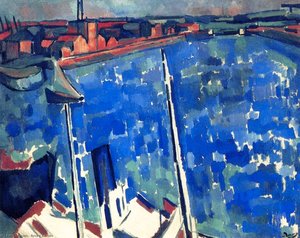
      In this oil on canvas, André Derain presents Harbour of Collioure, a work from 1905. The painting captures a Mediterranean port, focusing on the specific light and atmosphere…

      Have it painted by hand →
      Black Scarf (1935) od André Derain
      #14

      Black Scarf

      1935

      To stand before André Derain's "Black Scarf" is to step directly into the effervescent, color-drenched heart of early 20th-century Paris. Painted in 1935, this oil on canvas transcends…

      Order this canvas →
      Landscape (Blue) (1906) od André Derain
      #16

      Landscape (Blue)

      1906

      To stand before André Derain’s Landscape (Blue) is to step directly into the exhilarating heart of early twentieth-century modernism. This painting, executed in 1906, is not merely a…

      Have it painted by hand →
      Landscape near Chatou (1904) od André Derain
      #17

      Landscape near Chatou

      1904

      In the annals of early twentieth-century modernism, few moments capture the raw, unbridled energy of artistic revolution quite like André Derain’s Landscape near Chatou. Painted in 1904, this…

      Have it painted by hand →
      Landscape at Collioure (1905) od André Derain
      #18

      Landscape at Collioure

      1905

      To stand before André Derain’s Landscape at Collioure is to witness the moment when the traditional boundaries of nature were dissolved by a sudden, brilliant explosion of light…

      Bring this light home →
      The Dance (1906) od André Derain
      #19

      The Dance

      1906

      In the annals of modern art, few moments capture the raw, unbridled spirit of rebellion quite like the emergence of Fauvism, and few works embody this revolution as…

      Have it painted by hand →
      Still Life s ovocím (1940) od André Derain
      #20

      Still Life s ovocím

      1940 · Harris Museum - Art Gallery

      André Derain’s “Still Life with Fruit,” painted in 1940, stands as a quintessential example of Fauvist art—a movement that irrevocably altered the course of European painting. Born in…

      Have it painted by hand →
      Cassis od André Derain
      #21

      Cassis

      The artwork titled Cassis, also known as Landscape at Cassis, is an oil on canvas painting. This work was executed by the French artist André Derain in 1907.…

      Bring this light home →
      Music (1904) od André Derain
      #23

      Music

      1904

      The early 20th century was a transformative period for modern art, with the emergence of various movements that challenged traditional techniques and aesthetics. One such movement was Fauvism,…

      Order this canvas →
      Head of a Young Woman (1923) od André Derain
      #25

      Head of a Young Woman

      1923 · Statens Museum For Kunst

      A soulful portrait emerges from a palette of ochre, sienna, and cream. The subject is positioned in a close-up, centered composition that forces an intimate encounter between the…

      Bring this light home →
      Sorrowful Landscape (1946) od André Derain
      #26

      Sorrowful Landscape

      1946

      The Sorrowful Landscape by André Derain is a masterpiece that embodies the essence of Expressionism, a style characterized by its emphasis on conveying intense emotions and inner experiences.…

      Order this canvas →
      Collioure (1905) od André Derain
      #28

      Collioure

      1905

      The early 20th century was a transformative period for modern art, with the emergence of various movements that challenged traditional techniques and aesthetics. One such movement was Fauvism,…

      Bring this light home →
      Martigues (1908) od André Derain
      #30

      Martigues

      1908

      The painting Martigues by André Derain is a quintessential example of the Fauvist art movement. Created in 1908, this oil on canvas work embodies the essence of Fauvism,…

      Bring this light home →
      Harlequin (1923) od André Derain
      #31

      Harlequin

      1923 · Statens Museum For Kunst

      This 1923 oil painting on canvas presents a solitary figure dressed as a Harlequin, captured in a moment of quiet introspection. The subject is seated and holds a…

      Have it painted by hand →
      Boy's Head (1914) od André Derain
      #33

      Boy's Head

      1914 · Statens Museum For Kunst

      In Boy's Head by André Derain, the composition centers on a close-up study of a single human figure. The subject's face is positioned slightly turned to the left,…

      Bring this light home →
      The beautiful model (1923) od André Derain
      #37

      The beautiful model

      1923

      The painting The Beautiful Model by André Derain is a stunning example of Fauvism, a style characterized by vivid colors and emotive brushstrokes. Created in 1923, this oil…

      Order this canvas →
      Fishing Boats, Colioure (1905) od André Derain
      #38

      Fishing Boats, Colioure

      1905 · Metropolitné múzeum umenia

      Introduction to the Painting Fishing Boats, Colioure, painted in 1905 by André Derain, is a quintessential example of the Fauvist art movement. This vibrant oil on canvas painting…

      Order this canvas →
      Boats at Colliure od André Derain
      #41

      Boats at Colliure

      André Derain, a French artist and co-founder of the Fauvist movement, created a captivating piece titled Boats at Colliure. This painting is a quintessential representation of the Fauvist…

      Bring this light home →
      The Lighthouse at Collioure (1905) od André Derain
      #42

      The Lighthouse at Collioure

      1905 · Musée d’Art Moderne de la Ville de Paris

      André Derain’s “The Lighthouse at Collioure,” painted in 1905, isn't merely a depiction of a coastal scene; it’s an immersive experience—a vibrant explosion of color and movement that…

      Bring this light home →
      Nude with Folded Arms (1924) od André Derain
      #43

      Nude with Folded Arms

      1924 · Statens Museum For Kunst

      The oil on canvas work titled Nude with Folded Arms was executed by the artist André Derain. This specific painting dates to 1924. It is currently held within…

      Have it painted by hand →
      Golden age (1940) od André Derain
      #44

      Golden age

      1940

      In the sweeping expanse of André Derain’s "Golden Age," viewers are transported into a primordial realm where the boundaries between humanity and nature dissolve into a dramatic, cinematic…

      Bring this light home →
      Fishing Boats, Collioure (1905) od André Derain
      #56

      Fishing Boats, Collioure

      1905 · MoMA - Museum of Modern Art

      Introduction to the Painting Fishing Boats, Collioure, painted in 1905 by André Derain, is a quintessential example of Fauvism, an art movement characterized by bold and vivid colors.…

      Have it painted by hand →
      Landscape (1907) od André Derain
      #57

      Landscape

      1907

      In this mesmerizing 1907 masterpiece, titled Landscape, André Derain invites the viewer into a world where reality is reimagined through the fractured lens of early modernism. The canvas…

      Have it painted by hand →
      Still Life with Pipe (1911) od André Derain
      #58

      Still Life with Pipe

      1911 · Statens Museum For Kunst

      In the 1911 work Still Life with Pipe by André Derain, the composition is centered on a wooden table or ledge. The arrangement consists of a tall reddish-brown…

      Bring this light home →
      Pinewood near Sausset-les-Pins (1913) od André Derain
      #59

      Pinewood near Sausset-les-Pins

      1913 · Statens Museum For Kunst

      The landscape unfolds through a series of leaning, organic forms that define a grove of pine trees. Thick, sweeping brushstrokes trace the bark of the trunks, creating a…

      Order this canvas →
      Le Phare de Collioure od André Derain
      #60

      Le Phare de Collioure

      In the annals of modern art history, few movements captured the raw, unbridled energy of light and emotion quite like Fauvism. At the heart of this revolution stands…

      Order this canvas →
      The Last Supper (1911) od André Derain
      #61

      The Last Supper

      1911 · Art Institute of Chicago

      A Moment of Sacred Tension The air in the room feels heavy, thick with the weight of a final meal. In this 1911 oil on canvas, the scene…

      Order this canvas →
      The road (1932) od André Derain
      #65

      The road

      1932

      To gaze upon André Derain’s The Road is to step into a moment suspended in the golden haze of memory. This oil on canvas, dating from 1932, captures…

      Bring this light home →
      Bacchus dance (1906) od André Derain
      #66

      Bacchus dance

      1906

      Bacchus Dance: A Fauvist Celebration of Movement The early 20th century witnessed a seismic shift in art, marked by movements that boldly challenged established norms. Among these was…

      Have it painted by hand →
      L'Estaque (1906) od André Derain
      #72

      L'Estaque

      1906

      The painting L'Estaque by André Derain is a quintessential example of Fauvism, a style characterized by the use of bold, vibrant colors and energetic brushstrokes. Created in 1906,…

      Bring this light home →
      Boats at Collioure (1905) od André Derain
      #73

      Boats at Collioure

      1905

      Gazing upon André Derain's "Boats at Collioure," one is immediately transported to the sun-drenched shores of the French Riviera. This painting captures more than just a seascape; it…

      Order this canvas →
      Harlequin a Pierot (1924) od André Derain
      #75

      Harlequin a Pierot

      1924 · Musée de l'Orangerie

      Harlequin and Pierrot – Významné dílo André Deraina André Derainův obraz Harlekyn a Pierot představuje ikonickou ukázku fauvistického stylu, který zásadně změnil výtvarné umění počátku dvacátého století. Jeho…

      Bring this light home →
      Portrait of Alice Derain (1921) od André Derain
      #78

      Portrait of Alice Derain

      1921

      To gaze upon André Derain’s Portrait of Alice Derain is to step through a painted portal into a moment suspended in time—a quiet afternoon imbued with the warmth…

      Order this canvas →

      André Derain's canvases, period by period

      What André Derain painted most

      The four subjects that return most often on these canvases, each with its best-loved example.

      Where André Derain's canvases hang

      8 múzeá, v ktorých sa nachádza najviac obrazov z tejto stránky.

      Múzeá Mesto Diela umelca André Derain Obrazy z tohto zoznamu
      Statens Museum For Kunst, KodaňStatens Museum For Kunst Kodaň 17 Head of a Young Woman, Harlequin, Sitting Female Model, Semi-Nude
      Metropolitné múzeum umenia, New YorkMetropolitné múzeum umenia New York 4 Houses of Parliament at Night, London, Fishing Boats, Colioure, Lucien Gilbert
      Musée d’Art Moderne de la Ville de Paris, ParížMusée d’Art Moderne de la Ville de Paris Paríž 7 The Lighthouse at Collioure, The Gypsy
      MoMA - Museum of Modern Art, New YorkMoMA - Museum of Modern Art New York 4 London Bridge, Fishing Boats, Collioure
      Art Institute of Chicago, ChicagoArt Institute of Chicago Chicago 3 The Last Supper, Cagnes
      National Gallery of Art, WashingtonNational Gallery of Art Washington 2 Charing Cross from sw
      Musee d'Art Moderne de Troyes, TroyesMusee d'Art Moderne de Troyes Troyes 2 Hyde Park
      Pushkin State Museum, MoskvaPushkin State Museum Moskva 2 Drying the Sails

      Decade by decade: André Derain's most celebrated canvas

      1. 1890s
      2. 1900s
        bathers (1907) od André Derain
        Canvas 1 of 100

        bathers

        Vek 20 – 29

        To stand before André Derain's Bathers is to step directly into the exhilarating heart of the early twentieth century art revolution. This painting, executed in 1907, is not…

      3. 1910s
      4. 1920s
        Portrait of Madame Paul Guillaume with a large hat (1928) od André Derain
        Ranked 8 of 100

        Portrait of Madame Paul Guillaume with a large hat

        Vek 40 – 49

        To stand before André Derain’s Portrait of Madame Paul Guillaume with a large hat is to step directly into the vibrant, charged atmosphere of an early twentieth-century artist's…

      5. 1930s
        Black Scarf (1935) od André Derain
        14 of 100

        Black Scarf

        Vek 50 – 59

        To stand before André Derain's "Black Scarf" is to step directly into the effervescent, color-drenched heart of early 20th-century Paris. Painted in 1935, this oil on canvas transcends…

      6. 1940s
        Still Life s ovocím (1940) od André Derain
        Canvas 20 of 100

        Still Life s ovocím

        Vek 60 – 69 · Harris Museum - Art Gallery

        André Derain’s “Still Life with Fruit,” painted in 1940, stands as a quintessential example of Fauvist art—a movement that irrevocably altered the course of European painting. Born in…

      Your questions on André Derain's paintings, answered

      Which is the most celebrated painting by André Derain?Read the answer

      bathers (1907), followed by London Bridge (1906) and Charing Cross from sw (1906).

      How old was André Derain at the time of bathers?Read the answer

      André Derain, born in 1880, was 27 years old: bathers dates from 1907.

      Which ten paintings is André Derain most famous for?Read the answer

      bathers, London Bridge, Charing Cross from sw, Landscape at L'Estaque, Hyde Park, The Turning Road, L'Estaque - (129.5x195), Cypresses, Portrait of Madame Paul Guillaume with a large hat, Drying the Sails a Mountains at Collioure. Each canvas in the ranking above comes with its year and its museum.

      How many paintings by André Derain are known?Read the answer

      354 works by André Derain are in our catalogue, dated 1899 to 1946.

      Which museums hold André Derain's best-known canvases?Read the answer

      Mostly in Statens Museum For Kunst (Kodaň), Metropolitné múzeum umenia (New York) a Musée d’Art Moderne de la Ville de Paris (Paríž); the list above names each museum and its canvases.

      In which years did André Derain paint the most celebrated canvases?Read the answer

      In 1900s, which gave 45 of the 100 works on this page, bathers among them.

      What are the first and the last of André Derain's famous canvases?Read the answer

      The earliest canvas here is Funeral (1899); the latest is Sorrowful Landscape (1946).

      Which subjects return most often in André Derain's paintings?Read the answer

      Landscape (17), Trees (12) a Boats (10), across the 100 works on this page.

      What did André Derain usually paint with?Read the answer

      Oil On Canvas, used in 46 of the 100 works on this page.

      To which art movement does André Derain belong?Read the answer

      Fauvist expressionism, as the canvases on this page show.

      What can I see by André Derain at the Statens Museum For Kunst?Read the answer

      The Statens Museum For Kunst, Kodaň holds 10 of the works on this page, among them Head of a Young Woman, Harlequin a Sitting Female Model, Semi-Nude.

      Can I order a hand-painted copy of a painting by André Derain?Read the answer

      Yes. Every painting on this page can be ordered from its own page as an oil reproduction painted by hand, or as a fine art print, in the size you choose.

      André Derain: the painter's story

      Raný život, rodina a vzdelanie

      V roku 1880 sa André Derain narodil v Chatou, v dedine nestledej v regióne Yvelines vo Francúzsku. Jeho rané roky formovali tiché krajiny Île-de-France, kde v ňom začala zapúšczať koren prirodzená curiosita pre jeho okolie. Už v roku 1895 sa začal učiť sám, snažiac sa pochopiť vizuálny svet vlastnými očami namiesto formálneho výučenia. Toto obdobie samostatného hľadania mu umožnilo vyvinúť si osobitý spôsob vnímania skôr, než mu prísne akadémické pravidlá mohli narušiť jeho slobodu tvorby.

      Cesta maliara však nebola jeho jediným cieľom. V roku 1898 hľadal štruktúrovanějšie vzdelanie a krátko študoval na Académie Camillo, kde sa pripravoval na povolanie inžiniera. Práve v týchto akademických sálach však jeho život urobil rozhodujúci obrat; absolvoval lekcie maľby pod vedením Eugène Carrière a práve tam stretol Henri Matisse. Toto stretnutie malo zmeniť celý smer jeho života, pričime ho odviedlo od precíznosti inžinierstva smerom k expresívnym possibilitàiam plátna. Jeho ambície boli silné, no postup bol prerušený povinnosťami občanovi. Od septembra 1901 do roku 1904 plnil svoju vojenskú službu v Commercy, čo bolo obdobie odklonu, ktoré na chvíľu pozastavilo jeho rozkvitajúci umelecký rozvoj.

      Fauvistická revolúcia a Collioure

      Leto roku 1905 prinieslo do životov André Deraina a Henriho Matisse náhle, oslnivé zmenu. Spoločne odcestovali do rybárskej mestečky Collioure, miesta, kde sa zdalo, že samotné svetlo vyžaduje úplne nový spôsob vnímania. V tomto pobrežnom prostredí sa umelec začal vzdrapat od tradičných pravidiel reprezentácie. Jeho tvorba z rokov 1905 až 1906 bola definovaná divokým kolorizmom, ktorý šokoval tých, ktorí boli zvyknutí na jemnejšie tóny. Používal zjednodušené črtenie a exagerovanú paletu farieb, aby zachytil podstatu krajiny, pričom uprednostňoval intenzívne, nemiešané odtlačky pred naturalistickými odtencami sveta.

      Tento radikálny prístup k maľbe vyvolal u verejnosti aj v pressi prudkú reakciu. Umelci vyvolali taký údiv, že ich označili za Les Fauves, či divoké zvieratá. Tento názov, hoci bol primárne určený na posmech z ich údajnej lackeplnasti, bol skupinou plne prijatý. Plátna, ktoré André Derain vytváral v týchto rokoch, sa nesnažili replikovať krajinu tak, ako by to urobila fotografia; namiesto toho využili farbu ako priamu expresiu pocitov. ťah pędzľa bol odvážny a palety ohromujúce, čo znamenalo definitívny odklon od všetkého, čo nás predchádzalo.

      Londýnske maľby a zamówenky

      V marci 1906 spoznal umelcovský obchodník Ambroise Vollard pre André Derain nový smer a poslal ho do Londýna. Nešlo o len obyčajnú excursiu, ale o závislé zamówenku, ktorej cieľom bolo zachytiť podstatu mesta, ktoré dlhho slúžilo ako téma mnohým maľiarom. André Derain prišiel do anglickej metropolu a začal vnímať mestskú krajinu prostredníctvom intenzívnych farieb, čím sa vzdal tichia francúzskeho vidieka. Snažil sa preložiť energiu metropolie do podoby niečoho, čo sa vníma pocitoch, a nie len prostým pohľadom.

      Počas tohto obdobia vytvoril umelec sériu málo štiaštivých diel, ktoré smerovali jeho pozornosť k rieke Thames a monumentálnej architektúre mesta. Nepokúšal sa replikovať šedé vtáčky, ktoré sa často spájajú s touto riekou; namiesto toho použil odvážne odtlačky farieb na vykreslenie pohybu vody a siluet mostov. Jeho vízia mesta predstavovala radikálny odklon od atmosférických štúdií predchádzajúcich umelcov. Zameral sa na štrukturálnu váhu pamiatok a meniace sa svetlo urbánneho prostredia.

      Tieto diela ostali medzi jeho najobľúbenejšími tvorami, keďže ponúkli čerstvý pohľad na ustálenú sceneriu. Zameraním sa na Thames a Tower Bridge zachytil pocit modernosti a neustálého pohybu. Hrubé nanášanie farby a nekonvenčná paleta mu umožnili vykresliť mesto ako živú, dýchajúcu entitu svetla a tieňa.

      Evolúcia smerom k klasicizmu a gotickému štýlu

      S postupom rokov sa divoké impulzy jeho mladosti začali upokojovať. Kolem roku 1907 sa jeho rukám aj oku ovládol nový prístup a jeho tvorba sa stala ušľachtenejšou a prísnejšou. Nekontrolované farby, ktoré kedysi definovali jeho plátna, ustúpili disciplinovanejšiemu prístupu. Tento posun nebol náhlým zlomom, ale postupným pohybom smerom k štruktúre a forme. André Derain hľadal iný druh pravdy – takú, ktorú možno nájsť v tichej sile kompozície, a nie v šoku vyvolanom intenzívnou farbou.

      V období od roku 1911 do roku 1914 vstúpil do fázy, ktorú mnohí označili za jeho gotickú éru. Počas tohto času sa jeho záujem o starých majstrov a klasické formy stal výraznejším. Odklonoval sa od hlasných, nemiešaných pigmentov svojej ranšej tvorby a namiesto toho hľadal kontrolovaný a intelektuálne prísnejší spôsob vnímania. Bol to čas hľadania, kedy sa pozeral späť k samotným základom umenia, aby našiel novú cestu vpred.

      Práca veľkej vojny opäť zmenila krajináru jeho života aj jeho umenia. Po skončení konfliktu sa André Derain objavil ako vodca hnutia znaného ako návrat k poriadku. Tento nový klasicizmus hľadal stabilitu a jas v ére hlbokých zmien. Stal sa centrálnou postavou tohto obrodenia a pomohol smerovať umenie k rovnenejšej, štruktúrovanej a tradičnej estetike. Jeho diela odrážali túto túžbu po poriadku a prijali pocit trvanosti, ktorý mu v jeho experimentálnych rokoch chýbal.

      Neskoršie roky a smrť

      S postupom času sa záujmy umelca rozšírili za hranice plátna až do divadelného sveta. V roku 1919 obrátil svoj tvorivý pohľad na scénu, kde navrhol scenografiu k baletu La Boutique Fantasque pre Ballets Russes. Tento vstup do oblasti scenografie a kostymitvy odhalil v ňom cit pre rytmus a divadlo, ktoré dokonale dopĺňali jeho neustále sa vyvíjajúcu estetiku. Jeho schopnosť pútniť pozornosť prostredníctvom formy a farby pokračovala v uznávaní medzi jeho kolegami, čo mu v roku 1928 prinieslo prestížnú cenu Carnegie.

      Posledné dekády jeho života boli poznačené pokračujúcou hľadaním nového klasicizmu, čo predstavovalo odklon od divokých impulzov jeho mladosti. André Derain zostal v umeleckom svete aktívny, aj keď sa politická mapa Európy okolo neho neustále menila. Nakoniec odišiel do večnosti 8. septembra 1954, pričom za sebou nechal bohatý opus, ktorý prešiel mnohými rôznymi spôsobmi umeleckého vyjadrenia.

      Odkaz a vplyv

      Vlny fauvistického hnutia, ktoré André Derain pomohol vybudovať spolu s Henriom Matisseom, zasiahli oveľa hlbšie než len prvotný šok z ich radikálnych voľby farieb. Tým, že pretrhal tradičné väzy medzi farbou a fyzikálnou realitou sveta, pomohol odklisať cestu pre štrukturálne inovácie kubizmu a emocionálnu intenzitu, ktorú neskôr nachádzame v modernom expresionizme. Jeho neustále hľadanie nového vizuálneho jazyka znamenalo, že lekcie vyzdvihnuté v slnečným svetlom Collioure nakoniec cestovali na sever a ovplyvnili vývoj nemeckého expresionizmu. André Derain nebol len maliarom; pomohol redefinovať samotný účinok a poslanie ťahov pędzla.

      Jeho vplyv zostal neustálou prítomnosťou pre nasledujúce generácie umelcov, ktorí sa snažili nájsť rovnováhu medzi surovou energiou jeho raných rokov a štruktúrou a disciplínou jeho neskoršej tvorby. Aj keď sa jeho vlastný štýl posunul smerom k prísnejšiemu a klasickejšiemu prístupu, radikálny duch jeho mladosti v ňom pokračoval rezonovať. Dokázal, že umelec sa môže pohybovať medzi divokými, nemiešanými odtinkami svojej mladosti a kontrolovanou, intelektuálnou prácou, aniž by stratil svoju tvorivú pravdu. Táto schopnosť adaptácie zabezpečila, že jeho prítomnosť v histórii moderného umenia zostala nepoprávne, aj keď sa hnutia, ktoré pomohol zroditiť, vyvinuli do úplne nových podôb.

      • Charing Cross Bridge, London
      • Harlequin and Pierrot
      • The Last Supper of Jesus

      Všetky 354 diela od André Derain →