Ateliér — Bezplatné celosvetové doručenie — Doručenie za 2–6 týždňov
      Iľja Jefimovič Repin, 1844 – 1930

      Iľja Jefimovič Repin: 100 najznámejších obrazov

      Z všetkých obrazov umelca Iľja Jefimovič Repin je najznámejší Ivan Strašný a jeho syn Ivan 16. novembra 1885 (1885); visí v múzeu Tretyakov Gallery v meste Moskva. Hneď za nimi nasledujú Odpoveď: Odpoveď o Saporiských Kozákoch Sultánovi Mahúmovi IV. (1878) a Ťažiči na Volze (1873). Z 672 diel umelca Iľja Jefimovič Repin v našom katalógu je týchto 100 najslávnejších, pričom každá je zobrazená s dátumom jej vytvorenia, jej múzeom a jej príbehom.

      Poriadkované podľa nášho skóre popularity, ktoré kombinuje počet vyhľadávaní, návštev a objednávok pre každé dielo. Aktualizované október 2026. Každý obraz na tejto stránke si môžete objednať ako ručne maľovanú olejную reprodukciu na ľanovom plátne alebo ako umeleckú tlač, vyrobenú v požadovanom rozмере.

      Portrét Iľja Jefimovič Repin
      Iľja Jefimovič Repin · 1844 – 1930
      Narodený · zomrel
      1844 – 1930, Čuhujev
      Pohyb
      Realist expressionism
      Diela v našom katalógu
      672
      Najznámejšie
      Ivan Strašný a jeho syn Ivan 16. novembra 1885 (1885)
      Najviac diel v
      Tretyakov Gallery

      10 najslávnejších obrazov umelca Iľja Jefimovič Repin

      Ivan Strašný a jeho syn Ivan 16. novembra 1885 (1885) od Iľja Jefimovič Repin
      1

      Ivan Strašný a jeho syn Ivan 16. novembra 1885

      1885 · Olej na plátne · Tretyakov Gallery, Moskva

      Toto plátno na olej s názvom Ivan Strašný a jeho syn Ivan 16. novembra 1885 vytvoril ruský realista Ilja Repin. Obraz vznikol v období medzi rokmi 1883 a 1885 a jeho kompozícia sa sústredí na jeden z najsilnejších historických momentov, ktorý zapojil ruského cara Ivana Strašného a jeho syna, csareviča Ivana Ivanoviča. Scéna zachytáva cara, ako v neskutočnom bolesti prísni svojho umierajúceho syna po fatálnom údery do hlavy, ktorý mu…

      Odpoveď: Odpoveď o Saporiských Kozákoch Sultánovi Mahúmovi IV. (1878) od Iľja Jefimovič Repin
      2

      Odpoveď: Odpoveď o Saporiských Kozákoch Sultánovi Mahúmovi IV.

      1878 · Olej na plátne · Štátny ruský múzeum, Sankt Petersburg

      „Odpoveď Záporskej Kosačskej“ – obraz, ktorý pulzuje energiou a odhaľuje hlboké vrstvy ruského ducha. Ilya Repin, jeden z najvýznamnejších predstaviteľov ruského realizmu, v tomto monumentálnom dianí vytvoril nie len historickú scénu, ale aj živý portrét odvahy, nezávislosti a neústupnosti ukrajinských kosačských vojsk. V roku 1878 namiesto statického záznamu udalosti Repin zachytil moment intenzívneho prejavu – sprisahanie o odpovedi na sultánov príkaz, ktoré sa stalo symbolom odporu proti cudzému vplyvu a…

      Ťažiči na Volze (1873) od Iľja Jefimovič Repin
      3

      Ťažiči na Volze

      1873 · Olej na plátne · Štátny ruský múzeum, Sankt Petersburg

      V nekonečnom priestore ruského realismu devätnasteho storočia má len málo pláten, ktoré pútia pozornosť diváka takou surovou a neochvebnou silou, akú má Ťažiči na Volze od Iľji Jefimoviča Repina. Toto monumentálne dielo, vytvorené v rokoch 1870 až 1873, je oveľa viac než len prostým zobrazením manuálnej práce; je to hlboká psychologická štúdia ľudskej duše pod ťažkavou váhou systémového násilia. Keď človek zahliadne túto scénu, ťažká atmosféra rieky Volgy sa zdá,…

      Nečakaný návrat (1884) od Iľja Jefimovič Repin
      4

      Nečakaný návrat

      1884 · Olej na plátne · Tretyakov Gallery, Moskva

      V nekonečnej tapicérii ruského realismu má len málo diel zachytiť hlboké napätie medzi súkromnou intimitou a verejným nepokojom tak dojmovito, ako to má Iľja Jefimovič Repin vo svojom diele Nečakaný návrat. Toto majstrovské dielo z roku 1884 je oveľa viac než len obyčajnou domácou scénou; je to psychologická štúdia okamihu zamrznutého v čase, kde hranice rodinnej svätyne náhle narušuje váha histórie. Scéna zachytáva príchod revolučného vyhnanca, muža, ktorého samotná prítomnosť…

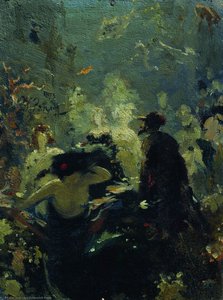
      Sadko (1876) od Iľja Jefimovič Repin
      5

      Sadko

      1876 · Oil On Canvas · Štátny ruský múzeum, Sankt Petersburg

      Ilya Repin’s “Sadko,” completed in 1876, is not merely a depiction of a fantastical tale; it’s an immersion into a world where myth and reality intertwine. This monumental canvas, measuring 323 x 230 cm, captures the essence of Russian folklore – the legend of the Volga boatman Sadko, who traded his riches for three beautiful daughters with the Sea King. The scene unfolds as a vibrant, almost overwhelming, tableau of…

      Krestny Khod (Religious Procession) in Kursk Gubernia (1883) od Iľja Jefimovič Repin
      6

      Krestny Khod (Religious Procession) in Kursk Gubernia

      1883 · Oil On Canvas · Tretyakov Gallery, Moskva

      A Social Commentary Through Art "CITE>Ilya Yefimovich Repin:CITE>" is renowned for his captivating and thought-provoking paintings, and "CITE>Krestny Khod (Religious Procession) in Kursk Gubernia:CITE>" stands out as a testament to his skillful storytelling through art. This oil on canvas masterpiece, measuring 175 x 280 cm, was created in 1883 and is now housed at the Tretyakov Gallery in Moscow. The Painting's Significance When first exhibited, "Krestny Khod (Religious Procession) in…

      Portrait of Chuguev resident S.L. Lyubitskaya (1877) od Iľja Jefimovič Repin
      8

      Portrait of Chuguev resident S.L. Lyubitskaya

      1877 · Oil On Canvas

      To stand before Ilya Yefimovich Repin's Portrait of Chuguev resident S.L. Lyubitskaya is to encounter a moment suspended in time, a quiet dialogue between the subject and the viewer. Painted in 1877, this oil on canvas transcends a mere likeness; it is a profound study in human introspection. Repin, the master chronicler of Russian life, captures here not just the features of S.L. Lyubitskaya, but the very essence of her…

      The Vice-President of the Academy of Arts, I.I. Tolstoy (1899) od Iľja Jefimovič Repin
      10

      The Vice-President of the Academy of Arts, I.I. Tolstoy

      1899 · Oil On Canvas · Štátny ruský múzeum, Sankt Petersburg

      To gaze upon Ilya Yefimovich Repin's depiction of The Vice-President of the Academy of Arts, I.I. Tolstoy, is to step into a moment suspended in time—a sanctuary of quiet thought amidst the grandeur of late 19th-century Russian intellectual life. This portrait transcends a mere likeness; it captures the very essence of contemplation. The subject, seated with an air of distinguished gravity, holds a book as if it were both a…

      Obrazy umelca Iľja Jefimovič Repin zoradené od 11 do 100

      Sebeportrét (1887) od Iľja Jefimovič Repin
      #14

      Sebeportrét

      1887 · Tretyakov Gallery

      The Tretyakov Gallery in Moscow holds within its walls countless treasures of Russian art, but perhaps none resonate with quite the same profound intimacy as Ilya Yefimovich Repin's…

      Prinesť toto svetlo domov →
      Portrait of Bella Gorskaya (1910) od Iľja Jefimovič Repin
      #24

      Portrait of Bella Gorskaya

      1910 · The State Museum of Fine Arts of Tatarstan Republic

      To stand before Portrait of Bella Gorskaya is to step directly into the vibrant, nuanced world of turn-of-the-century Russia. Ilya Yefimovich Repin, a titan whose brushstrokes defined the…

      Objednať toto plátno →
      Golgotha od Iľja Jefimovič Repin
      #37

      Golgotha

      Ilya Yefimovich Repin’s “Golgotha” stands as a monumental testament to the power of realism and empathy within the realm of religious art. Painted between 1921 and 1922, this…

      Nechajte si to namalovať ručne →
      Interior (etude). (1883) od Iľja Jefimovič Repin
      #39

      Interior (etude).

      1883 · Tretyakov Gallery

      Ilya Yefimovich Repin, a titan of Russian realism, bequeathed to us not merely paintings but profound reflections on human experience. His masterpiece, “Interior (etude),” completed in 1883 and…

      Prinesť toto svetlo domov →
      Unexpected Visitors (1888) od Iľja Jefimovič Repin
      #42

      Unexpected Visitors

      1888

      “Unexpected Visitors” (Не ждали), painted by Ilya Yefimovich Repin in 1888, is more than just a depiction of a family gathering; it's a profound commentary on Russian society…

      Objednať toto plátno →
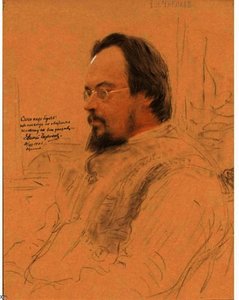
      Portrét Sergeja Viteho (1903) od Iľja Jefimovič Repin
      #51

      Portrét Sergeja Viteho

      1903

      Portrét Sergeja Viteho – Výrazný obraz ruského realista Ilyu Repina Ilya Yefimovich Repin, umelecký velikán ruského impresionizmu a následne realistického smeru, sa narodil v roku 1844 v prostom…

      Objednať toto plátno →
      Judas (1885) od Iľja Jefimovič Repin
      #53

      Judas

      1885

      The painting Judas by Ilya Repin captures a moment of heavy, silent reckoning. Created in 1885, the work focuses on the biblical figure Judas Iscariot. He is the…

      Nechajte si to namalovať ručne →
      Zaporozhets od Iľja Jefimovič Repin
      #60

      Zaporozhets

      Vitebské múzeum moderného umenia

      Ilya Yefimovich Repin’s “Zaporozhets,” painted in 1880-1891, isn’t merely a depiction of a man; it’s a carefully constructed tableau brimming with historical resonance and profound emotional depth. The…

      Nechajte si to namalovať ručne →
      The Procurator (1912) od Iľja Jefimovič Repin
      #62

      The Procurator

      1912 · Finnish National Gallery

      The Procurator is a vertical bust-length portrait of an elderly man, presented from an eye-level perspective that establishes an intimate connection with the viewer. The subject is depicted…

      Objednať toto plátno →
      A Shy Peasant (1877) od Iľja Jefimovič Repin
      #63

      A Shy Peasant

      1877

      In his 1877 oil on canvas, A Shy Peasant, Ilya Yefimovich Repin presents a profound study of human emotion and quietude. The painting captures a man with a…

      Objednať toto plátno →
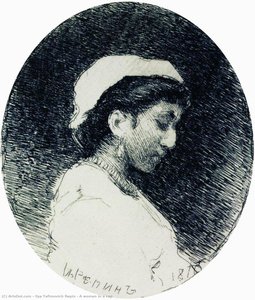
      A woman in a cap od Iľja Jefimovič Repin
      #69

      A woman in a cap

      Vitebské múzeum moderného umenia

      Ilya Repin's “A Woman in a Cap,” painted circa 1876-1878, isn’t merely a portrait; it’s a carefully constructed window into the soul of late 19th-century Russia. This arresting…

      Nechajte si to namalovať ručne →
      Diogenes and the boy (1867) od Iľja Jefimovič Repin
      #78

      Diogenes and the boy

      1867

      To stand before this vintage oil painting is to step directly into the charged atmosphere of 19th-century religious fervor. The scene, titled Diogenes and the boy, immediately arrests…

      Objednať toto plátno →

      Plátna umelca Iľja Jefimovič Repin podľa jednotlivých období

      Čo najčastejšie mal Iľja Jefimovič Repin

      Štyri témy, ktoré sa na týchto plátnach najčastejšie vracajú, každá s jej najobľúbenejším príkladom.

      Kde visia plátna umelca Iľja Jefimovič Repin

      8 múzeá, v ktorých sa nachádza najviac obrazov z tejto stránky.

      Múzeá Mesto Diela umelca Iľja Jefimovič Repin Obrazy z tohto zoznamu
      Tretyakov Gallery, MoskvaTretyakov Gallery Moskva 59 Ivan Strašný a jeho syn Ivan 16. novembra 1885, Nečakaný návrat, Krestny Khod (Religious Procession) in Kursk Gubernia
      Štátny ruský múzeum, Sankt PetersburgŠtátny ruský múzeum Sankt Petersburg 28 Odpoveď: Odpoveď o Saporiských Kozákoch Sultánovi Mahúmovi IV., Ťažiči na Volze, Sadko
      Finnish National Gallery, HelsinkiFinnish National Gallery Helsinki 29 Portrait of Professor Ivanov, The Procurator, The Scytheman
      Vitebské múzeum moderného umenia, VitebskVitebské múzeum moderného umenia Vitebsk 2 Zaporozhets, A woman in a cap
      The State Museum of Fine Arts of Tatarstan Republic, KazanThe State Museum of Fine Arts of Tatarstan Republic Kazan 2 Portrait of Bella Gorskaya
      Nizhniy Tagil State Museum of Fine Arts, Nizhny TagilNizhniy Tagil State Museum of Fine Arts Nizhny Tagil 2 Portrait of actor and dramatist Grigory Grigorievich Ghe
      Národné múzeum vo Varšave, VaršavaNárodné múzeum vo Varšave Varšava 2 Study of a peasant in the grass.
      Hermitáž, PetrohradHermitáž Petrohrad 1 Portrait of Emperor Nicholas II

      Dekáda po dekáde: najslávnejšie plátno umelca Iľja Jefimovič Repin

      1. 1850s
      2. 1860s
        Portrait of Tatyana Repina, the Artist's Mother. (1867) od Iľja Jefimovič Repin
        Položka 49 z 100

        Portrait of Tatyana Repina, the Artist's Mother.

        Vek 16 – 25 · Národná galéria v Prahe

        Ilya Yefimovich Repin, one of Russia’s most celebrated and profoundly humanistic painters, possessed an extraordinary ability to distill the essence of his subjects onto canvas. Few portraits capture…

      3. 1870s
        Odpoveď: Odpoveď o Saporiských Kozákoch Sultánovi Mahúmovi IV. (1878) od Iľja Jefimovič Repin
        Položka 2 z 100

        Odpoveď: Odpoveď o Saporiských Kozákoch Sultánovi Mahúmovi IV.

        Vek 26 – 35 · Štátny ruský múzeum

        „Odpoveď Záporskej Kosačskej“ – obraz, ktorý pulzuje energiou a odhaľuje hlboké vrstvy ruského ducha. Ilya Repin, jeden z najvýznamnejších predstaviteľov ruského realizmu, v tomto monumentálnom dianí vytvoril nie…

      4. 1880s
        Ivan Strašný a jeho syn Ivan 16. novembra 1885 (1885) od Iľja Jefimovič Repin
        1 z 100

        Ivan Strašný a jeho syn Ivan 16. novembra 1885

        Vek 36 – 45 · Tretyakov Gallery

        Toto plátno na olej s názvom Ivan Strašný a jeho syn Ivan 16. novembra 1885 vytvoril ruský realista Ilja Repin. Obraz vznikol v období medzi rokmi 1883 a…

      5. 1890s
        The Vice-President of the Academy of Arts, I.I. Tolstoy (1899) od Iľja Jefimovič Repin
        10 z 100

        The Vice-President of the Academy of Arts, I.I. Tolstoy

        Vek 46 – 55 · Štátny ruský múzeum

        To gaze upon Ilya Yefimovich Repin's depiction of The Vice-President of the Academy of Arts, I.I. Tolstoy, is to step into a moment suspended in time—a sanctuary of…

      6. 1900s
        Portrait of writer Yevgeny Nikolayevich Chirikov (1906) od Iľja Jefimovič Repin
        Plátno 25 z 100

        Portrait of writer Yevgeny Nikolayevich Chirikov

        Vek 56 – 65

        To stand before Ilya Yefimovich Repin’s Portrait of writer Yevgeny Nikolayevich Chirikov is to step directly into the vibrant, thoughtful atmosphere of turn-of-the-century Russian intellectualism. Painted in 1906,…

      7. 1910s
        Portrét Nikolaja Remizova (1917) od Iľja Jefimovič Repin
        Plátno 23 z 100

        Portrét Nikolaja Remizova

        Vek 66 – 75

        Portrait Of Nikolai Remizov – A Masterpiece of Russian Realism Ilya Yefimovich Repin’s “Portrait of Nikolai Remizov” stands as an enduring testament to the power of realist painting…

      8. 1920s

      Vaše otázky k obrazom od Iľja Jefimovič Repin, odpovedené

      Ktorý z obrazov Iľja Jefimovič Repin je najslávnejší?Prečítajte si odpoveď

      Ivan Strašný a jeho syn Ivan 16. novembra 1885 (1885), Tretyakov Gallery, Moskva. Nasledujú Odpoveď: Odpoveď o Saporiských Kozákoch Sultánovi Mahúmovi IV. (1878) a Ťažiči na Volze (1873).

      Koľko rokov mal(a) Iľja Jefimovič Repin v čase vytvorenia Ivan Strašný a jeho syn Ivan 16. novembra 1885?Prečítajte si odpoveď

      Iľja Jefimovič Repin, narodený v 1844, mal 41 rokov: Ivan Strašný a jeho syn Ivan 16. novembra 1885 vznikol v roku 1885.

      Ktorých desať obrazov je Iľja Jefimovič Repin najznámejší/najznámejšia?Prečítajte si odpoveď

      Ivan Strašný a jeho syn Ivan 16. novembra 1885, Odpoveď: Odpoveď o Saporiských Kozákoch Sultánovi Mahúmovi IV., Ťažiči na Volze, Nečakaný návrat, Sadko, Krestny Khod (Religious Procession) in Kursk Gubernia, Ceremonial Meeting of the State Council, Portrait of Chuguev resident S.L. Lyubitskaya, Portrait of the Poet Voinov a The Vice-President of the Academy of Arts, I.I. Tolstoy. Každé plátno v uvedenom poradaní obsahuje rok vytvorenia a názov múzeja.

      Koľko obrazov od Iľja Jefimovič Repin je známych?Prečítajte si odpoveď

      V našom katalógu sa nachádza 672 diel od umelca Iľja Jefimovič Repin, datovaných od 1859 do 1926.

      V ktorých múzeách sa nachádzajú najznámejšie plátna umelca Iľja Jefimovič Repin?Prečítajte si odpoveď

      Väčšinou v Tretyakov Gallery (Moskva), Štátny ruský múzeum (Sankt Petersburg) a Finnish National Gallery (Helsinki); vyššie uvedený zoznam uvádza jednotlivé múzeá a ich plátna.

      V ktorých rokoch vytvoril Iľja Jefimovič Repin svoje najznámejšie plátna?Prečítajte si odpoveď

      V období 1870s, ktoré predstavuje 34 z 100 diel na tejto stránke, medzi nimi aj Odpoveď: Odpoveď o Saporiských Kozákoch Sultánovi Mahúmovi IV..

      Aké sú prvé a posledné slávne plátna umelca Iľja Jefimovič Repin?Prečítajte si odpoveď

      Najstaršie plátno je z Portrait of A. Bocharova, artist's aunts (1859); najnovšie je z Portrait of the Poet Voinov (1926).

      Aké témy sa najčastejšie objavujú v obrazoch umelca Iľja Jefimovič Repin?Prečítajte si odpoveď

      Portrait (35), Russian art (29) a Portraits (10), v rámci 100 diel na tejto stránke.

      Čím zvyčajne mal(a) Iľja Jefimovič Repin?Prečítajte si odpoveď

      Oil On Canvas, použité v 45 z 100 dielov na tejto stránke.

      Do ktorého umeleckého smeru patrí Iľja Jefimovič Repin?Prečítajte si odpoveď

      Realist expressionism, ako dokazujú plátna na tejto stránke.

      Čo všetko môžem vidieť od Iľja Jefimovič Repin v múzeu Tretyakov Gallery?Prečítajte si odpoveď

      V múzeu Tretyakov Gallery, Moskva sa nachádza 28 z diel na tejto stránke, vrátane Ivan Strašný a jeho syn Ivan 16. novembra 1885, Nečakaný návrat a Krestny Khod (Religious Procession) in Kursk Gubernia.

      Môžem si objednať ručne maľovanú kópiu obrazu od Iľja Jefimovič Repin?Prečítajte si odpoveď

      Áno. Každý obraz na tejto stránke si môžete objednať z jeho vlastnej stránky ako ručne maľovanú olejную reprodukciu alebo ako umeleckú tlač, v rozmeroch, ktoré si vyberiete.

      Iľja Jefimovič Repin: príbeh maliara

      Early Life, Family and Training

      Ilya Yefimovich Repin entered the world on August 5, 1844, in Chuguev, located within the Kharkov Governorate of the Russian Empire. His upbringing was shaped by the practicalities of a modest household; his father, Yefim Vasilyevich Repin, was a military settler who later worked as an itinerant merchant. This background provided a connection to the movement of people and the realities of provincial life that would later inform his perspective. His early years were defined by the quiet discipline of a small town, far from the formal academies that would eventually define his professional life.

      The seeds of his technical skill were sown through a traditional apprenticeship. At the age of sixteen, he began the meticulous work of painting icons, learning the craft under the guidance of local icon painters. This period of training required a precise hand and an understanding of religious composition. It was a rigorous introduction to the visual language of his surroundings, teaching him to observe the nuances of form and light before he ever stepped foot in a major metropolitan center.

      In 1863, driven by an ambition to refine his talent, he traveled to Saint Petersburg. He did not enter the Imperial Academy of Arts through the standard channels at first, but instead audited courses, absorbing the atmosphere and instruction of the institution. This period of self-directed study allowed him to bridge the gap between his provincial training and the formal academic standards of the capital. He was a man of persistence, navigating the transition from a student of religious imagery to a serious practitioner of secular art.

      The Rise of a Realist Master

      The transition from a student to a central figure in Russian art was marked by rapid academic success. After navigating the challenges of his early training, he secured his first prizes at the Imperial Academy of Arts in 1869 and 1871. These accolades signaled a shift toward a more direct engagement with the world around him. His growing reputation led to a significant commission from Grand Duke Vladimir Alexandrovich for The Barge Haulers on the Volga, a work that would define his early career and establish his commitment to depicting the realities of labor.

      Between 1873 and 1876, his perspective expanded through two years spent in Paris and Normandy. This period allowed him to observe the techniques of painting in the open air, which he would later integrate into his own approach to light and form. He did not merely replicate the styles he encountered; instead, he refined a method of capturing the human condition with a specific, unvarnished clarity. This period of travel provided the technical breadth necessary to move beyond simple representation into a more profound psychological realism.

      By 1894, his influence had become institutionalized when he was appointed a professor of historical painting at the St. Petersburg Academy. He had moved from the periphery of the art world to its very center, teaching the next generation how to navigate the tension between academic tradition and the demand for social truth. His career had come full circle, from a student auditing classes to a master shaping the direction of national art.

      Key Works and Masterpieces

      Repin’s ascent was marked by a profound ability to translate the struggles of the common man into monumental visual narratives. In 1873, he produced Barge Haulers on the Volga, a work that captured the brutal physical toil of laborers dragging boats along the river. This painting moved beyond simple observation, offering a searing indictment of social injustice through the exhaustion and resolve of its subjects. It established him as a painter deeply attuned to the human condition and the socio-political tensions of his era.

      His interest in the complexities of the Russian soul led him to explore both religious and historical themes with intense psychological depth. Between 1880 and 1883, he painted Religious Procession in Kursk Province, a nuanced study of faith and social hierarchy. This period also saw the development of Reply of the Zaporozhian Cossacks, a work created between 1880 and 1891 that captured a defiant spirit of resistance. His brushwork often balanced the joy of folk motifs with the darker, more heavy aspects of history.

      The capacity for drama reached a peak in 1885 with Ivan the Terrible and His Son Ivan. This depiction of a moment of horrific violence and remorse remains one of his most striking explorations of power and guilt. Through these varied subjects, Repin moved from the grit of the riverbanks to the heavy shadows of the Kremlin, always maintaining a focus on the internal struggles of his figures.

      Technique and Artistic Style

      Repin established himself as the foremost exponent of the Russian Realist style, a movement that sought to strip away academic idealization in favor of the unvarnished truth of contemporary life. His artistic language was defined by a profound sense of plasticity, a quality that allowed him to render the human form and its surroundings with a tangible, three-dimensional presence. This technical command enabled him to move beyond mere likeness, capturing the physical weight of a laborer or the subtle tension in a historical scene. He was a master of genre painting, finding profound meaning in the everyday activities of the common people and the complex social hierarchies of his era.

      His approach was not static, however. During his time in France and Italy, he encountered the burgeoning Impressionist movement, and the influence of French plein-air techniques became evident in his later work. He began to integrate these observations into his rigorous realist foundation, utilizing light and brushwork to suggest atmosphere and movement rather than relying solely on rigid, polished finishes. This synthesis allowed him to depict the psychological depth of his subjects through a more fluid, observational lens. He used the human face as a landscape of emotion, often focusing on the internal struggles of his sitters.

      Later Years and Death

      The final chapter of Repin’s life was marked by a quiet withdrawal from the turbulent currents of history. Following the February Revolution of 1917, he found himself increasingly disillusioned by the violence and terror unleashed by the Bolsheviks. This profound sense of unease prompted a retreat from the center of Russian life toward the more tranquil surroundings of his estate, Penates. Located in Kuokkala, Finland, this sanctuary provided a refuge from the political upheaval that had reshaped his homeland.

      In this secluded setting, he continued to paint, finding a sense of peace away from the social transformations occurring in the cities. His focus shifted toward more personal and introspective subjects, often drawing from his immediate surroundings and the people closest to him. He remained active in his craft until his final days, maintaining a connection to the art that had defined his existence. He died on 29 September 1930 in Kuokkala. He is buried at The Penates.

      Legacy and Enduring Influence

      The influence of Ilya Yefimovich Repin extended far beyond the borders of the Russian Empire, reaching into the very foundations of modern painting. By defining the parameters of Russian realism, he established a visual language that would later inform the development of Socialist Realism. His ability to merge technical academic precision with a sharp social conscience allowed his work to function as a mirror to a changing society. This commitment to portraying the human condition with honesty ensured that his impact would be felt by generations of artists who followed in his footsteps.

      His reputation was recognized on the international stage, far from the provincial towns of his youth. In 1900, he served as a jury member of the Paris World Fair, a position that reflected his standing among the global artistic elite. This recognition was further solidified when he was awarded the Legion of Honour, an honor that underscored his importance to the European art world. He moved between the rigorous traditions of the Academy and the evolving techniques of plein-air painting, leaving behind a body of work that bridged the gap between the old world and the new.

      Where to See the Works Today

      The physical presence of Repin's oeuvre is scattered across several major institutions, reflecting the breadth of his influence. The Tretyakov Gallery in Moscow remains the most significant repository, housing 26 of his works. Within this collection, one can find his portrait of the composer Modest Musorgsky, dated 1881, alongside the portrait of Pavel Tretyakov from 1883. These pieces offer a direct encounter with the psychological depth he brought to his subjects.

      Beyond Moscow, his canvases have traveled to various corners of Europe and the former Soviet territories. The Vitebsk Museum of Modern Art holds two of his works, while the Pushkin State Museum in Moscow preserves a single piece. In Prague, the National Gallery maintains one of his paintings, ensuring his visual language remains accessible to international audiences. These specific locations provide a fragmented but significant map of his artistic output.

      Všetky 672 diela od Iľja Jefimovič Repin →