
Ateliér — Bezplatné celosvetové doručenie — Doručenie za 2–6 týždňov
      Maria Primachenková, 1908 – 1997

      Maria Primachenková: The 97 Best-Known Paintings

      Of all Maria Primachenková's paintings, Three Parrots on a Soldier's Grave (1982) is the most famous. Close behind come I Give My Little Stars to Children (1983) and The Little Elephant Who Wanted to Be a Sailor (1973). Among the 97 works by Maria Primachenková in our catalogue, these 97 are the most celebrated, each shown with its date, its museum and its story.

      Poriadkované podľa nášho skóre popularity, ktoré kombinuje počet vyhľadávaní, návštev a objednávok pre každé dielo. Aktualizované október 2026.

      Portrét Maria Primachenková
      Maria Primachenková · 1908 – 1997
      Narodený · zomrel
      1908 – 1997, Kyjevská oblasť
      Pohyb
      Naive art / primitivism
      Diela v našom katalógu
      97
      Najznámejšie
      Three Parrots on a Soldier's Grave (1982)

      Maria Primachenková's 10 most celebrated paintings

      Let Us Go to the Betrothal Party (1968) od Maria Primachenková
      7

      Let Us Go to the Betrothal Party

      1968 · Gouache

      In the vibrant tapestry of twentieth-century Naive Art, few works radiate as much warmth and cultural vitality as Maria Primachenko’s 1968 masterpiece, "Let Us Go to the Betrothal Party." This gouache painting is far more than a mere depiction of a festive occasion; it is an immersive window into the heart of Ukrainian folklore. At its center, a man and a woman stand in a tender embrace, their figures rendered…

      Flax Blooms and a Cossack Goes to a Girl (1982) od Maria Primachenková
      8

      Flax Blooms and a Cossack Goes to a Girl

      1982 · Acrylic On Canvas

      In the enchanting realm of Maria Primachenko’s artistry, the boundaries between reality and folklore dissolve into a vibrant tapestry of color and cultural memory. Her masterpiece, Flax Blooms and a Cossack Goes to a Girl, serves as a breathtaking window into the soul of Ukraine. At first glance, the viewer is swept up in a whirlwind of saturated hues and whimsical forms that evoke the joyous spirit of a traditional…

      Maria Primachenková paintings ranked 11 to 97

      My Flowers To Those Who Love Peace (1983) od Maria Primachenková
      #11

      My Flowers To Those Who Love Peace

      1983

      In this 1983 work, Maria Primachenko offers a quiet, colorful meditation on the concept of tranquility. The composition centers on a stylized, ornamental structure, reminiscent of a central…

      Wild Bull and Raven Are Friends (1983) od Maria Primachenková
      #14

      Wild Bull and Raven Are Friends

      1983

      In the enchanting realm of Maria Primachenko’s 1983 masterpiece, "Wild Bull and Raven Are Friends," the boundaries between reality and folklore dissolve into a vibrant tapestry of color…

      Crane Makes Friends with a Fox (1979) od Maria Primachenková
      #15

      Crane Makes Friends with a Fox

      1979

      The Maria Primachenko painting, "Crane Makes Friends with a Fox", is a captivating example of Naive Art/Primitivism, a style characterized by its simplicity, flat rendering, and lack of…

      Lovely Spring, What Did You Bring. (1977) od Maria Primachenková
      #16

      Lovely Spring, What Did You Bring.

      1977

      In the vibrant masterpiece "Lovely Spring, What Did You Bring," the legendary Ukrainian artist Maria Primachenko invites us into a world where nature and myth intertwine with breathtaking…

      Two-Headed Chicken (1977) od Maria Primachenková
      #17

      Two-Headed Chicken

      1977

      In this 1977 composition, two large yellow birds occupy the central space of a 62 x 85 cm canvas. These avian figures possess elongated necks and are positioned…

      Ukrainian Wedding (1966) od Maria Primachenková
      #18

      Ukrainian Wedding

      1966

      In the vibrant tapestry of twentieth-century Naive Art, few threads are as luminous and emotionally resonant as those woven by Maria Primachenlyko. Her 1966 masterpiece, Ukrainian Wedding, serves…

      Ukraine Blooming (1979) od Maria Primachenková
      #19

      Ukraine Blooming

      1979

      In the enchanting realm of Naive Art, few works capture the pure, unadulterated joy of nature quite like Maria Primachenko’s Ukraine Blooming. Created in 1979, this masterpiece serves…

      Flax Blooms, a Bride Goes to Her Groom (1983) od Maria Primachenková
      #20

      Flax Blooms, a Bride Goes to Her Groom

      1983

      In the enchanting realm of Maria Primachenko’s imagination, reality dissolves into a tapestry of myth and memory. Flax Blooms, a Bride Goes to Her Groom serves as a…

      Do I Love Orchards, Do I Love Forests (1968) od Maria Primachenková
      #21

      Do I Love Orchards, Do I Love Forests

      1968

      In the vibrant masterpiece Do I Love Orchards, Do I Love Forests, created in 1968, the legendary Ukrainian artist Maria Primachenko invites us into a world where the…

      Wild and Big-Eared (1977) od Maria Primachenková
      #22

      Wild and Big-Eared

      1977

      The Naive Art/Primitivism style has always been a fascinating genre, and one artist who embodies its spirit is Maria Primachenko. Her painting, Wild and Big-Eared, created in 1977,…
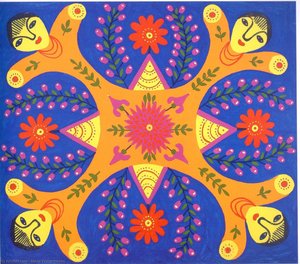
      Tablecloth (1976) od Maria Primachenková
      #23

      Tablecloth

      1976

      Created in 1976, this gouache work by Maria Primachenko utilizes a flattened perspective to organize a complex visual field. The composition centers on a large circle, which is…

      Ukrainian Dancers (1983) od Maria Primachenková
      #24

      Ukrainian Dancers

      1983

      In the vibrant tapestry of twentieth-century Ukrainian art, few works capture the pure, unadulterated joy of nature quite like Maria Primachenko’s Ukrainian Dancers. Created in 1983, this masterpiece…

      Monkey Riding a Four-Headed Beast (1982) od Maria Primachenková
      #25

      Monkey Riding a Four-Headed Beast

      1982

      The painting Monkey Riding a Four-Headed Beast by Maria Primachenko is a vibrant and captivating example of Naive Art/Primitivism, a style characterized by its simplicity, flat rendering, and…

      Dumplings on the Shelf (1979) od Maria Primachenková
      #26

      Dumplings on the Shelf

      1979

      In the tender, vibrant strokes of "Dumplings on the Shelf," we encounter the enchanting world of Maria Primachenko, a master of Naive Art who transformed the mundane into…
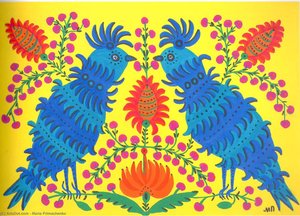
      Two Kites (1982) od Maria Primachenková
      #27

      Two Kites

      1982

      In the vibrant realm of Naive Art, few works capture the whimsical essence of nature as tenderly as Maria Primachenko’s 1982 masterpiece, Two Kites. This enchanting gouache painting…

      Red Poppies (1982) od Maria Primachenková
      #29

      Red Poppies

      1982

      Red Poppies is a work by Maria Prymachenko, executed in 1982. Measuring 85 x 61 cm, the piece belongs to the Naive Art and Primitivism movements. It reflects…

      Poppy (1983) od Maria Primachenková
      #52

      Poppy

      1983

      In the enchanting realm of Naive Art, few works capture the rhythmic pulse of life as tenderly as Maria Primachenko’s Poppy. Created in 1983, this masterpiece serves as…

      This Bear Wants to Have Some Flour Milled (1972) od Maria Primachenková
      #54

      This Bear Wants to Have Some Flour Milled

      1972

      In the enchanting realm of Maria Primachenko’s imagination, the boundaries between the mundane and the magical dissolve into a vibrant tapestry of color and folklore. Her captivating gouache…

      Tiger Laughs (1982) od Maria Primachenková
      #66

      Tiger Laughs

      1982

      Here are the cantos, eighteen of them, each one different in form, mood, color, beat, scale, and key. There are no cadenzas. Each is separate. Each can stand…

      Pigeons (1968) od Maria Primachenková
      #75

      Pigeons

      1968

      In the vast landscape of twentieth-century art, few voices resonate with as much pure, unadulterated joy as that of Maria Primachenko. Her 1968 masterpiece, "Pigeons," serves as a…

      A Cow Like That Gives 5,000 Liters a Day (1978) od Maria Primachenková
      #76

      A Cow Like That Gives 5,000 Liters a Day

      1978

      The painting "A Cow Like That Gives 5,000 Liters a Day" by Maria Primachenko is a stunning example of Naive Art/Primitivism, a style characterized by its simplicity, flat…

      Ukrainian Dough Looks Into Every House (1977) od Maria Primachenková
      #77

      Ukrainian Dough Looks Into Every House

      1977

      In the enchanting realm of Maria Primachenko’s 1977 masterpiece, "Ukrainian Dough Looks Into Every House," the boundaries between reality and myth dissolve into a vibrant, dreamlike landscape. This…

      My Bouquet to Grain Growers (1983) od Maria Primachenková
      #78

      My Bouquet to Grain Growers

      1983

      In the vibrant tapestry of twentieth-century Ukrainian art, few works capture the whimsical essence of life quite like Maria Primachenko’s My Bouquet to Grain Growers. Created in 1983,…

      Our Army, Our Protectors (1978) od Maria Primachenková
      #79

      Our Army, Our Protectors

      1978

      The painting "Our Army, Our Protectors" by Maria Primachenko is a stunning example of Naive Art/Primitivism, a style characterized by its simplicity, flat rendering, and lack of formal…

      Savage Hump-Shaker (1977) od Maria Primachenková
      #80

      Savage Hump-Shaker

      1977

      The Naive Art/Primitivism style has always been a fascinating genre, and one artist who embodies its spirit is Maria Primachenko. Her painting, Savage Hump-Shaker, created in 1977, is…

      Maiden and Cossack Enjoying a Ride on Horseback (1982) od Maria Primachenková
      #81

      Maiden and Cossack Enjoying a Ride on Horseback

      1982

      The painting Maiden and Cossack Enjoying a Ride on Horseback by Maria Primachenko is a stunning example of Naive Art, a style characterized by its simplicity, flat rendering,…

      A Hare's Birthday Party (1977) od Maria Primachenková
      #82

      A Hare's Birthday Party

      1977

      The Naive Art/Primitivism style has always been a fascinating genre, and one artist who embodies its spirit is Maria Primachenko. Her painting, "A Hare's Birthday Party", created in…

      A Coward Went A-Hunting (1983) od Maria Primachenková
      #83

      A Coward Went A-Hunting

      1983

      The Naive Art/Primitivism movement has long been a source of fascination for art enthusiasts, and Maria Primachenko's work is a stunning example of this style. Her painting, A…

      A Bunch of Red Flowers on Read Army Day (1970) od Maria Primachenková
      #84

      A Bunch of Red Flowers on Read Army Day

      1970

      The painting A Bunch of Red Flowers on Read Army Day is a stunning example of Naive Art/Primitivism, a style characterized by its simplicity, flat rendering, and lack…

      October Flowers (1968) od Maria Primachenková
      #85

      October Flowers

      1968

      The painting October Flowers is a stunning example of Naive Art/Primitivism, a style characterized by its simplicity, flat rendering, and lack of formal training. Created in 1968 by…

      This Beast is Making Magic (1983) od Maria Primachenková
      #86

      This Beast is Making Magic

      1983

      The painting "This Beast is Making Magic" by Maria Primachenko is a captivating example of Naive Art/Primitivism, a style characterized by its simplicity, flat rendering, and lack of…

      Menagerie (1977) od Maria Primachenková
      #87

      Menagerie

      1977

      The Menagerie by Maria Primachenko is a captivating example of Naive Art/Primitivism, a style characterized by its simplicity, flat rendering, and lack of formal training. Created in 1977,…

      An Outer Space Memory (1977) od Maria Primachenková
      #88

      An Outer Space Memory

      1977

      The Maria Primachenko painting, An Outer Space Memory, is a fascinating example of Naive Art/Primitivism. Created in 1977, this piece showcases the artist's unique style and perspective. The…
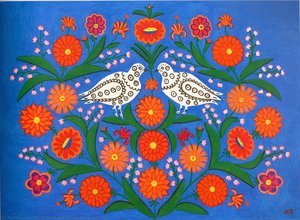
      Pigeon and Dove (1982) od Maria Primachenková
      #89

      Pigeon and Dove

      1982

      The painting "Pigeon and Dove" by Maria Primachenko is a stunning example of Naive Art/Primitivism, a style characterized by its simplicity, flat rendering, and lack of formal training.…

      Blue Birds in Flowers (1983) od Maria Primachenková
      #90

      Blue Birds in Flowers

      1983

      The painting Blue Birds in Flowers by Maria Primachenko is a stunning example of Naive Art, a style characterized by its simplicity, flat rendering, and lack of formal…

      Dear Cosmonauts, I Give You These Red Poppies (1983) od Maria Primachenková
      #91

      Dear Cosmonauts, I Give You These Red Poppies

      1983

      The painting Dear Cosmonauts, I Give You These Red Poppies is a stunning example of Naive Art/Primitivism, a style characterized by its simplicity, flat rendering, and lack of…

      Wild Cat (1977) od Maria Primachenková
      #92

      Wild Cat

      1977

      The Wild Cat painting by Maria Primachenko is a stunning example of Naive Art/Primitivism, a style characterized by its simplicity, flat rendering, and lack of formal training. Created…

      Red Snowball Tree Blooms Over a Well (1982) od Maria Primachenková
      #93

      Red Snowball Tree Blooms Over a Well

      1982

      The painting "Red Snowball Tree Blooms Over a Well" by Maria Primachenko is a stunning example of Naive Art/Primitivism, a style characterized by its simplicity, flat rendering, and…

      A Dove Has Spread Her Wings and Asks for Peace (1982) od Maria Primachenková
      #94

      A Dove Has Spread Her Wings and Asks for Peace

      1982

      The painting A Dove Has Spread Her Wings and Asks for Peace by Maria Primachenko is a stunning example of Naive Art/Primitivism, a style characterized by its simplicity,…

      Ukrainian Milkmaids Work Hard Like Miners (1970) od Maria Primachenková
      #95

      Ukrainian Milkmaids Work Hard Like Miners

      1970

      The Ukrainian Milkmaids Work Hard Like Miners painting by Maria Primachenko is a stunning example of Naive Art/Primitivism, a style characterized by its simplicity, flat rendering, and lack…

      Ola Man and Old Woman Carry a Turnip (1983) od Maria Primachenková
      #96

      Ola Man and Old Woman Carry a Turnip

      1983

      The painting "Ola Man and Old Woman Carry a Turnip" by Maria Primachenko is a stunning example of Naive Art/Primitivism, a style characterized by its simplicity, flat rendering,…

      The Lark (1976) od Maria Primachenková
      #97

      The Lark

      1976

      The Maria Primachenko painting, The Lark, is a stunning example of Naive Art/Primitivism, a style characterized by its simplicity, flat rendering, and lack of formal training. Created in…

      Maria Primachenková's canvases, period by period

      What Maria Primachenková painted most

      The four subjects that return most often on these canvases, each with its best-loved example.

      Decade by decade: Maria Primachenková's most celebrated canvas

      1. 1930s
      2. 1960s
        Let Us Go to the Betrothal Party (1968) od Maria Primachenková
        7 of 97

        Let Us Go to the Betrothal Party

        Vek 52 – 61

        In the vibrant tapestry of twentieth-century Naive Art, few works radiate as much warmth and cultural vitality as Maria Primachenko’s 1968 masterpiece, "Let Us Go to the Betrothal…

      3. 1970s
      4. 1980s

      Your questions on Maria Primachenková's paintings, answered

      Which is the most celebrated painting by Maria Primachenková?Read the answer

      Three Parrots on a Soldier's Grave (1982), followed by I Give My Little Stars to Children (1983) and The Little Elephant Who Wanted to Be a Sailor (1973).

      How old was Maria Primachenková at the time of Three Parrots on a Soldier's Grave?Read the answer

      Maria Primachenková, born in 1908, was 74 years old: Three Parrots on a Soldier's Grave dates from 1982.

      Which ten paintings is Maria Primachenková most famous for?Read the answer

      Three Parrots on a Soldier's Grave, I Give My Little Stars to Children, The Little Elephant Who Wanted to Be a Sailor, Corncob Horse in Outer Space, Lamd Has Harnesed a Wolf, Magpie in Roses, Let Us Go to the Betrothal Party, Flax Blooms and a Cossack Goes to a Girl, Black Beast a Taras Hryhorovych Shevchenko Arrives From His Exile to Flowering Ukraine. Each canvas in the ranking above comes with its year and its museum.

      How many paintings by Maria Primachenková are known?Read the answer

      97 works by Maria Primachenková are in our catalogue, dated 1936 to 1983.

      In which years did Maria Primachenková paint the most celebrated canvases?Read the answer

      In 1980s, which gave 46 of the 97 works on this page, Three Parrots on a Soldier's Grave among them.

      What are the first and the last of Maria Primachenková's famous canvases?Read the answer

      The earliest canvas here is Black Beast (1936); the latest is I Give My Little Stars to Children (1983).

      Which subjects return most often in Maria Primachenková's paintings?Read the answer

      Animals (30), Flowers (23) a Birds (14), across the 97 works on this page.

      What did Maria Primachenková usually paint with?Read the answer

      Gouache, used in 24 of the 97 works on this page.

      To which art movement does Maria Primachenková belong?Read the answer

      Naive art / primitivism, as the canvases on this page show.

      Maria Primachenková: the painter's story

      Život zakorenený v ukrajinskej pôde

      Maria Aksentievna Primachenková, narodená v roku 1908 v malej dedinke Bolotňa neďaleko Kyjeva, sa vyvinula ako jedna z najslávnejších a najvýraznejších ukrajinských umelkyň – skutočná vizionárka, ktorej dielo prekračuje akékoľvek triedenie. Jej život bol hlboko prepletený rytmami vidieckeho existovania, svetom sýteným prastarým folklórom, živými tradíciami a intímnym spojovaním s prírodou. Už od mladého veku sa Mariina cesta odkláňala od konvenčných očakávaní; ochorenie poliovou paralýzou ju ako dieťa uviazlo v interiéri na dlhé obdobia, no táto izolácia sa ukázala ako neočakávane úrodná pôda pre umelecký rozkvet. Jej matka a stará mama, zdatné vyšívačky, jej odovzdali zložité techniky a symbolický jazyk ukrajinského ľudového umenia – dedičstvo, ktoré sa stalo základným kameňom jej jedinečného štýlu. Tieto rané lekcie neboli len technické; boli to vtlačením kultúrnej pamäti, spôsobom videnia sveta preplateného významom a magiou. Práve v týchto formujúcich rokoch, obklopená farebnými nitkami a starobylými vzormi, začala Maria vyvíjať mimoriadne bohatú vizuálnu slovnú zásobu.

      Naívne odhalenie: Štýl bez hraníc

      Primachenkové umenie je často opisované ako „naívne“, čo je termín, ktorý môže byť zavádzajúco obmedzujúci. Hoci nešla do formálneho umeleckého výučby, jej tvorba disponuje hlbokou sofistikovaním – surovou, neukrotiteľnou energiou spojenou s hlbokým pochopením kompozície a farby. V 30. rokoch minulého storočia, po tom, čo ju objavila umelkyňa Tetiana Floru, sa Maria pripojila k Kyjevskej kooperatívnej vyšívaciej asociácii, kde jej talent rýchlo vynikl. To viedlo k pozvánke na experimentálne pracovné štúdie v Kyjevskom múzeu ukrajinského umenia, čo predstavovalo kľúčový moment v jej umeleckej ceste. Práve tu začala prekladať motívy a techniky vyšívania do malbytia – veľkoformátové plátna plné fantastických tvorov, živých kvetov a scén každodenného života preobrazených cez jedinečne osobnú optiku. Jej témy nevychádzali len z pozorovania; pramenia zo snov, spomienok a hlbokého prameňa fantázie. Lvi s ľudskými tváre, vtáky zapojené do hravých námluvných rituálov, kone ozdobené zložitými vzormi – toto neboli len zobrazenia, ale stelesnenia nádeje, strachov a neochvejného ducha Ukrajiny.

      Symbolika vtkávaná do každého ťahu štetcom

      Sila Primachenkového umenia spočíva nielen v jeho vizuálnej exuberancii, ale aj v bohatom symbolizme. Jej maľby sú plné motívov čerpaných z ukrajinského folklóra – prastarých slnečných kruhov predstavujúcich život a obnovu, vtákov symbolizujúcich slobodu a mier, a koní vystupujúcich ako ochráncov proti zlým duchom. Tieto symboly neboli zámyselne používané ako forma šifrovaných správ; skôr organicky vychádzali z jej kultúrneho prostredia a intuitívneho pochopenia prírodného sveta. Zvieratá v jej maľbách často získavajú ľudské vlastnosti – zúčastňujú sa svadieb, narodenín a iných spoločenských udalostí – čím sa rozmazávajú hranice medzi živočíchnou ríšou a ľudským svetom. Táto antropomorfizácia nie je len nápadná, ale odráža hlbú úctu k všetkým živým tvorom a vieru v ich vrodenú dôstojnosť. Jej použitie farieb je rovnako významné – odvážne, sýtené tóny, ktoré vyvolávajú radosť, vitalitu a pocit nebeskej krásy. Vrstvenie vzorov a textúr vytvára dynamický vizuálny povrch, ktorý diváka vtiahne do jej fantastického sveta.

      Uznanie a trvajúce oddedičenie

      Primachenkový talent neostal nepozorovaný. V roku 1937 bola jej práca vystavená na Svetovej výstave v Paríži, kde očarila publikum – a dokonca si získala obdiv aj u Pabla Picassa, ktorý vyhlásil, že keby žila vo Francúzsku, mohla by byť slávnejšia ako on sám. Na výstavách získala zlatú medailu a získala medzinárodné uznanie pre svoj jedinečný štýl. Napriek obdobiam ťažkostí a politických nepokoja Primachenková pokračovala v maľovaní počas celého svojho života, pričom vytvorila viac ako 800 diel, ktoré oslavujú krásu a odolnosť Ukrajiny. Jej umenie sa stalo symbolom národnej identity – dôkazom trvajúcej sily ľudových tradícií a ľudského ducha. Dnes je Maria Primachenková uctievaná ako jedna z najdôležitejších ukrajinských umelkyň, pričom jej podobizeň sa objavuje na známkach aj mincoch. Nedávne útoky na Historické a miestohistorické múzeum v Ivankive, ktoré hostilo mnohé z jej malieb, len podčiarkli dôležitosť zachovávania jej oddedičenia – kultúrneho pokladu, ktorý stelesňuje srdce a dušu národa.

      Výzva k mieru: Primachenková v modernom svete

      V dôsledku ruskej invázie na Ukrajinu v roku 2022 získalo umenie Marie Primachenovej nový rezonanciu. Jej živé maľby, často zobrazujúce scény harmónie medzi ľuďmi a zvieratami, sa stali mocnými symbolmi mieru a odporu. Zničenie niektorých jej prác počas útokov na Ivankiv slúžilo ako kruté pripomienku krehkosti kultúrneho dedičstva v čase konfliktov. Avšak vyvolalo to aj obnovený obdiv k jej umeniu – svedočstvo o jeho trvalej sile a univerzálnom posolstve. Primachenkové maľby nie sú len estetickými objektmi; sú vyjadrením nádeje, odolnosti a hlbokej lásky k Ukrajine. Jej oddedičenie naďalej inšpiruje umelcov aj publikum po celom svete, pripomínajúc nám dôležitosť zachovávania kultúrnych tradícií a oslavovania krásy ľudskej kreativity tvár v tvár s neistotou. Jej dielo stojí ako živé svedectvo o nesmrteľnej sile umenia – ako maják nádeje vo svete, ktorý je často zastínaný temnotou.

      Všetky 97 diela od Maria Primachenková →